
Tramadol and Seizure Risk: What You Need to Know if You Have a Seizure Disorder
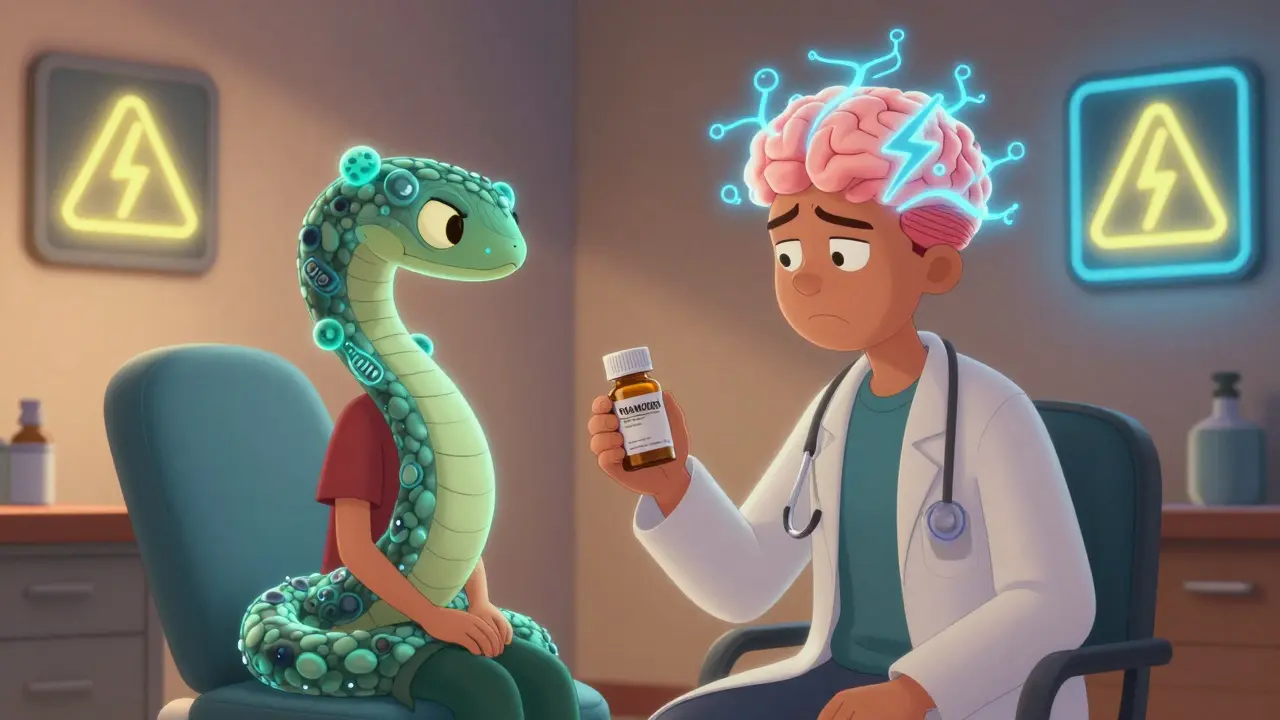
Tramadol Seizure Risk Calculator
Risk Assessment Tool
This tool helps you understand your potential seizure risk when taking tramadol. It is based on clinical evidence from the article and medical guidelines.
Select your risk factors above to see your assessment.
Important: This tool provides general information only. Always consult your doctor before changing any medications.
If you have a seizure disorder, taking tramadol could be dangerous-even at normal doses. This isn’t just a warning on a label. It’s a well-documented medical fact backed by clinical studies, emergency room data, and expert guidelines. Tramadol, a painkiller often prescribed for moderate to severe pain, doesn’t just act like other opioids. Its unique chemistry makes it a hidden risk for people with epilepsy or a history of seizures.
Why Tramadol Is Different from Other Painkillers
Most opioids, like morphine or oxycodone, affect the brain’s pain pathways through one main mechanism: binding to mu-opioid receptors. Tramadol is different. It does that too, but it also messes with two other brain chemicals: serotonin and norepinephrine. It blocks their reuptake, meaning more of them stick around in your brain. This dual action is why tramadol was originally thought to be safer and less addictive than traditional opioids. But it’s also why it can trigger seizures.The serotonin boost is the real problem. Too much serotonin in certain brain areas lowers your seizure threshold-the point at which your brain starts firing uncontrollably. This isn’t just a theory. In a 3-year study of 28 patients who had seizures after taking tramadol, 89% had their first seizure within 24 hours of taking the drug. Even more alarming: 13 of those 28 patients were taking less than the maximum recommended dose of 400mg per day. That means you don’t have to overdose to be at risk.
Who’s Most at Risk?
It’s not just people with epilepsy. Anyone with a history of seizures, brain injury, or a family history of epilepsy should avoid tramadol. But the risk spikes even higher if you’re taking other medications that also affect serotonin or lower the seizure threshold.Common culprits include:
- Tricyclic antidepressants (TCAs) like amitriptyline
- SSRIs like sertraline or fluoxetine
- Antipsychotics like risperidone or olanzapine
- Alcohol or illicit drugs
One case from New Zealand’s adverse drug report showed a patient who had been taking tramadol daily for months without issue-until their dose was increased. Within hours, they had a seizure. Another patient, already on a TCA and an antipsychotic, had a seizure after taking tramadol at a standard 75mg daily dose. These aren’t rare outliers. They’re repeatable patterns seen across multiple studies.
Men between 18 and 35 make up the majority of reported cases, but women are also affected. One study found that 7.2% of tramadol-induced seizure cases occurred in women. Age isn’t the only factor-renal failure is a major red flag. If your kidneys aren’t working well, tramadol builds up in your system faster. A single 300mg IV dose in a patient with kidney failure triggered a seizure. That’s why doctors check kidney function before prescribing it.
How Tramadol Causes Seizures: The Science Behind It
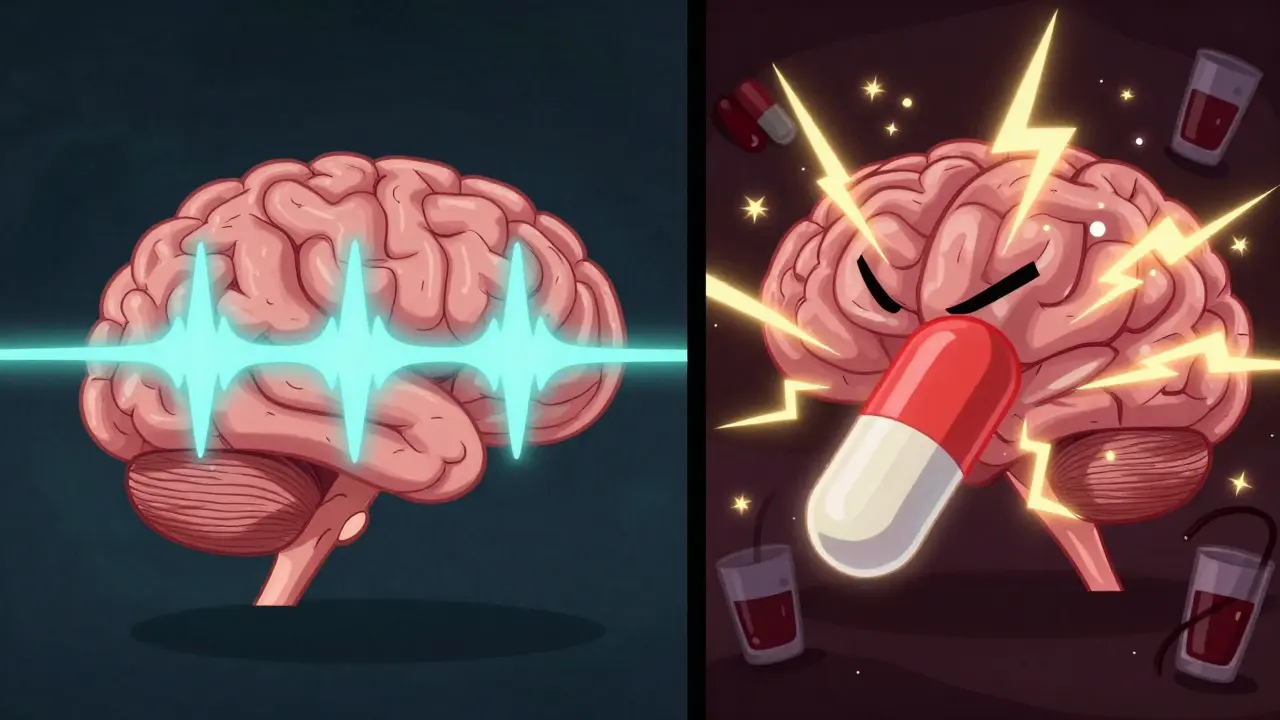
The exact mechanism isn’t fully understood, but researchers have pinned down key pieces. Tramadol and its main metabolite, M1, interfere with GABA, the brain’s main calming neurotransmitter. GABA acts like a brake on nerve activity. When it’s suppressed, neurons fire too easily. That’s how seizures start.EEG studies show that within the first 24 hours after a tramadol-induced seizure, about 43% of patients show abnormal brain wave patterns. But here’s the surprising part: after a week, only 3.6% still show abnormalities. That means the brain usually recovers quickly-but the damage during that first day can be serious. Most seizures are short, tonic-clonic (full-body convulsions), and stop on their own. But they can lead to falls, injuries, or even aspiration.
Unlike morphine, which can be anti-seizure at low doses, tramadol flips from safe to dangerous at relatively low doses. Animal studies show it can actually prevent seizures at normal pain-relieving doses-but at higher levels, it becomes a strong trigger. In humans, that balance is unpredictable. One person might take 200mg without issue. Another, with the same dose and no other drugs, could seize. That’s why guidelines say: if you have a seizure disorder, don’t take it at all.
What the Experts Say
Leading medical institutions are clear. The UCSF Pain Management Education program states outright: “Tramadol lowers the seizure threshold and should not be used in patients with seizure disorders.” The FDA, after reclassifying tramadol as a Schedule IV controlled substance in 2014, acknowledged its abuse potential and seizure risk. New Zealand’s Medsafe agency found tramadol was the most common drug linked to seizures in their reports between 2001 and 2006.Even the prescribing trends tell a story. Between 2008 and 2013, tramadol prescriptions in the U.S. jumped 88%. During that same period, emergency room visits related to tramadol rose 250%. That spike didn’t happen because people were suddenly more in pain. It happened because the risks weren’t fully understood-or ignored.
What to Do If You’re Currently Taking Tramadol
If you’re on tramadol and have a seizure disorder-or even a single past seizure-you need to talk to your doctor now. Don’t stop suddenly. Abrupt withdrawal can also trigger seizures. Your doctor can help you taper off safely and switch to a safer painkiller.Alternatives include:
- Acetaminophen (Tylenol) for mild to moderate pain
- NSAIDs like ibuprofen or naproxen if you don’t have kidney or stomach issues
- Non-opioid nerve pain medications like gabapentin or pregabalin for neuropathic pain
- Physical therapy, nerve blocks, or other non-drug options for chronic pain
Some patients are prescribed low-dose buprenorphine, which has a much lower seizure risk than tramadol. But it still needs careful monitoring.

What Your Doctor Should Check Before Prescribing
If you’re being considered for tramadol, your doctor should ask:- Have you ever had a seizure, even once?
- Do you have a family history of epilepsy?
- Are you taking antidepressants, antipsychotics, or other seizure-lowering drugs?
- Do you have kidney or liver problems?
- Do you drink alcohol regularly?
Any “yes” to these questions should rule out tramadol. No exceptions. Even if you think you’re “fine” or “just taking it once,” the risk isn’t worth it. There are better options.
What to Do in an Emergency
If someone you know has a seizure after taking tramadol:- Keep them safe-clear the area, turn them on their side, don’t put anything in their mouth.
- Time the seizure. If it lasts more than 5 minutes, call emergency services.
- Do not give them anything to eat or drink until they’re fully awake.
- Inform emergency responders that tramadol was taken. This changes how they treat it.
Most tramadol-induced seizures are self-limiting, but the risk of injury, breathing problems, or cardiac stress is real. Don’t wait to get help.
Bottom Line
Tramadol is not a safe painkiller for anyone with a seizure disorder. It doesn’t matter if you’ve been on it for years. It doesn’t matter if you’re taking it at a low dose. The science is clear: tramadol lowers the seizure threshold, and that risk exists even at therapeutic levels. Millions of people use it safely-but if you’re one of the susceptible ones, the consequences can be life-changing.If you have epilepsy, a history of seizures, or are on medications that affect serotonin, talk to your doctor about alternatives. Your brain’s safety is worth more than a quick pain fix.



Nicole Blain
March 20, 2026 AT 10:06Kathy Underhill
March 20, 2026 AT 16:45Srividhya Srinivasan
March 21, 2026 AT 11:13Sanjana Rajan
March 23, 2026 AT 11:08Aileen Nasywa Shabira
March 24, 2026 AT 23:57Kendrick Heyward
March 26, 2026 AT 19:18lawanna major
March 28, 2026 AT 14:04Ryan Voeltner
March 29, 2026 AT 12:25Linda Olsson
March 30, 2026 AT 16:01Ayan Khan
March 31, 2026 AT 16:48Emily Hager
April 1, 2026 AT 07:51