
Patient Vigilance: How You Can Spot Fake Medicines and Protect Your Health
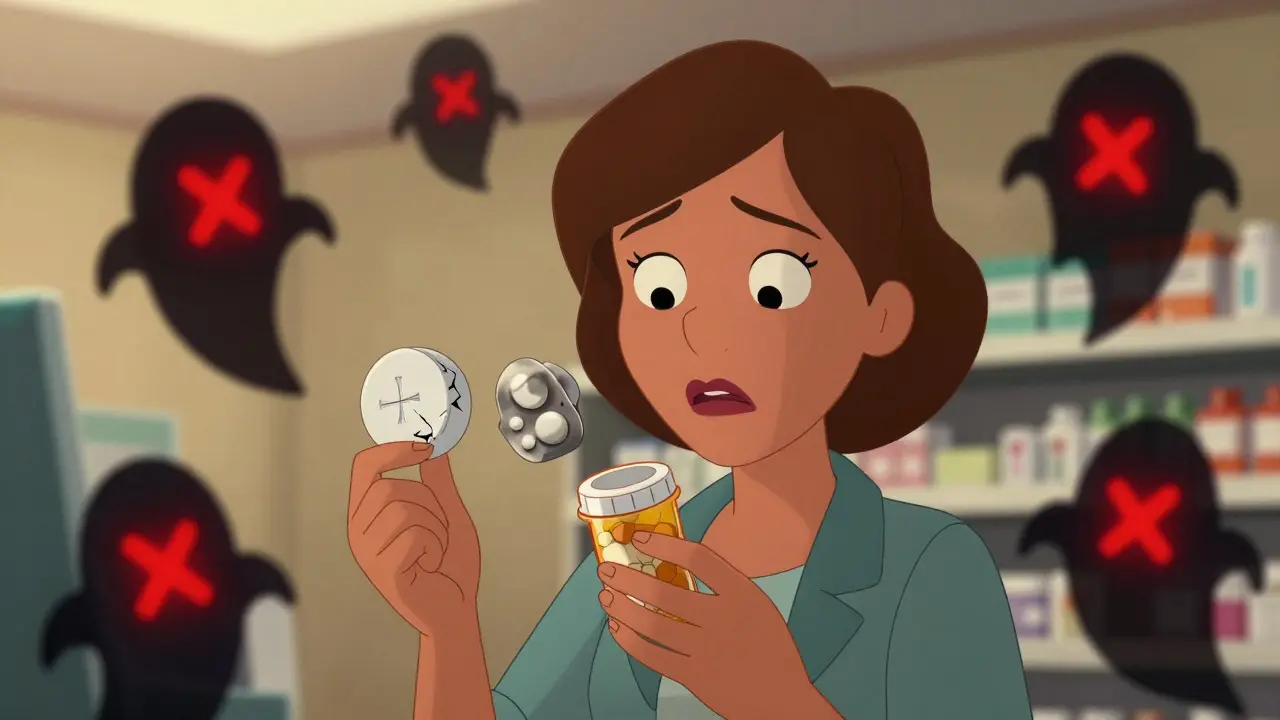
Every year, millions of people around the world take medicine they think is real - but it’s not. Fake pills, counterfeit injections, and falsified packages are flooding the market. And the scary part? Counterfeit drugs aren’t just ineffective - they can kill you.
You might think this only happens in faraway countries. But in 2024, the World Health Organization found that 1 in 10 medicines sold online globally are fake. In places like Southeast Asia and Sub-Saharan Africa, that number jumps to 1 in 3. Even in Canada and the U.S., fake drugs are showing up in social media ads, shady websites, and unlicensed pharmacies. And here’s the truth: no government agency or tech system can catch every single one. That’s where you come in.
What Exactly Is a Counterfeit Drug?
A counterfeit medicine isn’t just a cheap copy. It’s a dangerous lie. It might look identical to the real thing - same color, same shape, same logo. But inside? It could have no active ingredient. Or too much. Or the wrong chemical entirely. Some fake diabetes pills contain sugar instead of metformin. Fake antibiotics might be filled with chalk. Others have toxic substances like rat poison or industrial solvents.
The WHO defines counterfeit medicines as those that are deliberately mislabeled about their identity or source. That means even if it’s made in a real factory, if it’s sold under a fake brand name or without proper authorization, it’s still counterfeit. And it’s not rare. The global market for fake medicines is now worth over $200 billion a year. That’s more than the entire GDP of many countries.
Why You Can’t Rely on Technology Alone
You’ve probably heard about serialization - those unique barcodes or QR codes on medicine boxes. In Europe and parts of North America, every prescription drug now has one. It’s supposed to let you scan and verify it’s real. Sounds perfect, right?
But here’s the problem: 73% of counterfeit packages today pass basic visual inspection. That means they look real. And many consumers don’t even know how to use the scanning tools. A 2023 survey found only 28% of people in the U.S. and Europe check tamper seals. Only 12% know how to verify a serialization code. Even when the tech works, people ignore it.
Technology helps. But it’s not a shield. It’s a tool. And tools only work if you know how to use them. That’s why your eyes, your hands, and your questions matter more than ever.
The BE AWARE Checklist: How to Spot a Fake Medicine
You don’t need a lab to spot a fake pill. You need a few minutes and a sharp eye. The World Health Professions Alliance created a simple system called BE AWARE. Here’s how to use it:
- B - Box: Check the packaging. Is it wrinkled? Are the colors faded? Is the font blurry? Real medicine boxes are printed with precision. Fake ones often have spelling errors - like “Advil” spelled as “Advil” or “Lipitor” as “Liptor.”
- E - Expiration: Look at the date. Is it too far in the future? Or missing entirely? Counterfeiters often reuse old packaging or print fake dates. If the date looks smudged or doesn’t match the batch number, walk away.
- A - Appearance: Compare the pill to one you’ve taken before. Is the size different? The color off? Does it have strange markings? Even small changes matter. A real metformin tablet has a specific imprint. A fake might have none - or a different number.
- W - Wrapper: Is the seal broken? Is the foil torn? Does the bottle cap twist off too easily? Legitimate medicine has tamper-proof seals. If it looks like it was opened and resealed, don’t take it.
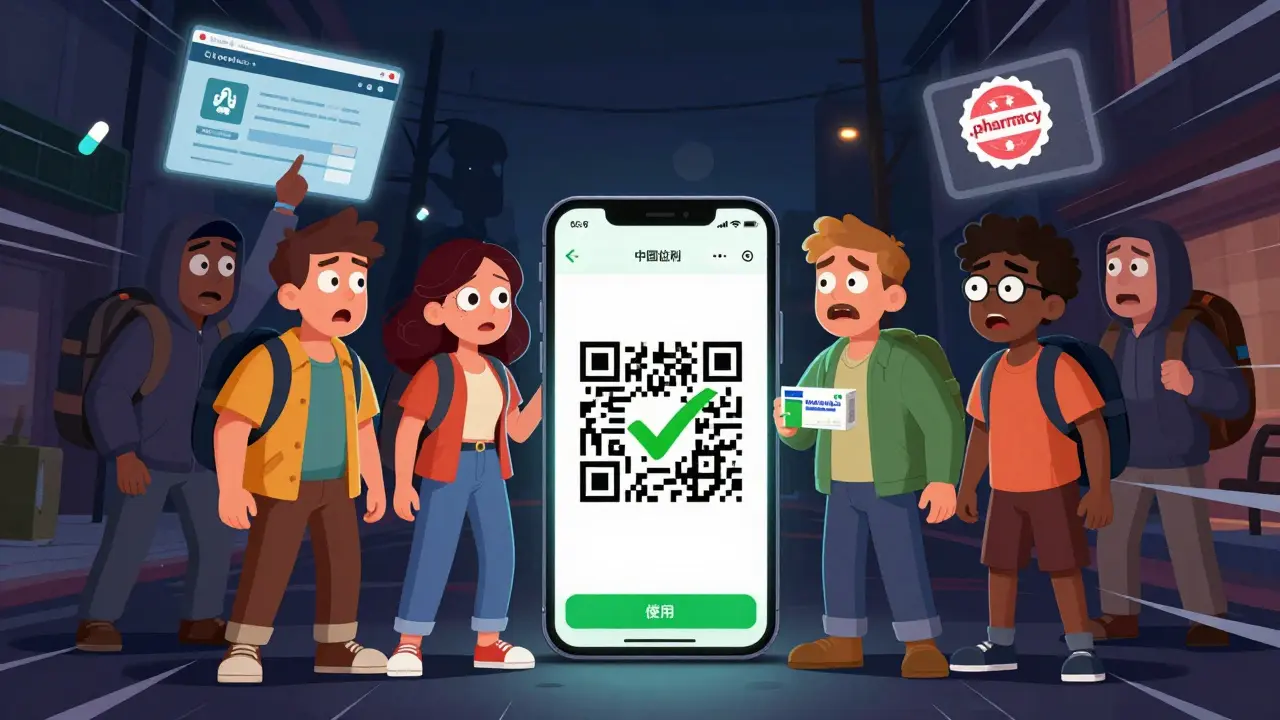
- A - Authentication: If it’s a prescription, scan the QR code or barcode. Use the official app from your pharmacy or the manufacturer. In France and Brazil, new digital leaflets require you to scan before opening. If you can’t verify it, don’t use it.
- R - Receipt: Did you buy it from a licensed pharmacy? If you bought it online, does the website have the .pharmacy seal? That’s the only trusted online certification in North America. If it doesn’t say that, it’s not safe.
- E - Environment: Where did you get it? If it was sold on Instagram, Facebook, or a “discount pharmacy” with no physical address - run. 89% of counterfeit medicines come from unverified online sellers.
These steps don’t take long. But they save lives. A 2022 study found that patients who followed even half of these steps could catch 70-80% of fake medicines before taking them.
Where Fake Drugs Come From - And How to Avoid Them
Most counterfeit drugs enter the market through three channels:
- Online pharmacies without certification - These sites look professional. They have logos, testimonials, and fake licenses. But they don’t require a prescription. They ship from warehouses in China, India, or Eastern Europe. If the price is 70% cheaper than your local pharmacy - it’s fake.
- Unlicensed street vendors - In some cities, people sell pills out of backpacks or parked vans. They claim to be “generic” or “imported.” These are almost always counterfeit.
- Compromised supply chains - Even legitimate pharmacies can get fake drugs if their supplier is hacked or bribed. That’s why checking your medicine every time matters. Just because you bought it from the same place last month doesn’t mean it’s safe this time.
The best defense? Buy only from:
- Your local, licensed pharmacy
- A verified online pharmacy with the .pharmacy seal (check NABP’s website)
- A hospital or clinic that dispenses directly
And never, ever buy medicine from social media, auction sites, or “international deals.”
Real Stories - What Happens When People Don’t Check
In 2023, a woman in Ontario bought “generic Viagra” from a website for $10 a pill. She took it for three weeks. Then she had a stroke. Tests later showed the pills had no sildenafil - just caffeine and a toxic dye.
Another case: A man in Calgary bought insulin online because his insurance wouldn’t cover it. The vial looked right. The label was perfect. But the insulin had no active ingredient. He ended up in the ER with diabetic ketoacidosis.
But there are wins too. In January 2024, Maria Silva in Brazil noticed her diabetes pills had a different color and no serial number. She called ANVISA (Brazil’s health agency). They traced the batch. It was fake. They shut down the distributor. Hundreds of people were saved because she checked.
That’s the pattern: people who survive fake drugs usually noticed something “off.” They didn’t ignore it. They acted.
What You Can Do - Beyond Checking
Spotting fake medicine is step one. Step two? Report it.
If you find a fake:
- Keep the packaging
- Take a photo
- Call your national health authority - in Canada, contact Health Canada’s Consumer Product Safety hotline
- Report online sellers to the NABP or FDA
In 2023, Pfizer received over 14,000 reports from patients. Those reports led to 217 busts across 116 countries. That’s 3.2 million fake doses taken off the streets - because regular people spoke up.
Also, talk to your pharmacist. Ask if they can show you how to verify a medicine. Most will. Ask your doctor to include a warning about counterfeit drugs in your next visit. Demand better education.
The Limits of Vigilance - And What Needs to Change
Let’s be honest: asking patients to catch fakes isn’t fair. In poor countries, people buy fake drugs because real ones are too expensive. In rural areas, there’s no pharmacy nearby. In Canada, seniors on fixed incomes buy from shady sites because their prescriptions cost $300 a month.
Consumer vigilance isn’t a replacement for strong regulation. It’s a backup. And it’s not enough on its own. But right now, it’s the last line of defense.
What needs to change? Governments need to enforce online pharmacy laws. Drug companies need to make verification easier - not just for tech-savvy people. Pharmacies need to offer free verification checks. And we need public campaigns - not just ads, but community workshops - teaching people how to spot fakes.
Until then, your attention is the most powerful tool we have.
Tools and Resources You Can Use Today
- MedCheck app - Used by over 1.2 million people worldwide. Lets you scan QR codes and check authenticity.
- WHO Medicines Safety app - Free, available in 15 languages. Includes visual guides for spotting fakes.
- NABP’s Verified Internet Pharmacy Practice Sites (VIPPS) - A list of safe online pharmacies. Visit www.nabp.net.
- Health Canada’s fake drug reporting portal - Report suspicious products at www.canada.ca/health-canada.
- Pharmacy-led education sessions - Many local pharmacies now offer free 10-minute workshops. Ask if yours does.
You don’t need to be a scientist. You don’t need to be rich. You just need to look. To question. To speak up.
Fake medicine doesn’t care who you are. But your vigilance can stop it.
Suzette Smith
February 13, 2026 AT 08:07Okay but have y’all seen the new fake Adderall going around? Looks exactly like the real thing - same logo, same color, even the little indent on the side. I took one thinking it was my prescription and ended up in the ER with heart palpitations. No active ingredient. Just sugar and caffeine. And guess what? The website had a .pharmacy seal. Turns out it was a cloned site. The real .pharmacy ones are way harder to fake than people think. Just saying - your checklist is solid, but even the tools can be spoofed now. 😅
Sophia Nelson
February 14, 2026 AT 06:42Stop acting like this is a new problem. Fake meds have been around since penicillin. The real issue? People are too lazy to go to a real pharmacy. You think scanning a QR code is hard? Try walking 10 blocks to a licensed pharmacy instead of clicking ‘Buy Now’ on Instagram. Also, why are we blaming patients? If your insulin costs $300, you’re gonna do what you gotta do. This whole article reads like a Big Pharma ad.
Steve DESTIVELLE
February 15, 2026 AT 00:44When we speak of counterfeit medicines we are speaking of the collapse of trust in systems that were once sacred - the pharmacy the prescription the doctor the ritual of healing itself. We live in an age where the symbol has replaced the substance. The pill that looks like a pill is not a pill. The website that looks like a pharmacy is not a pharmacy. The seal that looks like a seal is not a seal. We have become consumers of appearances. We have forgotten that medicine is not a product but a covenant between the body and the healer. And now that covenant is being auctioned off on eBay
athmaja biju
February 16, 2026 AT 10:25USA and Europe act like fake drugs are some new epidemic - but in India we’ve been dealing with this since the 90s. We have 1000s of small pharmacies in every town. Some are legit. Some are not. But here’s the difference - we don’t wait for apps or QR codes. We ask our neighbor. We ask the local pharmacist. We know who to trust. You think tech will save you? No. Community will. In India we don’t need a checklist. We need a village. And guess what? We have one. You in the West are just too isolated to understand that.
Robert Petersen
February 17, 2026 AT 23:44This is actually one of the most important public health pieces I’ve read all year. Seriously. I used to think this stuff only happened overseas - until my mom bought ‘generic’ blood pressure pills online because she couldn’t afford the copay. She was fine - but I nearly had a panic attack. Now I check every pill with her. We use the WHO app. We talk to her pharmacist every visit. It’s not about being paranoid. It’s about being prepared. If you’re reading this - start checking. Even one step makes a difference. You’ve got this 💪
Craig Staszak
February 19, 2026 AT 03:06BE AWARE checklist is genius. I printed it and taped it to my medicine cabinet. I’ve caught two fakes already - one was my own refill. The pill was slightly thinner. I called my pharmacy. They said thanks and replaced it free. No drama. Just good service. Also - if you’re buying online - always check the NABP site. It’s free. It’s real. And it’s way easier than you think. Don’t overthink it. Just do it. 🔍
alex clo
February 19, 2026 AT 08:52While the BE AWARE framework is commendable, I would suggest augmenting it with a fourth pillar: institutional accountability. The onus should not rest solely on the individual patient. Regulatory agencies must mandate real-time serialization with blockchain-backed traceability for all prescription drugs. Furthermore, manufacturers should be required to embed machine-readable optical tags that are impossible to replicate with consumer-grade printers. Without systemic reform, consumer vigilance remains an inadequate and inequitable solution.
Ernie Simsek
February 20, 2026 AT 02:36Bro I just bought a bottle of ‘generic’ Zoloft from a guy on TikTok for $5. It looked legit. Took one. Felt like a cup of coffee with a side of anxiety. Then I checked the batch number. It was from a factory that shut down in 2019. I reported it. Got an email back in 48 hours. They’re investigating. I’m alive. My cat is mad I didn’t give her the pills. But I’m alive. 🤡💊 #FakeMedWatch
Joanne Tan
February 21, 2026 AT 04:58so i just found out my dad bought fake metformin online bc he was scared of the cost. he’s been on it for 3 months. he’s fine. but i almost cried. i made him go to the pharmacy today and they gave him a free sample + showed him how to scan the code. he’s gonna start going in person now. also - they gave him a sticker that says ‘I checked my meds today’ 😭 we need more of this. not fear. just help.
Stacie Willhite
February 22, 2026 AT 09:12I’m a nurse. I’ve seen patients come in with rashes from fake antibiotics. I’ve seen kidney failure from fake painkillers. I’m not trying to scare anyone. But if you’re reading this - please don’t ignore the little things. The wrong color. The weird smell. The missing batch number. It’s not paranoia. It’s self-care. And if you’re too scared to ask your pharmacist - bring a friend. I promise, they’ll help. You’re not alone.
Gabriella Adams
February 23, 2026 AT 17:08Let’s normalize checking. Like, literally. Make it a social norm. ‘Hey, did you scan your pills today?’ should be as common as ‘Did you wash your hands?’ I started doing it with my friends. We post pics of our pill bottles with the QR code scanned. We tag our pharmacies. It’s weird at first. Then it becomes a ritual. I’ve saved two friends already. And it doesn’t take more than 30 seconds. Seriously. Try it. You’ll feel like a superhero.
Rachidi Toupé GAGNON
February 24, 2026 AT 03:32Check your meds. Not because you’re paranoid. Because you’re alive. 🎯