
Oral Care for Dry Mouth: Best Products and Daily Habits That Actually Work

Dry Mouth Product Finder
Find the best dry mouth products for your specific situation. Based on dentist recommendations and Mayo Clinic guidelines.
When your mouth feels like cotton wool-especially when you wake up or try to swallow food-you’re not just uncomfortable. You’re at risk. Dry mouth, or xerostomia, isn’t just an annoyance. It’s a silent threat to your teeth, gums, and overall oral health. Over 500 medications, from blood pressure pills to antidepressants, can cause it. About 30% of adults over 65 deal with it regularly. And if you’re on meds, you’re not alone. The good news? You can manage it. Not with magic, but with smart products and simple daily habits backed by dentists and the Mayo Clinic.
Why Dry Mouth Is More Than Just Thirst
Saliva isn’t just spit. It’s your mouth’s natural defense system. It washes away food, neutralizes acids, and keeps bacteria in check. When saliva dries up, your mouth becomes a breeding ground for cavities, gum disease, and bad breath. You might notice your tongue sticking to the roof of your mouth, your lips cracking, or food sticking to your teeth after meals. These aren’t just inconveniences-they’re early warning signs.
Medications are the #1 cause. Diuretics, antihistamines, antidepressants, and even some heart meds can cut saliva flow by half or more. Aging, radiation therapy, and autoimmune conditions like Sjögren’s syndrome also play a role. But here’s the thing: you can’t always stop the meds. So you fix the mouth.
What to Look for in Dry Mouth Products
Not all mouthwashes, gels, or sprays are created equal. Many contain alcohol, sugar, or sodium lauryl sulfate-ingredients that make dry mouth worse. The right products do three things: mimic saliva, protect teeth, and don’t irritate.
Look for these key ingredients:
- Xylitol: A natural sweetener that doesn’t feed cavity-causing bacteria. In fact, it helps reduce them. The Mayo Clinic specifically recommends xylitol products for dry mouth because they prevent decay.
- Carboxymethylcellulose or hydroxyethyl cellulose: These thickening agents act like artificial saliva. They coat and lubricate your mouth, giving you relief that lasts hours.
- Fluoride: Essential. Dry mouth means less natural protection. Fluoride strengthens enamel and fights cavities before they start.
Avoid anything with alcohol, citric acid, or artificial coloring. They sting, dry you out further, and can damage your oral tissues over time.
Top Products That Dentists Actually Recommend
Among hundreds of options, three brands stand out based on professional endorsements and real-world results.
Biotène
Biotène is the #1 dentist, pharmacist, and hygienist-recommended brand for dry mouth. Their products are designed to match the pH of natural saliva and are alcohol-free. Here’s how their lineup works:
- Biotène Oralbalance Moisturizing Gel: A thick gel you apply before bed. It lasts up to 4 hours and is perfect for nighttime dryness. Price: $8.29 for 1.5 oz.
- Biotène Dry Mouth Oral Rinse: Use this daily. It contains xylitol and carboxymethylcellulose. It rinses, moisturizes, and protects. Price: $12.99 for 33.8 fl oz.
- Biotène Mouth Spray: Quick, portable relief. Spray under your tongue or on your gums. Great for work or travel.
Biotène also has a Gentle version for sensitive mouths, which is ideal if your gums sting easily.
ACT Dry Mouth
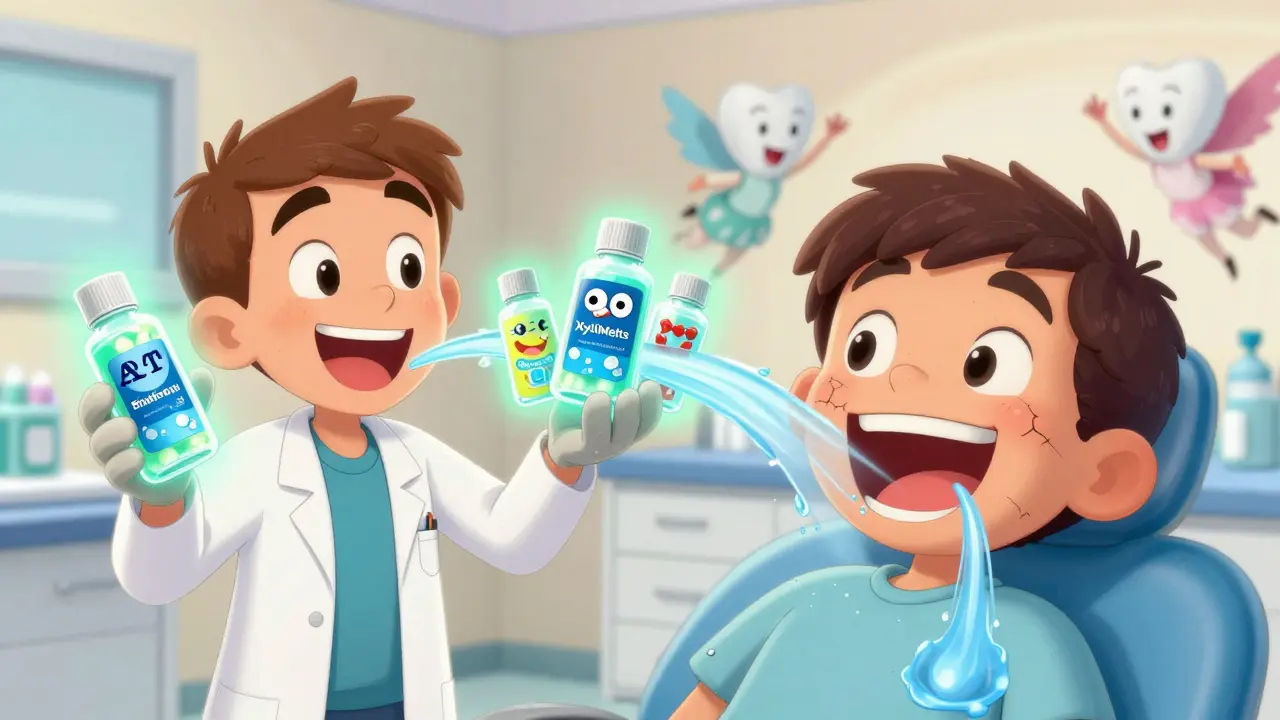
ACT is known for fluoride toothpaste, and their dry mouth line follows the same science. Their lozenges and rinse contain xylitol and are specifically designed to reduce cavity risk. Each lozenge gives you about 2 hours of relief. Price: $6.79 for 36 pieces-about 19 cents each.
XyliMelts
These are adhesive discs you stick to your gums or the roof of your mouth. They slowly dissolve over hours, releasing xylitol and moisture. They’re silent, don’t require chewing, and work while you sleep or sit in meetings. Price: $11.49 for 40 discs.
TheraBreath Dry Mouth Products
If bad breath goes hand-in-hand with dry mouth, TheraBreath is worth trying. Their formulations target odor-causing bacteria while adding moisture. They offer flavors like Mandarin Mint and Tart Berry, which make using them feel less like medicine and more like a treat.
Simple Habits That Make a Big Difference
Products help, but habits change everything. You can’t rely on gels and sprays alone. Here’s what works:
- Sip water all day. Not gulps. Small sips. Keep a bottle at your desk, in the car, by your bed. Sugar-free drinks are fine too.
- Chew sugar-free gum or suck on sugar-free hard candies. Look for xylitol as the first ingredient. This triggers saliva flow naturally. Just don’t overdo it-too much xylitol can cause gas or diarrhea.
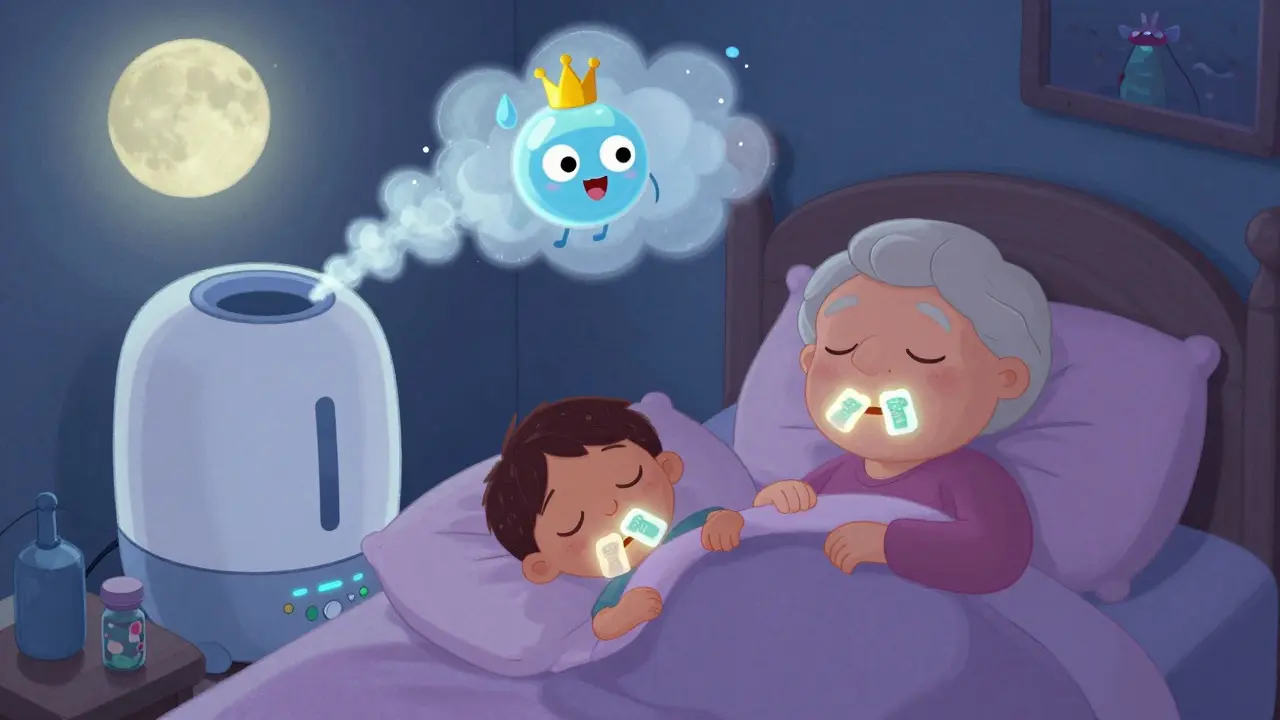
- Use a humidifier at night. Dry air pulls moisture from your mouth. A cool-mist humidifier in your bedroom can cut nighttime dryness by half.
- Breathe through your nose. Mouth breathing dries you out fast. If you snore or have nasal congestion, talk to your doctor. A nasal strip or allergy treatment might help.
- Avoid sugary, acidic, or caffeinated drinks. Soda, juice, and coffee feed bacteria and dry you out. Even diet soda has acid that erodes enamel.
- Brush with fluoride toothpaste. Colgate, Sensodyne, and Crest all make dry mouth-friendly formulas. Use a soft brush and don’t rinse with water after brushing-just spit. That lets the fluoride stay on your teeth longer.
- Use a fluoride rinse or gel before bed. Especially if you’re on meds. Your dentist can give you a custom fluoride tray if your risk is high.
When to See a Dentist (And How Often)
Most people with dry mouth need to see their dentist more often than once a year. If you’re on chronic medication or have persistent dryness, aim for every 3-6 months. Dentists can spot early decay, apply protective sealants, or recommend prescription-strength fluoride treatments.
Also, tell your doctor about your dry mouth. Sometimes switching to a different medication-even just changing the time you take it-can help. Your pharmacist can also check for drug interactions that worsen dryness.
What Doesn’t Work (And Why)
Some common fixes make things worse:
- Drinking alcohol: It dries out your mouth and irritates tissues.
- Using regular mouthwash: Most contain alcohol. Even if it says “freshening,” it’s stripping your mouth.
- Sucking on hard candy with sugar: It feeds bacteria. Sugar + dry mouth = cavities on steroids.
- Waiting until it feels bad: Dry mouth damage builds slowly. By the time you feel pain, you might need fillings or root canals.
There’s no cure for medication-induced dry mouth. But with the right tools and routines, you can live comfortably and protect your teeth for years.
Can dry mouth cause permanent damage?
Yes, if left unmanaged. Without saliva, plaque builds up faster, leading to tooth decay, gum disease, and even tooth loss. The risk is especially high if you’re on medications that reduce saliva and don’t use fluoride products or visit your dentist regularly. Early intervention is key-most damage can be stopped before it becomes serious.
Is Biotène the only good option for dry mouth?
No, but it’s the most recommended by dental professionals. ACT, XyliMelts, and TheraBreath all offer effective alternatives. The best product depends on your needs: gel for overnight use, lozenges for all-day relief, spray for quick fixes. Try one and stick with it for a week. If it helps, keep using it. If not, switch.
Can I use regular toothpaste if I have dry mouth?
You can, but it’s not ideal. Regular toothpaste often lacks enough fluoride and may contain sodium lauryl sulfate, which can irritate dry tissues. Fluoride toothpaste made for dry mouth is better-it’s gentler and gives you stronger cavity protection. Look for ADA approval and fluoride listed as the active ingredient.
How long does dry mouth relief last with these products?
Most products last 2-4 hours. Biotène gel lasts up to 4 hours, which is why it’s ideal for bedtime. Sprays and lozenges usually last 1-2 hours. You’ll need to reapply throughout the day. That’s normal. Think of it like moisturizing your skin-it’s not a one-time fix.
Can children get dry mouth from medications?
Yes, especially kids on ADHD meds, antihistamines, or asthma inhalers. While less common than in adults, dry mouth in children increases cavity risk. Use child-safe xylitol products like ACT lozenges (for kids over 6) or sugar-free gum. Always check with a pediatric dentist before using adult formulas.
Are there natural remedies that work for dry mouth?
Some help, but none replace proven products. Sipping water, chewing sugar-free gum, and using a humidifier are natural and effective. Aloe vera juice or coconut oil swishing may soothe, but they don’t provide fluoride or xylitol protection. Don’t rely on herbal teas or essential oils-they often contain acids or irritants that worsen dryness.
Next Steps: Build Your Dry Mouth Routine
Start simple. Pick one product and one habit to focus on this week.
- Buy Biotène Oral Rinse or ACT Dry Mouth Lozenges.
- Use it twice a day-morning and night.
- Keep a water bottle at your desk and sip every 20 minutes.
- Buy a small humidifier for your bedroom.
- Call your dentist and ask if you need a fluoride treatment.
After two weeks, you’ll notice a difference. Less stickiness. Easier swallowing. Fewer trips to the bathroom for water. And most importantly-you’ll be protecting your teeth for the long haul.




Jarrod Flesch
January 21, 2026 AT 00:16Been dealing with dry mouth since my chemo ended, and XyliMelts saved my life. No more waking up with a mouth like sandpaper. I stick one on before bed and just forget about it. Best $11 I ever spent. 😊
Malvina Tomja
January 21, 2026 AT 15:35Let me be perfectly clear: if you're using anything with xylitol and not brushing with prescription fluoride gel, you're just gambling with your teeth. This isn't 'natural wellness'-it's dental negligence dressed up as a lifestyle hack. The Mayo Clinic doesn't recommend 'products,' they recommend clinical intervention. Stop treating symptoms and start treating cause.
And Biotène? Please. It's the pharmaceutical industry's answer to lazy patients who don't want to switch meds. You're not fixing dry mouth-you're masking it with a $12 bottle of glorified water.
My aunt had Sjögren's. She didn't use sprays. She got a salivary stimulant prescription, adjusted her antidepressant, and saw a periodontist every 90 days. That's what real care looks like. Not gimmicks.
Samuel Mendoza
January 22, 2026 AT 10:25Fluoride toothpaste? You mean the stuff that makes your mouth feel like it's been scrubbed with sandpaper? Nah. I just drink water. Works fine.
Melanie Pearson
January 24, 2026 AT 04:09As a former clinical dental hygienist with 27 years in private practice, I can confirm that the majority of patients with xerostomia are misinformed about product efficacy. The market is saturated with overpriced, underperforming formulations that exploit desperation. Biotène’s gel contains carboxymethylcellulose, yes-but its pH is 6.2, which is suboptimal for remineralization. Fluoride concentration is also below ADA thresholds. You are not protecting enamel-you are creating a false sense of security.
For true management: 1) Prescription-strength fluoride varnish applied quarterly, 2) Pilocarpine or cevimeline if medically appropriate, 3) Nasal breathing retraining, 4) Elimination of all alcohol-based oral products. No exceptions. No shortcuts.
Stephen Rock
January 25, 2026 AT 21:51Why are we even talking about this? Everyone knows the real problem is Big Pharma pushing meds that dry you out and then selling you the ‘solution’ right back. It’s a loop. You’re not sick. You’re being exploited.
Barbara Mahone
January 26, 2026 AT 01:30I’ve used ACT lozenges for three years now. They’re inexpensive, effective, and don’t taste like chemical mint. I keep them in my purse, my car, and my desk drawer. I don’t need fancy gels or sprays. Just consistency. And no alcohol. Ever.
Also, if you’re on antidepressants and have dry mouth, please tell your psychiatrist. There are alternatives with less anticholinergic effect. You don’t have to suffer silently.
Gerard Jordan
January 26, 2026 AT 16:11My grandma’s been on 12 meds for 15 years and still has all her teeth-because she chews sugar-free gum after every meal and sleeps with a humidifier. No magic, just habits. And she swears by TheraBreath’s Mandarin Mint-it actually tastes good. 🤗
michelle Brownsea
January 27, 2026 AT 08:06Let’s not romanticize this: dry mouth isn’t a ‘lifestyle issue’-it’s a systemic failure of modern medicine. We treat symptoms instead of root causes. We sell you gels while your kidneys are failing from diuretics. We normalize dehydration because it’s profitable. And then we pat ourselves on the back for ‘managing’ it with xylitol. This isn’t health care. It’s corporate triage.
And don’t get me started on ‘natural remedies.’ Coconut oil? Please. That’s not science-that’s TikTok witchcraft. If you want to heal, stop consuming pharmaceuticals that destroy your salivary glands. But of course, that’s too inconvenient, isn’t it?
Kelly McRainey Moore
January 28, 2026 AT 02:27I started using the Biotène spray at work and it’s a game-changer. No more awkward sipping during Zoom calls. Also, I swear by the humidifier-my skin’s not dry anymore either. Small changes, big difference. 💕
Roisin Kelly
January 29, 2026 AT 21:40They’re all lying. These products don’t work. They’re just putting fluoride in everything to make you think you’re safe while the real cause-5G, EMF, water fluoridation-is still poisoning your body. You think your dentist cares? They’re paid by Big Dentistry. Wake up.