
Keratosis Pilaris: How to Smooth Rough Bumps with Proven Treatments
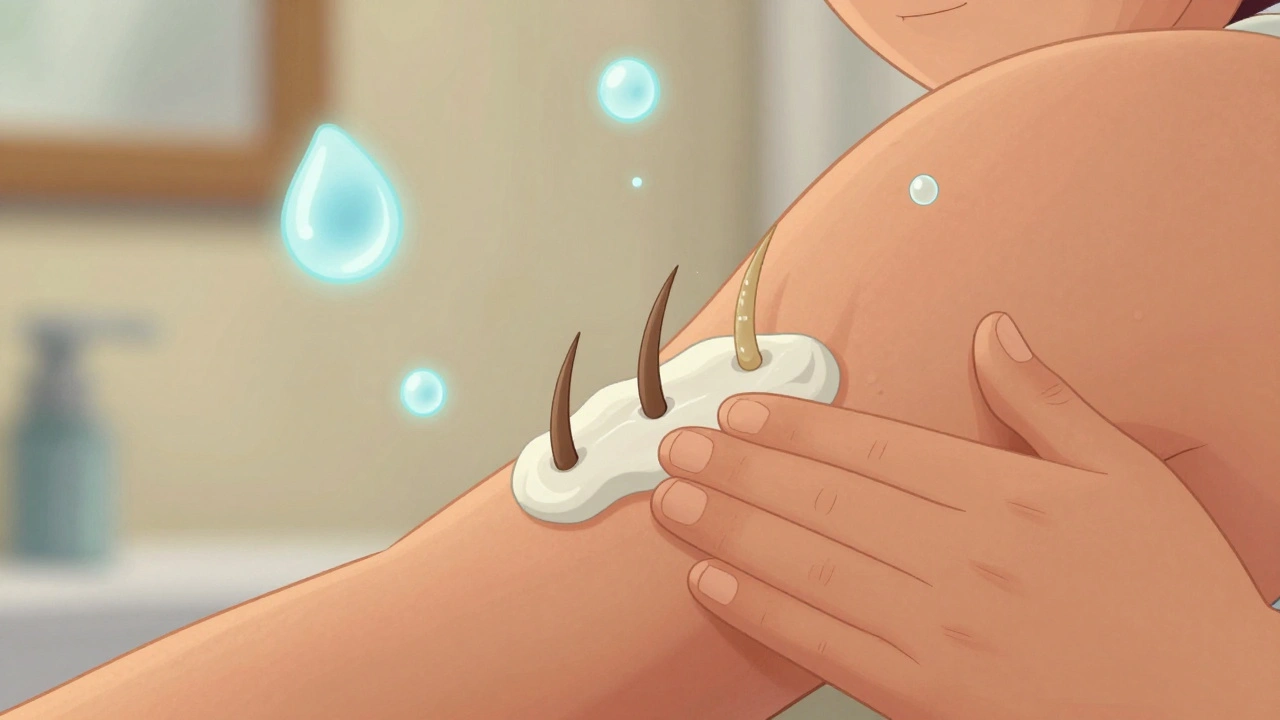
Keratosis pilaris isn’t acne. It’s not eczema. It’s not an allergy or an infection. It’s just your skin doing something weird-building up too much keratin around hair follicles and turning smooth skin into something that feels like sandpaper. You see it on your upper arms, maybe your thighs or buttocks. Tiny bumps. Sometimes red. Sometimes brown. Always dry. It’s called "chicken skin" for a reason. And if you’ve got it, you’re not alone. About 50 to 70% of teens and 40% of adults deal with it. It’s not dangerous. But it’s annoying. And it doesn’t just go away on its own for everyone.
What Causes Those Bumps?
It starts deep in your skin. Hair follicles get blocked by a buildup of keratin-the same protein that makes up your nails and the outer layer of your skin. Instead of shedding normally, the keratin piles up, traps the hair underneath, and forms a hard little bump. Each one is only 1 to 2 millimeters wide, but together, they create that rough texture you can’t ignore. This isn’t caused by dirt, poor hygiene, or diet. It’s genetic. If one of your parents had it, you’ve got a 50 to 70% chance of having it too. Research links it to mutations in the filaggrin gene, which weakens your skin’s natural barrier. That’s why people with keratosis pilaris often also have dry skin, eczema, or ichthyosis. And it gets worse in winter. When the air drops below 40% humidity, your skin dries out faster. That makes the bumps more noticeable and the texture rougher.Why Most Treatments Fail
You’ve probably tried scrubs, loofahs, or harsh soaps hoping to rub the bumps away. That’s the biggest mistake. Aggressive exfoliation doesn’t fix the problem-it makes it worse. Studies show 68% of people who use rough scrubs end up with more redness, irritation, or dark spots from inflammation. Keratosis pilaris isn’t a surface issue. You can’t scrub it off. Then there are the products that promise a "cure." The FDA has issued 17 warning letters to companies selling KP treatments that claim to eliminate the condition. There’s no cure. Not yet. What works is management. You’re not trying to erase it. You’re trying to soften it. To make it less obvious. To feel better in your skin.What Actually Works
The science is clear: two things matter most-exfoliation and hydration. Not in that order. Both, together, every day. Lactic acid is one of the most effective ingredients. Creams and lotions with 10-12% lactic acid, like AmLactin, improve skin texture in 40 to 60% of users within 4 to 6 weeks. On Reddit, 62% of users reported noticeable smoothing after using it twice daily for 8 to 12 weeks. The trick? Apply it right after your shower, while your skin is still damp. That’s when your skin is 50% more absorbent. Urea (10-20%) is another winner. It pulls moisture into the skin and gently breaks down the keratin plugs. A 2023 study found 65% of users saw less scaling after 8 weeks. CeraVe SA Lotion, which contains both urea and salicylic acid, has a 4.5/5 star rating from over 2,100 reviews. People who swear by it say the best results come when they apply it immediately after bathing. Glycolic acid (8-12%) works too, but slower. You’ll need 12 weeks to see 30 to 50% improvement. Paula’s Choice 8% AHA Lotion gets high marks for this, with 68% of reviewers noticing smoother skin after a month. If you’re willing to deal with some initial stinging, retinoids like tretinoin (0.025-0.1%) can be powerful. They speed up skin cell turnover and reduce follicle blockage. Clinical studies show 70% of users improve-but 40% quit within the first few weeks because of dryness and peeling. If you try this, start slow: every other night, and always follow with a thick moisturizer.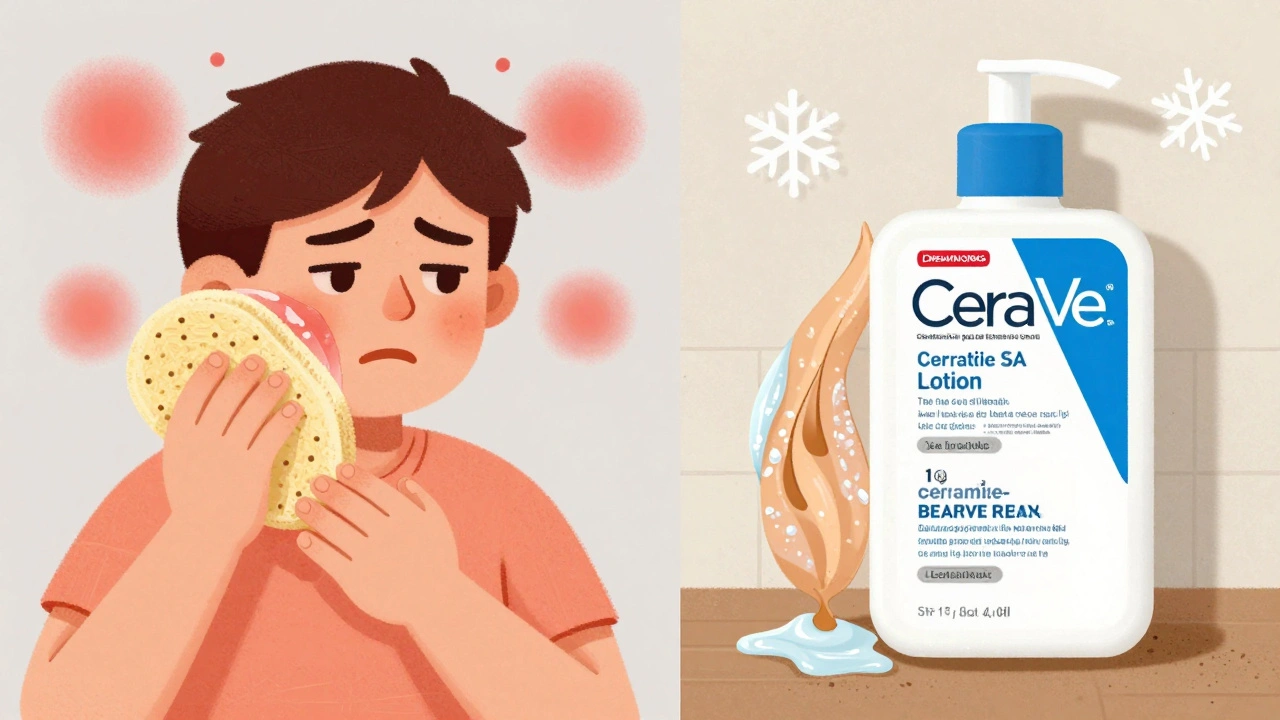
The Secret Weapon: Ceramides
Here’s what most people miss: exfoliants alone won’t keep the bumps away. You need to rebuild your skin’s barrier. That’s where ceramides come in. These are natural lipids your skin makes to hold moisture in. People with keratosis pilaris often don’t make enough. A 2023 study found that using ceramide-rich moisturizers gave 30% better long-term results than exfoliants alone. Look for products that list ceramides, cholesterol, or fatty acids in the first five ingredients. CeraVe Moisturizing Cream, Eucerin Advanced Repair, and Vanicream Moisturizing Cream all fit the bill. Apply them right after your exfoliant. Don’t wait. Do it within three minutes. That’s when your skin is still soaking up moisture.What About Lasers or Light Therapy?
If your bumps are red and inflamed, pulsed-dye laser therapy can reduce redness by 50 to 75% after 3 to 4 sessions. But it’s expensive-$300 to $500 per session-and not covered by public health plans. It’s also not a cure. The redness comes back if you stop treatments. Newer options are emerging. In early 2024, FDA-cleared LED devices showed a 35% reduction in follicle plugging after 8 weeks of home use. Microbiome-balancing treatments are in clinical trials and show promise for calming irritated skin. But these aren’t widely available yet.How to Make It Stick
The hardest part isn’t finding the right product. It’s sticking with it. A 2022 study tracked 150 people with KP. Only 38% used their treatments twice a day after three months. After six months? Just 22% still stuck with it. That’s why so many people think nothing works. They give up before the results kick in. Here’s the routine that works:- Take a lukewarm shower-not hot. Hot water strips your skin and makes KP worse by 45%.
- Pat skin dry, but leave it slightly damp.
- Apply your exfoliant (lactic acid, urea, or glycolic acid) to the affected areas.
- Within 3 minutes, apply a thick ceramide moisturizer.
- Do this every night. Even if your skin looks better.

What to Expect
Don’t expect perfect skin. That’s not realistic. Even with perfect treatment, only 28% of people see complete clearance by age 30. About 41% get significant improvement. And 31% still have symptoms that need ongoing care. But you don’t need perfect. You need smoother. You need less redness. You need to stop feeling self-conscious about your arms in a tank top. That’s doable. Most people see noticeable changes in 4 to 8 weeks. Full results take 12 weeks. And if you stop? The bumps come back in 2 to 4 weeks. This isn’t a quick fix. It’s a long-term habit. Like brushing your teeth. You don’t do it because you want perfect teeth. You do it because you don’t want cavities.What Not to Do
Avoid these common traps:- Don’t pick or scratch the bumps. You’ll cause scarring or dark spots.
- Don’t use alcohol-based toners or astringents. They dry you out further.
- Don’t believe claims of "cures" or "permanent results." If it sounds too good to be true, it is.
- Don’t switch products every week. Give each one at least 8 weeks to work.
When to See a Dermatologist
You don’t need to see a specialist just because you have KP. But if:- Your skin is painful, oozing, or infected
- It’s spreading to your face or other unusual areas
- Over-the-counter products haven’t helped after 3 months
- You’re feeling anxious or depressed because of how your skin looks
Keratosis pilaris doesn’t define you. But how you care for your skin? That does. It’s not about chasing perfection. It’s about consistency. Gentle care. Patience. And knowing that small, daily habits add up to skin that feels softer, looks smoother, and lets you move through the world without hiding your arms.
Is keratosis pilaris contagious?
No, keratosis pilaris is not contagious. You can’t catch it from touching someone else’s skin or sharing towels. It’s a genetic condition caused by how your body produces and sheds keratin. It’s not caused by bacteria, viruses, or fungi.
Can keratosis pilaris go away on its own?
Yes, for many people, it does-especially by age 30. About 28% of people see complete clearance by then. But 31% still have symptoms into adulthood. Even if it fades, it can return during dry seasons or stress. Treatment doesn’t cure it, but it helps manage it while you wait.
What’s the best over-the-counter product for keratosis pilaris?
There’s no single "best" product, but two top choices based on clinical results and user feedback are AmLactin (12% lactic acid) and CeraVe SA Lotion (containing urea and salicylic acid). Both are affordable, widely available, and backed by studies showing improvement in 60% or more of users. Apply them right after bathing for best results.
Do home remedies like coconut oil or apple cider vinegar help?
Coconut oil may temporarily soften skin, but it doesn’t break down keratin plugs and can clog pores in some people. Apple cider vinegar is too acidic and can irritate or dry out skin further. These aren’t proven treatments. Stick to ingredients with clinical backing: lactic acid, urea, glycolic acid, and ceramides.
Why does keratosis pilaris get worse in winter?
Cold, dry air lowers humidity, which dries out your skin. When your skin barrier weakens, keratin builds up faster in hair follicles. Studies show KP symptoms worsen when indoor humidity drops below 40%. Using a humidifier and applying moisturizer right after showering can cut winter flare-ups by up to 60%.




Roger Leiton
December 3, 2025 AT 06:26Just started using AmLactin last week and my arms already feel less like sandpaper 😅 I was skeptical but holy crap, it’s actually working. No more hiding my arms in summer now.
Laura Baur
December 4, 2025 AT 07:04Let’s be honest-this isn’t skincare, it’s a spiritual practice. You’re not treating keratosis pilaris, you’re performing daily rituals of humility before the altar of your own flawed biology. The fact that you must apply lotion within three minutes of stepping out of the shower? That’s not dermatology-that’s mindfulness with a moisturizer. The universe doesn’t reward perfection. It rewards consistency. And if you miss a night? You’re not failing. You’re learning the texture of surrender.
Jack Dao
December 5, 2025 AT 17:43Urea? Lactic acid? Please. Real men use nothing but pure, unfiltered coconut oil and cold showers. If your skin needs chemicals to feel soft, you're weak. Also, why are you all so obsessed with ‘smooth skin’? It’s just bumps. Grow a thicker skin. Literally.
dave nevogt
December 6, 2025 AT 18:55I’ve lived with KP since I was 12. I’m 47 now. It hasn’t disappeared, but it’s quieter. I think the real lesson here isn’t about ingredients-it’s about accepting your body as it is, while still tending to it with care. There’s a quiet dignity in showing up every night, even when you’re tired, even when you don’t see results yet. You’re not fighting your skin. You’re having a conversation with it. And sometimes, the best thing you can do is just listen.
Arun kumar
December 8, 2025 AT 18:32AmLactin work good but cost high in india. I use urea cream from local chemist-50rs only. Same result, less headache. Also humidifier is life saver here in delhi winter. No fancy brands needed.
Zed theMartian
December 9, 2025 AT 02:08Wow. Another ‘science-backed’ article from the skincare cult. Let me guess-next you’ll tell me I need to meditate while applying ceramides to align my chakras with my stratum corneum? This isn’t medicine. It’s marketing dressed in peer-reviewed jargon. The only thing that ‘works’ is time. And patience. And accepting that your skin will never be Instagram-ready. And that’s okay.
Ella van Rij
December 9, 2025 AT 20:37So let me get this straight. I’m supposed to apply acid, then moisturizer, then pray to the humidity gods… all within 3 minutes? And if I miss the window, my skin turns into a desert wasteland? 😭 I can’t even remember to brush my teeth on time. This is less ‘treatment’ and more ‘competitive endurance sport for people with too much free time.’
ATUL BHARDWAJ
December 10, 2025 AT 07:44India summer dry. Winter worse. Urea cream. Humidifier. No drama. Just do it. Skin not perfect. But better. That enough.
Steve World Shopping
December 10, 2025 AT 18:10From a clinical dermatology standpoint, the efficacy of topical keratolytics is mediated by their ability to modulate corneocyte cohesion via proteolytic disruption of desmosomal structures. The ceramide restoration paradigm, however, remains underpowered in longitudinal studies with sample sizes under 500. Recommend stratified intervention protocols with biomarker tracking.
Rebecca M.
December 12, 2025 AT 04:34I spent $200 on ‘the perfect KP routine’ and now I have a 12-step skincare altar in my bathroom. I cry every night when I forget to apply the lactic acid. My boyfriend says I’m ‘too intense.’ I say… I’m just finally taking care of myself. 💔
Lynn Steiner
December 12, 2025 AT 05:54My mom had this. So did her mom. So did I. And now my daughter has it too. It’s not a skin condition. It’s a family curse. I don’t fight it anymore. I just wear long sleeves and pretend I’m a vampire. 🧛♀️