
Doctor Attitudes Toward Generic Drugs: What Providers Really Think
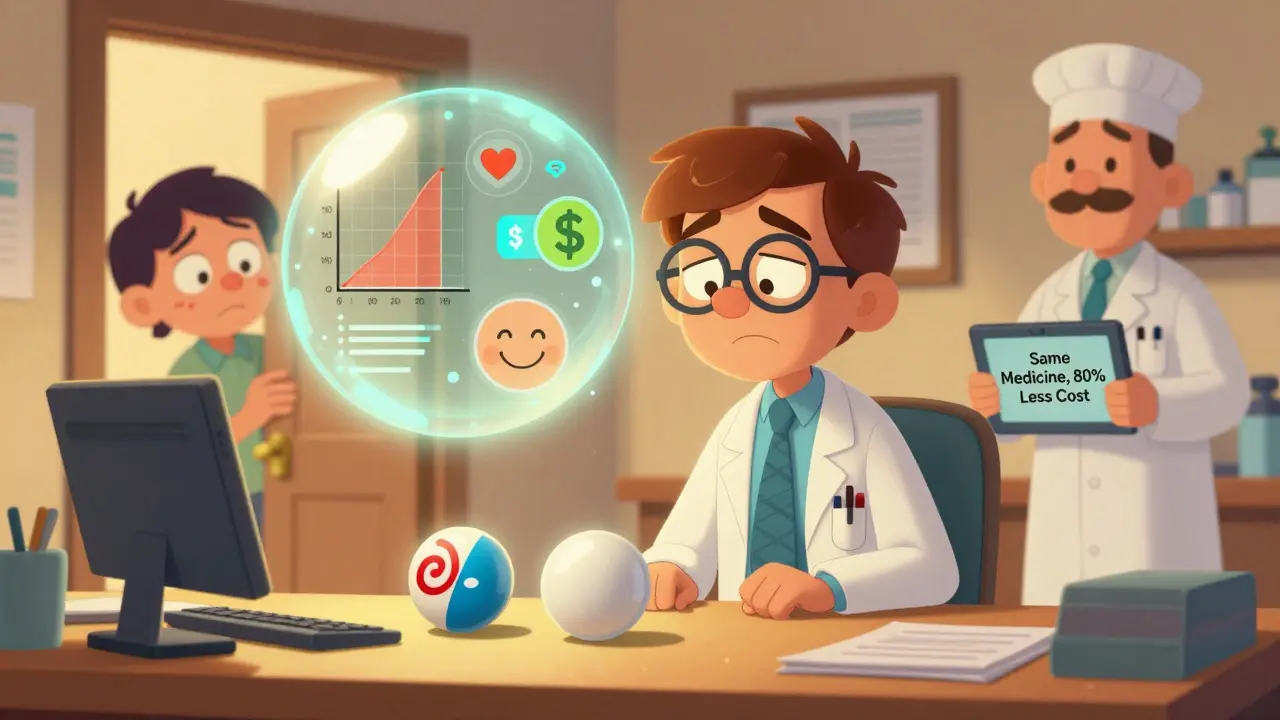
When a doctor writes a prescription, they’re not just choosing a drug-they’re making a decision that affects trust, cost, and outcomes for thousands of patients every year. And yet, many physicians still hesitate to prescribe generic medications, even when they’re just as effective as brand-name drugs. Why? It’s not about money. It’s not about laziness. It’s about perception.
What Doctors Believe About Generic Drugs
A 2017 study of 134 physicians in Greece found that more than 25% of them believed generic drugs were less effective or lower in quality than their brand-name counterparts. That’s not a small number. That’s one in four doctors who, despite all the science, still doubt whether a generic pill will do the same job as the branded version. And it’s not just Greece. Similar findings show up in the U.S., Canada, Australia, and Portugal.
Some doctors worry about side effects. One rural physician in the CDC’s 2012 study said patients kept coming back with complaints of nausea or dizziness after switching to a generic-so they went back to the brand. But here’s the catch: those side effects weren’t caused by the drug. They were caused by expectation. When patients are told, "This is a cheaper version," they start looking for problems. And when doctors don’t explain that clearly, the cycle continues.
Even more troubling? Many doctors don’t fully understand how generics are approved. A 2019 Oxford study found that only 43.7% of primary care physicians could correctly explain the FDA’s bioequivalence standards-which require generics to deliver 80% to 125% of the active ingredient compared to the brand. That’s not a narrow range. It’s a wide one. And yet, 78.4% of those same doctors claimed they were "familiar" with the rules.
Who Thinks Differently? Age, Gender, and Experience Matter
Not all doctors feel the same way. The data shows clear patterns. Male physicians, specialists, and those with over 10 years of experience are more likely to distrust generics. Female doctors, especially those earlier in their careers, tend to be more open. Why? It’s not about gender. It’s about exposure.
Doctors who trained in the 1990s or early 2000s learned about drugs mostly through pharmaceutical reps. Brand-name companies spent millions on lunches, free samples, and slick presentations. Generics? They didn’t show up. So for many older physicians, the brand name became the default. The generic? An afterthought.
Age also plays a role. A 2018 PLOS ONE study found strong correlations between a doctor’s age and their belief in generic effectiveness. Older doctors were more likely to say generics caused more side effects or weren’t as reliable. Younger doctors? They grew up with electronic prescribing systems that auto-substitute generics. They’ve seen the data. They’ve watched patients save hundreds of dollars without a single problem.
Why Don’t More Doctors Prescribe Generics?
It’s not just about belief. It’s about time, training, and trust.
Most primary care doctors say they don’t have time during a 15-minute visit to explain why a generic is safe. They’re rushing. They’re tired. And when a patient asks, "Is this the same?" the easy answer is, "Yes," even if they’re not sure themselves. That’s not confidence-that’s avoidance.
And then there’s the education gap. A 2023 study in the Journal of Young Pharmacists found that 83.4% of practicing physicians believe medical schools should require mandatory training on generics. Right now, only 38.7% of U.S. medical schools include it in their curriculum. That means doctors graduate knowing how to prescribe Lipitor-but not how to explain why atorvastatin works just as well.
Even worse? Many doctors are confused by the sheer number of generic manufacturers. One physician in the Greek study said, "I don’t know which company makes the best version." That’s not paranoia. It’s real. Different manufacturers use different fillers, coatings, and manufacturing processes. While all are FDA-approved, some batches do behave differently in rare cases-especially with drugs like warfarin or levothyroxine, where tiny changes matter.
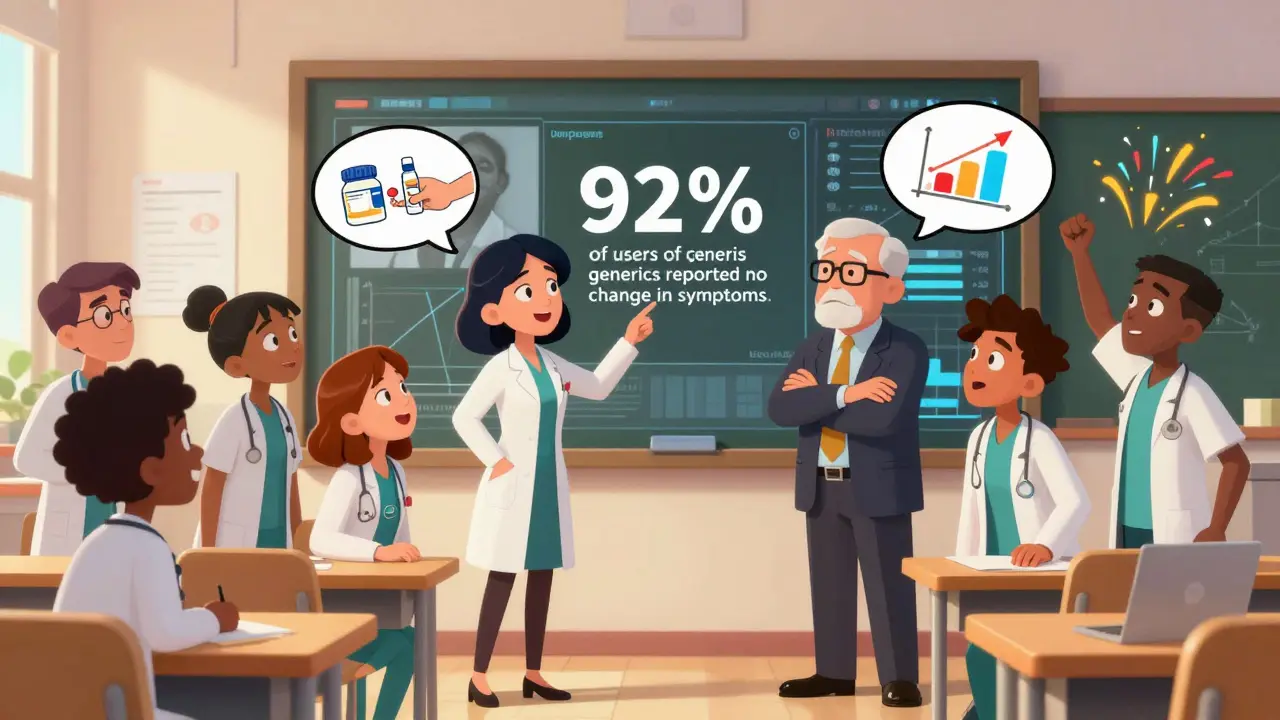
The Real Problem: The Mistrust Cascade
Here’s the quiet crisis no one talks about: when a doctor hesitates to prescribe a generic, patients notice. They hear the hesitation in the tone. They see the pause before signing the script. And then they Google it.
That’s how the mistrust cascade starts. A patient switches to a generic, feels a little off, and reads online that "generics aren’t as good." They stop taking it. They tell their neighbor. Their neighbor tells their sister. And soon, an entire community believes generics are dangerous.
The CDC found that 41.7% of rural patients stopped taking their medication after being switched to a generic-because their doctor didn’t explain why it was safe. That’s not just a prescription failure. That’s a public health failure.
What’s Working? Real Solutions From the Field
The good news? Change is possible. And it’s not about forcing doctors. It’s about equipping them.
In Greece, a simple 90-minute workshop-where doctors reviewed real-world data on generic outcomes-increased prescribing rates by 22.5% over six months. The biggest jump? Among doctors with 5-10 years of experience. Not the new grads. Not the old-timers. The ones in the middle, who still had room to learn.
At Johns Hopkins, when doctors got access to real-time data on how generics performed in actual patients-not just lab studies-their prescribing rates for new generics jumped 28.6%. Why? Because they saw it. They didn’t just read about it. They watched patients thrive on cheaper drugs.
One clinic in Alberta started having pharmacists sit in on morning rounds. Pharmacists explained the differences between generic manufacturers, showed side-by-side cost data, and even brought in patient testimonials. Within a year, generic prescribing rose by 35%. The doctors didn’t feel lectured. They felt supported.
The Future: Better Data, Better Names
The FDA’s 2023 GDUFA III rules now require better post-market tracking of generics. That means more real-world data will be available-data that shows how a generic performs in 10,000 real patients, not just 50 in a lab.
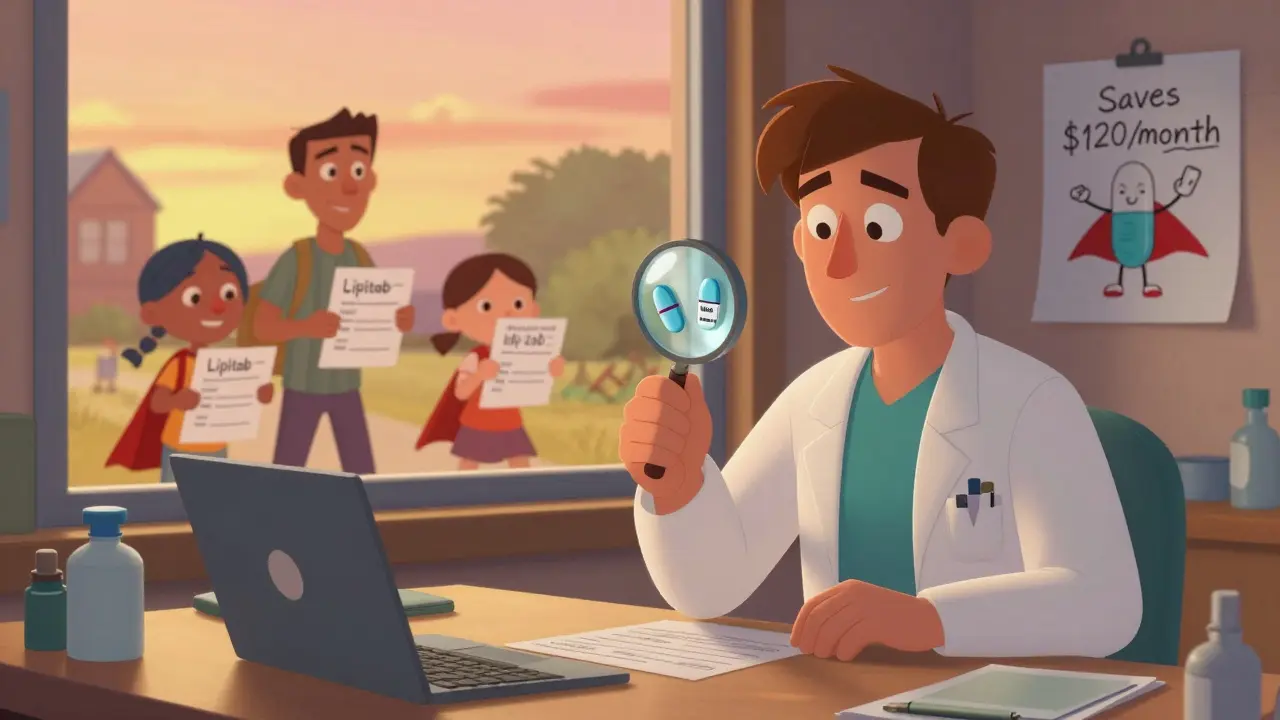
And the American Medical Association’s 2024 push to rename generics with pronounceable names-like "Lipitab" instead of "atorvastatin calcium"-is a game-changer. Why? Because doctors hate saying chemical names. Patients hate hearing them. A simple, clear name reduces confusion. Reduces hesitation. Reduces fear.
By 2030, modeling predicts that 78.4% of doctors will view generics as therapeutically equivalent-up from 64.7% today. That’s progress. But it’s slow. And it doesn’t help the patients who are still skipping doses because their doctor didn’t explain the truth.
What Needs to Change
It’s not about convincing doctors. It’s about giving them tools.
- Medical schools need to teach bioequivalence like they teach antibiotics-early, often, and with real data.
- Hospitals need pharmacists embedded in teams-not just behind the counter.
- Electronic health records should auto-populate generic alternatives with a one-click explanation: "This generic saved the patient $120 last month. 92% of patients had no change in symptoms."
- Drug companies need to stop spending millions on brand marketing and start funding honest education.
The math is simple: generics make up 90% of prescriptions in the U.S. but only 23% of drug spending. That’s $528 billion in global savings waiting to be unlocked. But none of that matters if doctors still whisper, "I’m not sure if this will work."
Doctors aren’t against generics. They’re against being left in the dark. Give them the facts. Give them the time. Give them the tools. And they’ll prescribe with confidence.
Why do some doctors still distrust generic drugs?
Many doctors distrust generics because of outdated beliefs, lack of training, or personal experience with rare cases where patients reported side effects after switching. Some believe generics are made with lower-quality ingredients or that different manufacturers produce inconsistent results. Research shows that 25-28% of physicians still question therapeutic equivalence, even though FDA standards require generics to deliver the same active ingredient within an 80-125% range of the brand-name drug.
Are generic drugs really as effective as brand-name drugs?
Yes. The FDA requires generic drugs to have the same active ingredient, strength, dosage form, and route of administration as the brand-name version. They must also meet strict bioequivalence standards, meaning they deliver the same amount of active ingredient into the bloodstream at the same rate. Over 90% of prescriptions in the U.S. are for generics, and studies show they work just as well for most conditions-including high blood pressure, diabetes, and depression.
Do doctors get paid to prescribe brand-name drugs?
No, doctors don’t get paid directly to prescribe brand-name drugs. But pharmaceutical companies spend billions on marketing-free samples, meals, educational events, and rep visits-that can influence prescribing habits. These relationships often create unconscious bias, making brand-name drugs seem more trusted or reliable, even when a generic is just as effective.
Can switching to a generic drug cause side effects?
In most cases, no. But for drugs with a narrow therapeutic index-like warfarin, levothyroxine, or epilepsy medications-tiny differences in absorption can matter. Some patients report feeling different after switching, even if lab tests show no change. This is often due to psychological factors or differences in inactive ingredients (like fillers or coatings), not the active drug. Doctors should monitor patients closely after switching and communicate clearly to reduce anxiety.
What can patients do if their doctor won’t prescribe a generic?
Ask. Say, "Is there a generic version available?" or "Can we talk about the cost difference?" Many doctors don’t realize how much patients care about price. Bring up studies showing generics are equally effective. If your doctor is unsure, ask if they’d be open to reviewing data from the FDA or your pharmacy. Most will reconsider once they see the evidence-and your willingness to understand the options.



Stephen Archbold
February 26, 2026 AT 06:18Man, I’ve seen this first-hand in Ireland. My uncle’s a GP, and he used to swear by the brand-name statins-until his pharmacy started sending him data on patient outcomes. Now? He prescribes generics like it’s no big deal. The real shift wasn’t in the science-it was in the *seeing*. When you watch someone save €80 a month and still keep their BP under control, you stop doubting.
It’s funny how we trust a pill more when it costs more. Like price = purity. We’re not rational creatures. We’re storytelling animals.
Nerina Devi
February 28, 2026 AT 01:41As someone from India where generics are the norm, I find this whole debate so surreal. Here, brand-name drugs are the luxury item. We don’t have the luxury of choice. But even then, the quality? Solid. My mom’s been on generic levothyroxine for 12 years. No issues. No hospital visits. Just steady numbers.
Doctors here don’t have time for the hesitation you describe. They prescribe what works, what’s available, and what won’t bankrupt their patients. Maybe the West needs to learn from the Global South instead of overthinking it.
Dinesh Dawn
March 1, 2026 AT 22:48Been a pharmacist for 18 years. I’ve seen the panic when a patient gets switched. One guy cried because his 'Lipitor' was now 'atorvastatin'. Said it felt like his heart didn’t recognize the pill.
Turns out, the new generic had a different dye. Made his stool look weird. He thought he was dying. We just explained it. He’s been on it for 5 years now. No complaints.
It’s not the drug. It’s the story we tell ourselves about it.
Vanessa Drummond
March 3, 2026 AT 04:11Let’s be real-this whole thing is a corporate scam dressed up as a medical debate. Big Pharma spent decades brainwashing doctors with free dinners and ‘educational grants’. Now they’re pretending the problem is ‘lack of training’? Please. The system is rigged. The real solution? Ban pharmaceutical marketing entirely. No more free lunches. No more reps in the halls. Let doctors make decisions without being marketed to like they’re teenagers at a vape shop.
Nick Hamby
March 5, 2026 AT 01:33There’s a deeper philosophical layer here that’s rarely addressed: the human need for certainty in medicine. We don’t just want effective treatment-we want *guaranteed* treatment. The brand-name drug becomes a psychological anchor. It’s not about efficacy. It’s about identity. We associate the familiar name with safety, even when the science says otherwise.
And this isn’t unique to generics. Think about how people cling to ‘natural’ remedies or expensive supplements because they feel more ‘authentic’. The mind seeks narrative, not data. Until medicine embraces that, we’ll keep fighting the same battle.
kirti juneja
March 6, 2026 AT 15:28Y’all are overcomplicating this. It’s not about trust. It’s about *language*. Doctors don’t say ‘atorvastatin’-they say ‘Lipitor’. Patients don’t hear ‘bioequivalent’-they hear ‘cheap knockoff’. The solution isn’t more training. It’s renaming. Give generics cool, simple names like ‘CardiCare’ or ‘LungEase’. Make them sound like they belong in the same universe as the brand. Stop treating them like second-class citizens with boring chemical names.
And yes-I’m serious. A name change could do more than a hundred studies.
Haley Gumm
March 6, 2026 AT 20:48Let’s not pretend this is just about perception. I’ve seen generic metformin batches that caused GI distress in 30% of patients. The brand? Zero issues. And no, it wasn’t placebo. The fillers were different. Bad ones. Cheap ones. And yeah, the FDA approves them. But ‘approved’ doesn’t mean ‘safe for everyone’. Some patients are sensitive. Some conditions are finicky. Not every generic is equal. And pretending otherwise is dangerous.
Steven Pam
March 8, 2026 AT 13:56I work in a rural clinic. We had a patient who stopped her generic blood pressure med because her cousin said it made her dizzy. We switched her back. She felt better. We didn’t push. We listened.
But here’s the thing-we didn’t just say ‘it’s the same’. We showed her the FDA data. We pulled up the pharmacy’s own tracking system that showed 97% of our patients had zero issues. We even had her talk to another patient who’d made the switch.
It wasn’t about convincing. It was about *connecting*. People don’t need facts. They need stories that mirror their own. And sometimes, that’s the only way in.
Erin Pinheiro
March 9, 2026 AT 16:42OMG this is so true I CRIED. Like, I’m a nurse and I’ve seen so many patients panic because their generic looked different. One guy thought he was being poisoned because the pill was yellow instead of blue. Like… it’s just dye. But nooo, now he’s convinced the government is swapping his meds. And his doctor just shrugged and said ‘it’s fine’. That’s not care. That’s negligence.
Doctors need to stop being lazy. Talk to your patients. Actually. Explain. Don’t just sign the script and run. We’re not robots. We’re scared humans with bills to pay. And if you don’t help us, who will?
William James
March 11, 2026 AT 09:49Reading this made me think about my dad. He’s 72, retired, on 7 meds. Half are generics. He never questioned them. Why? Because his doctor, a woman in her 40s, sat down with him, showed him the FDA charts, and said, ‘This one’s cheaper. Same exact molecule. I use it on myself.’
That’s the magic formula: transparency + personal connection. Not data dumps. Not lectures. Just one human saying, ‘I trust this. So should you.’
That’s all it takes. Not new laws. Not new apps. Just honesty.