
How to Talk to Patients About Generic Medications Without Losing Their Trust
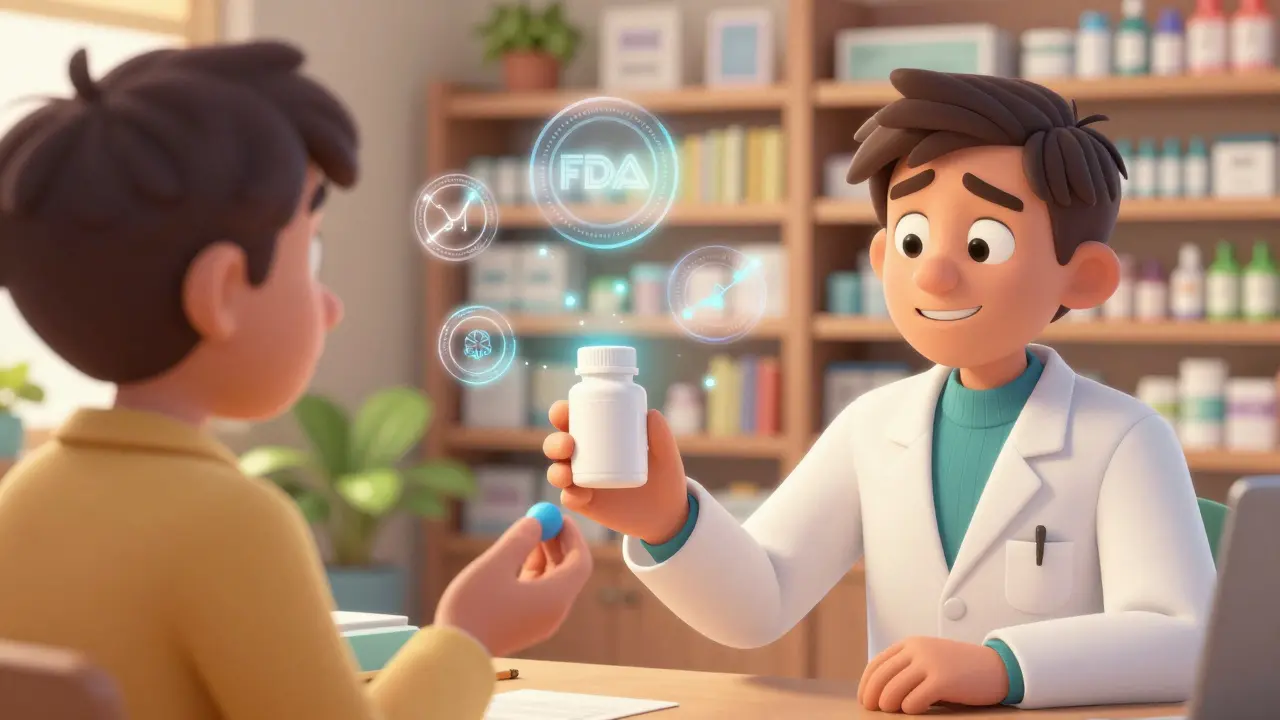
When a patient picks up a prescription and sees a pill that looks nothing like the one they’ve been taking for years, confusion sets in. Generic medications are just as effective as their brand-name cousins-but many patients don’t believe it. They worry the blue pill is weaker than the pink one. They think the change means something went wrong. And if you don’t address those fears right away, they might stop taking the medicine altogether.
Why Patients Doubt Generics (Even When They Shouldn’t)
The FDA requires generic drugs to have the same active ingredient, strength, dosage form, and route of administration as the brand-name version. That’s not a suggestion-it’s the law. And to get approved, generics must prove they deliver the same amount of medicine into the bloodstream at the same rate. The acceptable range? 80% to 125% of the brand’s performance. That’s tight. It’s not guesswork. It’s science.
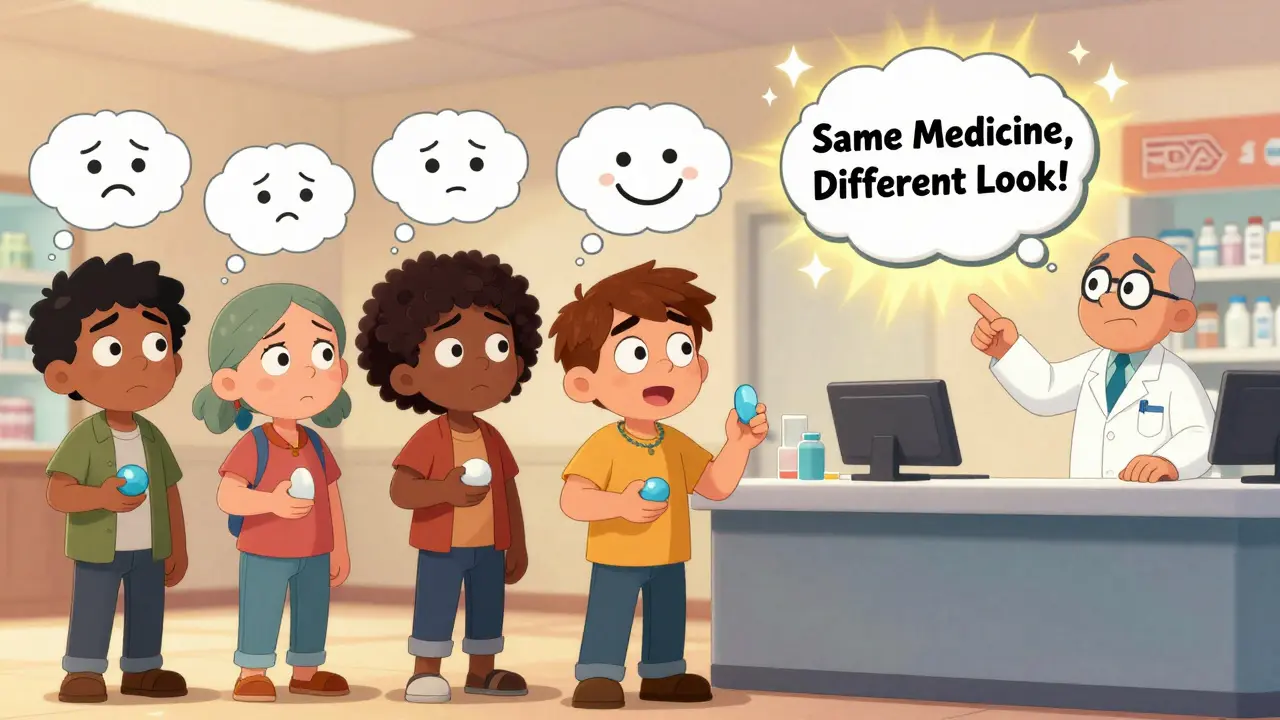
So why do 28% of patients still worry about switching? The answer isn’t in the pill-it’s in the packaging. Generics can’t look like the brand. Trademark laws force them to be different colors, shapes, or sizes. A patient who’s been taking a round, blue Crestor tablet for years might panic when they get a white, oval rosuvastatin pill. They don’t know it’s the same drug. They think it’s a downgrade.
And then there’s the cost. Patients see a $300 brand-name prescription drop to $15-and assume something’s missing. They think, ‘If it’s so cheap, why didn’t my doctor prescribe this before?’
What Really Happens When You Switch to a Generic
A 2008 review of 47 studies involving over 9,000 patients found no meaningful difference in effectiveness between generic and brand-name cardiovascular drugs. That’s not a small sample. That’s real-world evidence across heart attacks, high blood pressure, and cholesterol management. Another study showed patients who received clear counseling about generics had 22% higher adherence after six months.
Even for drugs with narrow therapeutic windows-like warfarin or levothyroxine-the FDA requires extra scrutiny. Generics for these drugs go through additional testing. The agency doesn’t cut corners. And yet, some clinicians still hesitate. Why? Because one patient once said, ‘The white pill gave me headaches.’ That anecdote sticks. But data shows those headaches aren’t caused by the active ingredient. They’re likely from inactive ingredients-fillers, dyes, coatings-that vary between manufacturers. These don’t affect how the medicine works, but they can cause minor side effects in sensitive people.
That’s why switching between different generic brands can sometimes trigger complaints. Not because the drug is weaker-but because the formulation changed. That’s not a failure of generics. It’s a quirk of manufacturing. And it’s fixable with communication.
The TELL Framework That Actually Works
Pharmacists are the ones who spend the most time with patients at the counter. And research shows 67% of patients get their first info about generics from their pharmacist-not their doctor. That means you’re the most important person in this conversation.
Use the TELL method:
- Tell them the generic has the same active ingredient. Say it clearly: ‘This is the exact same medicine your doctor prescribed.’
- Explain why it looks different. ‘Trademark rules mean we can’t make it look like the brand. The color and shape don’t change how it works.’
- Listen without interrupting. Don’t assume they’re just being difficult. Ask: ‘What are you worried about?’ They might say, ‘I had a bad reaction last time.’ Or, ‘My mom took this and it didn’t help.’ Listen first. Then respond.
- Link it to their goals. ‘This saves you $250 a month. That’s enough for groceries, gas, or your copay next time. And you’ll still get the same results.’
Don’t just hand them the bottle and say, ‘It’s cheaper.’ That’s not counseling. That’s transaction.
What to Say When They Say, ‘Is This Really the Same?’
Patients ask the same questions over and over. Be ready with clear, simple answers:
- ‘Is this really the same medicine?’ ‘Yes. The FDA requires the same active ingredient, strength, and how fast it enters your body. It’s the same drug, just made by a different company.’
- ‘Why does it look different?’ ‘Brand-name companies own the look of their pills. Generic makers have to make them different to avoid trademark issues. But the medicine inside is identical.’
- ‘Is it as strong?’ ‘Yes. The FDA tests this. The generic must deliver the same amount of medicine into your bloodstream as the brand. No more, no less.’
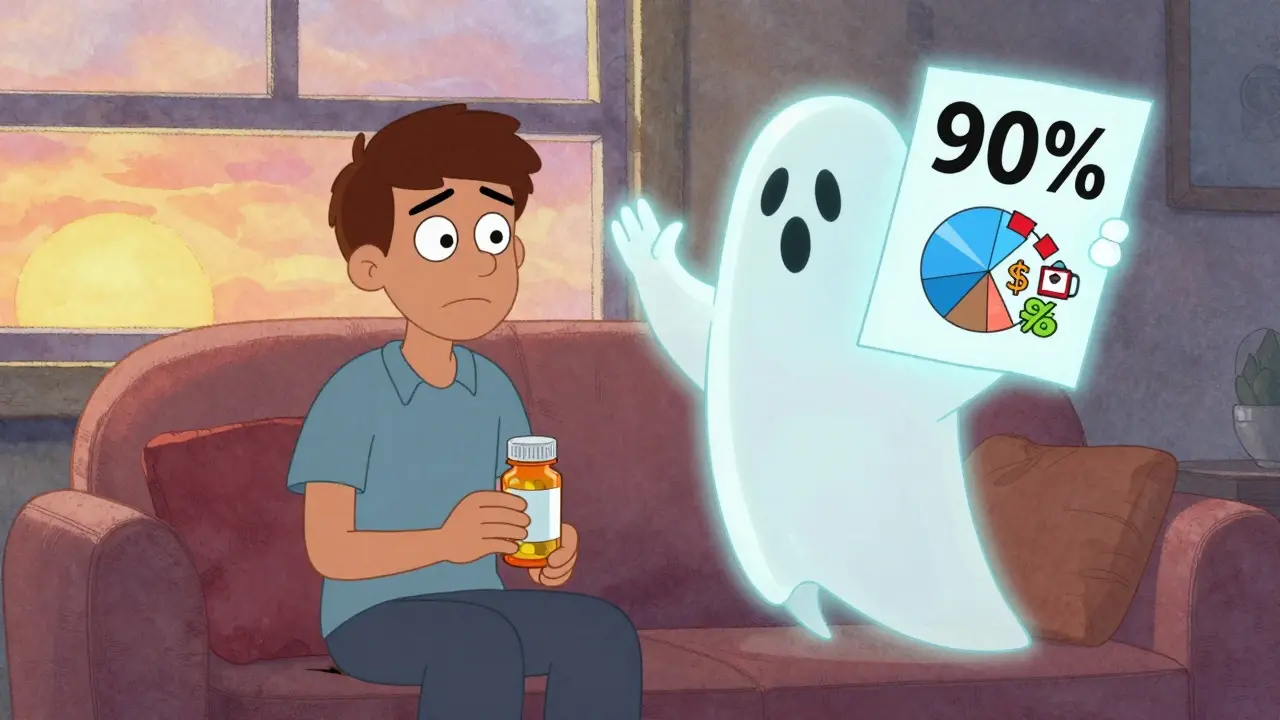
- ‘I heard generics aren’t as good.’ ‘That’s a myth. Generics make up 90% of prescriptions in the U.S. and save the system $373 billion a year. They’re not second-rate-they’re smart choices.’
Use the teach-back method. After you explain, ask: ‘Can you tell me in your own words why this pill is safe to take?’ If they can repeat it back correctly, they’re more likely to stick with it. Studies show this increases retention by 40%.
When Generics Don’t Work-And What to Do
There are rare cases where patients report feeling worse after switching. Sometimes it’s coincidence. Sometimes it’s a reaction to a new filler. Sometimes they switched between two different generic manufacturers, and the change in coating caused stomach upset.
Don’t dismiss it. Instead, say: ‘Let’s try going back to the original brand for a few weeks, then switch again to the same generic. If you feel better the second time, it might’ve been the change in inactive ingredients-not the medicine itself.’
Or offer an authorized generic. That’s when the brand-name company makes its own generic version-same pill, same look, same packaging, just cheaper. Thirty-seven percent of top-selling brand drugs now have authorized generics. If a patient is resistant, this can be a bridge.
Why This Matters Beyond the Prescription
When patients skip meds because they think generics don’t work, it leads to hospital visits, worsening conditions, and higher costs for everyone. One Medicare patient saved $300 a month switching from brand-name Crestor to generic rosuvastatin. That’s not just money. That’s stability. That’s peace of mind.
And it’s not just about savings. It’s about trust. When you take the time to explain, patients feel respected. They don’t feel like they’re being sold a bargain. They feel like they’re being cared for.
Insurance plans are pushing generics hard. Eighty-four percent put them in the lowest cost tier. That’s good for the system-but if patients don’t understand why, they’ll resist. Your job isn’t to sell generics. It’s to help patients understand why they’re safe, effective, and smart.
What You Can Do Today
- Keep a one-page handout ready explaining generics in plain language.
- Practice the TELL method until it feels natural-not rehearsed.
- Document every conversation in the patient’s file: ‘Explained generic substitution. Patient expressed concern about appearance. Reassured with FDA equivalence data. Will monitor for side effects.’
- Ask patients: ‘Have you ever switched to a generic before? What happened?’ That opens the door to real talk.
- Don’t wait for them to ask. If you’re filling a generic, say something before they leave the counter.
The FDA is now funding video tools to help with this. But you don’t need a video. You need to talk. One conversation, done right, can change a patient’s health trajectory.
Are generic medications really as effective as brand-name drugs?
Yes. The FDA requires generics to have the same active ingredient, strength, dosage form, and route of administration as the brand-name drug. They must also prove bioequivalence-delivering the same amount of medicine into the bloodstream at the same rate. Studies of over 9,000 patients show no clinically significant difference in effectiveness for most drugs, including heart medications, diabetes treatments, and blood pressure drugs.
Why do generic pills look different from brand-name ones?
Trademark laws prevent generic manufacturers from making pills that look exactly like brand-name versions. That means different colors, shapes, or markings-but the medicine inside is identical. These visual differences don’t affect how the drug works. They’re just legal requirements.
Can switching to a generic cause side effects?
The active ingredient doesn’t cause side effects when switched-but sometimes the inactive ingredients (like dyes or fillers) can. These don’t affect how the drug works, but a small number of people may be sensitive to them. If a patient reports new side effects after switching, try switching back to the brand or to a different generic manufacturer. Sometimes the issue is just the coating or filler, not the medicine itself.
Are generics safe for chronic conditions like high blood pressure or diabetes?
Yes. Generics are widely used and proven effective for chronic conditions. In fact, they’re often preferred because cost is a major barrier to adherence. Patients who can’t afford brand-name drugs often stop taking them. Generics remove that barrier. Studies show patients on generics for hypertension or diabetes have better long-term outcomes because they’re more likely to take their medicine consistently.
What should I do if a patient refuses a generic?
Don’t force it. First, listen. Ask why they’re resistant. Is it cost? Past experience? Fear? Then explain using the TELL method: Tell them it’s the same medicine, Explain the appearance difference, Listen to their concern, and Link it to their health goals. Offer an authorized generic if available. If they still refuse, document the conversation and work with the prescriber. Sometimes a small change in communication can turn resistance into acceptance.
Do generics have the same quality standards as brand-name drugs?
Yes. The FDA inspects generic manufacturing facilities with the same standards as brand-name ones. Generics must meet the same strict quality, purity, and potency requirements. They’re not made in lower-grade labs. In fact, many brand-name companies make their own generics under different labels. The difference isn’t quality-it’s cost and branding.
How can I improve patient acceptance of generics?
Start early. Don’t wait until the patient picks up the prescription. Mention generics during the prescribing visit if possible. Use clear, simple language. Avoid jargon. Use the teach-back method to confirm understanding. Offer a printed one-pager. Track outcomes-if a patient switches and stays on the medication, note it. Over time, positive experiences build trust. And remember: 78% of patients who get a full explanation report high satisfaction.
What’s Next for Generic Medications?
The future of generics isn’t just about pills. Biosimilars-complex, biologic drugs that mimic expensive treatments like cancer therapies-are starting to enter the market. The FDA has approved 43 biosimilars as of late 2023. These are harder to copy. They require even more careful explanation. Patients need to understand that a biosimilar isn’t a ‘copy’-it’s a highly similar version of a complex biological product.
But the core message stays the same: effectiveness isn’t tied to price. Safety isn’t tied to branding. And trust isn’t built by pushing savings-it’s built by listening, explaining, and showing up for patients when they’re unsure.
Generics save billions. But they only work if patients take them. And that starts with one conversation.

Sahil jassy
December 19, 2025 AT 11:34Just wanted to say this is gold 🙌 I’ve seen patients panic over pill color too-once someone thought switching to generic metformin meant they had diabetes now. We laugh about it later, but man, it’s real stress. TELL works. Every time.
Kathryn Featherstone
December 19, 2025 AT 13:38I’ve been using the TELL framework for six months now. My patients actually ask for generics before I even mention it. That’s huge. It’s not about the pill-it’s about the trust you build before they even get to the counter.
Alisa Silvia Bila
December 19, 2025 AT 16:52My grandma took a generic blood pressure med and said it made her dizzy. We switched back, then switched again to a different generic-same result. Turned out it was the dye. Not the drug. So we found one without red #40. Problem solved. It’s details like this that matter.
Kevin Motta Top
December 20, 2025 AT 04:45Generics are the unsung heroes of public health. No hype. No ads. Just science. And yet, people treat them like discount electronics. We need more of this kind of clear, calm messaging.
anthony funes gomez
December 20, 2025 AT 06:57The FDA’s bioequivalence parameters-80–125% AUC and Cmax-are statistically robust, yet culturally unintuitive. Patients conflate visual homogeneity with pharmacological equivalence, a cognitive bias rooted in perceptual constancy heuristics. The TELL framework operationalizes epistemic trust by decoupling aesthetic identity from therapeutic function-a necessary semiotic intervention in consumerized healthcare.
Nina Stacey
December 21, 2025 AT 14:23OMG I love this so much I cried a little reading it like seriously I’ve been a nurse for 18 years and I’ve seen so many people stop their meds because they thought the generic was fake or weak or made in a basement somewhere and I always tell them its the same exact stuff just cheaper and sometimes I forget to explain why it looks different and I’m gonna start using TELL right now because this is the first time someone actually gave me a script for how to talk about it without sounding like a robot and thank you thank you thank you
Marsha Jentzsch
December 22, 2025 AT 06:39Wait-so you’re telling me the government lets drug companies make pills that look different on purpose? That’s not science-that’s corporate manipulation. I’ve read about this. The real active ingredient is diluted. They put filler in there to make you dependent on the brand. And don’t get me started on the dyes-they’re linked to ADHD and autism. You think your doctor knows? They’re paid by Big Pharma. The pills are fine. The system isn’t.
Henry Marcus
December 22, 2025 AT 06:39Generics? HA. You know who makes most of them? China. And do you know what’s in those pills? Talc. Arsenic. Rat poison. The FDA doesn’t inspect those labs. They just rubber-stamp it because they’re paid off. I switched to a brand-name statin after my uncle had a stroke-turned out his generic was laced with industrial lubricant. He died. Don’t be fooled.
Carolyn Benson
December 23, 2025 AT 17:10You people are naive. The FDA is a regulatory capture fantasy. Generics aren’t ‘equivalent’-they’re legally permitted to be subpar. The 80–125% window is a joke. That’s a 45% variance. If your insulin swings that much, you’re dead. And you call that science? No. It’s capitalism masquerading as medicine. And you? You’re complicit. You’re selling poison with a smile and a handout. Shame.