
Dechallenge and Rechallenge in Drug Side Effects: What These Tests Mean
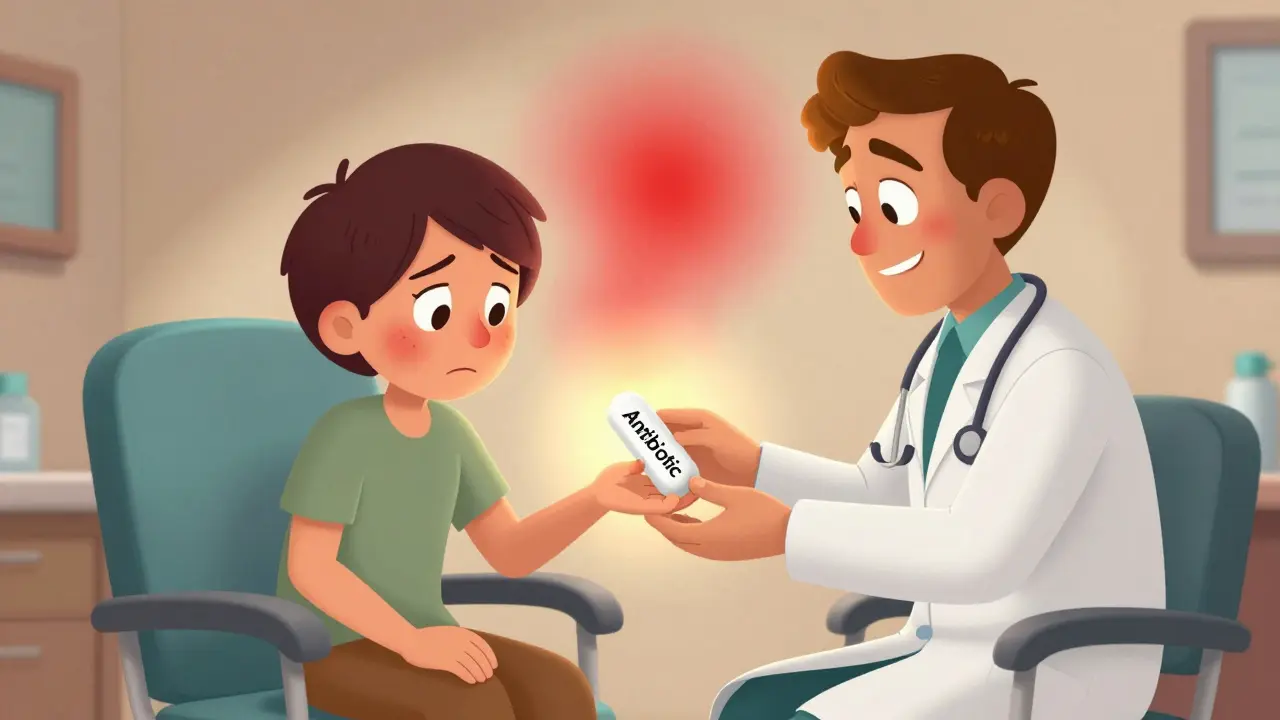
When you start a new medication, you hope it helps. But what if it makes you feel worse? A rash. Dizziness. Nausea. Maybe even something scary like swelling or breathing trouble. You stop the drug. The symptoms fade. Was it the medicine? Or just bad luck? This is where dechallenge and rechallenge come in-two simple, powerful tools doctors and pharmacists use to figure out if a drug really caused the problem.
What Is Dechallenge?
Dechallenge is just the act of stopping a drug to see if the bad reaction goes away. Sounds simple, right? But it’s one of the most reliable ways to tell if a medication is the culprit.Let’s say you take a new antibiotic and three days later, your skin breaks out in red, itchy patches. Your doctor asks: Did you start this drug before the rash appeared? Yes. Did you take anything else new? No. So they tell you to stop the antibiotic. You do. Two days later, the itching starts to fade. By day five, the rash is gone. That’s a positive dechallenge. It doesn’t prove the drug caused the rash-but it’s strong evidence.
Not all dechallenge results are clear. Sometimes symptoms don’t improve after stopping the drug. That’s a negative dechallenge. It doesn’t mean the drug is innocent-it could mean the damage is permanent, like liver scarring from a drug-induced injury. Or maybe the reaction takes longer to clear. The timing matters. If a drug has a short half-life (like ibuprofen), symptoms should improve within a day or two. If it’s a slow-clearing drug (like fluoxetine), it might take weeks.
Dechallenge is used in about 85% of skin-related drug reactions and nearly 80% of liver injury cases. It’s the first step in almost every drug safety investigation. And it’s safe. You’re not putting anyone at risk-you’re just stopping a drug that might be hurting them.
What Is Rechallenge?
Rechallenge is when you give the drug back-on purpose-to see if the reaction comes back. This is the gold standard. If the rash returns exactly the same way after you restart the drug, the link is almost certain.Here’s a real case: A patient got a fixed drug reaction from metronidazole-a red, blistering patch that always appeared on the same spot on their leg. After stopping the drug, the patch faded over two weeks. Months later, the doctor, with full consent and medical backup, gave them a small dose again. Within 48 hours, the exact same patch reappeared. That’s rechallenge in action. It’s not guesswork. It’s proof.
But here’s the catch: rechallenge is risky. If the reaction was severe-like Stevens-Johnson Syndrome, toxic epidermal necrolysis, or liver failure-reintroducing the drug could kill someone. So it’s rarely done. In fact, less than 0.3% of serious adverse reaction cases involve rechallenge, according to the FDA. It’s only considered when:
- The reaction was mild or moderate
- The drug is essential (like an antiretroviral for HIV)
- There’s no good alternative
- The patient gives full, informed consent
- The test is done in a controlled setting with emergency care ready
When rechallenge is done right, it upgrades the causality rating from “probable” to “definite.” According to WHO-UMC standards, a successful rechallenge means there’s a 97% chance the drug caused the reaction. No algorithm, no statistical model beats that.
Why These Tests Matter More Than You Think
Most people think side effects are just listed on a pill bottle. But behind every warning label is a story-often a patient who had a reaction, stopped the drug, and maybe even went back on it. That data gets collected, analyzed, and added to global safety databases.These aren’t just academic exercises. They save lives. When a new drug hits the market, regulators rely on real-world reports to spot patterns. If 10 people get a rare skin reaction after taking the same drug, and 9 of them had a positive dechallenge, that’s a signal. That signal can lead to a black box warning, a dosing change, or even withdrawal from the market.
Pharmaceutical companies now track dechallenge outcomes in post-marketing studies. In 2023, 82% of major drugmakers required this data in their safety reports. Why? Because lawsuits cost billions. If a patient claims a drug caused liver damage and the company can’t prove they even checked if stopping the drug helped, they’re vulnerable.
And it’s not just about big pharma. For you, the patient, knowing whether a drug caused your reaction means you can avoid it forever. No more guessing. No more accidental re-exposure. That’s powerful.

What Happens When You Can’t Do Rechallenge?
Most of the time, you won’t get rechallenged. And that’s okay. Doctors use other clues to fill the gaps:- Timing: Did the reaction start within hours or days of starting the drug? Or did it take weeks? Some reactions, like drug-induced lupus, take months.
- Biological plausibility: Does this drug have a known history of causing this reaction? For example, statins are linked to muscle pain. ACE inhibitors cause coughs. That’s not random.
- Alternative causes: Could it be an infection? Stress? Another drug? Polypharmacy (taking 5+ meds) makes this messy. That’s why dechallenge is so valuable-it removes one variable at a time.
Tools like the Naranjo Scale try to score all this-adding points for dechallenge, timing, and so on. But they’re still just guesses. A score of “probable” might mean 60% confidence. A positive dechallenge? That’s 80%. A successful rechallenge? Close to 100%.
Even without rechallenge, a clear dechallenge result is enough for most doctors to say: “Don’t take this drug again.”
Challenges in Real Life
You’d think this would be straightforward. But real-world medicine is messy.Patients often stop drugs on their own. They feel weird, so they toss the pills. No doctor involved. No documentation. That’s not dechallenge-it’s self-dechallenge. And it’s useless for safety databases.
Then there’s polypharmacy. A 72-year-old takes 12 medications. They get dizzy. Do you stop all of them? No. You stop one at a time. But who tracks that? Often, no one. That’s why electronic health records now have alerts for potential drug reactions-and why pharmacovigilance professionals are trained to ask: “What did you stop? When? And what happened after?”
Another problem: delayed reporting. A patient gets a rash in March. They forget to mention it until September. By then, the drug’s long gone. Rechallenge is impossible. The chance to prove causality is lost.
That’s why structured reporting tools are growing. Hospitals and clinics now use templates that ask: “Did you discontinue the drug? Did symptoms improve? Did you ever restart it?” Simple questions. Big impact.
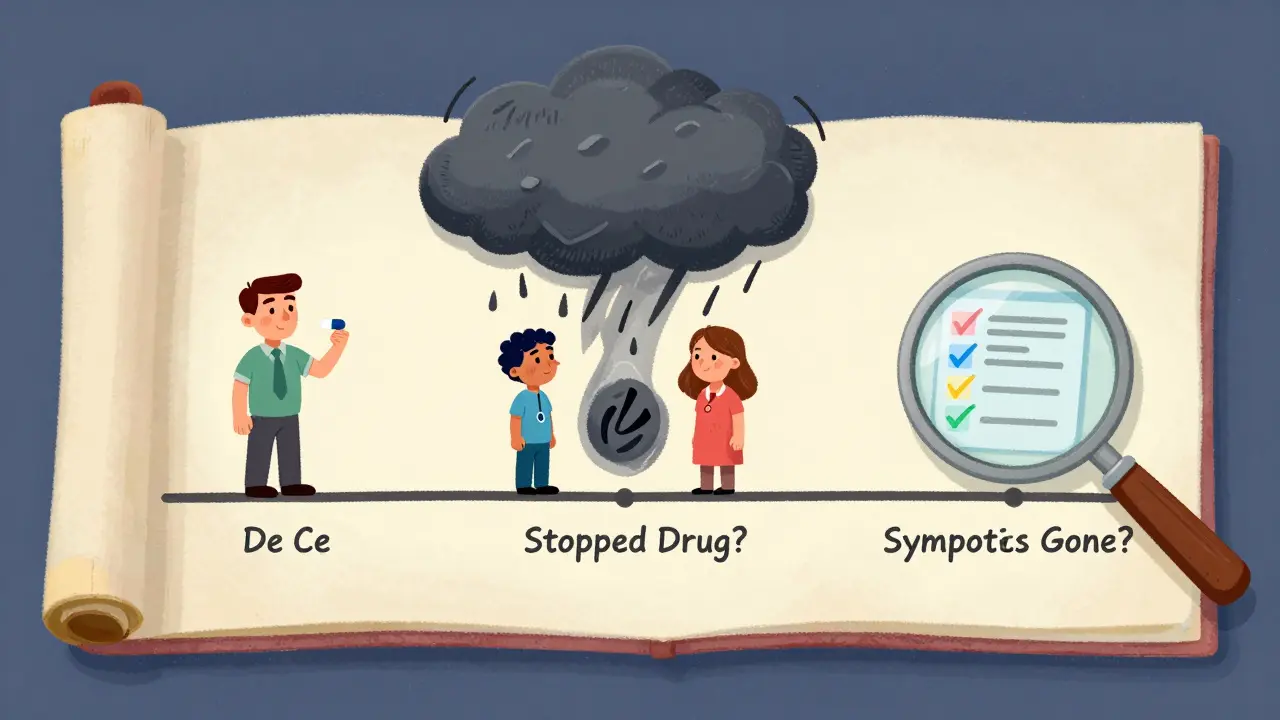
The Future: Tech Doesn’t Replace Dechallenge
New tech is coming. Wearable sensors can track heart rate, skin temperature, and inflammation markers when a drug is stopped. One 2023 study showed they caught resolution in 78% of cases-better than patient recall. Blood tests can now check for immune cells that react to specific drugs, predicting reactions without re-exposure.But here’s what experts agree on: no algorithm, no lab test, no AI model can replace the simple act of stopping a drug and watching what happens. As Dr. Elena Rodriguez from the WHO said in 2024: “No algorithm can substitute for the clinical reality of symptom resolution after drug discontinuation.”
Technology helps. It speeds things up. It catches what people forget. But dechallenge remains the foundation. Rechallenge, when possible, is the crown jewel.
What You Can Do
If you’ve had a bad reaction to a drug:- Don’t just stop it-tell your doctor. Write down when you started, when the reaction started, and when it ended.
- Ask: “Could this be from the medication?”
- Keep a list of drugs you’ve reacted to. Share it with every new provider.
- If you’re asked to rechallenge, understand the risks. Ask: “What if it gets worse? What’s the backup plan?”
You don’t need to be a scientist to help make drug safety better. Just be observant. Be honest. Be your own advocate.
What’s the difference between dechallenge and rechallenge?
Dechallenge means stopping a drug to see if side effects go away. If they do, it suggests the drug caused them. Rechallenge means giving the drug back after the side effects cleared. If they return, it’s strong proof the drug was responsible. Dechallenge is common and safe. Rechallenge is rare and risky-only done under strict supervision.
Is rechallenge dangerous?
Yes, it can be. Rechallenge can trigger the same severe reaction again-like skin blistering, liver failure, or anaphylaxis. That’s why it’s rarely done. It’s only considered for mild reactions, when no other drug works, and only with full consent and emergency care ready. For life-threatening reactions, rechallenge is almost never allowed.
Can dechallenge be wrong?
Sometimes. If you stop the wrong drug-like if you’re taking three new meds at once-you might think one caused the reaction when it was actually another. Timing matters too. Some reactions take weeks to clear. If you stop the drug too early and symptoms linger, it might look like a negative dechallenge when it’s just slow. That’s why doctors need full details: what you took, when, and how symptoms changed.
Why don’t all doctors use dechallenge and rechallenge?
Many don’t know how to do it properly. Others assume side effects are just “expected.” Some fear patients will panic if they’re told to stop a drug. And rechallenge? Most doctors won’t even consider it because of the risk. But trained pharmacovigilance professionals use these tools regularly-they’re part of standard safety protocols in hospitals and drug companies.
Do these tests work for all types of side effects?
They work best for reactions that are reversible and clearly linked to timing-like rashes, nausea, dizziness, or liver enzyme spikes. They’re less useful for things like weight gain, mood changes, or long-term damage like osteoporosis from steroids. But even then, dechallenge can still help rule out a drug as a cause-if symptoms don’t improve after stopping, the drug likely isn’t responsible.


Adarsh Uttral
January 31, 2026 AT 12:12man i had this thing with amoxicillin years ago - broke out in hives, thought it was stress, tossed the script, boom gone. never thought to call it dechallenge but yeah that’s exactly what happened. no rechallenge though, too scared to test it again
Claire Wiltshire
February 1, 2026 AT 16:22This is such an important topic, and you’ve explained it with remarkable clarity. Dechallenge is the unsung hero of pharmacovigilance - simple, safe, and surprisingly underutilized in primary care. I always encourage my patients to document the timeline: start date, symptom onset, resolution after discontinuation. Even if they never rechallenge, that data is invaluable for future providers. Thank you for highlighting this.
April Allen
February 2, 2026 AT 04:06The clinical utility of dechallenge/rechallenge is undeniable, but the real bottleneck is cognitive load on clinicians. We’re drowning in polypharmacy cases where 7-10 drugs are titrated simultaneously, and the EHR doesn’t flag temporal relationships. The Naranjo scale is a band-aid - what we need is AI-assisted temporal mapping of drug-symptom co-occurrence, integrated directly into the prescribing workflow. Without that, we’re just hoping patients remember what they took three months ago.
Holly Robin
February 2, 2026 AT 08:09so the pharmaceutical companies are literally testing drugs on people to see if they kill them?? and you call that science?? they don't care about your life they care about profit and they'll make you take it again if it means keeping the patent alive. they're monsters. and your 'informed consent' is just a legal loophole to avoid murder charges. i know someone who died after a rechallenge - they told her it was 'low risk' - it was a lie. the system is rigged.
Russ Kelemen
February 2, 2026 AT 23:47There’s something almost poetic about dechallenge - the quiet act of stepping back to see what disappears. In a world obsessed with adding more - more drugs, more tests, more data - the most powerful diagnostic tool is subtraction. Rechallenge, though? That’s not science. That’s faith. And faith in a molecule’s behavior, when your body has already screamed no… that’s a gamble only desperation makes rational. I wonder how many lives we’d save if we trusted the first no more often.
Sazzy De
February 4, 2026 AT 08:05i had a reaction to lisinopril once - face swollen, throat tight - stopped it right away, felt better in a day. never told my doc, just avoided it after. i wish i’d written it down. now i keep a little notebook. small thing, big difference
KATHRYN JOHNSON
February 5, 2026 AT 05:08Rechallenge is medical malpractice waiting to happen. Any doctor who suggests it without a signed waiver and a team of specialists on standby should be suspended. This isn't 'science' - it's arrogance disguised as evidence. Patients are not lab rats. And yes, I've seen the lawsuits. They're always filed after the damage is done.
Shubham Dixit
February 6, 2026 AT 05:56Look, in India we don’t have time for all this fancy Western terminology. If a patient gets sick after a pill, we stop the pill. If it gets better, we know it was the pill. Why do we need names like dechallenge and rechallenge? It’s just common sense. And if someone dies because we didn’t rechallenge? Then the drug was too dangerous to begin with. We don’t need American algorithms to tell us what our eyes and patients’ bodies already show us. We’ve been doing this for centuries before your FDA was even a thought.
Sarah Blevins
February 6, 2026 AT 16:31While the post presents dechallenge/rechallenge as objective tools, it ignores systemic bias in reporting. Patients of color, low-income patients, and non-English speakers are far less likely to be offered rechallenge or even properly asked about symptom resolution. The data you cite? It’s skewed by who gets access to specialist care. This isn’t a neutral method - it’s a privilege.