
COPD Explained: Understanding Disease Stages and Effective Treatment Options
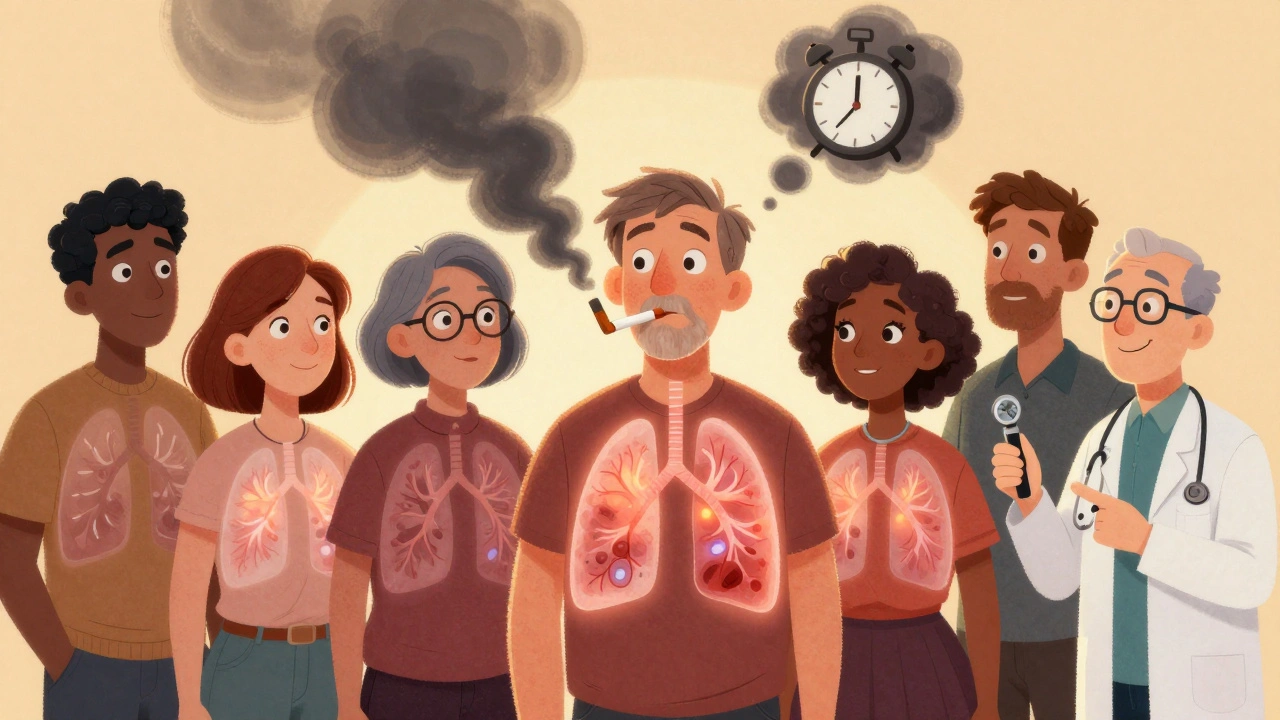
Chronic Obstructive Pulmonary Disease, or COPD, isn't just a cough that won't go away. It's a progressive lung condition that slowly steals your ability to breathe normally. By 2023, it affected 380 million people worldwide and ranked as the third leading cause of death globally. Many don’t realize they have it until their lungs are already significantly damaged. The good news? Early detection and the right treatment can slow things down - sometimes dramatically.
What Exactly Is COPD?
COPD isn’t one single disease. It’s an umbrella term for two main conditions: chronic bronchitis and emphysema. In chronic bronchitis, the airways become inflamed and produce too much mucus, making it hard to clear your lungs. In emphysema, the tiny air sacs in your lungs (alveoli) break down, reducing the surface area available for oxygen exchange. Both lead to the same problem: airflow that’s blocked and hard to move in and out.
Over 85% of cases are caused by smoking. Long-term exposure to air pollution, chemical fumes, or dust can also trigger it - especially in places with poor ventilation. But here’s the thing: not every smoker gets COPD, and not everyone with COPD ever smoked. Genetics, like alpha-1 antitrypsin deficiency, play a role in a small percentage of cases.
Diagnosis isn’t based on symptoms alone. It requires a simple breathing test called spirometry. This test measures how much air you can forcefully exhale in one second (FEV1) and compares it to what’s normal for someone your age, height, and gender. That number tells doctors how far the disease has progressed.
The Four Stages of COPD
The Global Initiative for Chronic Obstructive Lung Disease (GOLD) updated its staging system in 2023 to include both lung function and how much your symptoms affect daily life. But the core remains the same: four stages, defined by FEV1 percentages.
Stage 1: Mild COPD - FEV1 is 80% or higher of predicted normal. At this point, you might notice a persistent morning cough with phlegm, or feel slightly winded after climbing stairs. Many brush it off as aging or being out of shape. The problem? About 68% of people in this stage delay seeing a doctor for over two years. That’s a missed window to stop the damage.
Stage 2: Moderate COPD - FEV1 drops to 50-79%. Now, shortness of breath happens during everyday activities - walking on level ground, doing laundry, or carrying groceries. You start needing to stop and catch your breath every few minutes. This is often when people finally get diagnosed. By now, lung function has dropped noticeably, but there’s still time to slow progression with the right care.
Stage 3: Severe COPD - FEV1 falls to 30-49%. Breathing becomes a major effort. Simple tasks like getting dressed or preparing a meal leave you gasping. Frequent flare-ups - called exacerbations - become common, often requiring antibiotics, steroids, or even hospital visits. On average, patients in this stage have over three exacerbations per year. Anxiety about leaving the house grows because breathlessness feels unpredictable.
Stage 4: Very Severe (End-Stage) COPD - FEV1 is below 30%, or below 50% with chronic low oxygen levels. At this point, you may be short of breath even while resting. Many need oxygen therapy around the clock. Some develop cyanosis - a bluish tint to lips or fingertips - from lack of oxygen. Confusion, weight loss, and heart strain are common. This stage carries the highest risk of life-threatening flare-ups. Survival depends heavily on aggressive management.
Treatment by Stage: What Works When
Treatment isn’t one-size-fits-all. It changes as the disease moves forward.
Stage 1: Focus on Stopping the Damage
The single most effective step? Quit smoking. Studies show quitting can cut disease progression by half. No medication can match that. Short-acting inhalers like albuterol are used only as needed for sudden breathlessness. No daily meds are usually required yet. Vaccines for flu and pneumonia are strongly recommended - infections can accelerate lung damage.
Stage 2: Adding Daily Control
Long-acting bronchodilators like tiotropium (Spiriva) or salmeterol (Serevent) become standard. These keep airways open for 12-24 hours, making daily life easier. Pulmonary rehabilitation - a structured program of exercise, education, and breathing techniques - improves walking distance by an average of 54 meters on the 6-minute walk test. That’s the difference between needing help to shop and doing it yourself. Flu shots and pneumococcal vaccines are non-negotiable.
Stage 3: Managing Flare-Ups and Oxygen
Combination inhalers - usually a long-acting muscarinic antagonist (LAMA) plus a long-acting beta-agonist (LABA) - are common. If you’re having frequent exacerbations, inhaled corticosteroids are added (triple therapy). Oxygen therapy starts if your blood oxygen level drops below 88% at rest. Portable oxygen units help, but most only last 4-6 hours on a single charge. Many patients report feeling trapped by the equipment.
Stage 4: Survival-Oriented Care
Continuous oxygen therapy for at least 15 hours a day improves survival by 44% in patients with severe low oxygen levels, according to the landmark NOTT study. Lung volume reduction surgery can help select patients by removing damaged lung tissue, improving 2-year survival by 15%. For younger patients (under 65) with FEV1 under 20%, lung transplant becomes a real option - though donor availability is limited. Palliative care teams are often brought in to manage pain, anxiety, and quality of life.
What Else Helps Beyond Medication?
Medications are just one piece. The real game-changers are lifestyle and support.
Pulmonary rehab isn’t optional - it’s essential. A 2022 JAMA meta-analysis found it reduces hospitalizations by 37%. These programs run 8-12 weeks, with two sessions per week. You’ll learn how to breathe efficiently, strengthen your muscles, and manage anxiety. Many participants say it’s the first time they felt like they could take back control.
Nutrition matters. People with advanced COPD often lose weight because breathing burns so many calories. A diet rich in protein and healthy fats helps maintain muscle - including the muscles that help you breathe. Avoid heavy meals that push up on your diaphragm.
Getting the right inhaler technique is harder than it sounds. Studies show 70-80% of patients use their inhalers incorrectly. That means they’re not getting the full dose. A single 10-minute session with a respiratory therapist can fix this. Ask for a demonstration every time you refill your prescription.
What’s New in COPD Treatment?
In 2023, the FDA approved Breztri Aerosphere - the first single-inhaler triple therapy approved for both COPD and asthma-COPD overlap. It combines three medications in one device, simplifying treatment for patients who need all three.
Enisifentrine, a new inhaled drug in Phase 3 trials, showed a 13% improvement in FEV1 after 12 weeks. That’s significant for a disease where even a 5% gain is considered meaningful.
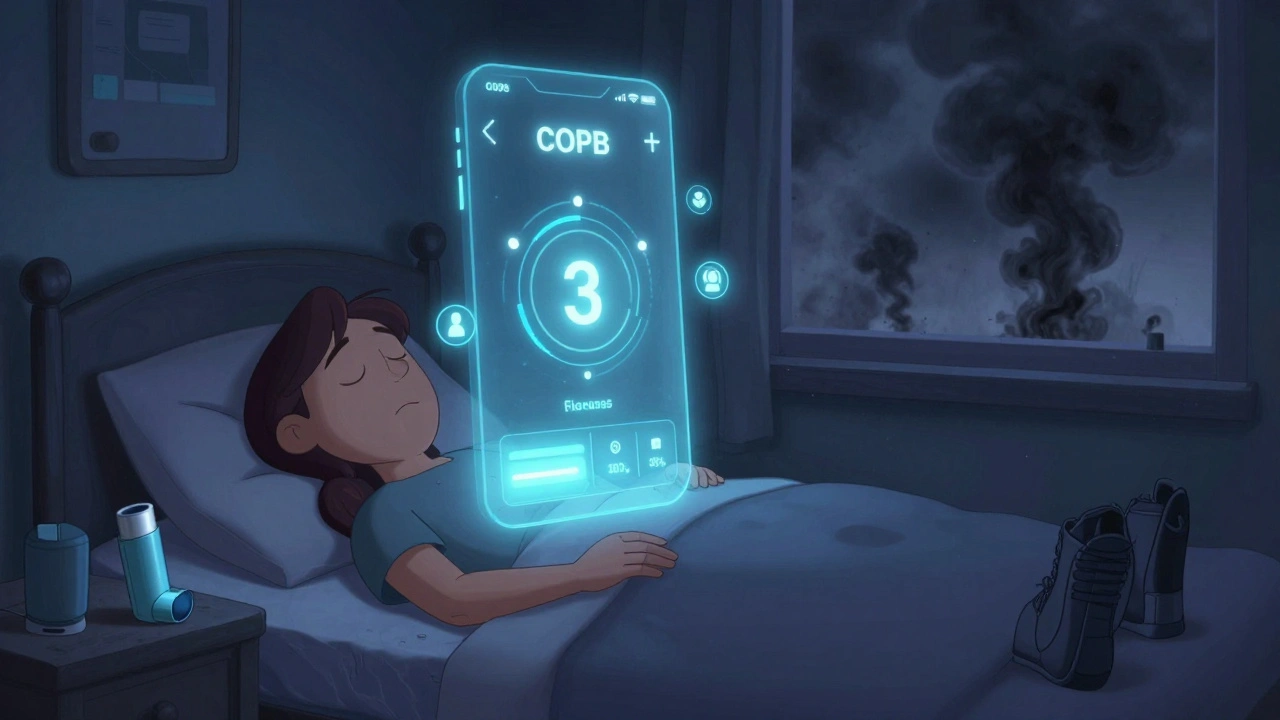
Digital tools are stepping up too. The Kyna COPD app, cleared by the FDA in June 2023, uses AI to predict flare-ups 3-5 days in advance by tracking daily symptoms, activity levels, and sleep. Early testing showed 82% accuracy. Apps like this could prevent emergency room visits.
Genetic research is also advancing. The NIH’s COPDGene study identified 82 genetic variants linked to how fast COPD progresses. This opens the door to personalized treatments - someday, your therapy might be chosen based on your DNA, not just your FEV1 number.
Challenges Patients Face
Cost is a huge barrier. Spiriva costs $350-$400 per month without insurance. Oxygen equipment, even with Medicare covering 80%, still requires a $233 deductible and ongoing rental fees. Many patients skip doses or ration oxygen because they can’t afford it.
Adherence is another problem. Half of patients stop taking their inhalers within six months. Why? Side effects, complexity, or simply forgetting. One Reddit user wrote, “I have 5 inhalers. I don’t know which one to use when.” Simplifying regimens - like using combo inhalers - helps.
Many patients don’t recognize early signs of an exacerbation. Only 40% can identify them correctly. Common warning signs: more mucus, darker color, increased breathlessness, or waking up at night gasping. Knowing these could mean catching a flare-up early and avoiding a hospital stay.
Where Do We Go From Here?
The future of COPD care is moving beyond lung function numbers. Experts now stress the importance of symptoms, activity levels, and patient-reported outcomes. Two people with the same FEV1 can have completely different lives - one is active and independent, the other is housebound. Treatment should reflect that.
Climate change is a growing threat. Rising pollution levels are expected to increase COPD exacerbations by 15-20% in high-risk areas by 2040. This makes clean air policies as critical as medical ones.
And while COPD is still a leading killer, especially in low-income countries, the tools to fight it are better than ever. Early diagnosis, quitting smoking, pulmonary rehab, and newer medications can turn a life of breathlessness into one of manageable limits. The goal isn’t a cure - there isn’t one yet - but a life where breathing doesn’t define your days.
Can COPD be cured?
No, COPD cannot be cured. Once lung tissue is damaged, it doesn’t regenerate. But the progression of the disease can be slowed significantly - especially if you quit smoking early. Treatment focuses on managing symptoms, preventing flare-ups, and improving quality of life. Many people live for years with stable COPD when they follow their treatment plan.
How do I know if I have COPD and not just asthma?
COPD and asthma both cause wheezing and shortness of breath, but they’re different. COPD usually develops after age 40, often in people with a smoking history, and symptoms get worse over time. Asthma often starts in childhood and comes and goes, triggered by allergens or exercise. Spirometry helps tell them apart - in COPD, airflow limitation doesn’t fully reverse with medication, while in asthma, it often does. Some people have both - called asthma-COPD overlap syndrome (ACOS).
Is oxygen therapy addictive?
No, oxygen therapy is not addictive. Your body doesn’t develop a dependency on oxygen the way it does with drugs. If you need supplemental oxygen because your lungs can’t get enough on their own, it’s a medical necessity - like glasses for poor vision. Stopping oxygen when you need it can cause serious harm, including heart strain and organ damage. It’s not about addiction - it’s about survival.
What’s the best way to quit smoking with COPD?
Quitting is the most important step you can take. Unaided attempts have only a 25-30% success rate. Use proven methods: nicotine replacement (patches, gum), prescription meds like varenicline (Chantix), or counseling. Many pulmonary rehab programs include smoking cessation support. The Lung Institute reports that quitting can slow COPD progression by 50%. Even if you’ve smoked for decades, quitting now still gives you years of better breathing.
Can I still exercise with COPD?
Yes - and you should. Inactivity makes your muscles weaker, which makes breathing harder. Start slow: short walks, seated leg lifts, or using a stationary bike. Pulmonary rehab teaches you how to exercise safely without overdoing it. Many patients report feeling stronger and less breathless after just a few weeks. Exercise doesn’t fix your lungs, but it helps your body use oxygen more efficiently.
How often should I see my doctor if I have COPD?
If your COPD is stable, see your doctor every 6-12 months. If you’re in Stage 3 or 4, or have frequent flare-ups, every 3-4 months is better. Bring your inhalers to every visit - your doctor should watch you use them. If you’ve had a recent hospital stay, schedule a follow-up within two weeks. Early detection of worsening symptoms can prevent emergency visits.


sagar bhute
December 3, 2025 AT 15:14COPD is just a fancy term for smokers who refused to quit and now want the world to feel sorry for them. You think your lungs are special? They're not. The data is clear: 85% of cases are smoking-related. Stop pretending genetics or pollution are the real villains. Quit or shut up.
Jim Schultz
December 4, 2025 AT 12:33Let’s be real: the GOLD criteria are outdated, and spirometry alone is a gross oversimplification-especially when you ignore patient-reported outcomes, functional status, and comorbidities like cardiovascular disease, which are often more lethal than FEV1 itself. Also, why is no one talking about the fact that triple therapy inhalers like Breztri are being pushed aggressively by Big Pharma, while pulmonary rehab remains underfunded and inaccessible to 80% of Medicare recipients? It’s a systemic failure masked as medical progress.
Makenzie Keely
December 6, 2025 AT 04:16Thank you for this incredibly thorough breakdown-I’ve been waiting for a post like this for years! I’m a respiratory therapist, and I see patients every day who don’t understand their own inhalers, or think oxygen is addictive, or skip rehab because they’re too tired or too broke. The part about inhaler technique? So true. I’ve watched people shake their inhalers like a soda can and then inhale for half a second. Ten minutes with a therapist can change everything. And please, if you’re reading this and you smoke-even one cigarette a day-stop. Your lungs aren’t asking for permission. They’re begging.
Francine Phillips
December 7, 2025 AT 23:13Yeah I’ve got it. Stage 2. Been on Spiriva for a year. Doesn’t help much. I just breathe. That’s it.
Katherine Gianelli
December 8, 2025 AT 09:03Hey, I know how overwhelming this can feel-like you’re drowning in meds, appointments, and guilt. But here’s the truth: you’re not alone. I’ve seen people go from barely walking to the mailbox to hiking a quarter-mile trail after just six weeks of rehab. It’s not magic-it’s muscle memory, breath control, and showing up even when you’re scared. You don’t need to be perfect. Just show up. One breath at a time. You’ve already won by reading this.
Joykrishna Banerjee
December 10, 2025 AT 04:30As a bioinformatics researcher specializing in epigenetic modifiers of pulmonary fibrosis, I must emphasize that the 85% smoking statistic is statistically misleading due to confounding environmental variables and selection bias in cohort studies. Furthermore, the GOLD staging system ignores the emerging role of neutrophil elastase activity and IL-8 cytokine gradients in disease progression-relying on FEV1 is like diagnosing diabetes with HbA1c alone while ignoring insulin resistance. Also, why is the FDA approving Breztri without long-term mortality data? This is pharmaceutical theater.
Myson Jones
December 10, 2025 AT 21:18It’s important to remember that COPD doesn’t discriminate. It affects people who never smoked-factory workers, cooks, women in rural areas using biomass fuel for cooking. And while quitting smoking is critical, we also need to stop blaming individuals and start demanding clean air policies, workplace protections, and equitable access to rehab. The system failed them long before their lungs did.
parth pandya
December 11, 2025 AT 23:41great post! i had no idea about the kyna app. i use my inhaler wrong all the time. my dr never showed me. i’ll go back and ask. also, oxygen isn’t addictive? wow i always thought it was. thanks!
Albert Essel
December 12, 2025 AT 03:09I appreciate the nuance here. Too many discussions reduce COPD to ‘smokers vs. non-smokers’ or ‘meds vs. rehab.’ But the real story is in the gaps-between diagnosis and treatment, between policy and access, between what’s known and what’s affordable. This post doesn’t just inform-it humanizes.
Charles Moore
December 12, 2025 AT 11:45For anyone feeling overwhelmed: you’re not failing. COPD doesn’t care how hard you try-it just keeps going. But you? You’re still here. Reading. Learning. Trying. That’s courage. And it’s enough. Start small. One walk. One correct inhaler use. One conversation with your doctor. You don’t have to fix everything today. Just keep breathing. We’re rooting for you.
Kara Bysterbusch
December 13, 2025 AT 23:21As someone who works in global health policy, I’m struck by how this post highlights the disparity between high-income and low-income countries. In rural India or sub-Saharan Africa, where biomass fuel is still the primary cooking source and spirometry machines are rare, COPD is often diagnosed at Stage 4-or not at all. We need mobile clinics, community health worker training, and low-cost diagnostics-not just fancy inhalers. The future of COPD care must be equitable, not just innovative.