
Back Pain Red Flags: When Imaging and Referral Are Needed
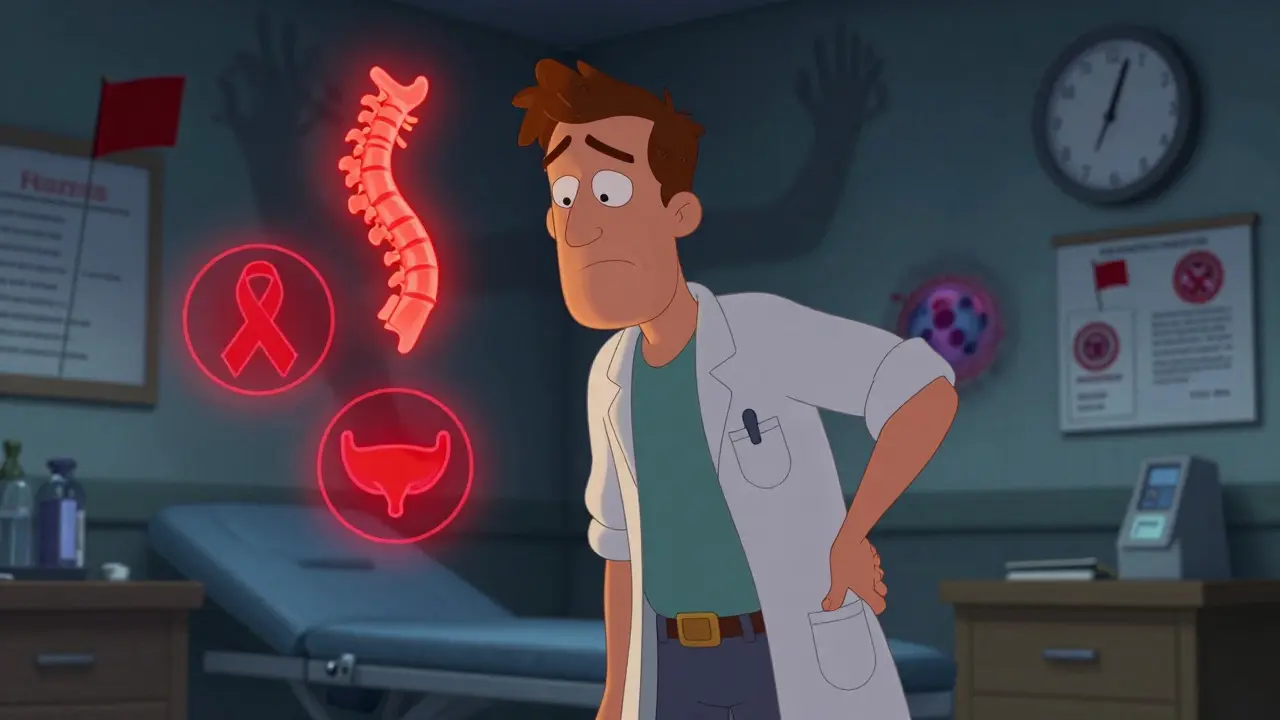
Most people experience back pain at some point. It’s common, often temporary, and usually goes away on its own with rest, movement, and over-the-counter pain relief. But here’s the thing: back pain isn’t always just a muscle strain. Sometimes, it’s a warning sign of something far more serious - something that needs immediate attention. Knowing when to stop treating it like a typical ache and start treating it like a medical emergency can prevent permanent damage, disability, or even death.
What Are Back Pain Red Flags?
Red flags aren’t just vague symptoms. They’re specific clinical clues that point to serious underlying conditions: spinal infections, tumors, fractures, nerve damage, or life-threatening neurological issues. These aren’t rare. About 10% of people with back pain have one of these conditions. Missing them can lead to irreversible harm. And yes - there are real legal and medical consequences for failing to spot them. The key is understanding which signs demand action. Not every backache needs an MRI. But if you have even one of these red flags, you need to act fast.When to Suspect a Spinal Infection
Spinal infections - like osteomyelitis or discitis - are rare but dangerous. They can spread quickly and destroy bone, disc tissue, and nerves. The biggest red flag? Pain that doesn’t improve with rest, painkillers, or time. In fact, studies show 78% of people with spinal infections report pain that persists despite treatment, compared to just 22% with mechanical back pain. Other warning signs include:- Fever or chills
- Recent infection (like a urinary tract infection or skin abscess)
- History of intravenous drug use
- Recent spinal surgery or injection
- Unexplained weight loss
Fractures: More Common Than You Think
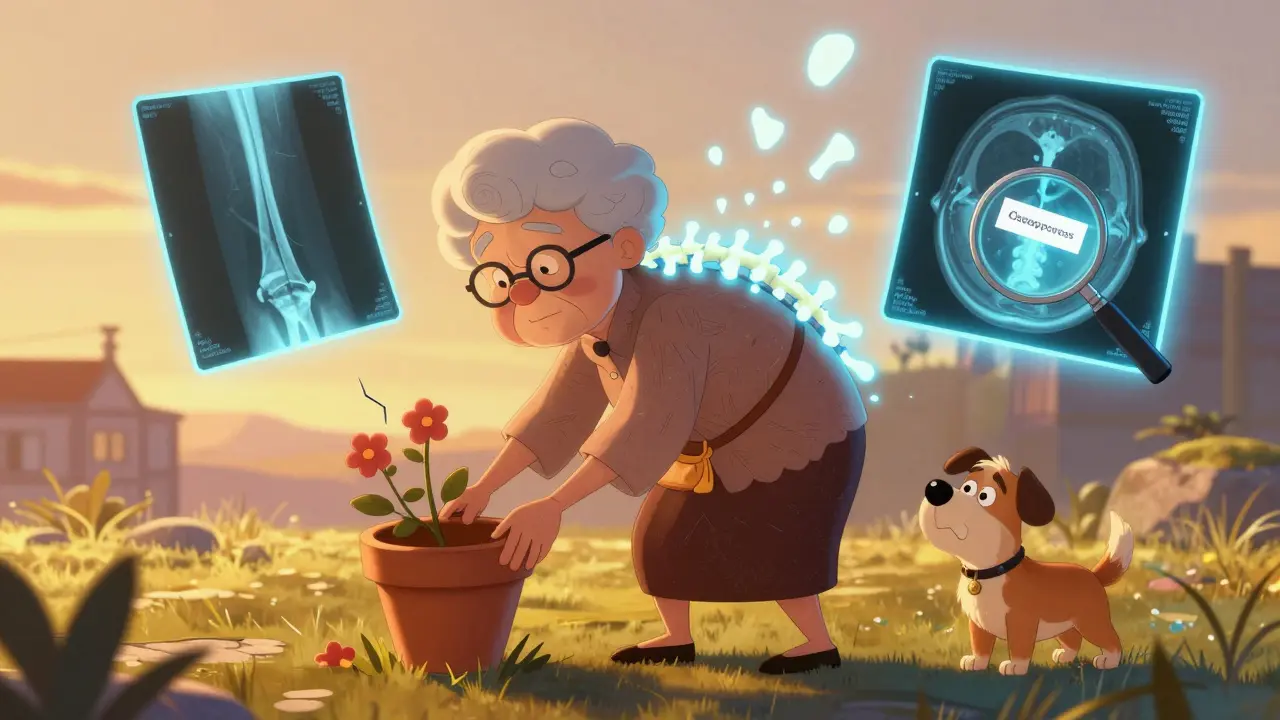
People assume fractures only happen after car crashes or falls. But in older adults, even a simple stumble or bending over can cause a vertebral compression fracture. One study found that 36.5% of people over 70 with back pain had a fracture - compared to just 9.1% of those under 50. Red flags for fracture include:- Age over 50
- History of osteoporosis
- Long-term steroid use
- Recent trauma (even minor)
- Pain that worsens when lying down or at night
Causing Permanent Damage: Cauda Equina Syndrome
This is the one you can’t afford to ignore. Cauda equina syndrome happens when the bundle of nerves at the bottom of your spinal cord gets compressed. Left untreated, it leads to permanent paralysis, loss of bladder or bowel control, and sexual dysfunction. The red flags are unmistakable:- Loss of bladder or bowel control (incontinence or retention)
- Numbness in the groin, inner thighs, or buttocks (saddle anesthesia)
- Sudden weakness or numbness in one or both legs
- Severe or worsening sciatica in both legs
Cancer That Starts in the Back
Back pain can be the first sign of cancer - either from a tumor in the spine or cancer that spread from elsewhere (like breast, lung, or prostate). The most reliable red flag? A personal history of cancer. Studies show a positive likelihood ratio of 6.4 to 15.3 - meaning if you’ve had cancer before and now have back pain, the odds of it being spinal metastasis are high. Other warning signs:- Pain that wakes you up at night
- Pain that gets worse over time, not better
- Unexplained weight loss
- History of smoking or heavy alcohol use
When Imaging Isn’t Needed - and When It Is
Here’s the truth: 90% of back pain cases don’t need imaging. That’s not opinion - it’s evidence. The American College of Radiology says imaging for simple back pain without red flags is rarely appropriate. In fact, 34% of all lumbar spine X-rays and MRIs are done without a valid reason. Why does this matter? Because unnecessary imaging leads to:- Higher costs (an extra $300-$500 per patient)
- More false positives (like disc degeneration in 79% of healthy 80-year-olds)
- Unnecessary surgeries
- Increased anxiety
- No red flags? Try conservative care: rest, movement, NSAIDs, physical therapy. Wait 4-6 weeks.
- Red flags present? Get imaging - usually MRI. If MRI isn’t available, CT or X-ray may be used depending on the suspected condition.
What Happens If You Wait Too Long?
Delay isn’t just risky - it’s costly. A 2018 study found patients whose pain didn’t improve after four weeks were 19.3 times more likely to need surgery. That’s not coincidence. It’s progression. And it’s not just about pain. A 2021 analysis of malpractice claims found that 12% of spinal litigation cases involved delayed diagnosis of serious pathology. Doctors miss these signs because they assume back pain is “just back pain.” But when you have a red flag, it’s not just pain - it’s a signal.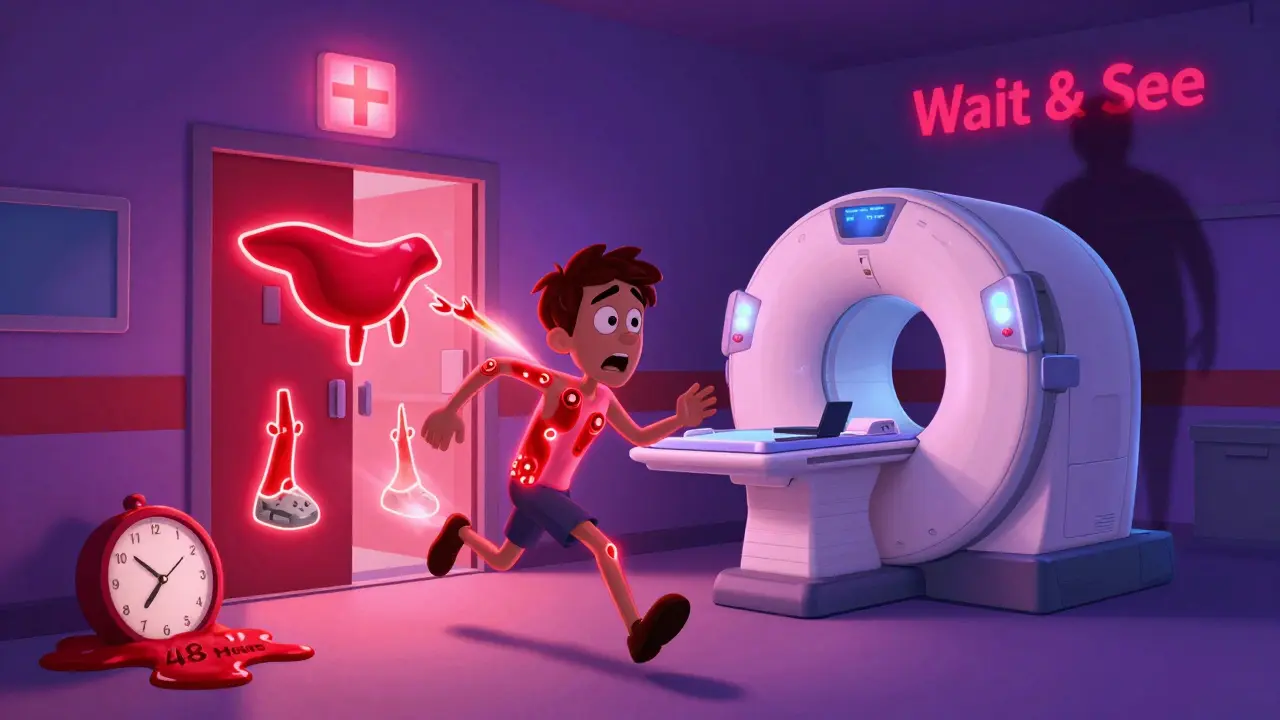
Who Should You See?
If you have red flags:- Emergency room: for cauda equina, suspected infection with fever, or trauma with neurological symptoms
- Primary care doctor: for cancer history, unexplained weight loss, or pain that won’t resolve
- Spine specialist or neurologist: for persistent neurological symptoms or unclear diagnosis
What’s Changing in 2026?
New tools are emerging. The American Pain Society is testing a risk-stratification model called STarT Back, which uses questionnaires to predict serious pathology with 83% accuracy. Point-of-care ultrasound is being studied to screen for bladder retention - a key sign of cord compression - with 92% accuracy. And machine learning is now being used to predict red flags from patient history, reaching 89% accuracy. But none of this replaces the basics: a good history and a careful exam. No algorithm replaces a doctor asking, “Have you lost control of your bladder?” or “Did you have cancer before?”Final Takeaway
Back pain is common. Serious causes are rare - but not rare enough to ignore. You don’t need an MRI for every ache. But if you have any of these:- Pain that doesn’t improve after a month
- Loss of bladder or bowel control
- History of cancer
- Fever with back pain
- Age over 50 with trauma or osteoporosis
What are the most dangerous back pain red flags?
The most dangerous red flags are those that signal immediate risk of permanent damage: loss of bladder or bowel control, numbness in the groin or saddle area, sudden leg weakness, or severe pain that doesn’t improve with rest. These can indicate cauda equina syndrome - a surgical emergency requiring treatment within 48 hours. Other critical red flags include fever with back pain (possible infection), history of cancer (possible metastasis), and trauma in older adults (possible fracture).
Do I need an MRI for every case of back pain?
No. In fact, most people with back pain don’t need imaging at all. Up to 90% of cases are nonspecific and improve with conservative care like activity modification, physical therapy, and over-the-counter pain relief. Imaging is only recommended if red flags are present - such as neurological symptoms, unexplained weight loss, fever, trauma, or pain that persists beyond four weeks. Unnecessary imaging increases costs and leads to false positives, especially in older adults.
Can back pain be a sign of cancer?
Yes. Back pain can be the first symptom of cancer that has spread to the spine - especially from breast, lung, prostate, or kidney cancer. Red flags include pain that worsens at night, unexplained weight loss, a history of cancer, and pain that doesn’t improve with rest or treatment. MRI is the most sensitive test for detecting spinal tumors. If you have any of these signs, especially if you’re over 50, get evaluated promptly.
Why do doctors sometimes miss serious back pain causes?
Doctors often miss serious causes because back pain is so common, and most cases are harmless. There’s pressure to avoid unnecessary testing, which can lead to under-investigation. Also, some red flags - like “high clinical suspicion” - are subjective and hard to define. A 2019 JAMA study found that even experienced clinicians struggle to consistently identify red flags without structured tools. That’s why clear guidelines and patient education matter: if you have a red flag, speak up - don’t wait for your doctor to catch it.
What should I do if my back pain doesn’t improve after a few weeks?
If your back pain hasn’t improved after four weeks of conservative care - like rest, gentle movement, and pain relievers - it’s time to get re-evaluated. Studies show that patients who don’t improve by this point are nearly 20 times more likely to need surgery or advanced treatment. At this stage, your doctor should reassess for red flags, consider imaging (usually MRI), and possibly refer you to a specialist. Don’t assume it’s just “slow healing.” Persistent pain is a signal.
For more information on managing back pain safely, consult your healthcare provider or visit resources from the American College of Physicians or the American Academy of Family Physicians. Always prioritize evidence-based care over assumptions.



Tommy Chapman
February 21, 2026 AT 07:22Hariom Sharma
February 22, 2026 AT 14:53Nina Catherine
February 22, 2026 AT 15:41Taylor Mead
February 24, 2026 AT 11:33Amrit N
February 25, 2026 AT 05:56Courtney Hain
February 26, 2026 AT 18:50Greg Scott
February 27, 2026 AT 16:09Caleb Sciannella
February 28, 2026 AT 17:04Liam Crean
March 1, 2026 AT 10:18John Cena
March 3, 2026 AT 06:33aine power
March 3, 2026 AT 22:49Irish Council
March 4, 2026 AT 08:24