
Treatment-Resistant Depression: Augmentation and Advanced Therapies That Actually Work
When antidepressants stop working, it’s not your fault. You’ve tried the pills, stuck to the schedule, maybe even added therapy-but the heavy fog won’t lift. This isn’t laziness. It’s treatment-resistant depression (TRD), a real medical condition affecting 30-40% of people with major depression after two failed treatment attempts. The Sequenced Treatment Alternatives to Relieve Depression (STAR*D) trial, which tracked over 2,800 patients, showed most people don’t get relief from the first or even second antidepressant. That doesn’t mean you’re broken. It means your brain needs a different kind of help.
What Counts as Treatment-Resistant Depression?
TRD isn’t just "didn’t feel better." It means you’ve taken at least two different antidepressants, each at a full dose for at least six weeks, and still had little to no improvement. Many people assume they just need to try one more pill. But after two solid tries, the odds of another standard antidepressant working drop sharply. That’s when you move beyond switching meds and into augmentation-or advanced therapies.
Augmentation: Adding Something, Not Replacing
Augmentation means keeping your current antidepressant and adding another medication to boost its effect. It’s not a backup plan-it’s a strategy backed by decades of research. The FDA has approved five specific combinations for TRD:
- Aripiprazole (Abilify): 2-15 mg/day, added to SSRIs or SNRIs
- Brexpiprazole (Rexulti): 0.5-3 mg/day, similar use
- Quetiapine extended-release (Seroquel XR): 150-300 mg/day
- Olanzapine-fluoxetine (Symbyax): a fixed-dose combo of an antipsychotic and an SSRI
- Lithium: not FDA-approved for this use, but widely used off-label with strong evidence
A 2022 network meta-analysis of 12,415 patients found that aripiprazole, brexpiprazole, quetiapine, and lithium all doubled the odds of response compared to placebo. Aripiprazole stood out for its balance of effectiveness and tolerability. About 25% of people in the VAST-D trial reached full remission with aripiprazole added to their existing antidepressant-better than switching to another drug.
But side effects matter. Aripiprazole can cause restlessness (akathisia) in 15-25% of users. Quetiapine causes drowsiness in up to 60% and can lead to weight gain. Lithium requires regular blood tests to stay in the safe range (0.3-0.6 mEq/L). Too high, and it’s toxic. Too low, and it does nothing. Still, for many, the trade-off is worth it.
Other Augmentation Options with Real Data
Not everything approved by the FDA is the only option. Some off-label additions have strong evidence too:
- Liothyronine (T3 thyroid hormone): Studies show it can help, especially in people with low thyroid function. Response odds are nearly three times higher than placebo.
- Modafinil: Used for fatigue and brain fog. It’s not a mood lifter alone, but it helps people feel more capable of engaging in therapy or daily life.
- Nortriptyline: An older tricyclic antidepressant. It’s not first-line, but when added to an SSRI, it boosts response rates significantly.
- Lisdexamfetamine: A stimulant used for ADHD, but it’s being studied in TRD patients with severe fatigue and lack of motivation. Early results show promise.
One thing these all have in common? They’re not magic. They work for some, not all. The British Journal of Psychiatry found that only aripiprazole had a clear, consistent edge over placebo. Others showed mixed results. That’s why treatment isn’t one-size-fits-all.
Cognitive Behavioral Therapy: The Non-Drug Powerhouse
Medication isn’t the only tool. Cognitive behavioral therapy (CBT) has an effect size of 1.58 in TRD-stronger than most drugs. That means when you add CBT to your antidepressant, you’re more likely to see real change than if you just added another pill. CBT teaches you to spot negative thought loops, challenge them, and build small, sustainable habits that lift mood over time. It’s not about "thinking positive." It’s about rewiring how your brain reacts to stress, failure, and sadness.
Studies show people who stick with CBT for 12-16 weeks while on medication are twice as likely to stay well six months later compared to those on meds alone. It’s the only non-drug treatment with this kind of durability.
Esketamine: Fast Relief, But With Caveats
If you’ve been stuck for months or years, you might be ready for something faster. Esketamine nasal spray (Spravato) is the first FDA-approved treatment that works in hours, not weeks. In the TRANSFORM-2 trial, 70% of patients responded within four weeks-compared to 47% on placebo. That’s a big jump.
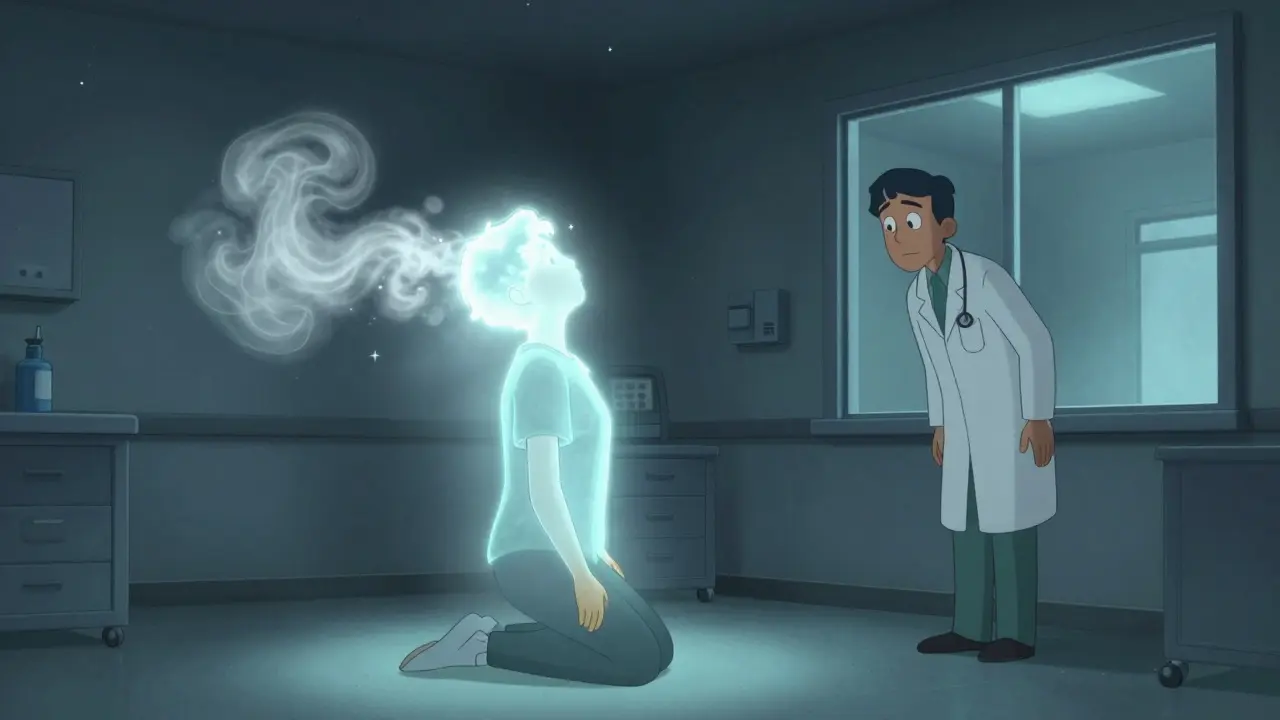
But here’s the catch: You can’t take it at home. You must go to a certified clinic. You’re monitored for two hours after each dose because it can cause dissociation-feeling detached from your body or surroundings. About 60% of people experience this. It’s temporary, but it’s intense. And it’s expensive. Most insurance requires you to try at least four other treatments first.
Still, for people who’ve lost hope, that 24-hour shift from despair to a flicker of relief can be life-changing. It’s not a cure, but it’s a bridge.
rTMS: Brain Stimulation Without the Shock
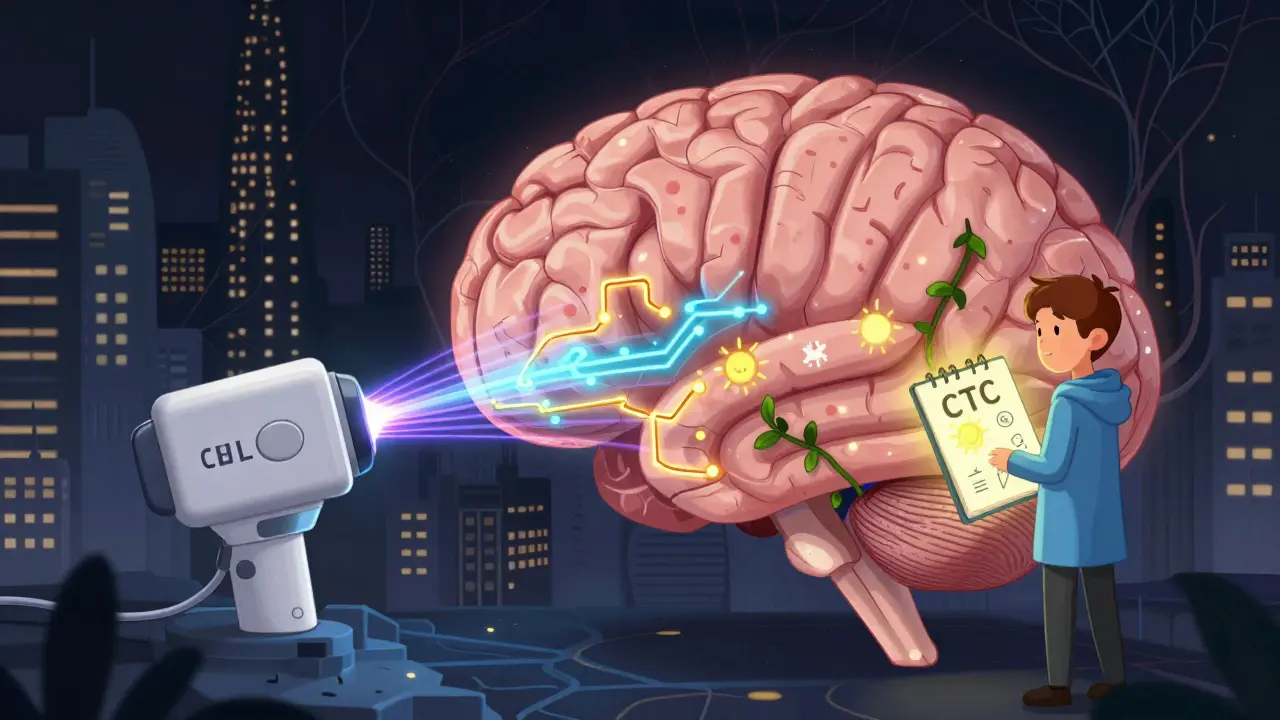
Repetitive transcranial magnetic stimulation (rTMS) uses magnetic pulses to stimulate underactive areas of the brain linked to depression. It’s non-invasive, doesn’t require anesthesia, and has almost no memory side effects-unlike electroconvulsive therapy (ECT).
Over 50 clinical trials, involving more than 10,000 patients, show rTMS works for about half of TRD patients. Around 30-35% achieve full remission. Treatment usually takes 20-30 minutes a day, five days a week, for four to six weeks. Many people notice improvement by week two. Side effects? Mild headaches or scalp discomfort. No brain damage. No memory loss.
It’s covered by most insurance in the U.S. and Canada if you’ve tried at least two antidepressants. It’s not a last resort-it’s a smart next step.
Deep Brain Stimulation and Beyond
For the rare few who’ve tried everything and still can’t function, deep brain stimulation (DBS) is an option. Surgeons implant electrodes into the subcallosal cingulate cortex, a brain region tied to mood regulation. In one small 2017 study, six patients with severe, long-term TRD had a 92% response rate after two years. That’s extraordinary.
But DBS is still experimental. It’s invasive, expensive, and only offered in a handful of research centers. It’s not for everyone. But it proves the brain can be rewired-even after years of depression.
The New Frontier: Inflammation and Psychedelics
Science is moving fast. A 2022 study in Molecular Psychiatry found that people with high inflammation (measured by hs-CRP levels) responded better to infliximab, an anti-inflammatory drug used for arthritis. Those with high inflammation had a 30.5% remission rate with infliximab-nearly double the placebo group. This suggests inflammation might be a biological marker for a subtype of TRD.
And then there’s psilocybin. A 2020 JAMA Psychiatry trial gave 24 people with TRD a single high dose of psilocybin with therapy. At four weeks, 71% responded. Only 9% did in the placebo group. The effects lasted. The FDA hasn’t approved it yet, but Phase 3 trials are underway. If approved, it could change everything.
Why Some People Still Don’t Get Better
Even with all these options, only about 28% of TRD patients in real-world registries reach full remission. Why? Because depression isn’t one disease. It’s a mix of biology, trauma, sleep, stress, inflammation, genetics, and environment. What works for one person might do nothing for another.
That’s why personalized treatment is the future. Blood tests for inflammation. Genetic panels to predict drug metabolism. Brain scans to find underactive circuits. We’re not there yet for most clinics-but we’re getting closer.
What to Do Next
If you’ve tried two antidepressants and still feel stuck:
- Confirm your diagnosis. Is it really depression-or bipolar disorder, thyroid issues, or something else?
- Check if you’ve taken enough of each medication for long enough. Many people give up too soon.
- Ask your doctor about augmentation. Start with aripiprazole, lithium, or quetiapine if you’re not already on them.
- Add CBT. It’s not optional. It’s essential.
- Consider rTMS if you’ve tried at least two medications and therapy.
- If you’re in crisis or severely impaired, ask about esketamine.
There’s no shame in needing more than a pill. Your brain deserves better than guesswork. The tools are here. You just need to ask for them.
What is the most effective augmentation for treatment-resistant depression?
Aripiprazole has the strongest evidence for balancing effectiveness and tolerability. In large trials, it doubled the chance of response compared to placebo and showed better remission rates than switching antidepressants. Lithium and quetiapine are also well-supported, but require monitoring for side effects. For some, combining aripiprazole with CBT yields the best long-term results.
Can esketamine be used at home?
No. Esketamine (Spravato) must be administered in a certified clinic under medical supervision. You’ll be monitored for at least two hours after each dose due to risks of dissociation, dizziness, or increased blood pressure. It’s not a take-home medication. This is a safety requirement, not a limitation-it’s designed to protect patients during the intense, short-term effects.
Is rTMS better than ECT for treatment-resistant depression?
For many people, yes. rTMS has similar response rates (50-55%) to ECT but without the need for anesthesia or the risk of memory loss. ECT is still more effective for the most severe cases, especially with psychosis or catatonia. But rTMS is preferred for those who want a non-invasive option with fewer cognitive side effects. Most insurance covers rTMS after two failed antidepressant trials.
Does lithium really work for depression, or is it just for bipolar?
Lithium is FDA-approved for bipolar disorder, but it’s one of the oldest and most studied augmentation agents for unipolar treatment-resistant depression. Studies show it nearly doubles the odds of response when added to an antidepressant. It requires regular blood tests to avoid toxicity, but for patients who tolerate it, it’s a powerful tool. The International Society for Bipolar Disorders recommends target levels of 0.3-0.6 mEq/L for depression augmentation.
Why do some people still not improve after trying everything?
Depression isn’t one illness. It’s a collection of biological subtypes. Some people have high inflammation, others have sleep circuit disruptions, and some have genetic differences that make standard antidepressants ineffective. We’re still learning how to match treatments to these subtypes. Right now, only about 30-40% of TRD patients achieve lasting remission. That’s why research into biomarkers, psilocybin, and anti-inflammatory drugs is so critical-it’s the next step toward truly personalized care.


Candice Hartley
January 26, 2026 AT 17:23John O'Brien
January 28, 2026 AT 15:41Kegan Powell
January 28, 2026 AT 16:39astrid cook
January 29, 2026 AT 09:05Desaundrea Morton-Pusey
January 30, 2026 AT 14:03Murphy Game
January 31, 2026 AT 09:58Anjula Jyala
January 31, 2026 AT 21:15April Williams
February 1, 2026 AT 16:10Harry Henderson
February 2, 2026 AT 09:17suhail ahmed
February 2, 2026 AT 15:25Kathy McDaniel
February 3, 2026 AT 19:48Andrew Clausen
February 5, 2026 AT 03:10Kirstin Santiago
February 6, 2026 AT 07:09