
Antihistamines and Glaucoma: Why Some Allergy Meds Can Blind You

Glaucoma Medication Safety Checker
Is This Medication Safe for You?
Select your glaucoma type and medication to check safety. This tool is based on medical research about glaucoma risks.
Select your glaucoma type and medication to see results.
Most people think of allergy season as a nuisance - sneezing, itchy eyes, runny nose. But for one in ten people with glaucoma, reaching for that common antihistamine could be a medical emergency. You might not even know you have the dangerous type of glaucoma until it’s too late. And yet, these medications are sold right next to cough syrup and pain relievers, with no warning on the label. This isn’t a rare edge case. In the UK alone, over 300,000 people with narrow-angle glaucoma are at risk every time they take Benadryl or a cold tablet. The danger isn’t theoretical. It’s real, sudden, and can cost you your sight - fast.
What Kind of Glaucoma Are You At Risk For?
Not all glaucoma is the same. Most people - about 70% - have primary open-angle glaucoma (POAG). It’s slow, silent, and usually manageable with eye drops. For these folks, most OTC allergy meds are fine. But the other 10% to 15% have narrow-angle glaucoma - or worse, angle-closure glaucoma. This isn’t just a different subtype. It’s a ticking time bomb in the eye.Think of your eye like a room with a drainage system. Fluid flows in, then out through a tiny angle between the iris and cornea. In narrow-angle glaucoma, that angle is already squeezed shut. When antihistamines like diphenhydramine or chlorpheniramine enter your system, they cause your pupils to dilate. That pushes the iris forward, blocking the drainage channel completely. Pressure spikes overnight. Vision blurs. Pain hits like a hammer. You might see halos around lights. Your eye feels hard. This is acute angle-closure glaucoma. It’s a true emergency. Without treatment within hours, permanent blindness can happen.
Which Medications Are the Worst?
Not all allergy pills are equal. The real danger comes from first-generation antihistamines - the old-school ones that make you drowsy. These include:- Diphenhydramine (Benadryl, Tylenol Allergy, many nighttime cold remedies)
- Chlorpheniramine (Chlor-Trimeton, many store-brand allergy pills)
- Brompheniramine (found in Dimetapp and similar products)
These drugs don’t just block histamine. They also have strong anticholinergic effects - meaning they interfere with nerve signals that control pupil size and fluid drainage. Even worse, many of them are combined with decongestants like pseudoephedrine or phenylephrine. Those raise blood pressure, which can also spike eye pressure.
It’s not just allergy meds. Some cold and flu products, sleep aids, motion sickness pills (like Dramamine or Meclizine), and even antidepressants (SSRIs like sertraline or escitalopram) can trigger the same reaction. One study in Taiwan found daily SSRI users had over a 5.8 times higher risk of sudden angle closure. Steroid nasal sprays and eye drops are another hidden threat - especially if used longer than 10 days. They can slowly clog the drainage system with protein buildup, leading to open-angle glaucoma over time.
What About Newer Allergy Pills Like Claritin or Zyrtec?
Here’s the good news: second-generation antihistamines are much safer. These include:- Loratadine (Claritin)
- Cetirizine (Zyrtec)
- Fexofenadine (Allegra)
These are designed to stay out of the brain and eyes. They don’t cause pupil dilation or block drainage. Studies show they have minimal to no effect on intraocular pressure - even in people with narrow angles. That’s why most eye doctors say it’s okay to use these if you have glaucoma. But even here, caution matters. Always check the label. Some versions of Zyrtec or Claritin include decongestants (like Zyrtec-D or Claritin-D). Those are off-limits. Stick to the plain versions.

Why Don’t Labels Warn You?
This is where things get disturbing. The FDA doesn’t require OTC allergy medications to list glaucoma as a risk. You won’t find it on the Drug Facts panel. No bold print. No red flags. Just a tiny note buried under "consult your doctor if you have heart problems or high blood pressure." But glaucoma? Not mentioned. Not even once.It’s not that no one knows. The Glaucoma Research Foundation, the American Academy of Ophthalmology, and dozens of peer-reviewed studies have been screaming about this for years. But regulatory agencies haven’t acted. The result? Millions of people with undiagnosed narrow angles are taking these meds every day. One Reddit user from Calgary shared how he lost 30% of his vision after taking Benadryl for a cold - he didn’t even know he had glaucoma until the ER doctor asked if he’d taken allergy meds.
What Should You Do If You Have Glaucoma?
If you’ve been diagnosed with glaucoma, here’s your action plan:- Ask your eye doctor what type you have. Don’t assume. Many people think "glaucoma" means one thing. It doesn’t. You need to know if you have open-angle or narrow-angle.
- If you have narrow-angle glaucoma, avoid all first-gen antihistamines and decongestants. That means no Benadryl, no Dimetapp, no NyQuil. No cold & flu combos.
- Use loratadine, cetirizine, or fexofenadine instead. These are your safe alternatives. Check labels carefully - make sure it’s the plain version.
- Never use steroid nasal sprays or eye drops for more than 10 days without checking pressure. Even a 2-week course can cause permanent damage.
- Carry a medical ID card. Write down your glaucoma type and list of dangerous meds. If you collapse from eye pain, paramedics need to know.
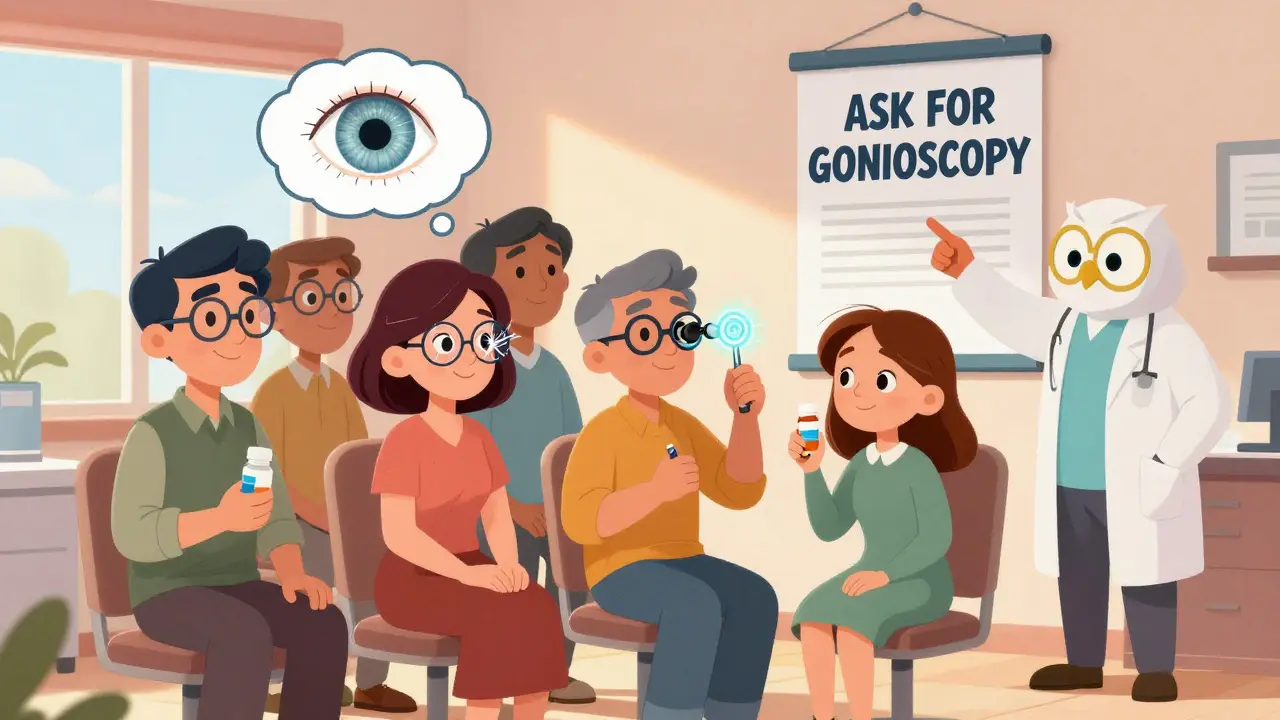
What If You Don’t Know If You Have Glaucoma?
That’s the scariest part. About 50% of people with glaucoma don’t know they have it. And narrow-angle glaucoma? Often doesn’t cause symptoms until it’s too late. You might have a family history. You might be over 40. You might be farsighted. All of these raise your risk.Here’s what you need to do: Get a gonioscopy. It’s a simple, painless test your eye doctor does with a special lens. It shows if your drainage angle is narrow. The American Academy of Ophthalmology now recommends this for everyone over 40 during their first comprehensive eye exam. If you’ve had one before 2021 and they didn’t mention it, ask for it now.
And if you’ve ever had sudden eye pain, blurred vision, or halos around lights - especially after taking allergy meds - go to the ER. Don’t wait. Don’t call your doctor tomorrow. Go now. You might be having an acute angle-closure attack.
Is There Any Hope?
Yes. Research is moving. A 2023 clinical trial is testing a new version of loratadine that doesn’t even reach the eye. That could be a game-changer. Meanwhile, studies show statins - the cholesterol drugs - might actually slow glaucoma progression in some people. That’s not a treatment, but it’s a clue that biology is more complex than we thought.But the biggest hope? Awareness. If you read this and realize you’ve taken Benadryl for years without knowing you have glaucoma - you’re not alone. But now you know. And that knowledge could save your vision.
Can I take Zyrtec if I have glaucoma?
Yes - but only the plain version. Zyrtec (cetirizine) is a second-generation antihistamine and generally safe for glaucoma patients. However, Zyrtec-D contains pseudoephedrine, a decongestant that can raise eye pressure. Always check the label. Stick to "Zyrtec" without the "-D".
Is Benadryl safe for glaucoma?
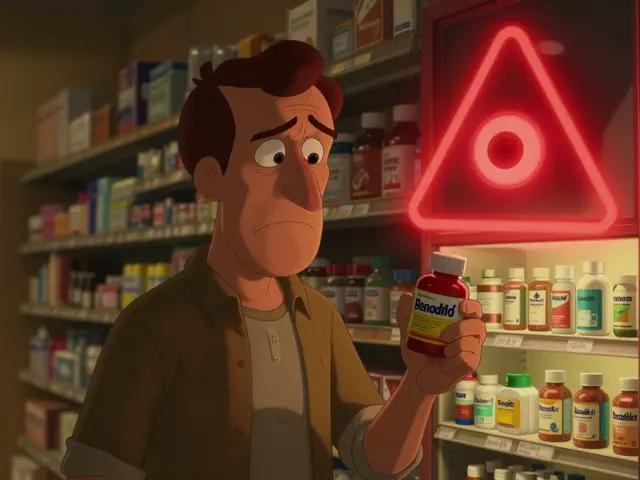
No. Benadryl contains diphenhydramine, a first-generation antihistamine with strong anticholinergic effects. It can trigger acute angle-closure glaucoma in people with narrow angles - even if they don’t know they have it. This can lead to sudden vision loss and requires emergency treatment. Avoid it completely.
Do steroid nasal sprays cause glaucoma?
Yes - but not always. Long-term use (over 10 days) of steroid nasal sprays, eye drops, or oral steroids can increase eye pressure and lead to open-angle glaucoma. The exact mechanism isn’t fully understood, but it’s thought that proteins build up and block the eye’s drainage system. If you use these for allergies, limit use to under 10 days and get your eye pressure checked afterward.
What’s the difference between open-angle and narrow-angle glaucoma?
Open-angle glaucoma is slow and gradual - fluid drains too slowly over time. It’s the most common type and usually has no symptoms until vision is lost. Narrow-angle glaucoma means the drainage channel is physically blocked by the iris. It can suddenly close, causing pressure to spike within hours. This is an emergency. Medications like antihistamines can trigger it. The difference isn’t just medical - it’s life-changing.
Can laser surgery fix narrow-angle glaucoma?
Yes - a procedure called laser peripheral iridotomy can create a small hole in the iris, letting fluid flow freely again. This is often done preventively in people with narrow angles. After this surgery, many people can safely take antihistamines. But always confirm with your eye doctor - not all cases are fully resolved, and other risks (like steroids) still apply.

Kandace Bennett
March 15, 2026 AT 09:10OMG I CAN’T BELIEVE THIS ISN’T ON EVERY MEDICATION LABEL 😭 I took Benadryl for YEARS thinking it was harmless… then my mom lost 40% of her vision and we had NO IDEA she had narrow-angle glaucoma. Why are we still letting Big Pharma get away with this?? 🤬 #WakeUpAmerica
Tim Schulz
March 15, 2026 AT 09:43Oh wow, a real public health crisis disguised as a ‘side note’ in a footnote. How quaint. 🤡 I mean, we’ve got TikTok influencers telling people to drink bleach for COVID, but a drug that can blind you overnight? Nah, that’s just ‘consult your doctor’ territory. Classic American regulatory genius. 🇺🇸
Jinesh Jain
March 16, 2026 AT 16:09Interesting. I’ve been using Zyrtec for years and never knew this. My dad had glaucoma but he was told it was ‘open-angle’ so we assumed all meds were fine. I’ll ask my ophthalmologist next visit about gonioscopy. Thanks for the clarity.
Katherine Rodriguez
March 16, 2026 AT 22:29So like… if I dont have glaucoma i can still take benadryl right? like its fine? i mean im not the one with the problem so why should i care? 🤷♀️
Devin Ersoy
March 18, 2026 AT 01:07Let me guess - the FDA’s too busy regulating kale smoothies to care about people going blind from allergy meds. 🤦♂️ Meanwhile, in Germany, they slap glowing red warning labels on anything that so much as glances at your eyeballs. We’re not just behind - we’re in a different century. Also, statins helping glaucoma? That’s wild. Next they’ll say coffee cures cataracts. 🧠☕
Adam M
March 19, 2026 AT 17:17Benadryl = bad. Zyrtec = good. Check labels. Done.
Stephanie Paluch
March 20, 2026 AT 20:46This made me cry. My grandma went blind in one eye after taking NyQuil. She never even knew she had glaucoma. I’m sharing this with everyone I know. 🥺❤️ Please, if you’re over 40, get that gonioscopy. It takes 2 minutes. It could save your sight.
tynece roberts
March 22, 2026 AT 10:05so i just found out i have narrow angle and i use dramamine for motion sickness… like… is that bad? i mean i only take it on road trips? also why is everyone so mad? i just want to chill on the highway without puking 🤔
Hugh Breen
March 23, 2026 AT 18:01THIS IS A PUBLIC HEALTH EMERGENCY. I work in pharmacy. I’ve seen it. People come in with red, painful eyes after taking Benadryl… and they say ‘I didn’t know’. We need mandatory warnings. We need education. We need this on every OTC box. I’ve emailed the FDA 3 times. No response. So I’m screaming here. 🚨👁️🗨️ Let’s get this changed - before someone else loses their sight.
Byron Boror
March 24, 2026 AT 17:46Why is this even a thing? America is soft. In my day, you took your medicine and didn’t whine. If you got blind, maybe you shouldn’t have taken the pill. Problem solved. Stop coddling people.
Lorna Brown
March 24, 2026 AT 19:13It’s fascinating how deeply our healthcare system ignores invisible conditions. Glaucoma doesn’t scream. It whispers. And by the time you hear it, it’s too late. This isn’t just about meds - it’s about how we value sight, aging, and preventative care. We treat symptoms, not systems.
Rex Regum
March 25, 2026 AT 16:15Oh so now we’re blaming OTC meds for people not getting eye exams? What’s next? Should we ban sugar because people get diabetes? This is just fearmongering wrapped in medical jargon. I’ve taken Benadryl for 20 years. I’m fine. You’re just trying to sell more eye exams.
Kelsey Vonk
March 27, 2026 AT 00:28I’m so grateful for this. I just got diagnosed with narrow-angle last month. I’d been using Zyrtec-D because I thought ‘D’ just meant ‘all-day’. Never even checked. Now I’m switching to plain Zyrtec. Thank you for the clarity. 🙏