
ACE Inhibitors and High-Potassium Foods: What You Need to Know About the Risk
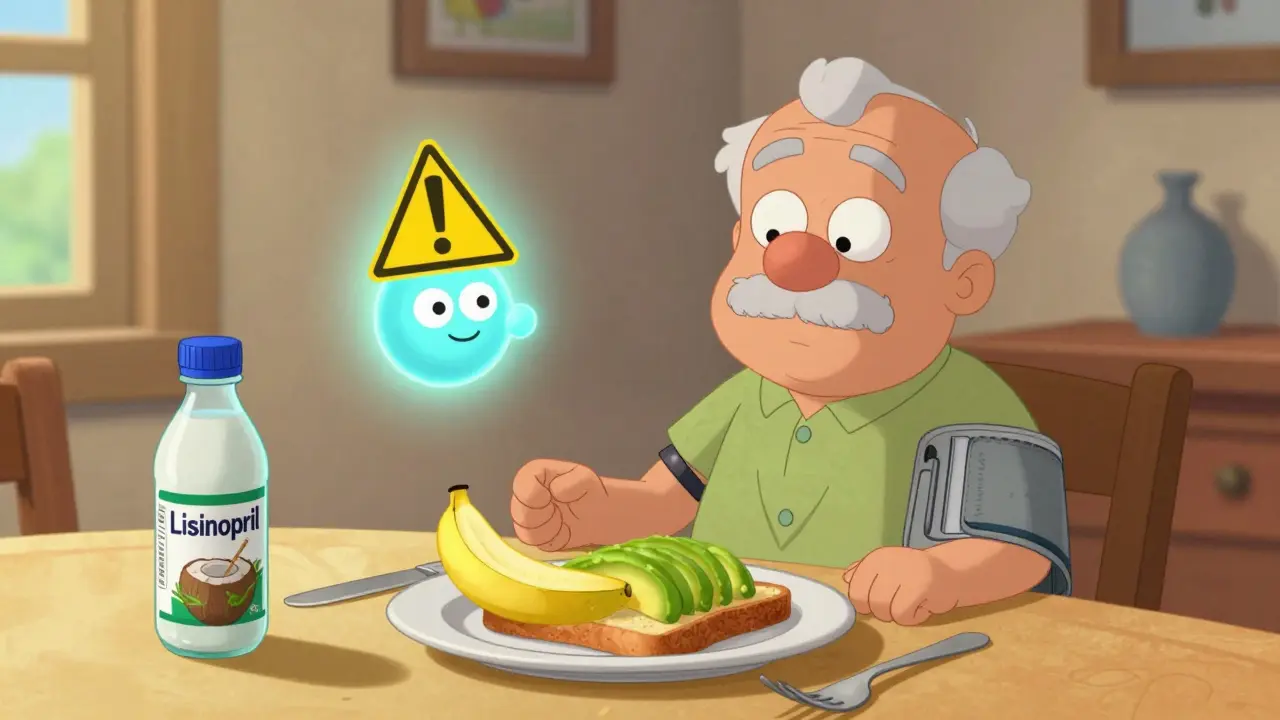
When you’re taking an ACE inhibitor like lisinopril, your doctor likely told you to watch your salt. But few mention the real hidden risk: what you eat. Many people on these blood pressure meds don’t realize that common foods-bananas, potatoes, avocados, even coconut water-can push their potassium levels into dangerous territory. And that’s not just a theory. It’s a real, documented danger that lands people in the hospital every year.
How ACE Inhibitors Change Your Body’s Potassium Balance
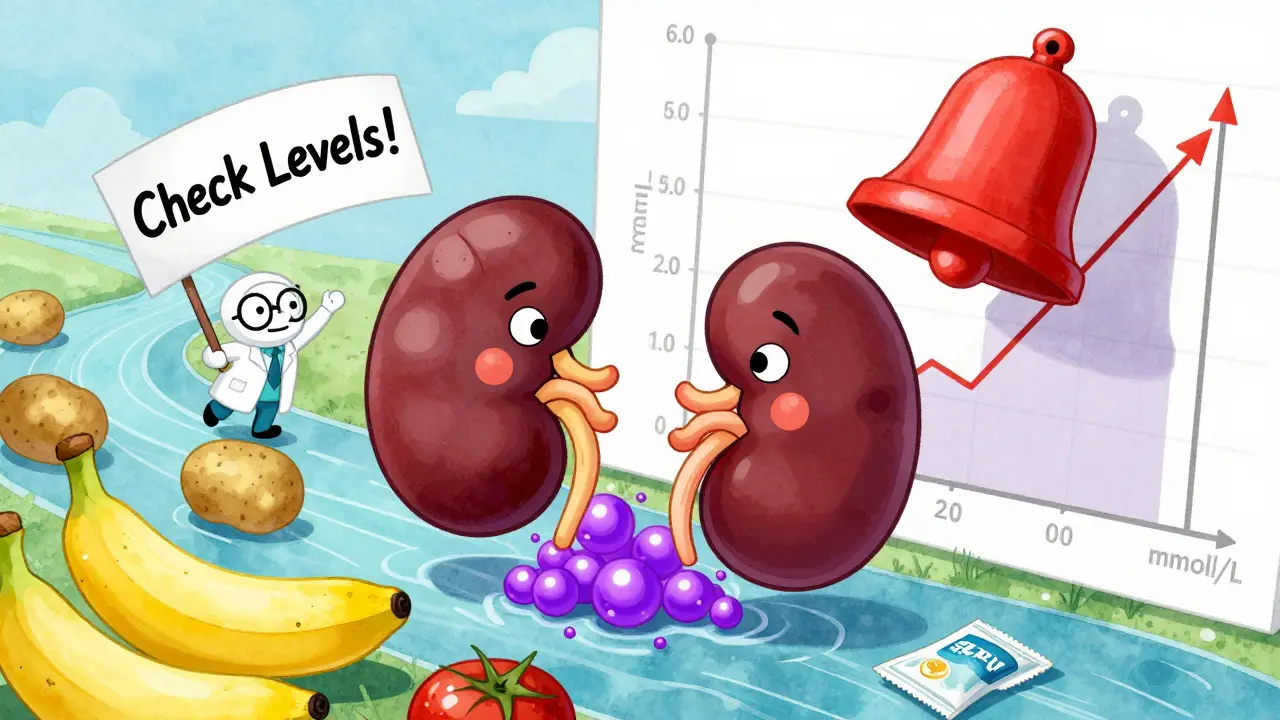
ACE inhibitors work by relaxing your blood vessels. They do this by blocking a chemical called angiotensin II, which normally tightens arteries. But here’s the side effect no one talks about: when that chemical is blocked, your kidneys stop flushing out as much potassium. That’s not a bug-it’s how the drug works. Less aldosterone means less potassium excreted in urine. For most people, that’s fine. But if you’re eating a lot of potassium-rich foods on top of it, your body can’t keep up.
Studies show that in people with healthy kidneys, ACE inhibitors raise potassium by about 0.5 to 1.0 mmol/L. That’s usually harmless. But if you have kidney problems-especially stage 3 or 4 chronic kidney disease-your levels can jump 1.5 to 2.5 mmol/L. And once potassium hits above 5.0 mmol/L, you’re in danger zone. Above 6.0? That’s a medical emergency. Irregular heartbeat. Muscle weakness. Nausea. In worst cases, cardiac arrest.
Which Foods Are the Biggest Culprits?
You don’t need to avoid all fruits and veggies. But some are loaded with potassium-and they’re easy to overdo. A single banana has around 326 mg. One medium baked potato? 379 mg. Half an avocado? Over 500 mg. A cup of tomato sauce? Nearly 400 mg. And don’t forget salt substitutes. Products like Nu-Salt pack 525 mg of potassium into just 1.25 grams. That’s more than a banana in a teaspoon.
Here’s what to watch out for:
- Bananas (326 mg per medium)
- Oranges and orange juice (237 mg per medium orange, 496 mg per cup)
- Avocados (507 mg per 100g)
- White and sweet potatoes (379 mg and 670 mg per 100g, respectively)
- Tomatoes and tomato products (193 mg per 100g raw, higher when cooked or concentrated)
- Dried fruits (apricots, raisins, prunes-concentrated sugar and potassium)
- Coconut water (1,500 mg per serving-yes, that’s in one bottle)
- Salt substitutes with potassium chloride
These aren’t “bad” foods. In fact, they’re healthy for most people. But when your kidneys are already struggling to remove potassium because of your medication, they become ticking time bombs.
Who’s at Highest Risk?
Not everyone on ACE inhibitors needs to panic. The risk isn’t the same for everyone. It depends on three big factors: kidney function, diabetes, and other meds.
If you have normal kidney function, your annual risk of dangerous hyperkalemia is about 1.2%. But if you have chronic kidney disease (CKD) stages 3 or 4? That jumps to 12.7%. If you have diabetes? Your risk is 3.2 times higher than someone without it. And if you’re also taking a potassium-sparing diuretic like spironolactone? Your risk triples or even quadruples.
Age matters too. Older adults often have reduced kidney function without knowing it. They might eat a banana with breakfast, take their lisinopril, and never think twice. But their kidneys can’t clear the extra potassium. And by the time they feel weak or dizzy, it’s already too late.
What Does the Science Say About Eating Potassium?
Here’s where it gets confusing. Some studies say you should cut back. Others say you should eat more. A 2016 study in the Journal of the American College of Cardiology found that people on ACE inhibitors or ARBs who ate 3,400-4,700 mg of potassium per day didn’t develop hyperkalemia-as long as their kidneys were healthy.
So what’s the truth? It’s not black and white. The key is matching your intake to your body’s ability to handle it. If your kidneys are working fine, moderate potassium intake is safe-and even beneficial. Potassium helps lower blood pressure, reduces stroke risk, and protects your heart. But if your kidneys are damaged? Too much potassium becomes toxic.
That’s why blanket advice like “avoid all potassium” is outdated-and dangerous. It can lead to nutrient deficiencies. The real answer? Personalized guidance.
How to Stay Safe Without Cutting Out Healthy Foods
You don’t have to give up your avocado toast or sweet potato fries. But you do need to be smart about it.
- Get your potassium checked regularly. Your doctor should test your blood potassium before starting an ACE inhibitor, then again at 1-2 weeks after starting or changing the dose. After that, every 3-6 months if you’re stable. If you have kidney disease or diabetes, check monthly.
- Know your daily limit. For most people on ACE inhibitors with normal kidney function, 2,600-3,400 mg per day is safe. If you have kidney issues, aim for under 2,000 mg. That’s not easy, but it’s doable.
- Space out your meals. Research shows that eating high-potassium foods 2 hours before or after your ACE inhibitor dose reduces the spike in blood potassium by about 25%. Timing matters.
- Swap smartly. If you love potatoes, try boiling them and draining the water. That removes up to 50% of the potassium. Same with carrots or beets. Leaching helps.
- Read labels. Many processed foods have potassium chloride added as a salt substitute. Look for “potassium chloride” or “KCl” in the ingredients.
What About Other Medications?
ACE inhibitors aren’t the only drugs that raise potassium. Combining them with other meds is where things get risky.
Spironolactone, eplerenone, and triamterene-all potassium-sparing diuretics-can double or triple your risk. Even some NSAIDs like ibuprofen can reduce kidney function enough to make potassium buildup more likely. If you’re on multiple medications, your pharmacist should flag these interactions. If they didn’t, ask.
And here’s something most people don’t know: not all ACE inhibitors are equal. Enalapril has been shown to carry a 15% higher risk of hyperkalemia than lisinopril at the same dose. If you’ve had a potassium spike before, switching to lisinopril might help.
Real Stories, Real Risks
One nurse on Reddit shared that she’s seen at least a dozen patients hospitalized for hyperkalemia after drinking coconut water daily while on lisinopril. Most were elderly, with undiagnosed mild kidney disease. They thought coconut water was “healthy.” It was a silent killer.
Another patient on Drugs.com said his potassium shot to 5.8 after eating two bananas a day with his medication. His doctor had never warned him. He ended up in the ER with an irregular heartbeat.
But not everyone has problems. A 2022 survey of over 1,200 people on ACE inhibitors found that 68% had no issues with moderate potassium intake-under 2,000 mg per day. The difference? They monitored their levels and adjusted their diet.
What’s New in 2026?
The FDA updated its guidance in 2023 to stop recommending blanket potassium restrictions. Instead, they now push for risk-based advice. If you’re young and healthy with normal kidneys? Eat your bananas. If you’re 70, diabetic, and have stage 3 CKD? Be cautious.
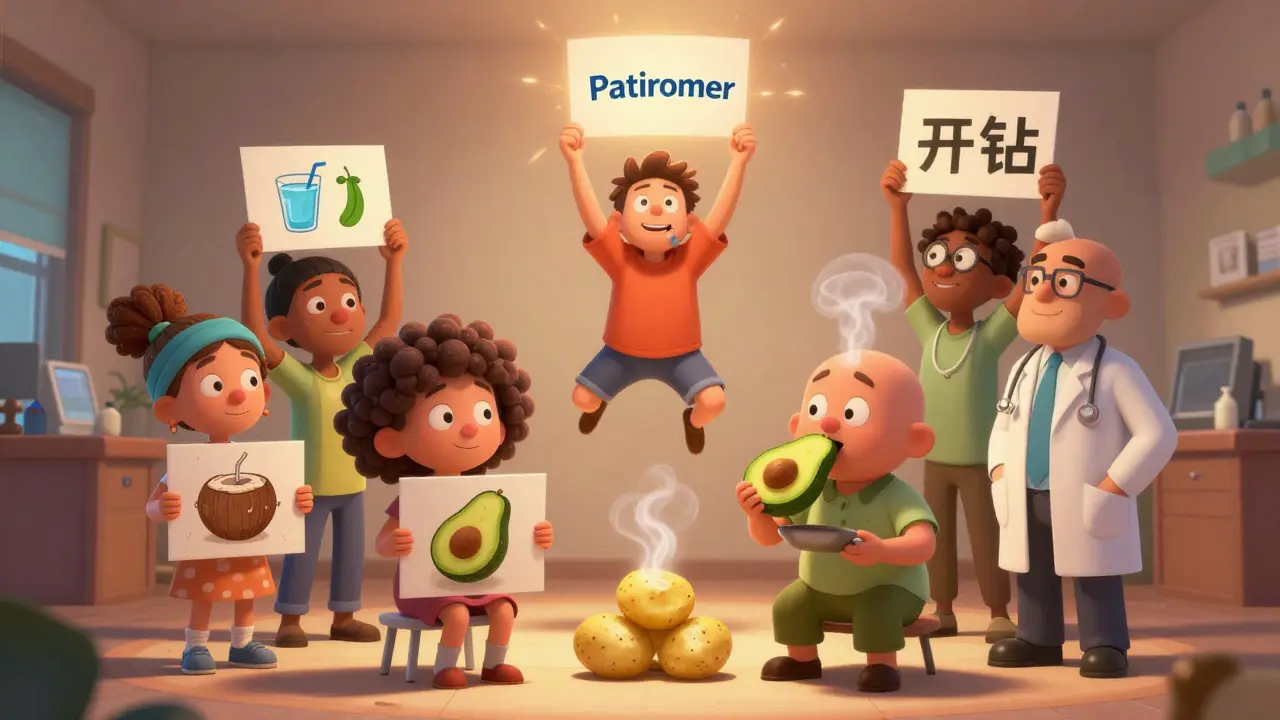
There’s also a new drug called patiromer (Veltassa), approved in 2015, that binds potassium in the gut and lets your body pass it out. It’s not for everyone-but for those who need to stay on ACE inhibitors but keep getting high potassium, it’s a game-changer. Clinical trials show 89% of patients who couldn’t tolerate potassium-rich foods were able to resume their diet after starting patiromer.
And now, genetic testing is starting to help. Some people have a variation in the WNK1 gene that makes them extra sensitive to potassium buildup on ACE inhibitors. Those with this variant have over five times the risk. Testing isn’t routine yet-but it’s coming.
Bottom Line: Don’t Fear Food, Fear Ignorance
You don’t need to live on rice and chicken. You just need to know your numbers. If you’re on an ACE inhibitor, get your potassium checked. Talk to your doctor or pharmacist about what you’re eating. Don’t assume you’re fine because you feel okay. Hyperkalemia doesn’t always cause symptoms until it’s too late.
Healthy eating doesn’t mean eating everything. It means eating wisely-with your health in mind. Your blood pressure medication is helping you live longer. Don’t let a banana undo that.
Can I eat bananas while taking lisinopril?
If you have normal kidney function and your potassium levels are stable, one banana a day is usually fine. But if you have kidney disease, diabetes, or are on other potassium-raising medications, even one banana can push your levels too high. Always check your blood potassium first before assuming it’s safe.
What happens if my potassium gets too high on ACE inhibitors?
High potassium (above 5.0 mmol/L) can cause muscle weakness, nausea, irregular heartbeat, and in severe cases, cardiac arrest. Levels above 6.0 mmol/L are life-threatening and require emergency treatment. Symptoms often appear suddenly and without warning, which is why regular blood tests are critical.
Are all ACE inhibitors the same when it comes to potassium risk?
No. Enalapril has been shown to carry a 15% higher risk of raising potassium compared to lisinopril at equivalent doses. This is likely due to differences in how the drugs are absorbed and how long they stay active in your body. If you’ve had a potassium spike before, talk to your doctor about switching.
Should I stop eating potassium-rich foods completely?
No. Potassium is essential for heart and muscle function. Avoiding it entirely can lead to deficiencies and increase your risk of stroke and heart disease. The goal isn’t to eliminate potassium-it’s to match your intake to your body’s ability to process it. Work with your doctor to find your safe limit.
How often should I get my potassium checked?
Before starting an ACE inhibitor, get a baseline test. Then retest at 1-2 weeks after starting or changing the dose. If results are normal and you have healthy kidneys, check every 3-6 months. If you have kidney disease, diabetes, or are on other risky meds, check monthly.
Can I use salt substitutes if I’m on ACE inhibitors?
Avoid them unless your doctor says it’s safe. Most salt substitutes contain potassium chloride, and just 1.25 grams can give you over 500 mg of potassium-equivalent to a banana. That’s too much for many people on ACE inhibitors, especially if they’re already eating potassium-rich foods.
Is coconut water safe with ACE inhibitors?
No, not if you have any kidney issues or are on other medications that raise potassium. One bottle of coconut water contains about 1,500 mg of potassium-more than most people should have in a full day. Many hospitalizations for hyperkalemia have been linked to daily coconut water use in people on ACE inhibitors.
Next Steps: What to Do Today
- Check your last potassium blood test result. If it’s over 4.8 mmol/L, schedule a follow-up.
- Review your medications with your pharmacist. Are you on any potassium-sparing diuretics or NSAIDs?
- Track your potassium intake for 3 days using a free app like Cronometer. See if you’re hitting 2,000+ mg daily.
- Ask your doctor: “Based on my kidney function and other meds, what’s my safe potassium limit?”
- If you’re unsure, avoid coconut water, salt substitutes, and more than one banana or avocado per day until you get tested.


Jason Yan
January 15, 2026 AT 01:59Look, I get it - bananas are the poster child for potassium, but let’s not turn this into a fear diet. My grandpa’s on lisinopril, eats two bananas a day, and his potassium’s been stable for five years. The real issue isn’t the food - it’s the lack of follow-up blood work. Doctors give you a script and vanish. No one checks in. No one says, ‘Hey, how’s your potassium doing?’ That’s the broken system, not the avocado toast.
Vicky Zhang
January 16, 2026 AT 16:34I almost died from this. Not exaggerating. I was drinking coconut water every morning like it was some kind of wellness ritual - ‘natural electrolytes!’ - and took my lisinopril like clockwork. One day I couldn’t lift my arm. Felt like my heart was skipping beats. ER. ICU. Turned out my potassium was 6.1. They said if I’d waited another hour, I wouldn’t have made it. Please, if you’re on this med - stop treating ‘healthy’ like it’s permission to ignore your body. You’re not invincible.
Andrew Freeman
January 17, 2026 AT 20:42lol so now im not allowed to eat potatoes cause i take blood pressure med? next theyll say dont breathe cause oxygen raises ph
Susie Deer
January 19, 2026 AT 09:23USA medical system is broken. Doctors dont care. They just hand out pills and forget. I know because my mom died from this. No one warned her. She was 72. Ate sweet potatoes. Took lisinopril. Died in her sleep. No one ever tested her potassium. This is murder by neglect.
Dylan Livingston
January 20, 2026 AT 16:52How ironic that the same people who preach ‘eat the rainbow’ are now suddenly terrified of potassium-rich foods. It’s not the food. It’s the pharmaceutical-industrial complex pushing fear to sell more tests, more drugs, more Veltassa. You’re being manipulated into thinking you need to be ‘careful’ - while they profit from your anxiety. The real toxicity here isn’t in your banana. It’s in the system that profits from your fear.
Anna Hunger
January 20, 2026 AT 18:53It is imperative that individuals prescribed ACE inhibitors undergo regular serum potassium monitoring, particularly if comorbid conditions such as chronic kidney disease or diabetes are present. The data unequivocally supports that dietary potassium intake, when calibrated to renal function, poses no significant risk. However, the omission of baseline and follow-up laboratory assessments constitutes a critical lapse in clinical care. Patients must be empowered to request these tests; reliance on physician initiative alone is insufficient and potentially hazardous. The burden of vigilance should not rest solely on the patient, yet in practice, it often does.
Sarah Triphahn
January 22, 2026 AT 07:45So you’re telling me the only reason you’re not dead yet is because you didn’t eat enough bananas? Congrats. You’re not a hero. You’re just lucky. Most people don’t even know what potassium is. They think ‘natural’ means ‘safe.’ It doesn’t. Your body doesn’t care if it came from a tree or a lab. If it’s in your blood too high, you die. Stop romanticizing food. This isn’t a lifestyle blog. It’s a warning.
says haze
January 24, 2026 AT 07:23It’s fascinating how the medical establishment pivots from ‘potassium is essential’ to ‘potassium is deadly’ depending on who’s taking the pill. The truth? It’s never about the food. It’s about control. If you can make people afraid of avocados, they’ll trust you more. They’ll come back for more tests, more meds, more ‘guidance.’ But here’s the real question: if your body can’t handle a banana, why are you on a drug that makes it worse? Maybe the problem isn’t your diet. Maybe it’s the prescription.
TooAfraid ToSay
January 25, 2026 AT 22:35Bro, in Nigeria we eat plantains with every meal and nobody’s dropping dead from potassium. You guys are so scared of food you forgot how to live. This is why America is dying. Not from bananas. From fear. You think your doctor knows more than your grandma who cooked for 60 years? Nah. You just got sold a fear package. Go eat your avocado. Live a little.
Allison Deming
January 27, 2026 AT 15:21It is morally irresponsible to publish content that suggests dietary moderation as a solution without first demanding systemic accountability. The pharmaceutical industry, the medical establishment, and the food industry have conspired to shift blame onto the individual. You are not failing because you ate a banana. You are failing because your healthcare system treats you like a statistic, not a human. If your doctor does not proactively monitor your potassium, they are negligent. If your pharmacy does not flag interactions, they are complicit. Stop telling people to eat less. Start telling them to demand better.