
Viral Warts: HPV Infection and What Actually Works to Remove Them
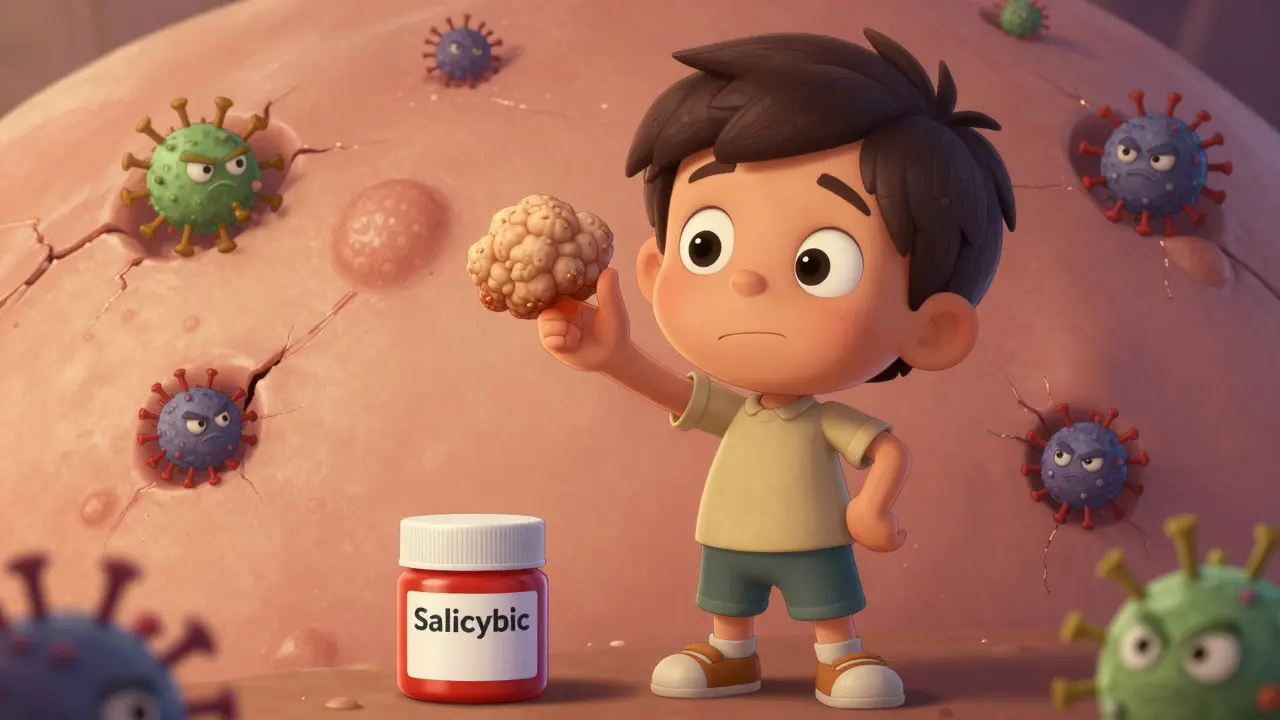
Most people think warts are just a nuisance - ugly, rough bumps on the skin that won’t go away. But they’re not just a cosmetic issue. Warts are caused by HPV - the human papillomavirus - and there are over 100 different strains of it. Some cause harmless bumps on your fingers. Others dig deep into the soles of your feet, making every step painful. And while many warts disappear on their own within two years, most people don’t want to wait. They want them gone now.
How HPV Turns Skin Into Warts
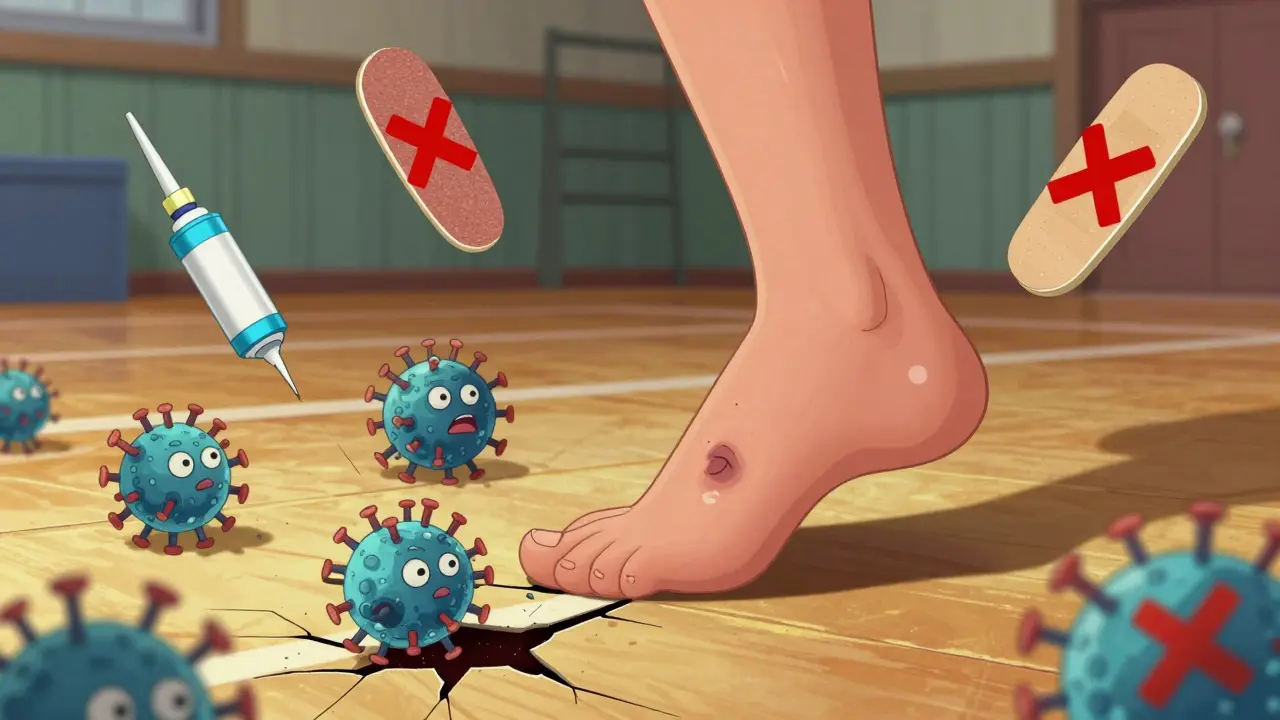
HPV doesn’t just show up out of nowhere. It enters your skin through tiny cuts or cracks - maybe from walking barefoot in a gym locker room, biting your nails, or scratching a dry patch. Once inside, it tricks your skin cells into multiplying faster than normal. That’s what creates the thick, raised bump you see. The virus doesn’t spread through your bloodstream like a cold. It stays local, which is why you often get clusters of warts near where the original one appeared.
Not all warts are the same. The type you get depends on the strain of HPV:
- Common warts (HPV types 1, 2, 4) - usually show up on fingers, hands, or around nails. They’re rough, raised, and sometimes look like tiny cauliflower heads.
- Flat warts (HPV types 3, 10) - smoother, smaller, and often show up in large numbers on the face, arms, or legs. These are common in kids and teens.
- Plantar warts (HPV types 1, 2, 4, 60, 63) - grow inward because of pressure from walking. They hurt. A lot. You might see small black dots in the center - those are tiny blood vessels, not seeds.
According to the American Academy of Dermatology (AAD), up to 24% of children and 5% of adults have non-genital warts. That’s one in four kids you’ll see in a classroom with at least one. And while it’s less common in adults, it doesn’t mean you’re immune. Stress, a weakened immune system, or frequent skin contact with infected surfaces can trigger them at any age.
Warts Can Go Away on Their Own - But Should You Wait?
Yes, most warts will vanish without treatment. Studies show 60-70% clear up within two years. But waiting isn’t always the smart move. Warts are contagious. You can spread them to other parts of your body - or to someone else. A plantar wart on your foot can turn into ten if you keep walking on it. A common wart on your finger can spread to your face if you pick at it.
And then there’s the pain. Plantar warts feel like walking on a pebble. Common warts crack and bleed. Flat warts can be embarrassing, especially when they show up on your face. If you’re the kind of person who hates the way your skin looks or you’re tired of the discomfort, waiting isn’t practical. You want a solution that works - fast.
Topical Treatments: What’s Actually Effective?
The most widely used home treatment is salicylic acid. You can buy it over the counter in liquids, gels, or patches. It works by slowly breaking down the wart tissue layer by layer. But it’s not magic. You have to be consistent. The standard routine: soak the wart in warm water for 10 minutes, gently file it with an emery board (don’t reuse the file on healthy skin), then apply the acid. Do this daily. It takes 6 to 12 weeks. No shortcuts.
A 1976 study of 1,802 patients published in the British Journal of Dermatology found salicylic acid cured 84% of plantar warts - but only when used correctly. Miss a day? Delay the filing? Your results drop fast.
Another option is trichloroacetic acid (TCA), often used in clinics. Dermatologists apply it directly after scraping the wart surface. It burns the tissue, causing it to die and peel off. It’s stronger than salicylic acid and works faster - but it can burn healthy skin too. Side effects include pain, redness, and sometimes dark spots on the skin. Not ideal for beginners.
Cryotherapy: Freezing Warts Off
If you’ve ever been to a dermatologist for a wart, you’ve probably seen this: a puff of cold mist, a sharp sting, and then a blister. That’s cryotherapy - liquid nitrogen freezing the wart. It’s one of the most common in-office treatments. The goal is to freeze the wart and a small rim of healthy skin around it, cutting off its blood supply.
A 2023 review in the Journal of Skin Appendage Disorders compared cryotherapy to salicylic acid across seven studies and 976 patients. The results? No significant difference in cure rates after 12 weeks. Both worked about equally well. But here’s the catch: timing matters. The same 1976 study showed that if you wait four weeks between freeze sessions, the success rate drops from 75% to 40%. The sweet spot? Treatments every 2-3 weeks. Most people need 3-6 sessions.
It’s not painless. You’ll feel a burning sensation during the freeze, and the area will blister afterward. Some people get a dark scab that takes weeks to fall off. But for many, it’s worth it. Especially for thick plantar warts or stubborn common warts that haven’t responded to home treatments.
Other Medical Options - When Nothing Else Works
When salicylic acid and cryotherapy fail, doctors turn to stronger tools.
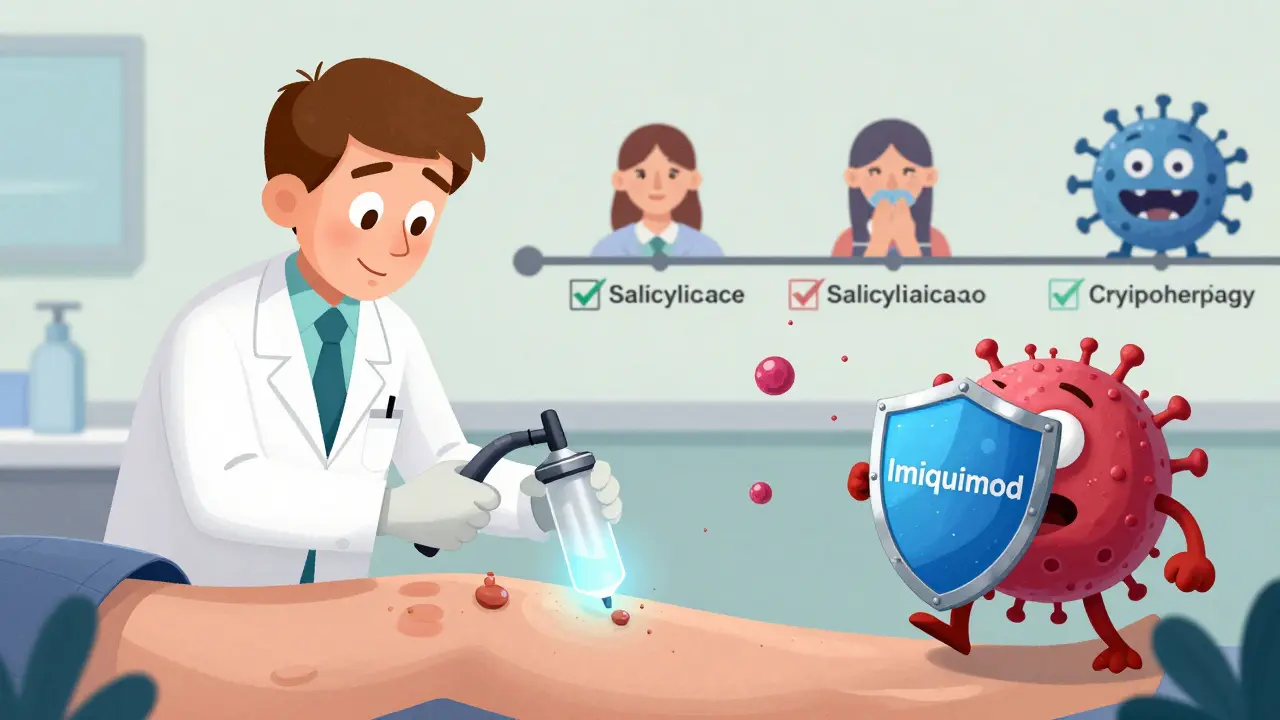
- Imiquimod cream - This isn’t a wart killer. It’s an immune booster. You apply it three times a week. It doesn’t burn or dissolve the wart. Instead, it wakes up your body’s immune system to attack the HPV virus. It’s been used successfully when other treatments failed. Side effects? Redness, swelling, itching - signs your immune system is doing its job.
- Electrosurgery - A tiny needle burns the wart off. Done under local numbing. It’s fast, but it leaves a small scar. Reserved for warts that have lasted years.
- Laser treatment - Pulse dye lasers (like VBeam) target the blood vessels feeding the wart. It turns the wart purple or black within days. The tissue dies and falls off. It’s expensive and usually not covered by insurance, but it’s effective for warts that won’t budge.
There are dozens of other methods - silver nitrate, cantharidin, even duct tape - but most lack solid evidence. A 2022 review from the Royal Australian College of General Practitioners looked at 15 different treatments and found only salicylic acid and cryotherapy had reliable data. Everything else? Mostly anecdotal.
What Doesn’t Work - And Why
There’s a lot of misinformation out there. People swear by apple cider vinegar, garlic, or superglue. Some even try cutting warts off with scissors. These don’t work - and they can make things worse.
Super glue? It seals the wart, but doesn’t kill the virus. It might protect the area temporarily, but the HPV is still there. Cutting? That’s how you get infections or spread the virus to other parts of your skin. And don’t use harsh chemicals meant for other purposes - they can scar your skin permanently.
Even surgical removal - cutting the wart out - is usually avoided. Why? Because the virus lives in the surrounding skin. If you don’t remove a wide enough margin, the wart comes back. Studies show recurrence rates are high, and the scar is often worse than the wart.
How to Prevent Spreading - And Recurrence
Warts are contagious, but not because they’re “dirty.” They spread through direct skin contact or shared surfaces - towels, shower floors, nail clippers. Here’s how to stop them:
- Never pick or scratch a wart.
- Wash your hands after touching one.
- Use separate towels, socks, and shoes if you have plantar warts.
- Don’t share razors or emery boards.
- Wear flip-flops in public showers and pools.
Even after the wart is gone, the virus can linger in your skin for months. That’s why new warts sometimes appear nearby. Stay vigilant. Keep your skin moisturized - dry, cracked skin is an open door for HPV.
When to See a Doctor
You don’t need to rush to a dermatologist for every wart. But if any of these apply, it’s time:
- The wart is bleeding, painful, or changing color.
- You have diabetes or a weakened immune system - your body can’t fight off HPV well.
- Warts keep coming back after treatment.
- You’re not sure if it’s a wart - some skin cancers look like warts.
- You’ve tried over-the-counter treatments for 12 weeks with no change.
Doctors can confirm the diagnosis with a quick visual exam. No biopsies needed unless it looks suspicious. And they’ll help you pick the best treatment based on your wart type, location, and medical history.
The Bottom Line
Viral warts are frustrating, but they’re not dangerous. The best approach? Start simple. Use salicylic acid daily for 12 weeks. If that doesn’t work, try cryotherapy. Combine them if you can - studies suggest it boosts success rates. Be patient. Warts don’t vanish overnight. And don’t be tempted by quick fixes that promise miracles. Most don’t deliver.
What works isn’t flashy. It’s consistency. It’s hygiene. It’s knowing when to stop trying home remedies and let a professional handle it. And if you’re one of the lucky ones - the 60-70% - your body will clear it on its own. But why wait? With the right plan, you can get rid of it faster.



Rob Turner
February 11, 2026 AT 15:29Been dealing with plantar warts for years. Salicylic acid worked eventually, but only after I stopped being lazy and did the soak-file-apply routine every single day. No magic, just consistency. Also, wear socks to bed. Trust me, it helps.
Also, don’t let anyone tell you duct tape is a cure. It’s not. It’s just a way to pretend you’re doing something.
And yeah, HPV is wild. My kid got one from the gym shower. We’re all wearing flip-flops now. No shame.
christian jon
February 13, 2026 AT 03:47OH MY GOD. I CAN’T BELIEVE THIS POST ISN’T CALLING OUT THE CDC FOR HIDING THE TRUTH ABOUT HPV AND WARTS!!!
EVERY SINGLE ONE OF THESE TREATMENTS? THEY’RE DESIGNED TO KEEP YOU COMING BACK FOR MORE! SALICYLIC ACID? THAT’S A PHARMA TRAP! CRYOTHERAPY? THAT’S JUST A COVER FOR THE VACCINE MANUFACTURERS TO GET YOU USED TO FREEZING YOUR SKIN! THEY WANT YOU AFRAID OF YOUR OWN BODY!
AND DON’T EVEN GET ME STARTED ON THE ‘DON’T SHARE TOWELS’ THING-THAT’S A SOCIAL CONTROL TACTIC! WARTS AREN’T CONTAGIOUS, THEY’RE A SIGN YOU’RE LIVING IN A TOXIC SYSTEM!
JUST EAT MORE GARLIC. AND PRAY. AND STOP USING SOAP.
ALSO, THE BLACK DOTS? THOSE AREN’T BLOOD VESSELS. THEY’RE MICROCHIPS. I’M NOT KIDDING.
Autumn Frankart
February 14, 2026 AT 23:14So let me get this straight. The government lets HPV run rampant because they’re too busy making sure we all get vaccinated for the ‘right’ strains? What about the 100+ strains? They don’t want us to know about those, do they?
I’ve been tracking this for years. My neighbor’s kid got warts after the school mandated foot inspections. Coincidence? I think not.
And why is it always the feet? Why not the hands? The face? Because they’re targeting the lower half. Why? Because that’s where the control is. Grounded. Submissive. Easy to track.
Don’t trust the AAD. They’re funded by Big Dermatology. I’ve got receipts.
Also, I heard the military uses laser treatment on recruits to ‘break their spirit.’ I’m not making this up.
Pat Mun
February 16, 2026 AT 16:33I just want to say-this post is so helpful. I’ve been so stressed about my flat warts on my arms. I thought I was the only one. Turns out, 5% of adults? That’s like 1 in 20 people. I feel seen.
Also, I started using salicylic acid last week. It’s been 4 days. I’m not giving up. I’m not even mad anymore. I’m just… committed. I’ve got a little calendar on my fridge. Day 1: soak. Day 2: file. Day 3: apply. Day 4: repeat.
And I started wearing socks to bed. It’s weird, but I feel like I’m taking back control. Small wins.
If you’re reading this and you’re stuck-just keep going. You’re not alone. I’m rooting for you.
Also, moisturize. Your skin deserves kindness.
Skilken Awe
February 17, 2026 AT 18:31Oh wow. Another ‘let’s make warts sound like a medical mystery’ post. How quaint.
Let me break this down for you: HPV is a virus. It causes hyperproliferation of keratinocytes. That’s it. No ‘tricking skin cells.’ No ‘cauliflower heads.’ Just biology.
Salicylic acid? Keratolytic agent. Cryotherapy? Induces apoptosis. Imiquimod? TLR7 agonist. You don’t need a novel. You need a textbook.
And don’t even get me started on ‘duct tape therapy.’ That’s not anecdotal-it’s a placebo with adhesive. The 2022 review said it best: no reliable data. That’s because it’s nonsense.
Also, ‘black dots are blood vessels’? No. They’re thrombosed capillaries. Stop using layman terms. We’re not on TikTok.
andres az
February 18, 2026 AT 19:00Why are we even talking about this? The real issue is why the CDC doesn’t just say: ‘HPV is everywhere. You’ll get it. You’ll get rid of it. Stop freaking out.’
Why do we need 12-week regimens? Why do dermatologists charge $300 to freeze a wart? Why not just say: ‘Let your immune system do its job?’
I’ve had warts for 8 years. Never treated them. Still here. Still walking. Still typing.
Maybe the problem isn’t the wart. Maybe it’s the panic.
Also, ‘don’t pick’? That’s like saying ‘don’t breathe.’ Impossible.
Alyssa Williams
February 19, 2026 AT 23:53I just want to say thank you for this. I’ve been scared to go to the doctor because I thought warts were embarrassing. But reading this? I realized they’re just… a thing. Like a pimple. But on your foot.
I started the salicylic acid routine yesterday. Soaked, filed, applied. It felt weird. But I did it. And I didn’t cry.
Also, I bought new flip-flops. For the shower. And I threw out my old emery board. No more sharing. Ever.
You’re right. It’s not about speed. It’s about being gentle with yourself. I’m proud of me.
Jack Havard
February 20, 2026 AT 04:1360-70% clear up on their own? Then why are we being sold a $50 bottle of acid? Why are clinics pushing cryo? Why are we told to ‘take action’? Because profit.
It’s a scam. The virus doesn’t care. Your body doesn’t care. But the industry? Oh, they care.
I’ve got two warts. I haven’t touched them. I’ve been living with them for 5 years. They’re smaller now. Coincidence? Maybe. Or maybe my immune system is just better than your treatment plan.
Stop selling fear. Start trusting biology.
Gloria Ricky
February 21, 2026 AT 16:51OMG I just tried the salicylic acid and I forgot to file it for 3 days and now I feel like a failure 😭
but then I read this post and realized-wait, it’s supposed to take 12 weeks??
so I’m not broken. I’m just early.
also, I started wearing socks to bed and my dog licked my foot and I didn’t panic. progress!!
thank you for not making this sound like a battle. it’s just… a thing. and i’m still me.
Stacie Willhite
February 22, 2026 AT 11:08I just wanted to say-I’ve had plantar warts since I was 12. I’m 34 now. I’ve tried everything. Cryo. Acid. Laser. Even that weird cantharidin stuff that made my foot tingle for days.
None of it worked. Not really.
Then one day, I just stopped fighting. I moisturized. I wore sandals. I stopped touching them. I stopped stressing.
Two years later? Gone. No treatment. Just time.
Maybe the real cure isn’t in the bottle. Maybe it’s in the peace.
Jason Pascoe
February 23, 2026 AT 12:07Just came back from Australia. We’ve got a thing here-‘warts are just part of growing up.’ No drama. No panic. Just let it be.
My nephew had one on his thumb. We didn’t treat it. He didn’t pick it. He played soccer. He washed his hands. Three months later? Vanished.
Maybe we’re overcomplicating this. The body’s smart. Let it do its thing.
Also, flip-flops in showers? Yes. But also-just don’t walk barefoot in gyms. Simple.
Peace over panic.
Annie Joyce
February 24, 2026 AT 06:28I’m a nurse, and I’ve seen so many people stress over warts like they’re a death sentence.
Let me say this: you are not broken. You are not dirty. You are not alone.
Salicylic acid? It’s not glamorous. But it works. Cryo? It stings. But it works. Imiquimod? It burns. But it works.
And if none of that works? Your immune system is still fighting. You’re still alive.
Warts don’t define you. Your patience does.
Also-yes, wear flip-flops. And yes, don’t share nail clippers. But no, you’re not a bad person for having one.
You’re human. And that’s enough.
Suzette Smith
February 25, 2026 AT 16:16Wait, so the black dots aren’t seeds? I’ve been telling people for years they’re HPV seeds. Like little virus eggs. Now I feel silly.
Also, I tried garlic. It burned. I cried. The wart didn’t budge.
So… salicylic acid it is. I guess.
Also, why is everyone so calm about this? I thought I was the only one who screamed into a pillow every time I saw my foot.
Rob Turner
February 26, 2026 AT 01:44Replying to myself because I forgot to say this: I just got my first clean patch of skin in 5 years. No warts. No acid. No cryo. Just… normal skin.
It took 14 months. I didn’t give up. I didn’t panic. I just kept doing the little things.
And now? I walk barefoot in the house. And I don’t even think about it anymore.
Thank you for this thread. I needed to hear that I’m not crazy.