
180-Day Exclusivity: How Patent Law Controls Generic Drug Market Entry
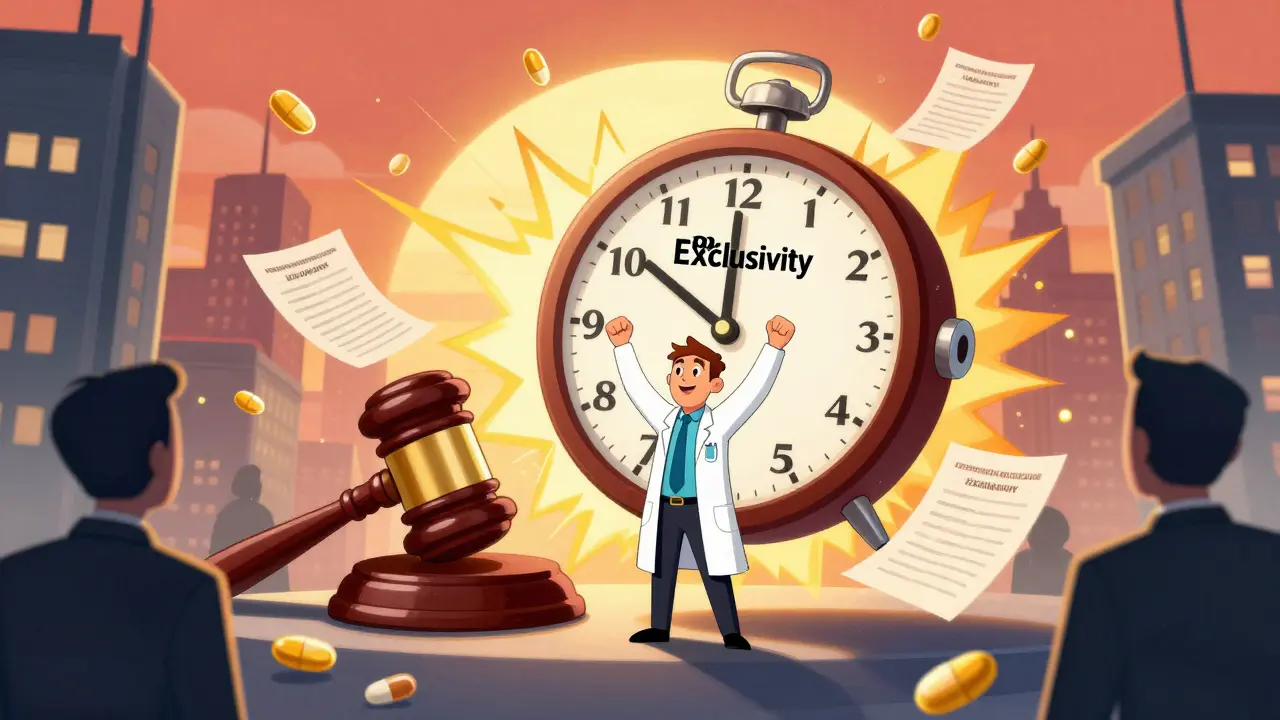
When a brand-name drug’s patent runs out, you’d think generic versions would flood the market right away. But that’s not how it works. In the U.S., a single generic company can block everyone else from selling the same drug for up to 180 days - and sometimes even longer. This isn’t a loophole. It’s the 180-day exclusivity rule, built into federal law to reward the first generic company brave enough to challenge a patent. But here’s the catch: it doesn’t always speed up access. Sometimes, it delays it.
How the 180-Day Exclusivity Rule Was Born
In 1984, Congress passed the Hatch-Waxman Act to fix a broken system. Brand-name drug makers had long monopolies - sometimes for decades - because generic companies couldn’t even start testing their versions until the patent expired. That meant patients paid high prices for years after the innovation had faded. The Hatch-Waxman Act changed that. It let generic manufacturers file an Abbreviated New Drug Application (ANDA) before the patent expired. But here’s the incentive: if a generic company files an ANDA and says, "This patent is invalid or we don’t infringe it" - known as a Paragraph IV certification - and wins in court, they get 180 days of exclusive rights to sell the generic version. No one else can enter until that clock runs out. This wasn’t just a reward. It was a strategic tool. The government knew that patent challenges are expensive, risky, and time-consuming. A generic company might spend millions on lawyers and lose. So the 180-day exclusivity was designed to make the gamble worth it.Who Gets the Clock? It’s Not as Simple as First to File
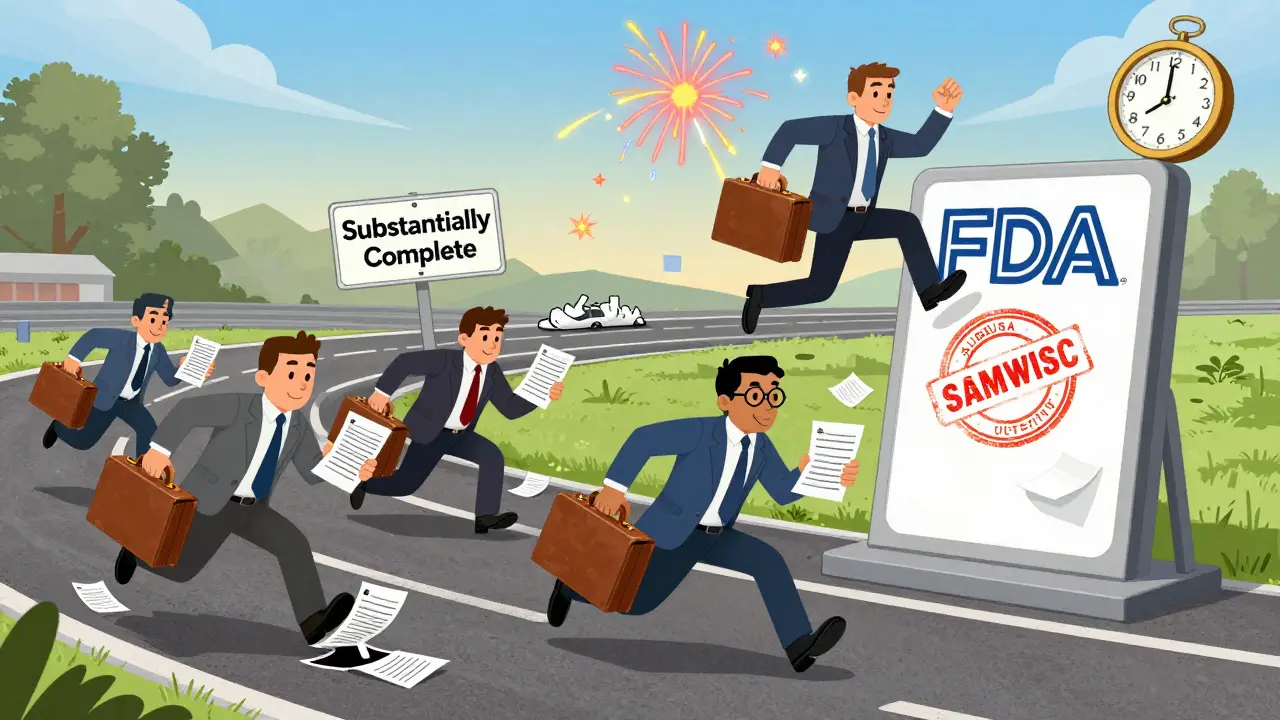
You’d think the first company to submit an ANDA with a Paragraph IV certification gets the exclusivity. But that’s not always true. The FDA requires the application to be "substantially complete." That means all the data, forms, and technical details must be in order. If even one page is missing, the FDA can say, "Not qualified." Then the next applicant - even if they filed a week later - becomes the first eligible one. Courts have ruled on this before. In Granutec, Inc. v. Shalala (1998), the Fourth Circuit made it clear: only the first company to submit a complete ANDA with a valid Paragraph IV certification qualifies. That’s why generic companies now have entire legal teams reviewing submissions before hitting send. And if two companies file on the same day? The FDA has internal rules to decide who wins. It’s not random. It’s based on timestamps, completeness, and sometimes even which company responded faster to FDA requests. This creates a race - not just to challenge the patent, but to file the perfect paperwork.When the Clock Starts - And When It Doesn’t
The 180-day clock doesn’t start when the FDA approves the drug. It doesn’t even start when the court rules in favor of the generic company. It starts on the earliest of two events:- The date the generic drug is first sold commercially
- The date a court rules the patent is invalid or not infringed
The Big Problem: Exclusivity That Lasts Years
This delay isn’t theoretical. In 2018, the FDA admitted the system sometimes lets the first generic company hold the market hostage for years. One example: a drug for opioid addiction. The first generic applicant challenged the patent in 2012. They won in court in 2014. But they didn’t launch the drug until 2017. That meant for three years, no other generics could enter - even though the patent was already dead. The FDA called this a flaw. In March 2022, they proposed a fix: make the exclusivity period start only when the drug is actually sold. No more waiting. If the first applicant delays, the clock doesn’t start - and everyone else can enter immediately. They also proposed a new rule: if a company launches more than five years before the patent expires, they get 270 days instead of 180. That’s a bigger reward for early challengers. But critics say it’s still too vague. Who decides what "early" means? What if the patent is weak? What if the company is just waiting for the right price point?Forfeiture: Losing the Prize
It’s not just about timing. The 180-day exclusivity can vanish - and fast. The Medicare Modernization Act of 2003 added forfeiture rules. If the first applicant doesn’t market the drug within 75 days after getting FDA approval - or within 30 months of filing the ANDA - they lose their exclusivity. That’s a hard deadline. Miss it, and the door opens for everyone. But here’s the problem: the rules are full of gray areas. What counts as "marketing"? What if the drug is approved but there’s a shortage of active ingredients? What if the company is negotiating with a distributor? The FDA has issued guidance - like the July 13, 2018, letter on buprenorphine/naloxone - to clarify, but companies still live in fear of accidentally forfeiting their prize.
Why This Matters to Patients and Prices
The U.S. spends over $1.7 trillion a year on prescription drugs. Generics make up 90% of prescriptions but only 20% of costs. That’s because once a generic enters, prices drop - often by 80% or more. The 180-day exclusivity was meant to speed that up. And it did - for the first wave. But when the first generic company delays, it blocks the next wave. That means patients pay more. Pharmacies pay more. Insurers pay more. Some experts say the system has become a tool for anti-competitive deals. Brand-name companies sometimes pay generic companies to delay their launch - a "pay-for-delay" settlement. These deals are illegal under antitrust law, but they still happen. And they’re easier to hide when the exclusivity clock is stuck.How This Compares to Other Exclusivity Rules
The 180-day rule is unique. It’s not like the 5-year exclusivity for new chemical entities - that prevents any ANDA from being filed at all. It’s not like pediatric exclusivity, which adds six months to a patent. This is the only exclusivity that’s tied to a legal challenge. Compare it to biosimilars - the generic version of biologic drugs like Humira. Under the BPCIA, the first interchangeable biosimilar gets 12 months of exclusivity. But multiple companies can qualify. It’s not winner-takes-all. That’s a big difference. The 180-day rule is a high-stakes poker game. One player wins big. Everyone else waits. And the cost? Millions in lost savings for patients.What’s Next for Generic Drug Access?
The FDA’s 2022 proposal is the most serious attempt to fix the system in decades. If passed, it would mean:- Exclusivity lasts exactly 180 days - from the day the first generic is sold
- No more multi-year delays
- More competition, faster
What triggers the 180-day exclusivity clock for generic drugs?
The clock starts on the earliest of two dates: the day the first generic drug is commercially marketed, or the day a court rules the challenged patent is invalid or not infringed. It does not start when the FDA approves the drug, even if approval comes first.
Can a generic company lose its 180-day exclusivity?
Yes. Under the Medicare Modernization Act of 2003, a first applicant can forfeit exclusivity if they fail to market the drug within 75 days after FDA approval or within 30 months of submitting their ANDA. Other reasons include withdrawing a Paragraph IV certification or settling a patent suit in a way that delays market entry.
Why does the FDA care about "substantially complete" ANDAs?
Only the first applicant to submit a substantially complete ANDA with a valid Paragraph IV certification qualifies for exclusivity. If the application is missing key data, forms, or certifications, the FDA can reject it as incomplete - even if it was filed first. This prevents companies from gaming the system by filing early with incomplete paperwork.
How does 180-day exclusivity differ from other types of drug exclusivity?
Unlike new chemical entity exclusivity (5 years) or pediatric exclusivity (6 months), which block ANDA submissions entirely, 180-day exclusivity only blocks other generic applicants who challenge the same patent. It’s tied to litigation, not innovation. It’s also a "winner-takes-all" reward - only one company gets it, unlike biosimilar exclusivity, which can be shared.
What happens if multiple companies file ANDAs on the same day?
The FDA uses internal rules to determine which applicant is first. Factors include the exact time of submission, completeness of documentation, and responsiveness to FDA requests. If all are substantially complete and filed on the same day, they may be considered joint first applicants - but only if they challenge the same patent. If they challenge different patents, each may qualify for their own exclusivity period.
Is the 180-day exclusivity rule being changed?
Yes. In March 2022, the FDA proposed a major reform: exclusivity would begin only when the first generic drug is actually sold, not when a court rules. This would prevent delays of years. They also proposed extending exclusivity to 270 days if a company launches more than five years before patent expiration. These changes are still under review and have not yet become law.



Harsh Khandelwal
December 23, 2025 AT 07:30This whole 180-day thing is just Big Pharma’s way of playing chess with our medicine. They let one generic company in, then quietly pay them to stall - all while the rest of us get stuck paying $500 for insulin like it’s gold dust. The FDA? They’re asleep at the wheel. I’ve seen this movie before - same script, different pill bottle.
niharika hardikar
December 25, 2025 AT 04:40The regulatory framework established under the Hatch-Waxman Act was designed to harmonize innovation incentives with market access, yet the current interpretation of Paragraph IV certifications and the temporal parameters of exclusivity have introduced significant market distortions. The absence of a clear, enforceable trigger for the commencement of the 180-day period constitutes a systemic failure in administrative oversight.
Aurora Daisy
December 26, 2025 AT 09:03Oh wow, America’s healthcare system is broken again? Shocking. In the UK, we just let the NHS negotiate prices and everyone gets their meds without needing a law degree to understand why they cost £12 instead of £120. Maybe if you stopped treating medicine like a stock market ticker, your system wouldn’t be this ridiculous.
Isaac Bonillo Alcaina
December 27, 2025 AT 06:02You’re all missing the point. The problem isn’t the 180-day rule - it’s the lack of enforcement. The FDA has issued guidance, but they don’t audit. They don’t punish. They don’t even track when companies ‘market’ a drug. If a company files an ANDA and sits on it for three years, that’s not a loophole - it’s fraud. And the fact that the DOJ hasn’t brought a single antitrust case against these pay-for-delay schemes proves this whole system is captured.
Rosemary O'Shea
December 28, 2025 AT 21:03Let me tell you, this isn’t just about drug pricing - it’s about the death of American fairness. We used to believe in meritocracy. Now? It’s a game of who can file the most legalese-heavy paperwork and then sit on it like a dragon guarding treasure. The first generic company isn’t a hero - they’re a cartel member with a law degree. And the FDA? They’re the bouncer letting the VIPs in while the rest of us wait in line, freezing.
Joe Jeter
December 28, 2025 AT 21:39Actually, the 180-day exclusivity is the only thing keeping generics from being a race to the bottom. If you let everyone in at once, you get 20 companies cutting corners on quality just to undercut each other. The first mover gets to prove the drug works - and if they delay, maybe they’re just waiting to make sure the supply chain isn’t garbage. You want cheap drugs? Fine. But do you want cheap drugs that give you liver failure?
Sidra Khan
December 29, 2025 AT 17:45So basically, the system rewards lawyers more than patients. 🤡
Lu Jelonek
December 30, 2025 AT 16:28For context - in Nigeria and India, where drug access is already strained, this 180-day delay can mean the difference between life and death for people on HIV or epilepsy meds. The FDA’s proposed change to tie exclusivity to actual market launch is a step forward, but it needs global alignment. If the U.S. fixes this but other countries don’t, we’ll just see parallel markets where generics are blocked here but flood elsewhere - and the profit stays with the brand.
Ademola Madehin
January 1, 2026 AT 00:03Man, this whole thing is just a scam. I seen it on TikTok - some dude said the big pharma companies just buy the first generic company like it’s a Netflix account. They pay ‘em a million, tell ‘em to chill for 3 years, then the rest of us pay $800 for a pill that should cost $5. Bro, this ain’t capitalism - this is robbery with a law degree. 🤬