
Vestibular Migraine: How to Manage Dizziness and Headaches Effectively

When you feel like the room is spinning, your head is pounding, and even walking to the kitchen feels impossible, it’s easy to blame it on stress, fatigue, or a bad night’s sleep. But if this happens over and over - especially if you’ve had migraines before - you might be dealing with vestibular migraine. It’s not just a bad headache. It’s a neurological condition that throws off your balance, makes you nauseous, and can leave you housebound for hours or even days. And here’s the catch: most people don’t know they have it.
Up to 10% of people who visit dizziness clinics are diagnosed with vestibular migraine. That’s more than Ménière’s disease or vestibular neuritis. Yet, the average person waits over a year before getting the right diagnosis. Why? Because doctors often mistake it for inner ear infections, BPPV (that spinning feeling when you roll over in bed), or even anxiety. But vestibular migraine isn’t an ear problem. It’s a brain problem - one that responds to specific treatments, not generic ones.
What Exactly Is Vestibular Migraine?
Vestibular migraine isn’t just migraine with dizziness. It’s a distinct condition where the brain’s balance and pain systems go haywire together. You might get vertigo without a headache. Or a headache without vertigo. Sometimes both hit at once. Episodes can last from 5 minutes to 3 days. You might feel off-balance, nauseous, sensitive to light or sound, or see flashing lights before the attack hits. Motion - like driving, scrolling on your phone, or walking in a busy store - can make it worse.
The key diagnostic clue? You need a history of migraine (with or without aura) and at least five episodes of moderate-to-severe dizziness lasting 5 minutes to 72 hours, with at least half of them having typical migraine features like light sensitivity, nausea, or throbbing pain. There’s no blood test or scan that confirms it. Diagnosis is based on your story - which is why so many people get missed.
What Triggers These Attacks?
Knowing your triggers is the first step to stopping attacks before they start. In a survey of over 850 patients, the top triggers were clear:
- Stress (82% of people)
- Sleep disruption (76%)
- Weather changes (68%)
- Caffeine (54%)
- Alcohol (49%)
- Aged cheeses, processed meats, and MSG (38%)
It’s not just about what you eat. It’s about rhythm. Skipping meals, staying up late, or sudden changes in barometric pressure can set off an attack just as much as a glass of red wine. Keeping a daily symptom diary for 6-8 weeks helps spot patterns. Note what you ate, how much you slept, your stress level, and the weather. You might find that your dizziness spikes every time you skip breakfast on a rainy Tuesday. That’s not coincidence - that’s your trigger pattern.
How to Treat Acute Attacks
When you’re in the middle of an episode, you need fast relief. But treating the headache isn’t the same as treating the dizziness.
For headache pain: Triptans like sumatriptan (50-100 mg) work well - about 70% of people get relief within 2 hours. If you can’t swallow pills during an attack, the nasal spray or injection forms help. Over-the-counter NSAIDs like naproxen (500-850 mg) or ibuprofen (400-800 mg) help about half the time.
For dizziness and nausea: Anti-nausea meds are key. Ondansetron (4-8 mg) works for 75% of people. Prochlorperazine (5-10 mg) is even stronger - it stops vertigo in 68% of cases within 2 hours. If you’re too nauseated to take pills, suppositories or injections work. Benzodiazepines like lorazepam can help too, but they’re risky long-term. They can make your brain dependent on them and slow down your natural recovery.
Don’t underestimate simple stuff. Lie down in a dark, quiet room. Drink 2 liters of water. Avoid screens. These aren’t just comfort measures - studies show they reduce symptom severity by 35%. And if you can, get up slowly. Moving too fast during an attack can make the dizziness worse.
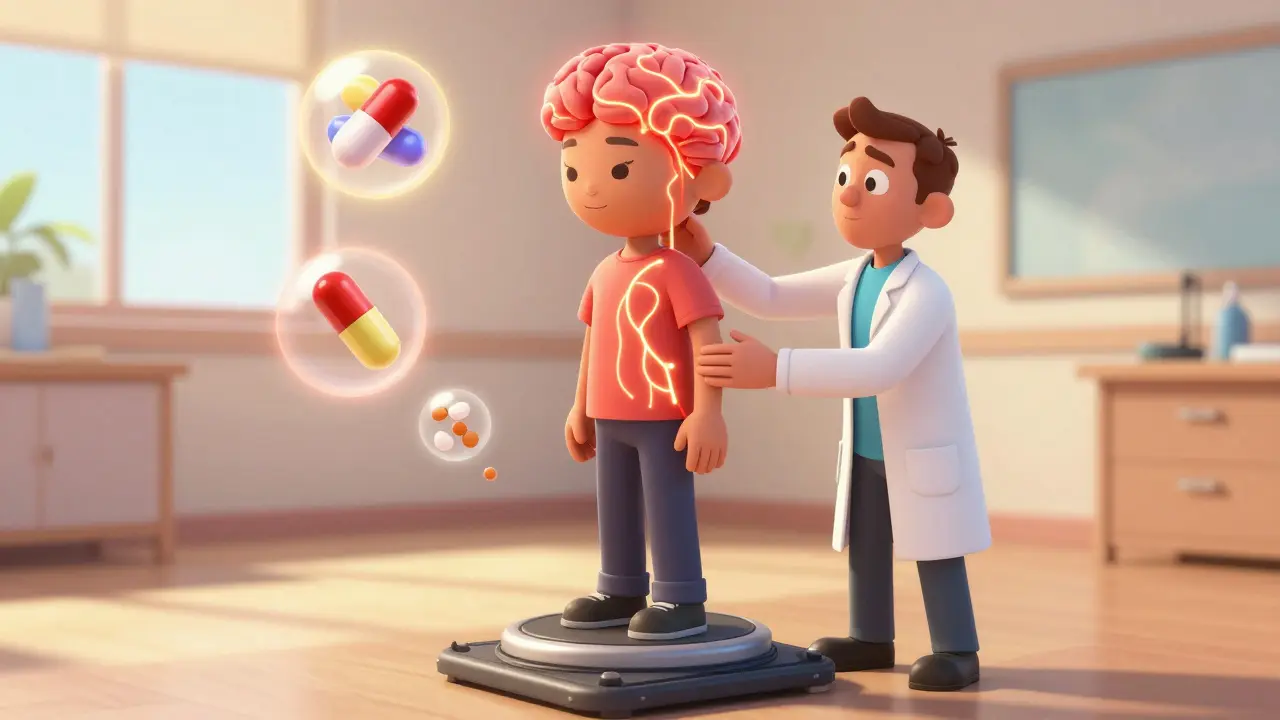
Preventing Attacks Before They Start
If you’re having more than 4 attacks a month, prevention isn’t optional - it’s necessary. Delaying treatment increases your risk of your brain becoming hypersensitive, turning episodic migraines into chronic ones.
First-line preventives:
- Propranolol (40-160 mg daily): A beta-blocker. 62% of patients cut their attack frequency in half.
- Amitriptyline (10-75 mg at night): A tricyclic antidepressant. 40-60% effective for vertigo reduction.
- Verapamil (120-240 mg daily): A calcium channel blocker. Works well if stress or sleep triggers are dominant.
- Topiramate (25-100 mg daily): An antiseizure drug. 54% of patients had over 50% fewer attacks in clinical trials.
Flunarizine (5-10 mg daily) is a top choice in Europe and works better than placebo - but it’s not FDA-approved in the U.S. So your doctor might not offer it unless you’ve tried others first.
Supplements with real evidence:
- Magnesium (600 mg daily): Reduces attack frequency by 30-40%.
- Riboflavin (B2) (400 mg daily): Proven in multiple studies to help prevent migraines.
- Coenzyme Q10 (300 mg daily): Works slowly - takes 2-3 months - but has almost no side effects.
Butterbur used to be popular - and it worked. But since 2015, safety warnings about liver damage have made it risky. Avoid it unless under strict medical supervision.
Vestibular Rehabilitation Therapy (VRT): The Hidden Gem
Most people think vestibular migraine means you need to avoid movement. But that’s wrong. The longer you avoid motion, the worse your balance gets. Vestibular rehabilitation therapy (VRT) is a set of customized exercises that retrain your brain to rely on other balance signals - your eyes, your joints, your muscles - instead of your overactive inner ear.
In the 2018 DIZZINESS trial, patients who did 8 weeks of VRT improved their dizziness scores by 40%. In the 2020 VRT-VM study, 78% of patients had over 50% fewer symptoms after 12 sessions. These aren’t fancy machines or expensive equipment. They’re simple head movements, balance drills, and gaze stabilization exercises you do at home.
A physical therapist trained in vestibular rehab will design your program. You’ll start slow - sitting, then standing, then walking with head turns. It’s not easy. You’ll feel dizzy at first. But over time, your brain learns to adapt. VRT is now rated as “strongly recommended” by the European Academy of Neurology. And it works even if you’re on medication.
What Doesn’t Work - And Why
Too many people get the wrong treatment because vestibular migraine is misdiagnosed. Here’s what doesn’t help:
- Diuretics (like hydrochlorothiazide): These are used for Ménière’s disease. In vestibular migraine, they help only 20% of people.
- Corticosteroids: Great for vestibular neuritis, but only 30% of VM patients respond.
- Prolonged benzodiazepines: They calm you down short-term but prevent your brain from healing. Long-term use leads to worse balance and dependency.
- Antibiotics: If someone tells you it’s an ear infection - walk away. It’s not.
One study found that 40% of vestibular migraine patients were first diagnosed with BPPV. Another 25% were told they had Ménière’s. Both get treatments that don’t touch the real problem - brain hyperexcitability. That’s why so many people feel like nothing works. They’re treating the wrong condition.

What’s New in 2025
Treatment is evolving fast. In 2023, the FDA approved atogepant for migraine prevention - and early data shows it works for vestibular migraine too, with 56% of patients cutting attacks in half. Rimegepant, another CGRP inhibitor, reduced vertigo days by 49% in a 2022 trial.
Genetic testing is starting to help. People with a mutation in the CACNA1A gene - found in about 25% of familial cases - respond better to calcium channel blockers like verapamil. This could soon mean personalized treatment based on your DNA.
Non-invasive devices like gammaCore (a vagus nerve stimulator) are now showing 45% reduction in vertigo after 3 months of use. And researchers are close to validating a blood or nerve test using vestibular-evoked myogenic potentials (VEMPs) - a simple test that could diagnose VM with 82% accuracy.
Real Stories, Real Results
On Reddit’s migraine community, 1,247 people shared their experiences. The most effective acute treatment? Sumatriptan - rated 7.2/10. For prevention? Propranolol (7.5/10) and amitriptyline (7.3/10). But side effects were a problem: 65% said amitriptyline made them too sleepy. 58% said topiramate fogged their thinking.
One woman from Calgary - who’d been misdiagnosed for 18 months - started on propranolol, cut out caffeine, and began VRT. After 6 months, her attacks dropped from 10 a month to 1-2. She says: “I didn’t know I could walk through a grocery store without feeling like I’d fall over.”
Another man stopped taking lorazepam after 3 years and started VRT. His balance returned. His headaches faded. He got his driver’s license back.
Success isn’t about a magic pill. It’s about combining the right meds, lifestyle changes, and rehab - and sticking with it.
Getting Started: Your Action Plan
Here’s what to do next:
- Start a symptom diary for 6 weeks. Track triggers, timing, and severity.
- See a neurologist or headache specialist - not just an ENT or GP. You need someone who knows vestibular migraine.
- Ask about VRT. Find a physical therapist certified in vestibular rehab.
- Try one preventive - start with magnesium or riboflavin. If no improvement in 3 months, talk about propranolol or amitriptyline.
- Eliminate caffeine and alcohol for 30 days. See if your attacks drop.
- Don’t wait. If you’re having 4+ attacks a month, start prevention now. Delaying makes it harder to treat.
Vestibular migraine is manageable. It’s not curable - but it doesn’t have to control your life. With the right approach, you can go back to walking your dog, driving, working, and living without fear of the next attack.
Can vestibular migraine go away on its own?
Sometimes, yes - especially if attacks are mild and infrequent. But for most people, symptoms persist or worsen without treatment. Left untreated, vestibular migraine can lead to chronic dizziness, anxiety about movement, and central sensitization - where your brain becomes overly reactive to normal stimuli. Early intervention significantly improves long-term outcomes.
Is vestibular migraine the same as vertigo?
No. Vertigo is a symptom - the feeling that you or your surroundings are spinning. Vestibular migraine is a condition that causes vertigo, along with other migraine features like headache, light sensitivity, or aura. Other conditions like BPPV or Ménière’s disease also cause vertigo, but they have different causes and treatments. Vestibular migraine is specifically linked to migraine brain pathways.
Do I need an MRI to diagnose vestibular migraine?
No. There’s no imaging test that confirms vestibular migraine. An MRI is sometimes done to rule out other conditions like tumors or MS, especially if symptoms are unusual or sudden. But if your history matches the diagnostic criteria - recurrent vertigo episodes with migraine features - and your neurological exam is normal, an MRI isn’t needed.
Can I take migraine meds if I have high blood pressure?
Some migraine preventives like beta-blockers (propranolol) are safe and even helpful for high blood pressure. Others like topiramate or amitriptyline may need dose adjustments. Triptans should be avoided if you have uncontrolled hypertension or heart disease. Always talk to your doctor before starting any new medication - especially if you have other health conditions.
How long does vestibular rehabilitation take to work?
Most people start noticing improvement after 4-6 weeks of consistent daily exercises. Full benefits usually take 8-12 weeks. It’s not a quick fix - you need to do the exercises even when you feel better. Stopping too soon can cause symptoms to return. Think of it like physical therapy for your balance system: consistency beats intensity.
Are there any natural remedies that actually work?
Yes - but only a few. Magnesium, riboflavin (B2), and coenzyme Q10 have strong clinical evidence for reducing attack frequency by 30-40%. Ginger tea helps with nausea during attacks. Avoid butterbur - it’s risky for your liver. Also, maintaining regular sleep, hydration, and stress management are natural, powerful tools - and they’re free.
Can children get vestibular migraine?
Yes. In fact, it’s one of the most common causes of recurrent dizziness in kids and teens. Children may not describe headaches clearly - they might say their head feels “funny,” or they just want to lie down. They may have pale skin, vomiting, or avoid school during episodes. Diagnosis is based on family history of migraine and pattern of symptoms. Treatment is similar but uses lower doses and focuses more on lifestyle and VRT.




Janelle Moore
December 18, 2025 AT 21:17So let me get this straight - they’re telling us to take magnesium and riboflavin like it’s some kind of miracle cure? 🤔 Meanwhile, Big Pharma is hiding the real truth: the government is spraying lithium in the water to keep people docile, and vestibular migraines are just a side effect of the mind-control program. I’ve been tracking the barometric pressure changes with my phone app - it spikes every time the FAA flies overhead. Coincidence? I think not. 🚁💧
Andrew Kelly
December 19, 2025 AT 14:05Let’s be real - if you’re taking triptans like candy and blaming your dizziness on ‘triggers,’ you’re just avoiding responsibility. You think stress causes migraines? No. It’s your lack of discipline. Get up at 5 a.m., cold shower, no caffeine, no screens after 7 p.m., and stop eating processed garbage. If you can’t control your life, don’t blame the brain. This isn’t medicine - it’s weakness dressed up as science.
Isabel Rábago
December 20, 2025 AT 14:27I used to be like you - popping pills, chasing triggers, reading all the ‘experts.’ Then I realized: the body doesn’t lie. When I stopped chasing ‘treatments’ and just listened - truly listened - to my body’s whispers, the attacks stopped. No meds. No VRT. Just silence. Stillness. Surrender. The modern world is so loud, we’ve forgotten how to be still. That’s the real cure. Not propranolol. Not magnesium. Peace.
Mike Rengifo
December 22, 2025 AT 07:31I had this for like 3 years. Thought I was losing my mind. Went to 4 doctors, got told it was anxiety, then BPPV, then ‘probably stress.’ Finally found a neurologist who actually knew what vestibular migraine was. Started propranolol + cut caffeine. Did 10 minutes of VRT every morning. Now I go hiking. No joke. It’s not magic. It’s just… consistent. Do the boring stuff. It works.
Ashley Bliss
December 22, 2025 AT 15:42EVERY TIME I READ SOMETHING LIKE THIS I CRY. 🥺 I spent 18 months in a dark room, terrified to turn my head, convinced I was going insane. My husband left because he said I was ‘too much.’ Then I found VRT. And magnesium. And a therapist who didn’t tell me to ‘just relax.’ I’m not ‘fixed.’ But I’m alive again. And if you’re reading this and you’re suffering - YOU ARE NOT ALONE. Your pain is real. Your brain isn’t broken. It’s just overwhelmed. I’m rooting for you. 💪❤️
Kelly Mulder
December 23, 2025 AT 17:44While I acknowledge the clinical utility of beta-blockers and CGRP inhibitors, I must formally contest the epistemological foundation of this article. The conflation of subjective symptom reporting with diagnostic certainty constitutes a fundamental fallacy in neurology. Furthermore, the promotion of ‘natural remedies’ such as riboflavin - a vitamin with no proven mechanism of action in vestibular modulation - is scientifically indefensible. One must question the integrity of peer-reviewed literature when it is disseminated through Reddit forums under the guise of medical authority.
Emily P
December 25, 2025 AT 05:03Does anyone know if VRT exercises work the same for kids? My 12-year-old gets dizzy after school every day - no headache, just nausea and can’t focus. We’ve been told it’s ‘anxiety,’ but she’s never had anxiety before. I’m scared to push her too hard with exercises… but also scared to do nothing.
Vicki Belcher
December 26, 2025 AT 21:20