
Specialty Pharmacy: How Providers Dispense Generic Specialty Drugs
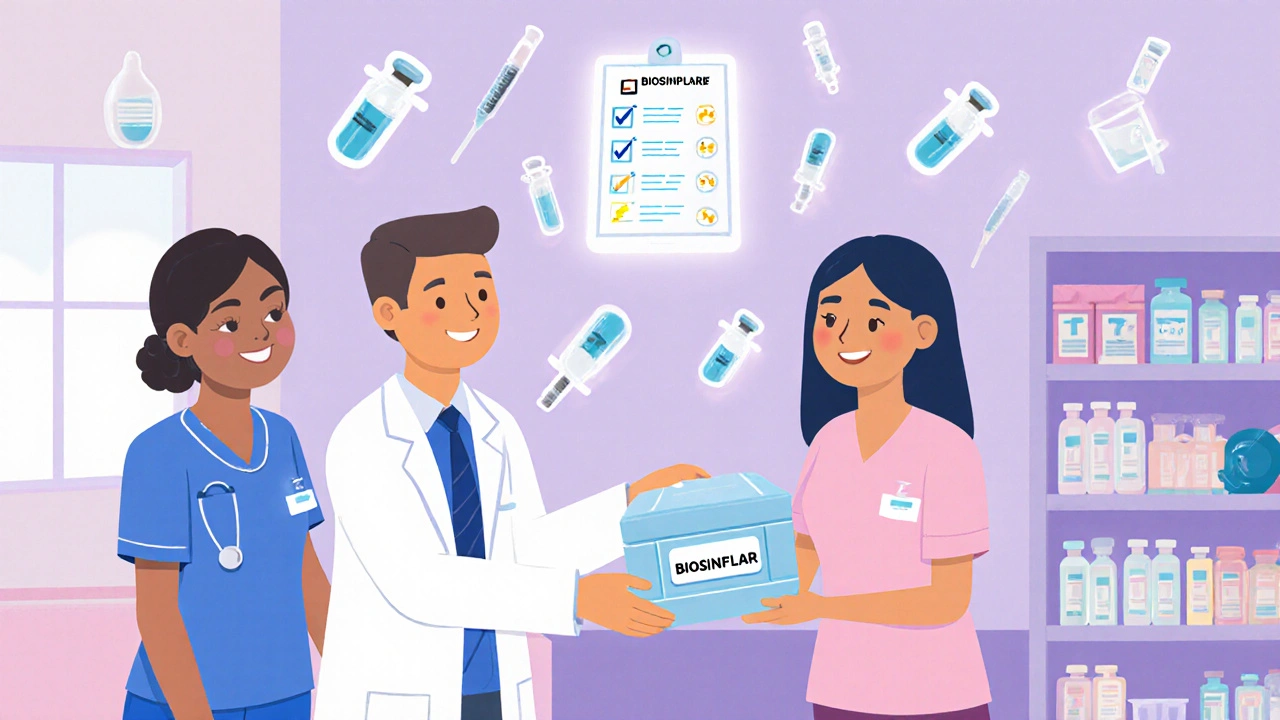
When you hear the word specialty pharmacy, you might think of expensive brand-name drugs for rare diseases. But here’s the reality: more and more generic specialty drugs are flowing through these same channels - and providers play a critical role in making sure they get to patients safely and effectively.
What Exactly Is a Generic Specialty Drug?
Not all generics are created equal. A generic version of a common pill like metformin? That’s simple. But a generic version of a drug like adalimumab (Humira) or infliximab (Remicade)? That’s different. These are biologics - complex, protein-based medications made from living cells. You can’t just copy them like a tablet. Instead, you get biosimilars, which are highly similar versions approved by the FDA after rigorous testing. They’re not exact copies, but they work the same way and are proven safe. And yes, they count as generic specialty drugs in the eyes of insurers and providers. These drugs aren’t sold at your local CVS. They’re distributed through specialty pharmacies because they require special handling - refrigeration, precise dosing, or infusion setups. Even when the drug is cheaper, the delivery system stays the same.Why Can’t Retail Pharmacies Dispense Them?
You might wonder: if it’s a generic, why can’t I just pick it up at Walgreens like my blood pressure med? The answer lies in distribution rules. Many manufacturers - even for biosimilars - lock their drugs into specialty pharmacy networks. This isn’t about profit. It’s about control. These drugs come with REMS programs (Risk Evaluation and Mitigation Strategies) mandated by the FDA. That means patients need education, monitoring, lab tests, and follow-up calls. Retail pharmacies don’t have the staff, systems, or training to handle this. A 2023 study found that specialty pharmacies require 12-15 data points per patient just to start treatment. Retail pharmacies? Five to seven. That gap isn’t accidental. It’s built into the system because the risk profile is higher.The Provider’s Role: More Than Just Writing a Prescription
Providers - doctors, nurse practitioners, physician assistants - are the gatekeepers. They don’t just write the script. They decide which specialty pharmacy to use, and they often have to fight for it. Many providers now work directly with specialty pharmacies to streamline the process. They’ll call the pharmacy before prescribing to confirm coverage, check prior authorization requirements, or ask if the patient has been on a similar drug before. Some clinics even have dedicated staff who handle prior auths and financial assistance applications so the provider can focus on care. It’s not uncommon for a provider to say: “I’m prescribing the biosimilar version of adalimumab. Can you confirm your pharmacy can handle it? Does the patient have a care coordinator?” This level of coordination matters. A patient switching from Humira to a biosimilar might have the same condition, but their body reacts differently. A provider who’s involved in the transition can spot early signs of reduced effectiveness or side effects.
How Specialty Pharmacies Handle Generic vs. Brand
The workflow is nearly identical whether the drug is brand or generic. Here’s what happens:- Prescription received - sent electronically from the provider’s EHR system.
- Insurance verification - the pharmacy checks coverage, copay, and prior authorization. Even biosimilars often need pre-approval because insurers still treat them as specialty drugs.
- Financial assistance - many patients can’t afford even the reduced cost of a biosimilar. Specialty pharmacies help apply for manufacturer coupons or patient assistance programs.
- Clinical review - a specialty pharmacist reviews the patient’s history, current meds, lab results, and potential interactions.
- Patient education - a nurse or care coordinator calls the patient to explain how to inject or infuse the drug, what side effects to watch for, and when to call for help.
- Shipping - packaged with cold packs, delivered to the home. No pickup required.
- Follow-up - calls at 7, 14, and 30 days to check on tolerance, adherence, and lab results.
Real Patient Experiences: Frustration and Relief
Patients have mixed feelings. One user on Reddit shared: “My generic version of Xeljanz still comes through the same specialty pharmacy with the same nurse who’s known me for three years. I wouldn’t trade that for a faster pickup.” Another wrote: “Went from a $15 copay at Walgreens for methotrexate to $75 through the specialty pharmacy. Took two weeks. No one explained why.” The difference? In the first case, the provider and pharmacy kept the care team consistent. In the second, the patient was left in the dark. Studies show 68% of patients prefer staying with the same specialty pharmacy when switching to a biosimilar - not because of the drug, but because of the people.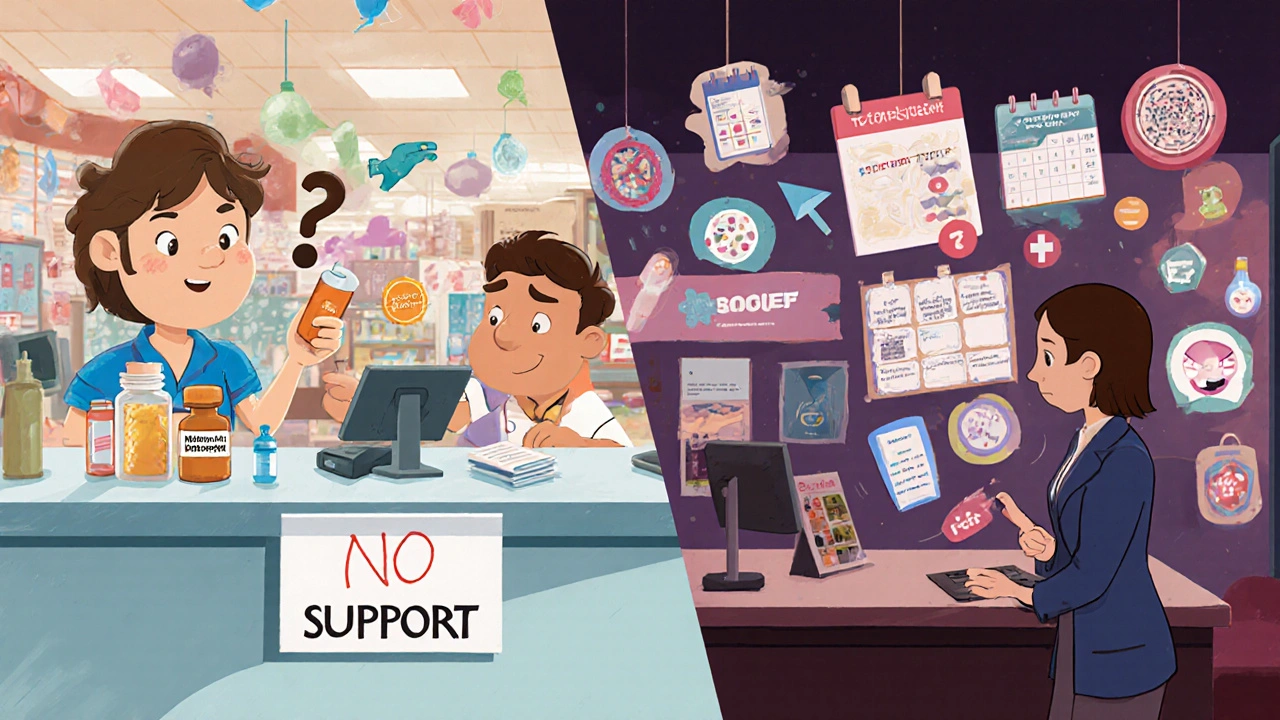


LINDA PUSPITASARI
November 29, 2025 AT 21:18Just had my biosimilar shipped this week and the nurse called me twice already to check in 😊 I swear these specialty pharmacies are like my personal health cheerleaders. My old retail pharmacy never even knew my name. This is care, not just a transaction.
gerardo beaudoin
December 1, 2025 AT 16:35Yeah this makes sense. Even if the drug is cheaper, the support doesn't change. You still need someone to explain how to use it and watch for side effects. Retail just can't do that.
Matthew Higgins
December 2, 2025 AT 10:28Bro this whole system is wild. I mean imagine having to wait two weeks for your medicine just because it's in a fancy bottle with ice packs. But then again... my cousin with Crohn's says the same nurse calls her every month like clockwork. So maybe it's worth it? 🤷♂️
Scott Collard
December 2, 2025 AT 17:10Specialty pharmacies are a regulatory capture scheme disguised as patient care. The real cost isn't the drug-it's the bureaucratic friction designed to keep margins high.
Steven Howell
December 2, 2025 AT 21:45It is imperative to recognize that the structural complexity inherent in the administration of biologics and their biosimilar counterparts necessitates a highly specialized logistical and clinical infrastructure. The alternative-decentralized dispensing-poses unacceptable risks to patient safety and therapeutic fidelity.
Robert Bashaw
December 3, 2025 AT 00:32Imagine your life depends on a shot you give yourself every two weeks... and the only person who knows your whole story is a nurse who remembers your dog's name and asks how your mom's hip is doing. That's not pharmacy. That's family. And yeah, I'll wait 10 days for that.
Brandy Johnson
December 4, 2025 AT 10:03This is why America's healthcare system is broken. We pay for convenience, not outcomes. Retail pharmacies are perfectly capable. This is corporate control masquerading as clinical necessity.
Peter Axelberg
December 4, 2025 AT 12:05Let me tell you about my experience. I switched from Humira to a biosimilar last year. Took 14 days to get it. Had three phone calls, a video consult, a lab order, a form signed by my PCP, and a reminder text every day for a week. But here's the thing-I didn't have a single flare-up since. So maybe all that red tape is just the price of staying alive. I don't mind. I'd rather be alive and annoyed than dead and free.
Monica Lindsey
December 5, 2025 AT 04:53Patients who don't understand the difference between generics and biosimilars shouldn't be allowed to choose. This is medicine, not a grocery run.
jamie sigler
December 7, 2025 AT 01:58Why do we even bother? It's all just a big money game. Someone's getting rich off this. I'm not buying it.
Bernie Terrien
December 7, 2025 AT 17:59Specialty pharmacy = glorified drug courier with a therapist on speed dial. The drug's cheaper, but the emotional labor? Still premium pricing.
Jennifer Wang
December 9, 2025 AT 06:00It is well documented in peer-reviewed literature that adherence rates for injectable biologics improve by 37% when administered through a specialty pharmacy with integrated care coordination. The clinical evidence supporting this model is robust and unequivocal.
stephen idiado
December 9, 2025 AT 15:00In Nigeria, we get generics at roadside kiosks. You inject, you survive. Your system is over-engineered. This is not healthcare. This is consultancy with a cold chain.