
Orphan Drug Exclusivity: How Rare-Disease Medicines Get Market Protection
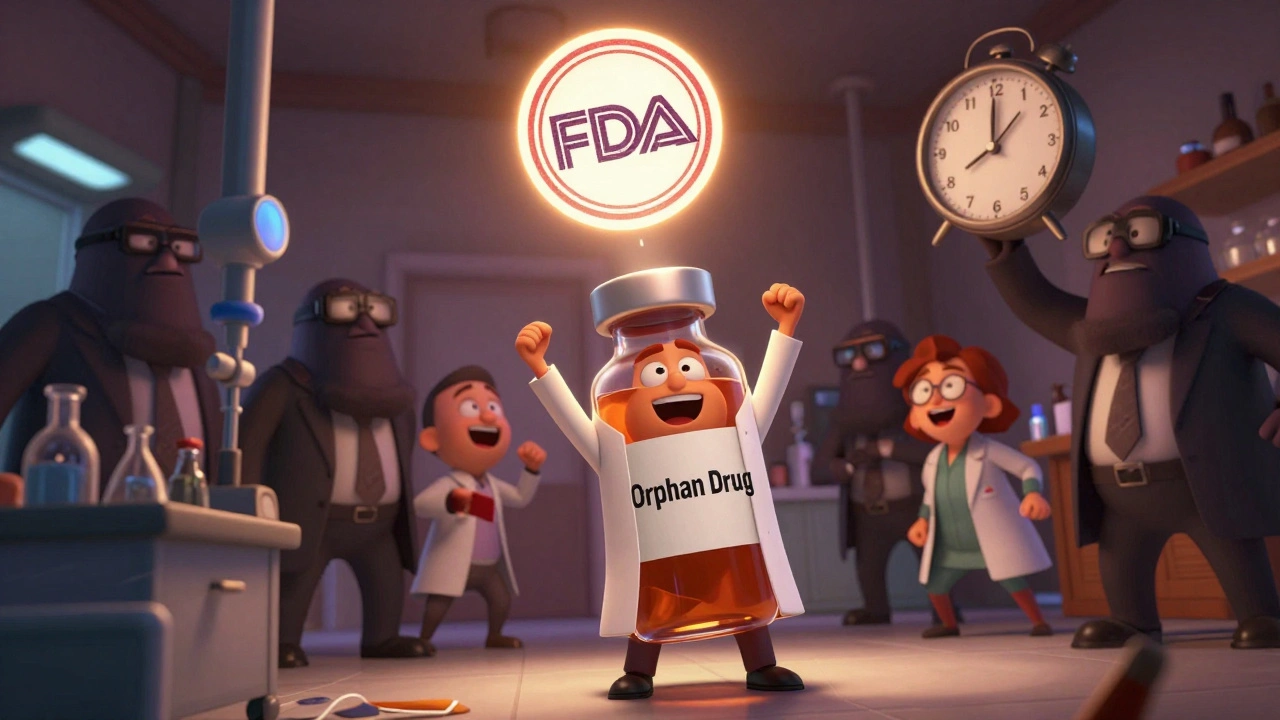
Before 1983, fewer than 40 treatments existed for rare diseases in the U.S. Today, more than 1,000 have been approved. What changed? The orphan drug exclusivity system. It didn’t just encourage drug development-it created a whole new industry around diseases that once had no hope of treatment.
What Exactly Is Orphan Drug Exclusivity?
Orphan drug exclusivity is a seven-year period of market protection granted by the U.S. Food and Drug Administration (FDA) to a drug approved to treat a rare disease. A rare disease is defined as one affecting fewer than 200,000 people in the U.S. at any given time. This protection kicks in the moment the FDA approves the drug for marketing, not when it’s patented.This isn’t a patent. It’s a separate legal shield. Even if a drug’s patent expires, no other company can sell the same drug for the same rare disease during those seven years-unless they can prove their version is clinically superior. That’s a high bar. Since 1983, only three companies have successfully met it.
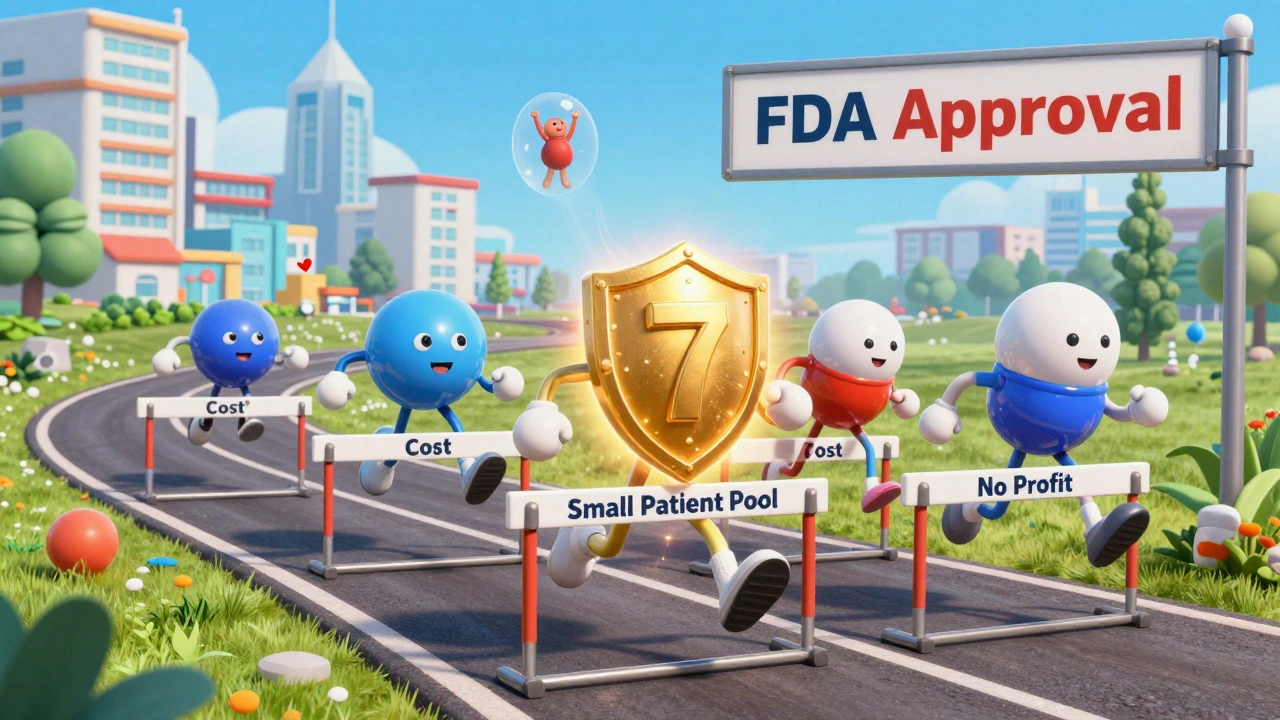
Think of it like a race. Dozens of companies can apply for orphan designation for the same disease. But only the first one to get FDA approval wins the seven-year exclusivity. It’s not about who invented it first. It’s about who got to the finish line first.
Why Was This System Created?
In the early 1980s, pharmaceutical companies had little reason to invest in drugs for tiny patient groups. Developing a new drug costs hundreds of millions. For a disease affecting just 5,000 people, the return on investment was practically zero. Many rare diseases had no treatment at all.The Orphan Drug Act of 1983 changed that. Congress didn’t just offer tax breaks or fee waivers-though those helped too. They gave companies something no other incentive could: guaranteed market control. No competition for seven years. That meant companies could price drugs high enough to recoup costs and make a profit.
The results? Before 1983: 38 rare disease drugs approved in 10 years. After 1983: over 500 in the next 35 years. Today, about half of all new FDA-approved drugs have orphan status. That’s not a coincidence. It’s the direct result of this policy.
How It Works: The Rules and Loopholes
The exclusivity applies to a very specific combination: the exact drug molecule and the exact disease. That’s called the “dyad.” If a company gets approval for a drug to treat Duchenne muscular dystrophy, no one else can sell that same molecule for Duchenne for seven years.But here’s the twist: the same drug can be approved for other diseases. Let’s say a drug is approved for a rare neurological condition and also works for a common one like high blood pressure. The exclusivity only protects the rare disease use. Generics can still come out for the common use.
Companies have learned to use this. Some drugs get multiple orphan designations-one for each rare disease they might treat. A single molecule might have five or six orphan approvals. That stretches the exclusivity period across different conditions, sometimes for decades.
And then there’s the “same drug” problem. If Company A gets approval for Drug X for Disease Y, Company B can’t just copy it. But if Company B can prove their version is better-say, it has fewer side effects or works in patients who didn’t respond to the original-they can get approval. That’s happened three times since 1983. It’s rare because proving “clinical superiority” requires new, expensive trials.
How It Compares to Other Countries
The U.S. gives seven years. The European Union gives ten. And in Europe, if a company runs pediatric studies on the drug, they can get an extra two years. That’s a big incentive. The U.S. doesn’t offer that extension.Europe also has a way to shorten exclusivity from ten to six years if the drug turns out to be more profitable than expected. The U.S. doesn’t have that safety valve. Once exclusivity is granted, it’s locked in for seven years, no matter how much money the drug makes.
That’s led to criticism. Some drugs, like Humira, got orphan status for rare uses even though they were already blockbuster sellers for common conditions. Critics say that’s gaming the system. Supporters argue that without orphan status, those rare uses might never have been studied at all.
Who Benefits? Who Pays?
Biotech startups benefit the most. A small company with a promising drug for a disease affecting 8,000 people can’t compete with big pharma on marketing or sales. But with seven years of exclusivity, they can attract investors, run clinical trials, and get the drug to market.One regulatory affairs manager at a mid-sized biotech told me: “Without orphan exclusivity, we couldn’t justify spending $150 million on a drug for 8,000 patients.” That’s the real value. It turns impossible business cases into viable ones.
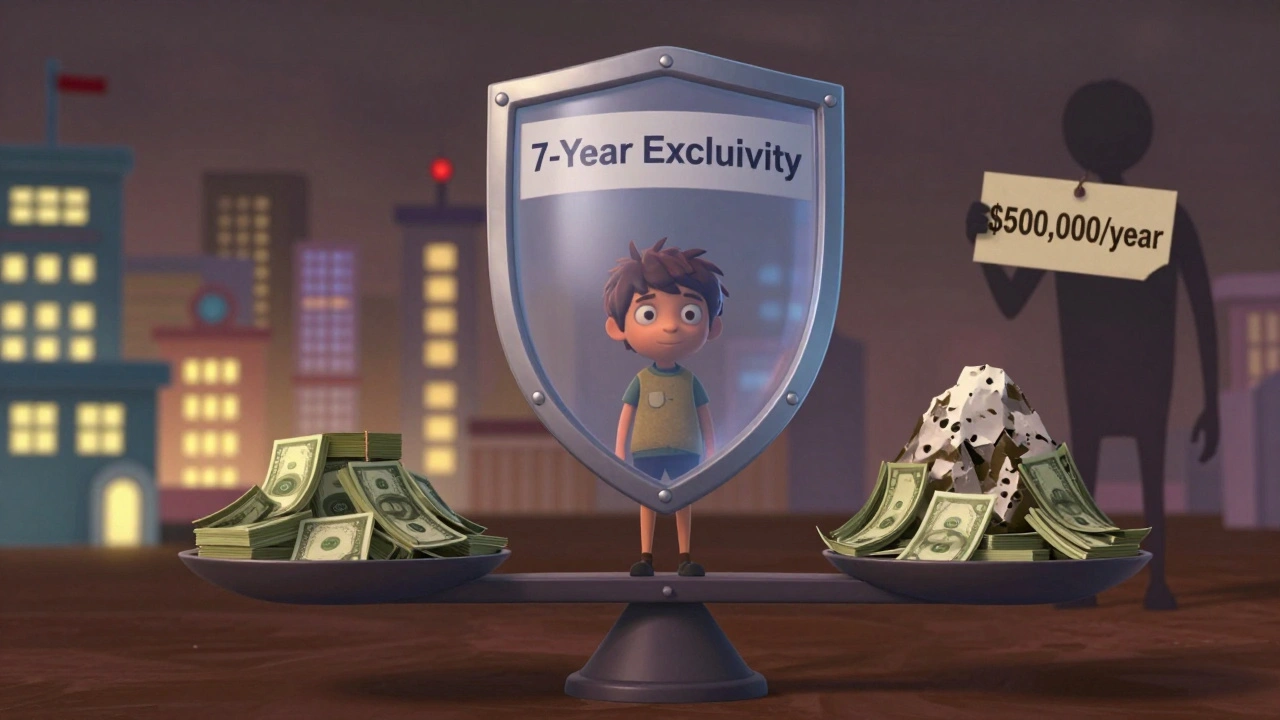
But the cost is passed on to patients and insurers. Orphan drugs often cost $300,000 to $700,000 per year. The National Organization for Rare Disorders found that 42% of patient groups are concerned about pricing. The system works-but it’s expensive.
What’s Next? The Future of Orphan Drug Exclusivity
The FDA approved 434 orphan designations in 2022-up from 127 in 2010. That’s a threefold increase. More than half of all new drug approvals now carry orphan status. By 2027, Deloitte predicts that number will hit 72%.But the system is under scrutiny. In 2023, the FDA released draft guidance to clarify what counts as the “same drug,” especially after controversial approvals like Ruzurgi for Lambert-Eaton syndrome. There’s also talk in Europe about reducing the exclusivity period from ten to eight years for drugs that become wildly profitable.
Meanwhile, the U.S. has no plans to change the seven-year rule. The incentives work too well. The orphan drug market hit $217 billion in global sales in 2022-up from $139 billion in 2018. Oncology leads the pack, with nearly half of all orphan drugs treating cancer. But neurology, blood disorders, and metabolic diseases are growing fast.
Why This Matters to You
If you or someone you know has a rare disease, orphan drug exclusivity is why any treatment exists at all. Two decades ago, many of these conditions had no FDA-approved options. Now, there’s hope.But if you’re paying for these drugs-or your insurance is-you’re also feeling the cost. The system balances two things: rewarding innovation and making sure patients get access. It’s not perfect. But without it, most rare disease drugs would never be developed.
It’s not about big pharma greed. It’s about economics. No company will spend $200 million to treat 5,000 people unless they know they’ll have a monopoly for years. Orphan exclusivity makes that math work.
How long does orphan drug exclusivity last in the U.S.?
In the United States, orphan drug exclusivity lasts for seven years from the date the FDA approves the drug for marketing. This protection applies only to the specific drug and the specific rare disease it was approved to treat. During this time, the FDA cannot approve another company’s version of the same drug for the same condition unless it proves clinical superiority.
Can a drug have orphan exclusivity and a patent at the same time?
Yes. Orphan exclusivity and patent protection are separate. Most drugs have both. Patents protect the chemical structure or manufacturing method, while orphan exclusivity protects the use of the drug for a specific rare disease. In fact, patents often last longer than the seven-year exclusivity period. For most orphan drugs, patent protection is the main barrier to generic competition-not orphan exclusivity.
What happens if another company develops a similar drug?
If another company develops a drug with the same active ingredient for the same rare disease, they can’t get FDA approval during the seven-year exclusivity window unless they prove their version is clinically superior. That means showing a meaningful improvement-like better effectiveness, fewer side effects, or safety for patients who didn’t respond to the original. This has only happened three times since 1983.
Do orphan drugs always cost a lot of money?
Most do. Because the patient population is small, companies need to recoup high development costs from fewer users. Many orphan drugs cost over $300,000 per year. While this pricing is controversial, it’s often necessary for companies to stay in business. Without the ability to charge high prices during exclusivity, few companies would invest in rare disease research.
Is orphan drug exclusivity only available in the U.S.?
No. The European Union offers ten years of exclusivity for orphan drugs, with a possible two-year extension for pediatric studies. Other countries have similar programs, but the U.S. system was the first and remains the most influential. Many global drug developers design their clinical trials to meet U.S. orphan drug criteria because it’s the most predictable path to market.


kelly mckeown
December 4, 2025 AT 12:58Wow, this is actually the first time I’ve understood how orphan drug exclusivity works without my brain shutting down. Thanks for breaking it down so clearly.
Cyndy Gregoria
December 4, 2025 AT 19:37This system isn’t perfect but without it, my niece wouldn’t have her treatment. I’ve seen what zero options looks like. This is hope made legal.
Siddharth Notani
December 6, 2025 AT 00:46Orphan drug exclusivity is a brilliant economic incentive structure. The U.S. model has catalyzed innovation in rare disease therapeutics more effectively than any other national policy. The cost-benefit analysis, while controversial, remains favorable when measured in lives saved.
Stacy Natanielle
December 6, 2025 AT 18:46Can we talk about how some companies game this? 🤦♀️ I mean, Humira got orphan status for a condition it barely treats while making billions on the common use? That’s not innovation - that’s loophole bingo. 💸 #PharmaGreed
Tom Costello
December 8, 2025 AT 02:59It’s interesting how the U.S. doesn’t adjust exclusivity based on profitability like the EU does. In a way, that’s both fair and naive. You reward innovation, sure - but when a drug makes $10B in five years, shouldn’t there be some recalibration? Maybe not for the company, but for the system.
Erik van Hees
December 10, 2025 AT 02:27Let me tell you something you all ignore - this whole system is a scam run by Big Pharma and FDA insiders. They invented ‘rare disease’ definitions to justify insane pricing. There are 200,000 people with asthma. Why isn’t that rare? Because they don’t want to give exclusivity to cheap drugs. It’s all about control. Wake up.
Brian Perry
December 11, 2025 AT 07:17so like… if a drug works for 5 different rare diseases, they get 7 years for each one? so… 35 years total? that’s wild. like, i get the intent but wow. that’s basically a lifetime monopoly on one molecule. 🤯
Susan Haboustak
December 11, 2025 AT 19:48Don’t pretend this is about patients. It’s about profit maximization under the guise of compassion. The FDA approves 434 orphan designations a year - half of them are cancer drugs that could be treated with generics. This isn’t innovation. It’s rent-seeking dressed in lab coats.
Mindy Bilotta
December 13, 2025 AT 03:34My cousin’s kid got a drug approved last year because of this. It’s $400k/year but… he’s alive. I don’t know what the answer is, but taking this away feels like punishing the only thing keeping hope alive.
Josh Bilskemper
December 13, 2025 AT 18:517 years is generous. Patents last 20. If you can’t make money in 7 years with a monopoly on a disease affecting 5k people you shouldn’t be in pharma. Simple math. Stop crying about pricing.
Colin Mitchell
December 14, 2025 AT 06:32Just want to say - thank you for writing this. I work in rare disease advocacy and this is the clearest explanation I’ve seen. People need to know how this actually works, not just the soundbites.
Paul Corcoran
December 14, 2025 AT 18:18Some of you are missing the point. This isn’t about whether the system is perfect - it’s about whether we’d have *any* treatments without it. Before 1983, kids with spinal muscular atrophy died before age 2. Now they’re walking. That’s not greed. That’s progress.
Cristy Magdalena
December 15, 2025 AT 16:42They say it’s about hope… but when your insurance denies coverage because it’s ‘experimental’ even though it’s been on the market for 5 years… you start to wonder who the real victims are. I cry every time I see the bill. I’m not mad at the company. I’m mad at the system that lets them get away with this.
Chris Jahmil Ignacio
December 15, 2025 AT 20:29Let’s be real - this whole orphan drug system is a front for Big Pharma to turn rare diseases into cash cows. They repackage old drugs, tweak the dosage, call it a ‘new indication,’ and boom - another 7 years of monopoly. The FDA is complicit. The patients are collateral. And the public? They’re just paying the bill. This isn’t medicine. It’s capitalism with a heart-shaped sticker on it.