
Generics vs Brand Biologics: Real Cost Differences in 2026
When you hear "generic drug," you probably think of a cheap pill that does the same thing as the expensive brand-name version. But when it comes to biologics, that simple idea falls apart. Biologics aren’t made in a lab with chemicals-they’re grown in living cells. That makes them incredibly complex. And because of that, you can’t just copy them exactly. Instead, you get something called a biosimilar. It’s not a generic. It’s not the same. But it’s close enough to work the same way-and it costs a lot less.
What’s the real price gap between brand biologics and biosimilars?
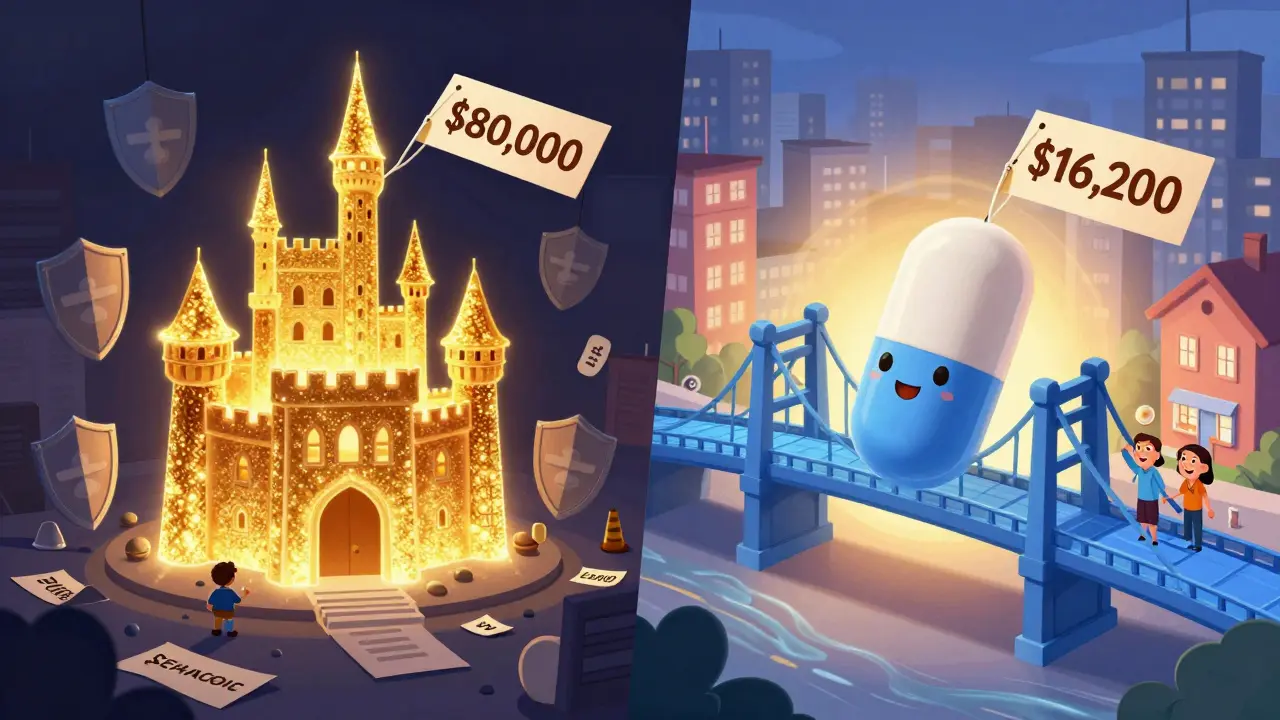
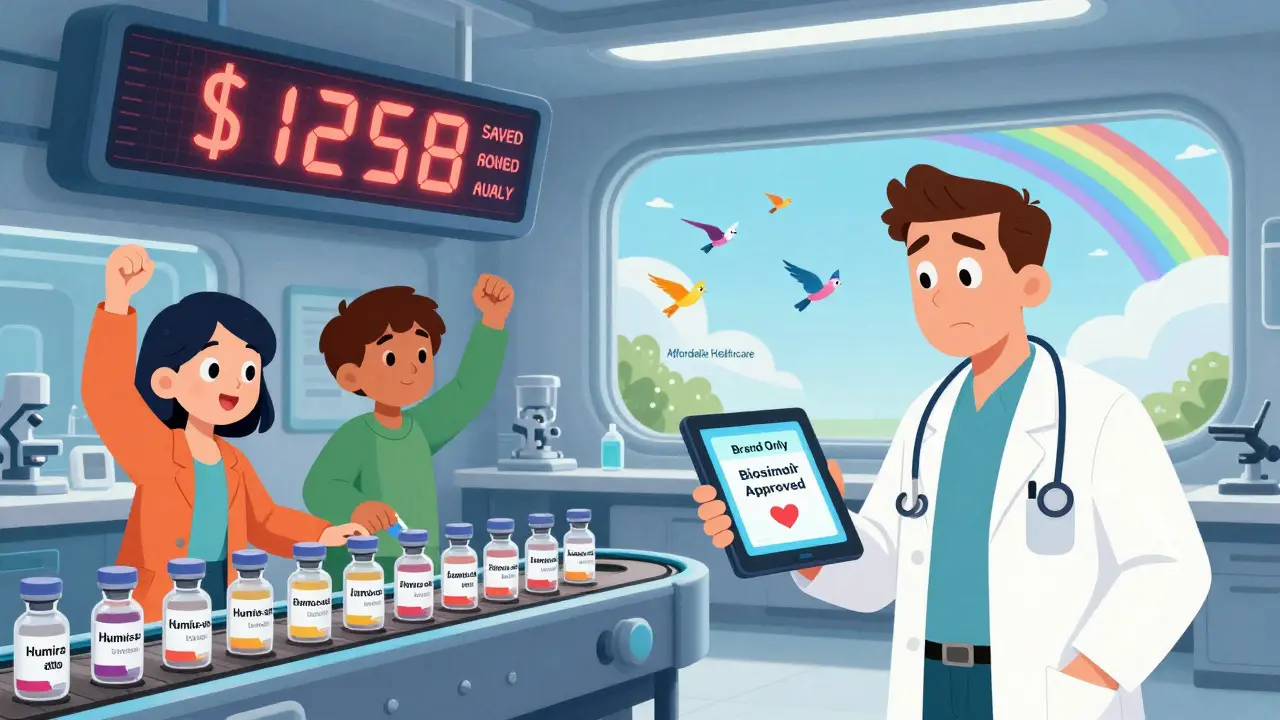
In 2025, the average 30-day prescription for a brand biologic cost $2,104. The biosimilar version? $919. That’s more than half off. For drugs like Humira, which treats autoimmune conditions like rheumatoid arthritis and Crohn’s disease, the annual list price used to be around $80,000 per patient. After biosimilars hit the market in 2023, prices dropped by 80%. Some patients now pay less than $16,000 a year for the same treatment. That’s not a small discount. That’s life-changing.It’s not just about the list price. Out-of-pocket costs for patients using biosimilars are 23% lower than for the original brand. That means fewer people skip doses because they can’t afford them. Fewer people end up in the ER because their condition flared up from skipped treatments. And fewer families are forced to choose between medicine and rent.
Why are biosimilars cheaper if they’re so complex?
You might think making a copy of a drug grown in living cells would be expensive-and it is. Developing a single biosimilar costs between $100 million and $250 million. That’s way more than the $2 million it takes to make a traditional generic pill. So why the big price drop?Because the brand companies don’t have to start from scratch. Biosimilar makers don’t need to run full clinical trials proving the drug works. They just need to show it’s "highly similar" to the original, with no meaningful differences in safety or effectiveness. The FDA approved its first biosimilar, Zarxio, in 2015. Since then, 76 have been approved. And every time one enters the market, the brand company has to lower its price to stay competitive.
Here’s the kicker: when biosimilars enter, the original brand doesn’t just sit still. It drops its price too. On average, brand biologics cut their prices by 25% after a biosimilar launches. Sometimes it’s more. After Humira’s biosimilars came out, the brand itself dropped its price by 33%. That’s not charity. That’s market pressure. And it’s happening across the board.
How much have biosimilars saved the system so far?
Since 2015, biosimilars have saved the U.S. healthcare system between $36 billion and $56 billion, depending on who’s counting. The most recent data from 2024 shows $12.4 billion to $20 billion saved in just one year. That’s money that didn’t go to drug companies. It went back into hospitals, into patients’ pockets, into insurance premiums.But here’s the bigger picture: biosimilars make up less than 20% of the biologics market. Meanwhile, traditional generics-simple pills-make up 90% of all prescriptions but only 13% of total drug spending. Why? Because generics face dozens of competitors. Biosimilars? Often just one or two. That means less competition. Less pressure to drop prices further.
Take the example of insulin. There are dozens of generic insulins now, and prices have plummeted. But for biologic insulins like Humalog or Lantus? Biosimilars are just starting to appear. And the brand companies are fighting hard to keep them out. They file dozens of patents-not to protect innovation, but to block competition. This is called a "patent thicket." It’s legal. It’s effective. And it’s expensive for patients.
Why aren’t biosimilars used more often?
You’d think with prices this low and safety this proven, everyone would switch. But they don’t. Here’s why:- Pharmacy Benefit Managers (PBMs) get big rebates from brand companies. If a patient switches to a biosimilar, the PBM loses that rebate. So they don’t push it. Sometimes they even penalize pharmacies that prescribe biosimilars.
- Doctors don’t always know the difference. Many aren’t trained on biosimilars. They’re told, "This is the drug that works." They don’t get updates on the latest biosimilar approvals or cost savings.
- Patients are scared. If you’ve been on Humira for five years and your doctor says, "We’re switching you to a biosimilar," your first thought isn’t "I’ll save $60,000." It’s "Will this make me sicker?"
The FDA says biosimilars are as safe and effective as the original. Multiple studies back that up. But fear doesn’t care about data. It needs trust. And trust takes time.
What’s changing in 2026?
The government is finally stepping in. The Biden administration launched its Biosimilars Action Plan in late 2025. The FDA is rolling out new rules to cut development time and reduce unnecessary testing. They’re trying to make it easier and cheaper to bring biosimilars to market.Meanwhile, health plans are starting to notice the savings. Some are now requiring patients to try a biosimilar before covering the brand. Others are removing step therapy barriers entirely. And insurers are starting to offer lower co-pays for biosimilars.
By 2030, analysts predict biosimilars will make up 35% to 40% of the biologics market. That could mean $125 billion in annual savings. But that only happens if the barriers come down.
What does this mean for you?
If you’re on a brand biologic right now-whether it’s for arthritis, cancer, or a chronic condition-ask your doctor: "Is there a biosimilar available?" Don’t assume there isn’t. Check your insurance formulary. Ask your pharmacist. You might be paying way more than you need to.If you’re a caregiver, a patient advocate, or just someone trying to make sense of drug prices, know this: biosimilars aren’t a future idea. They’re here. And they’re saving real money right now. The problem isn’t the science. It’s the system. But the system is starting to shift.
For the first time in decades, there’s a real chance that the most expensive drugs in medicine could become affordable. Not because of charity. Not because of politics. But because competition finally caught up.
What’s the catch?
There’s no magic bullet. Biosimilars won’t fix everything. Drug pricing is still broken. PBMs still have too much power. Patent games still delay access. But for the first time, we have a proven tool to fight back.And that tool costs less than half the price of the original.
Are biosimilars the same as generics?
No. Generics are exact chemical copies of small-molecule drugs, like aspirin or metformin. Biosimilars are highly similar-but not identical-to complex biologic drugs made from living cells. They’re not exact copies because you can’t replicate a living system perfectly. But they work the same way and are proven safe and effective by the FDA.
Are biosimilars safe?
Yes. Every FDA-approved biosimilar must show no meaningful difference in safety, purity, or potency compared to the original biologic. Over 10 years of real-world use and dozens of clinical studies confirm they work just as well. Patients switching from brand to biosimilar don’t experience more side effects or reduced effectiveness.
Why aren’t biosimilars cheaper than they are?
Because competition is limited. Unlike traditional generics, where 10+ companies might make the same drug, biosimilars often have only one or two competitors. Brand companies also use legal tactics-like patent thickets and rebate deals with PBMs-to block market entry. That keeps prices higher than they could be.
Can I switch from a brand biologic to a biosimilar?
Yes, if your doctor agrees and your insurance covers it. Many patients switch without issue. Some states allow pharmacists to substitute a biosimilar automatically-unless the doctor says no. Always talk to your provider before switching, but don’t assume you can’t.
What biologics have biosimilars available in 2026?
As of 2026, biosimilars are available for over 20 brand biologics, including Humira (adalimumab), Enbrel (etanercept), Herceptin (trastuzumab), Avastin (bevacizumab), and several insulin products like Lantus and Humalog. More are coming every year, especially for cancer and autoimmune drugs.
Will my insurance cover a biosimilar?
Most do-but not always automatically. Some plans still require prior authorization or step therapy. Check your formulary or call your insurer. Many are now incentivizing biosimilar use with lower co-pays. Don’t assume the brand is covered better-ask.
How do I know if I’m getting a biosimilar?
Look at the prescription label. Biosimilars have distinct nonproprietary names that end in "-mab," "-mab," or other suffixes (like adalimumab-atto for a Humira biosimilar). Your pharmacist should tell you if it’s a biosimilar. You can also check the FDA’s Purple Book for approved biosimilars and their brand equivalents.
What’s next?
The next five years will decide whether biosimilars become a mainstream tool for lowering drug costs-or remain a niche option locked behind legal and financial barriers. If the system changes, we could see biologic drugs become affordable for millions. If it doesn’t, prices will keep rising, and patients will keep paying the price.You don’t need to wait for policy to change. Start asking questions. Talk to your doctor. Check your bills. Demand transparency. The money’s there. The science is proven. All that’s left is the will to use it.

Shanna Sung
January 4, 2026 AT 11:48The FDA is in on it. Biosimilars? Totally controlled by Big Pharma to keep you hooked on the same drugs while making you think you’re saving money. They’re not even close to the same-just different enough to avoid lawsuits. You think your Humira biosimilar is safe? Wait till your immune system starts attacking itself. They’ve been hiding the adverse event reports for years.
Allen Ye
January 6, 2026 AT 09:28What’s fascinating here isn’t just the price drop-it’s the entire epistemological shift in how we define ‘equivalence’ in medicine. We’ve spent decades treating pharmaceuticals like widgets, but biologics are living systems, emergent phenomena shaped by cell lines, fermentation conditions, purification protocols-each batch a unique artifact. The idea that ‘highly similar’ is sufficient speaks volumes about our reductionist healthcare model. We’re trading ontological fidelity for economic efficiency. And yet… if that efficiency saves lives, isn’t that the ultimate utilitarian win? The real tragedy isn’t the biosimilar-it’s that we needed a 70% price drop to even consider this conversation.
mark etang
January 7, 2026 AT 18:31It is with profound respect for the advancements in pharmaceutical science that I acknowledge the transformative potential of biosimilars. The reduction in out-of-pocket expenditures for patients suffering from chronic autoimmune conditions represents a monumental step toward equitable healthcare access. It is imperative that stakeholders across the continuum-clinicians, payers, regulators, and patients-collaborate with rigor and integrity to ensure the safe, widespread adoption of these life-sustaining therapies. The data are unequivocal; the moral imperative is clear.
josh plum
January 7, 2026 AT 19:40You people are so naive. Biosimilars are just a Trojan horse. The real goal? Get you off the brand so they can quietly replace it with something worse later. PBMs? They’re not just taking rebates-they’re locking in contracts with the big pharma oligarchs to keep you dependent. And don’t get me started on how doctors get paid to push the original. They don’t care if you live or die, as long as the script runs. I’ve seen it. My cousin switched to a biosimilar and got hospitalized. No one talks about that. The FDA’s ‘no meaningful difference’? That’s corporate legalese for ‘we didn’t catch it yet.’
Clint Moser
January 9, 2026 AT 02:38the fda approvaled 76 biosimilars but did u know that 89% of them have a 0.03% variance in glycosylation patterns? that’s not ‘highly similar’-that’s a bio-weapon waiting to happen. and the patents? they’re not thickets, they’re quantum encryption layers. big pharma uses blockchain-secured IP chains to auto-patent every possible variant before the biosimilar even hits the lab. the real cost? not $100M to develop-$100B to unmask the system. and pBM rebates? they’re coded into the HHS algorithm under ‘therapeutic substitution incentives.’ it’s all math. and we’re the variables.
Ashley Viñas
January 10, 2026 AT 00:23Let’s be honest-most people don’t even know what a biologic is, let alone a biosimilar. And that’s the problem. The system doesn’t want you to understand it. It wants you to be afraid. I’ve had patients cry because they thought switching meant they were ‘downgrading’ their care. It’s not about science-it’s about branding. Humira isn’t a drug; it’s a lifestyle. And the pharma companies sold that fantasy for decades. The biosimilar isn’t the enemy. The fear is.
Brendan F. Cochran
January 10, 2026 AT 06:47USA still letting these foreign companies make our meds? I mean, come on. Biosimilars? Half of ‘em are made in India or China. You think they’re testing these on real people? Nah. They’re using rats from a warehouse in Mumbai. And now we’re supposed to trust this? My cousin got a biosimilar and his legs swelled up like balloons. No one talks about that. We need American-made drugs. Period. Stop letting the world play with our health.
jigisha Patel
January 10, 2026 AT 18:16While the cost differentials are statistically significant, the market penetration remains suboptimal due to structural inefficiencies in reimbursement architecture and physician inertia. The 23% reduction in out-of-pocket costs is offset by higher administrative burden and inconsistent formulary alignment across payers. Moreover, the absence of standardized education pathways for prescribers creates a cognitive dissonance between clinical evidence and practice patterns. Until these systemic variables are normalized, biosimilar adoption will remain a fragmented, non-linear trajectory despite economic incentives.