Packaging and Labeling: How to Verify the Authenticity of Generic Medicines
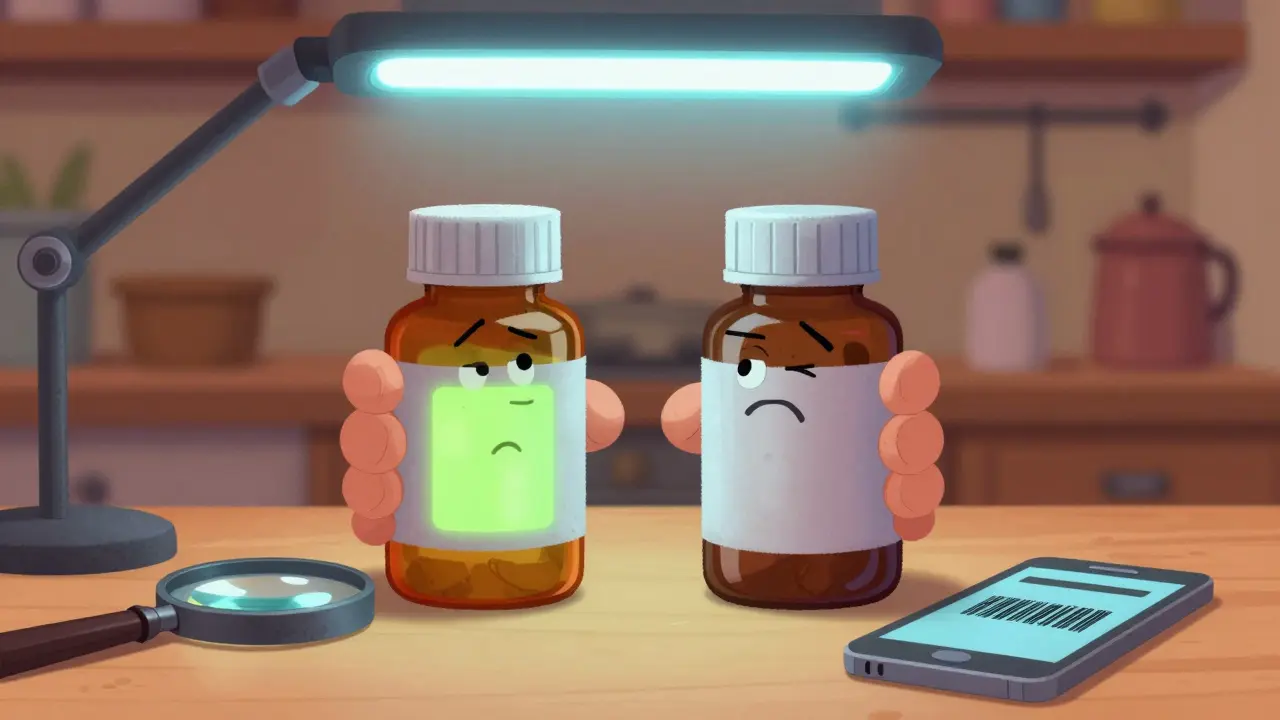
Why Generic Medicines Are Targeted by Counterfeiters
Generic drugs make up 90% of all prescriptions in the U.S., but they account for only 22% of total drug spending. That gap is why counterfeiters target them. Making fake branded drugs is risky and expensive - big companies like Pfizer or Merck have strong security on their packaging. But generics? Many manufacturers cut corners to save money. That means fewer security features, inconsistent labeling, and sometimes no serial numbers at all. A 2023 report from the Generic Pharmaceutical Association found that 35-45% of generic medicines lack proper serialization, making them easy targets.
Counterfeiters don’t need to get the medicine right - they just need the packaging to look real. A fake metformin pill might have the exact shape, color, and imprint as the real one. But if the active ingredient is missing, or replaced with chalk or flour, it won’t work. Worse, it could cause harm. The FDA has documented cases where counterfeit generics led to treatment failure, antibiotic resistance, and even death.
The Three Layers of Packaging Security
Real pharmaceutical companies use three layers to protect their products: overt, covert, and track-and-trace features. Together, they create a safety net. But not all generics use all three.
- Overt features are what you can see with your eyes. Think color-shifting ink - like the green-to-blue shift on Pfizer’s Viagra packaging - or holograms with tiny text only visible under magnification. These are meant for quick checks at the pharmacy or at home. But here’s the problem: modern counterfeiters can copy these with 80-90% accuracy, according to INTERPOL’s 2021 Operation Pangea report.
- Covert features need a little help. UV ink, for example, only shows up under a 365nm blacklight. Johnson & Johnson has used this on Tylenol since 2015. RFID tags and chemical taggants like Lumilink® are harder to fake. These cost more to produce, so they’re rare on low-cost generics.
- Track-and-trace is the strongest layer. Each package gets a unique serial number, scanned at every step from factory to pharmacy. The U.S. Drug Supply Chain Security Act (DSCSA) required this for all prescription drugs by November 2023. But here’s the catch: many generic manufacturers still don’t comply fully. A 2023 survey of pharmacists found that barcode scanning works well for branded drugs but fails 40-50% of the time with generics.
How to Check a Generic Medicine at Home
You don’t need a lab to spot a fake. Start with these simple steps:
- Compare the packaging to a previous bottle of the same drug. Look at font size, spacing, logo placement, and expiration date format. One pharmacist on Reddit noticed the font on fake Nexium® generics was slightly thinner - it took three bottles to catch it.
- Use a UV light. A $15 keychain UV light from Amazon can reveal hidden markings. If nothing shows up under the light, and the label says it should, that’s a red flag.
- Check the seal. Is it broken? Is the cap loose? Is the outer shrink wrap misaligned? These are cheap signs, but counterfeiters often miss them.
- Verify the barcode. Scan it with your phone. If the app says “product not found” or “invalid serial number,” walk away. Apps like MediMark work for branded drugs but often fail with generics because the data isn’t in the system.
- Check the pill itself. Is the color slightly off? Does it crumble easily? Does it taste strange? Authentic generics must meet FDA standards for appearance and dissolution. If it doesn’t match what you’ve taken before, ask your pharmacist.
What Pharmacists Are Doing About It
Community pharmacists are on the front lines. A 2022 survey by the National Community Pharmacists Association found that 68% of pharmacists find it harder to verify generics than branded drugs. Why? Two big reasons: inconsistent security features and no reference samples.
Many small pharmacies don’t have access to the original packaging from the manufacturer. Without something to compare against, even experienced staff can miss subtle differences. That’s why some states are setting up regional verification centers - places where pharmacists can drop off suspicious packages for lab testing. As of 2023, 22 U.S. states have these centers.
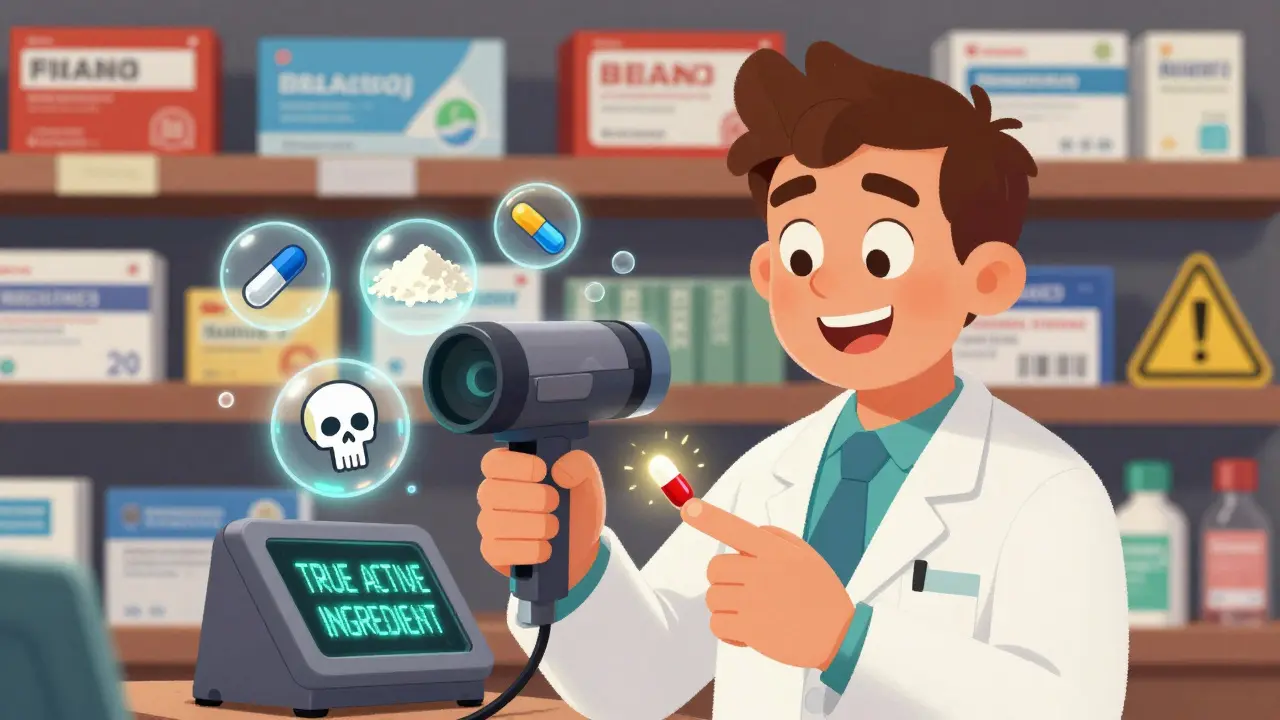
Some pharmacies are investing in handheld spectrometers. Devices like the Thermo Fisher TruScan® RM or B&W Tek NanoRam® use infrared or Raman light to analyze the chemical makeup of a pill - not just its appearance. These machines can detect fake metformin that looks identical to the real thing. One pharmacist in Ohio told Drug Topics: “The NanoRam® found a counterfeit that had fooled every visual check. Saved a patient from kidney damage.”
But these devices cost $15,000-$50,000. Most small pharmacies can’t afford them. That’s why the FDA’s 2022 verification toolkit recommends starting simple: UV lights, magnifiers, and training. It’s not glamorous, but it works.
The Tech Revolution: Spectroscopy and Blockchain
The future of drug verification isn’t just about labels - it’s about science. Handheld NIR (near-infrared) spectrometers are becoming more affordable and faster. The latest model, TruScan® RM Gen3, analyzes a pill in 5-15 seconds with 96-98% accuracy. It detects differences in moisture, coating thickness, and active ingredient concentration - things your eyes can’t see.
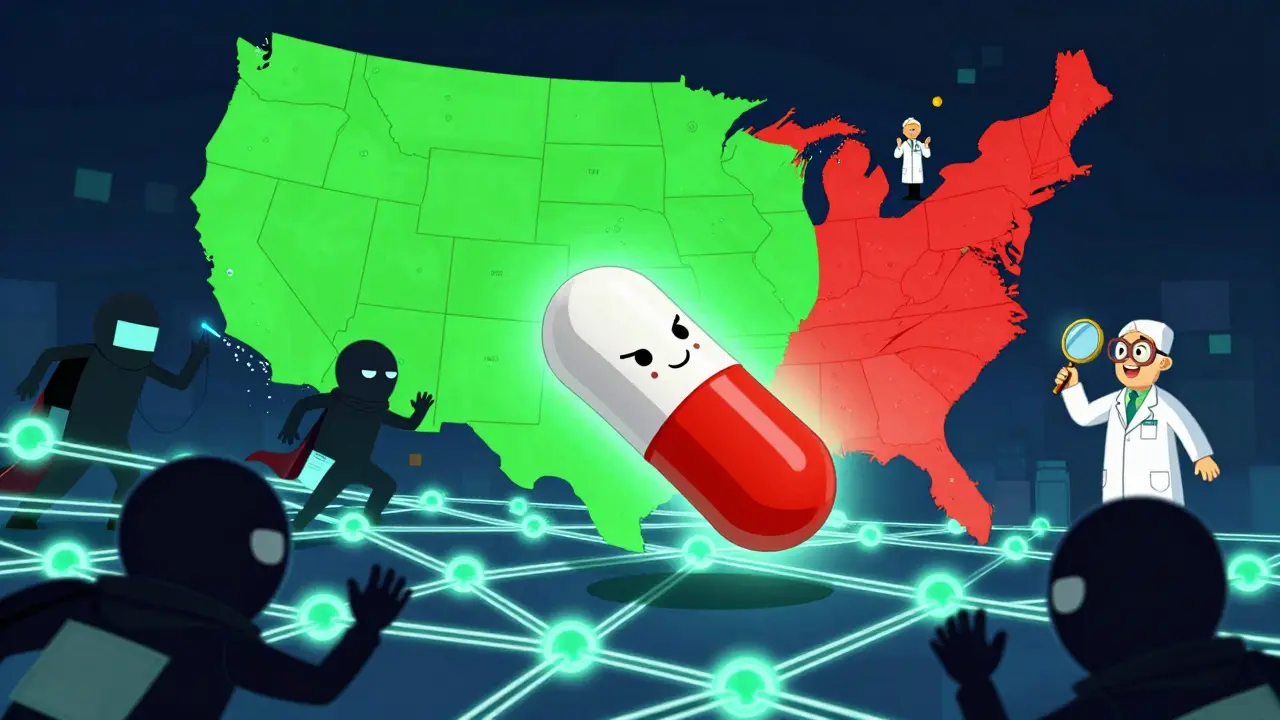
Meanwhile, blockchain pilots are testing ways to make tracking more secure. The FDA’s 2023 pilot with 12 manufacturers and 500 pharmacies achieved 99.2% accuracy in tracing generics through four distribution layers. Unlike traditional databases, blockchain can’t be altered once data is recorded. That means if a pill is tampered with in transit, the system knows.
But here’s the catch: these technologies work best in rich countries. In sub-Saharan Africa, 80% of clinics can’t access them due to lack of power, internet, or trained staff. The WHO warns that without global cooperation, counterfeiters will keep exploiting these gaps.
Why Some Generics Are Safer Than Others
Not all generics are created equal. The same drug can come from five different manufacturers - each with different quality controls. The safest generics usually come from:
- Manufacturers that follow EU or FDA standards
- Companies that publish their verification methods publicly
- Brands that use serialized packaging (look for 2D data matrix codes)
- Suppliers with a track record of compliance
Check the label. If it says “Made in India” or “Manufactured in China,” that’s not automatically bad - but it should make you ask more questions. The European Medicines Verification System (EMVS) processes over 2.5 billion verifications a year with 99.998% uptime. India’s DAVA system, used by many generic makers, handles 200 million but has lower uptime and less oversight.
Ask your pharmacist: “Is this generic from a verified supplier?” If they hesitate, it’s worth switching.
What’s Coming Next
By January 1, 2025, the EU will require all generic medicines to have cryptographic 2D codes - not just barcodes, but encrypted data that can’t be copied. The U.S. Generic Pharmaceutical Association aims for 100% serialization of all generics by 2026, with $500 million in federal support for small manufacturers.
AI is also entering the game. Gartner predicts that by 2028, 70% of drug verification will use AI to combine visual, spectral, and blockchain data in real time. That means your phone app might soon tell you not just if a pill is real - but whether it’s been tampered with, stored improperly, or shipped from a known counterfeit hub.
What You Can Do Today
You don’t have to wait for technology to fix this. Here’s what works now:
- Buy from licensed pharmacies only - avoid online sellers without a physical address or license number.
- Keep old packaging to compare with new bottles.
- Use a UV light to check for hidden markings.
- Report suspicious drugs to your pharmacist or the FDA’s MedWatch program.
- Ask your pharmacist about the source of your generic drugs - and don’t be shy.
Counterfeiters are getting smarter. But so are the systems designed to stop them. The key is using multiple checks - not just one. A fake might pass a visual inspection. But if it fails the UV test, or the barcode doesn’t scan, or the pill dissolves wrong - you’ve got your answer.
What to Do If You Find a Fake
If you suspect a counterfeit:
- Stop taking the medication.
- Return it to the pharmacy where you bought it.
- Ask them to report it to the manufacturer and the FDA.
- Take a photo of the packaging and lot number.
- Call the FDA’s MedWatch hotline at 1-800-FDA-1088.
Don’t throw it away. That’s how counterfeiters get their packaging back - and reuse it.
Can I trust generic medicines?
Yes - but only if they’re from a reliable source. Most generic drugs are safe and effective. The FDA requires them to be bioequivalent to brand-name versions. But counterfeit generics - fake ones made by unregulated labs - are a real danger. Always verify packaging and buy from licensed pharmacies.
Are generic drugs less safe than brand-name drugs?
No, authentic generics are just as safe. They must meet the same FDA standards for strength, purity, and performance. The issue isn’t the generic label - it’s the counterfeiters who exploit the lower cost and less visible security on generic packaging. The real risk comes from unverified suppliers, not the generic drug model itself.
How do I know if my generic medicine is real?
Check for consistent packaging, use a UV light to look for hidden markings, scan the barcode, and compare it to a previous bottle. If anything looks off - font, color, seal, taste - don’t take it. Ask your pharmacist to verify it. For high-risk drugs like insulin or blood thinners, consider using a handheld spectrometer if your pharmacy has one.
Why do some generic drugs look different than others?
Different manufacturers use different inactive ingredients - like dyes or binders - which can change the pill’s color, shape, or size. That’s normal. But if the imprint code, lot number, or expiration date format changes unexpectedly, that’s a red flag. Always check the label against the prescription and previous refills.
Is it safe to buy generic medicines online?
Only if the website is verified. Look for the VIPPS seal (Verified Internet Pharmacy Practice Sites) or a physical U.S. address and licensed pharmacist on staff. Avoid sites that sell without a prescription, offer “too-good-to-be-true” prices, or ship from overseas. The FDA estimates that 96% of online pharmacies are illegal - and many sell counterfeit drugs.
What should I do if my pharmacy won’t let me return a suspicious drug?
You have a right to safety. If a pharmacy refuses to take back a suspicious drug, contact your state board of pharmacy or file a report with the FDA’s MedWatch program. You can also ask to speak to the pharmacist-in-charge. If they still refuse, consider switching pharmacies. Your health isn’t worth the risk.
Final Thought: Don’t Assume, Verify
Counterfeit drugs aren’t a distant problem. They’re in pharmacies, online stores, and sometimes even in your medicine cabinet. The best defense isn’t high-tech gear - it’s awareness. Know what your medicine should look like. Ask questions. Trust your instincts. And never ignore a detail that feels off. One small check could save your life.