
Switching Between Generic Medications: What You Need to Know
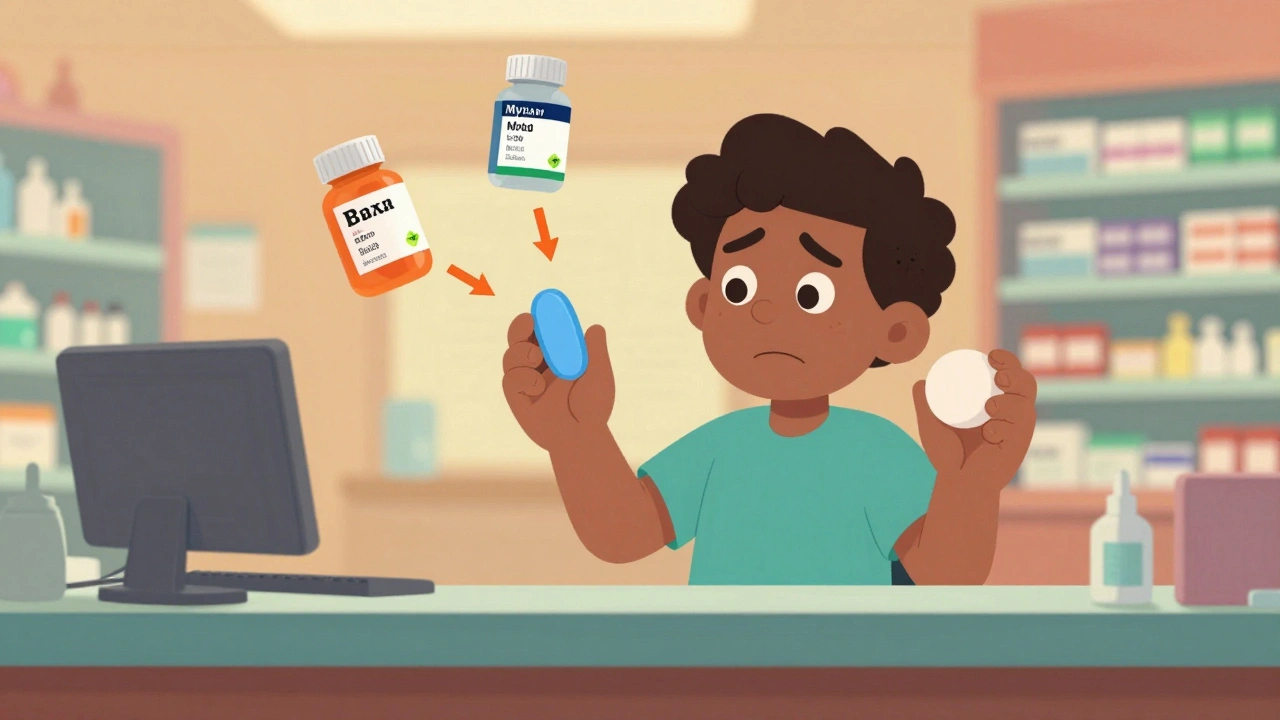
Every time you pick up your prescription, you might be getting a different pill-even if it’s the same drug. One month it’s blue and oval, the next it’s white and round. The name on the label says the same thing: levothyroxine, warfarin, or lamotrigine. But the manufacturer? It changes. And that’s not a glitch-it’s the new normal in American healthcare.
Generic drugs make up over 90% of prescriptions filled in the U.S. They’re cheaper, often 80% to 85% less than brand names. That’s billions in savings every year. But here’s the part no one tells you: not all generics are the same. And switching between them-sometimes every refill-can have real consequences.
Why Do Generics Keep Changing?
It’s not your pharmacy being inconsistent. It’s the system.
Insurance companies and pharmacy benefit managers (PBMs) push for the cheapest option available. If Teva’s version of your blood pressure pill drops to $3 and Mylan’s goes to $5, your pharmacy will switch you automatically. No notice. No doctor approval. Just a different pill in your bottle.
Drug shortages also force switches. If one manufacturer can’t keep up, another steps in. Hospitals and pharmacies rotate generics to manage inventory. It’s efficient for them. But for you? It’s confusing.
And it’s not just about price. Generic manufacturers compete fiercely. There are often 4 or 5 different companies making the same drug. Each uses slightly different fillers, coatings, or manufacturing processes. The FDA says that’s okay-as long as each generic matches the brand within 80% to 125% of the active ingredient. But here’s the catch: two generics can be on opposite ends of that range. One could be 80% effective, the other 125%. That’s a 45% difference between two pills labeled the same.
When Switching Can Be Dangerous
For most people, switching generics is fine. Statins, antibiotics, even many antidepressants? You probably won’t notice a thing.
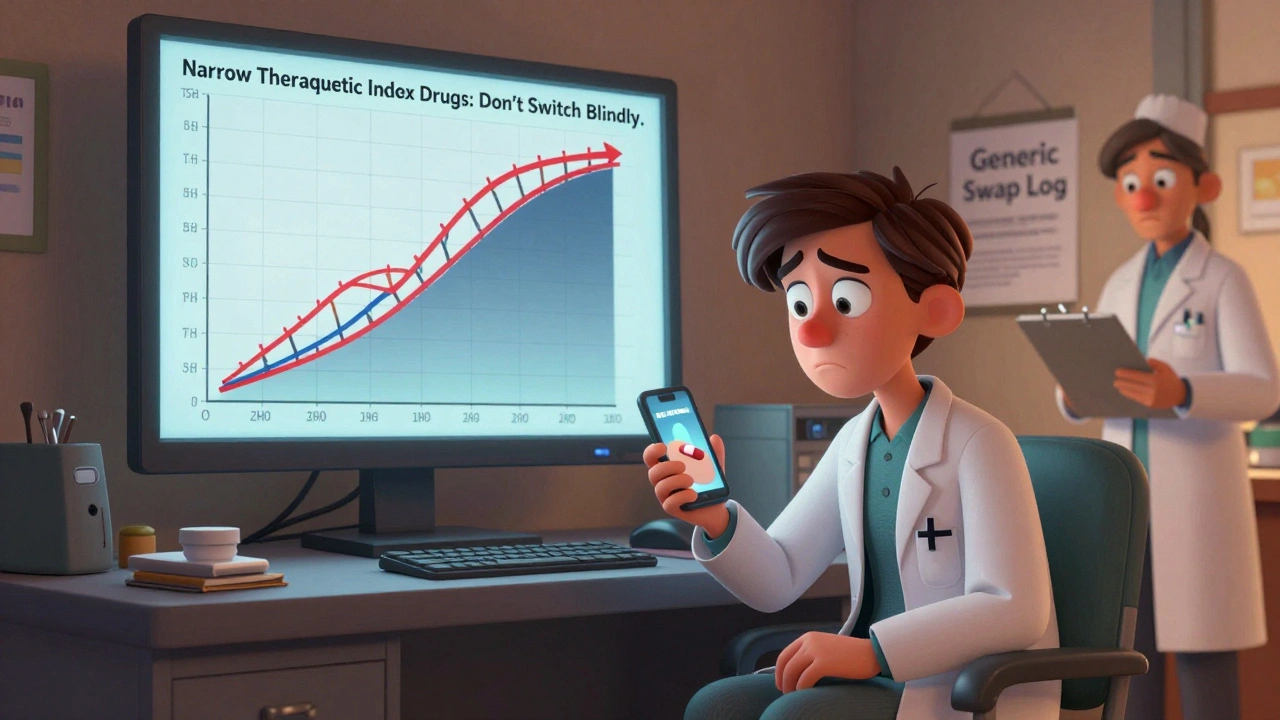
But for drugs with a narrow therapeutic index (NTI), even tiny changes can be risky. These are medications where the difference between a safe dose and a harmful one is razor-thin.
Three big ones:
- Levothyroxine (for hypothyroidism): A small change in blood levels can make you feel exhausted, anxious, or cause heart palpitations. Patients report TSH levels swinging wildly after each manufacturer switch. One study found 32.7% of users had issues after switching.
- Warfarin (a blood thinner): Too much? Risk of bleeding. Too little? Risk of stroke. Even small changes in absorption can push INR levels out of range. While some studies show no difference, others show increased hospital visits after switches.
- Tacrolimus and sirolimus (for transplant patients): These drugs keep the body from rejecting organs. A slight drop in blood levels can trigger rejection. Doctors monitor these closely-often after every switch.
- Lamotrigine and phenytoin (for epilepsy): Patients on these drugs report breakthrough seizures after switching generics. One Reddit user described two seizures after switching from Mylan to Teva. His neurologist confirmed his blood levels had dropped.
The FDA doesn’t test how generics interact with each other-only that each one matches the original brand. That means if you switch from Generic A to Generic B, then to Generic C, there’s no safety check between B and C. It’s a chain of untested swaps.
What Patients Are Saying
Not everyone has problems. In fact, most people don’t.
A review of 1,247 patient reports on PharmacyChecker.com showed 68% noticed no difference after switching. Many people on lisinopril, metformin, or atorvastatin report stable health for years, even with multiple manufacturer changes.
But for those who do have issues, the complaints are consistent:
- “Every time my thyroid med changes, I feel like crap for weeks.”
- “I didn’t know I’d been switched until I saw the new pill. Then my seizures came back.”
- “My pharmacist said it was the same drug. But my INR jumped from 2.8 to 4.5 in three days.”
And the confusion is real. One study found 67% of patients identify their meds by how they look-color, shape, imprint. When that changes, they think they got the wrong prescription. Some even double-dose, thinking they missed a pill. That led to 11.5% of cases where patients accidentally took two versions of the same drug.
What You Can Do
You don’t have to accept random switches as unavoidable. Here’s how to take control:
- Ask your pharmacist at every pickup: “Is this the same manufacturer as last time?” If it’s not, ask if they can hold your prescription to the same brand.
- Request a “lock-in” for NTI drugs. Tell your doctor you want to stay on one specific generic. Many clinics now have formularies that lock in one manufacturer for drugs like levothyroxine or warfarin.
- Check your pill. Keep a photo of your medication on your phone. Note the shape, color, and imprint code (like “L484” or “54 142”). If it changes unexpectedly, call your pharmacy.
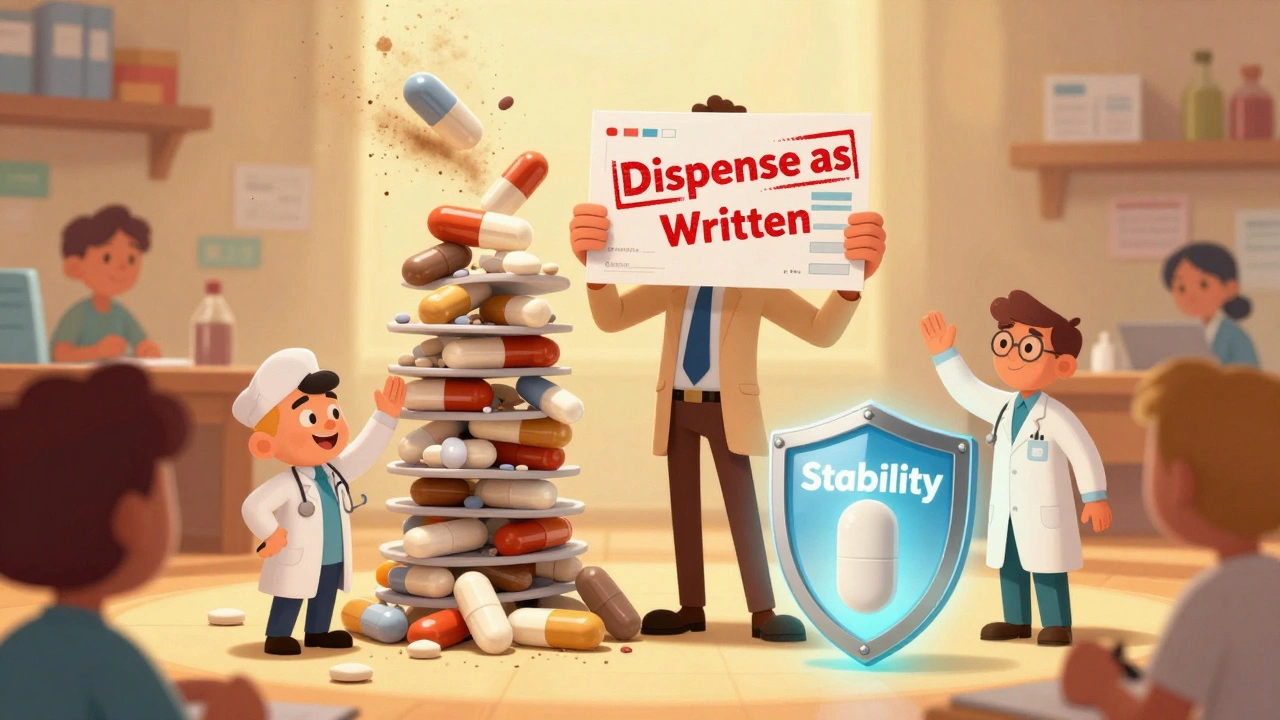
- Ask for a prescription that says “Dispense as Written” or “Do Not Substitute.” This legally blocks automatic switches. Some insurers still allow it, especially for NTI drugs.
- Monitor your symptoms. If you start feeling off-fatigue, dizziness, mood changes, new side effects-after a switch, don’t wait. Call your doctor. Get a blood test if needed.
What Doctors and Pharmacies Are Doing
Leading hospitals and clinics are starting to act. Some have created “generic stability programs” for high-risk medications. Others require pharmacists to note the manufacturer on the prescription label.
In 2024, Medsafe (New Zealand’s drug regulator) updated its guidelines to explicitly recommend avoiding switches between different levothyroxine brands. The FDA is also testing new tracking systems to flag frequent switches for NTI drugs.
But the biggest gap? Communication. A 2023 survey found 62% of doctors didn’t know their patients had been switched to a different generic until the patient came in with problems. That’s on the system-not the patient.
The Bigger Picture
Generics saved the U.S. healthcare system hundreds of billions. That’s huge. But the goal shouldn’t be just the lowest price-it should be the safest, most consistent treatment.
As generic use climbs to 78% of all prescriptions by 2028, regulators are starting to ask: Are we trading cost savings for patient risk? The answer isn’t to stop generics. It’s to manage them better.
For now, the burden falls on you. Know your meds. Ask questions. Track changes. And don’t assume “same drug” means “same effect.”
Which Drugs Are Safest to Switch?
Some medications are much more forgiving than others.
Low risk (switching usually fine):
- Statins (atorvastatin, simvastatin)
- ACE inhibitors (lisinopril, enalapril)
- Metformin
- Antibiotics (amoxicillin, azithromycin)
- Many SSRIs (sertraline, fluoxetine)
High risk (avoid switching unless necessary):
- Levothyroxine
- Warfarin
- Tacrolimus
- Sirolimus
- Lamotrigine
- Phenytoin
- Cyclosporine
If you’re on one of the high-risk drugs, make your doctor and pharmacist aware. Ask for a written note on your prescription: “Dispense only [Manufacturer Name].”
Can I ask my pharmacy to always give me the same generic manufacturer?
Yes. You can ask your pharmacist to fill your prescription with the same generic manufacturer each time. Some pharmacies will do this automatically if you request it. For high-risk drugs like levothyroxine or warfarin, you can also ask your doctor to write “Dispense as Written” or “Do Not Substitute” on the prescription. This legally prevents automatic switching.
Why do generic pills look different every time?
Each generic manufacturer uses different inactive ingredients-fillers, dyes, coatings-which affect the pill’s color, shape, and size. The FDA only requires the active ingredient to match the brand. The rest is up to the manufacturer. That’s why your pill might change every refill, even if the drug name is the same.
Are generic drugs less effective than brand names?
For most drugs, generics work just as well. But for drugs with a narrow therapeutic index-like levothyroxine, warfarin, or seizure meds-small differences in how the body absorbs the drug can matter. The FDA approves each generic individually against the brand, but not against other generics. So while each is “equivalent,” switching between different generics can cause instability in your body’s response.
Should I avoid generics altogether to stay safe?
No. Generics are safe and effective for most people and save billions in healthcare costs. The issue isn’t generics themselves-it’s frequent, unmonitored switching between different manufacturers, especially for high-risk drugs. If you’re on a drug like levothyroxine or warfarin, stick with one manufacturer when possible. For most other medications, generics are a smart, safe choice.
How do I know if I’ve been switched to a different generic?
Check the pill itself. Note its color, shape, and imprint code (the letters or numbers stamped on it). Keep a photo on your phone. If it looks different from your last refill, ask your pharmacist which manufacturer made it. You can also check the label-the manufacturer’s name is usually listed. If you’re unsure, call your doctor’s office and ask if your prescription was changed.
Can switching generics cause side effects?
Yes, especially for drugs with a narrow therapeutic index. Changes in absorption can lead to under- or over-dosing. For example, switching levothyroxine brands can cause fatigue, weight gain, or heart palpitations. Switching warfarin can raise your INR, increasing bleeding risk. Even if you feel fine, it’s worth checking your blood levels after a switch if you’re on one of these medications.
What’s Next?
The system is changing. In 2023, the FDA launched a pilot program requiring generic manufacturers to report any formulation changes. In 2024, Medsafe and other agencies started pushing for clearer labeling and fewer switches for high-risk drugs.
But until those rules are nationwide, you’re your own best advocate. Know your meds. Ask questions. Don’t be afraid to push back. Your health isn’t a cost-saving metric-it’s your life.




Webster Bull
December 13, 2025 AT 09:16Bro, I swear my thyroid med changes like my ex’s mood. One month I’m fine, next I’m a zombie. No one tells you this shit until you’re barely functional.
Donna Hammond
December 15, 2025 AT 01:53As a pharmacist for 18 years, I’ve seen this firsthand. Patients don’t realize that a 10% difference in absorption can flip a therapeutic window. For NTI drugs, we always flag the manufacturer-especially for levothyroxine and warfarin. If your doctor doesn’t know, they need to. Knowledge is power.
Shelby Ume
December 15, 2025 AT 01:53Thank you for writing this with such precision. I’ve been on lamotrigine for a decade and switched from Mylan to Teva last year. Two weeks later, I had a tonic-clonic seizure. My neurologist said my blood levels dropped 37%. I now have a signed note from my doctor that says ‘DO NOT SUBSTITUTE.’ It’s not a request-it’s a medical necessity. If you’re on an NTI drug, fight for consistency. Your brain deserves it.
Tom Zerkoff
December 16, 2025 AT 04:02While the systemic issues surrounding generic substitution are deeply concerning, I must emphasize that the burden of vigilance should not fall disproportionately on patients. Healthcare systems are designed for efficiency, not individualized care. The FDA’s current framework, while technically compliant with bioequivalence standards, fails to account for inter-generic variability. A standardized, traceable labeling protocol-perhaps even QR codes linking to batch-specific pharmacokinetic data-would be a responsible next step. Until then, patient advocacy remains essential, but it should not be the primary safeguard.
Jennifer Taylor
December 17, 2025 AT 19:45THIS IS A PHARMA CONSPIRACY. They want you switching so you keep buying meds. They know you won’t notice until you’re in the ER. I’ve got proof-my cousin’s INR spiked after a switch, and the pharmacy got a $200 rebate from the new generic maker. They’re playing Russian roulette with your life and calling it ‘cost savings.’
Emma Sbarge
December 18, 2025 AT 19:30My dad’s on warfarin. Switched generics last month. He got dizzy, almost fell. Took 3 weeks to stabilize. Now we have a laminated card in his wallet: ‘DO NOT SUBSTITUE - WARFARIN.’ He’s 76. He shouldn’t have to be a detective just to stay alive.
Willie Onst
December 19, 2025 AT 00:49Man, I used to think generics were just cheaper versions of the same thing. Then I switched from one levothyroxine to another and started crying for no reason. Turns out my TSH went from 2.1 to 7.8. I felt like a ghost. Now I take a pic of every pill. If it looks weird, I call my pharmacist. Small thing. Big difference.
Tommy Watson
December 19, 2025 AT 20:22Why do we even have generics if they’re gonna mess with your brain? Just make the brand name cheaper. Or better yet, let the government pay for it. I’m tired of playing guess-the-pill. My anxiety’s worse now than when I started taking this stuff.