How to Safely Transfer Prescriptions and Keep Label Accuracy
Transferring a prescription might seem like a simple phone call or a quick app tap-but when it goes wrong, the consequences can be life-threatening. A misplaced decimal point, a missing refill number, or an outdated label can lead to a tenfold overdose. In 2023, the DEA changed the rules to let pharmacies electronically transfer Schedule II prescriptions for the first time. That’s a big deal. But it also means the stakes are higher than ever. If you’re a patient, a pharmacist, or just someone managing prescriptions for a loved one, knowing how to do this right isn’t optional-it’s essential.
Why Prescription Labels Must Be Perfect
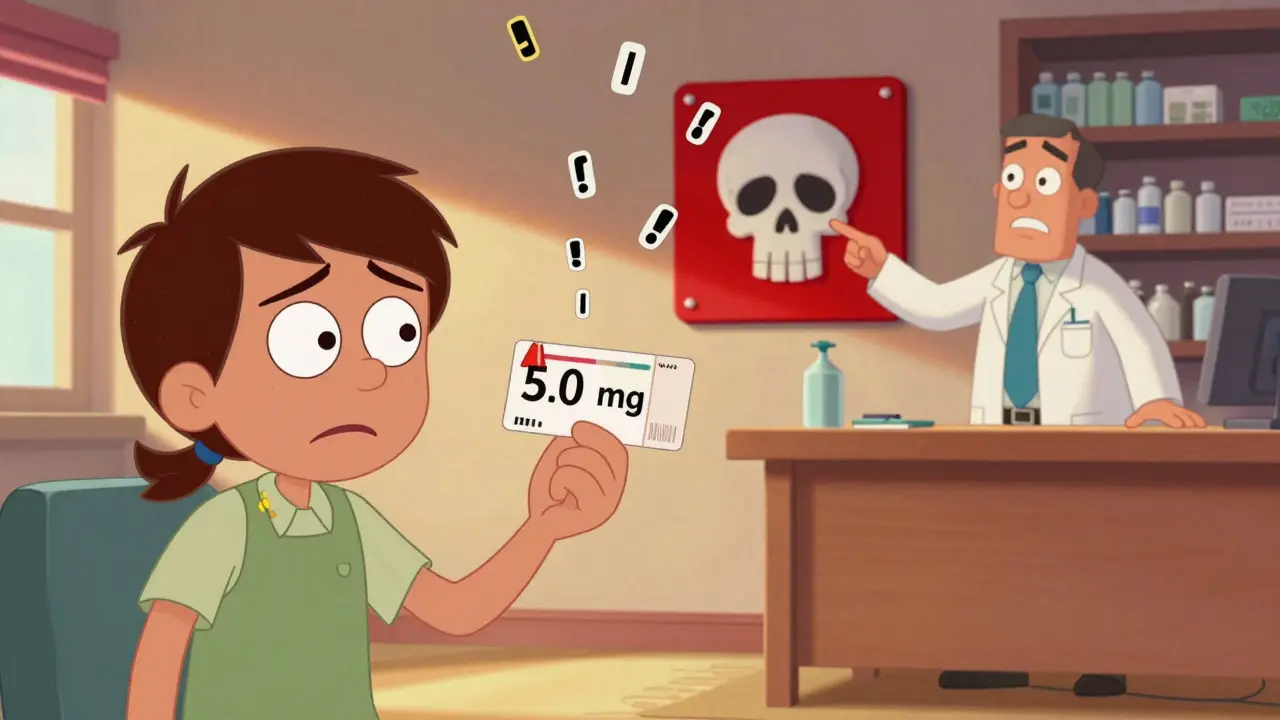
Every prescription label carries critical information. Patient name, drug name, strength, dosage, refills, prescriber, pharmacy contact. Miss one detail, and you risk a dangerous mistake. The FDA estimates that standardized labeling alone could prevent 1.5 million adverse drug events each year. Why? Because small errors add up. A trailing zero-writing "1.0 mg" instead of "1 mg"-has caused hundreds of overdoses. A missing leading zero-".4 mg" instead of "0.4 mg"-can make a patient get four times the dose. These aren’t hypotheticals. The National Coordinating Council for Medication Error Reporting and Prevention analyzed over 2,300 errors in 2022 and found these formatting mistakes were behind dozens of serious incidents.
Even the units matter. The metric system is required for all prescription strengths (except insulin). No more "grains" or "minims." That’s because old apothecary units caused 12% of dosage errors in hospital systems, according to ASHP’s 2021 data. If the label says "5 mL," it must mean exactly 5 milliliters-not 5 teaspoons, not 5 drops. No guesswork.
How Controlled Substances Change the Rules
Not all prescriptions are treated the same. Schedule II drugs-like oxycodone, fentanyl, or Adderall-are tightly controlled. Under the DEA’s August 2023 rule, these can now be transferred electronically between pharmacies, but only once. Once it’s transferred and filled, the original prescription is void. No more back-and-forth. No more refills on the original. If the patient needs another fill, they must go back to the prescriber.
Schedule III to V drugs-like codeine cough syrup or anabolic steroids-are more flexible. They can be transferred multiple times, up to the number of refills the prescriber originally authorized. But even here, every transfer must be documented. The transferring pharmacist must record: the date, the name of the receiving pharmacy, the DEA number of that pharmacy, and their own identification. The receiving pharmacist must mark the record as "transfer," and note where it came from.
Here’s what a valid electronic transfer must include:
- Transfer action notation
- Name and DEA number of the transferring pharmacy
- Name and DEA number of the receiving pharmacy
- Date of the original prescription
- Date of the transfer
- Name of the pharmacist who transferred it
- Name of the pharmacist who received it
- Original prescription number
- Remaining refills
- Date of first fill
- Complete refill history
Any missing piece? The prescription is invalid. The pharmacy can’t fill it. And if they do anyway? They risk DEA penalties, state board sanctions, or even criminal charges.
How Electronic Transfers Work (And Why They’re Safer)
Most transfers today happen through NCPDP SCRIPT standards-version 2017071 or newer. This isn’t just email or fax. It’s a secure, structured data format that keeps every field intact. A 2022 University of Florida study found these systems preserve 98.7% of data. Fax? Only 82.3%. Phone? Just 76.1%. That’s why the DEA now only allows fax or phone transfers for Schedule III-V drugs, and only if electronic transfer isn’t possible.
But not all pharmacies have the same tech. Independent pharmacies, especially in rural areas, still struggle with outdated systems. That’s why 18% of pharmacies reported data truncation during transfers in a 2022 National Community Pharmacists Association survey. A patient’s name might get cut off. The dosage might disappear. The refill count might reset to zero. These aren’t glitches-they’re safety failures.
That’s why the best practice is simple: Always confirm with the receiving pharmacy before you transfer. Ask: "Can you pull up my prescription? Do you see all the refills? Is the dosage clear?" Patients in California reported that 23% of transfer attempts failed because they didn’t check this first. One Reddit user shared how they transferred an oxycodone script, only to find out the new pharmacy had no inventory. They went 4 days without pain relief. That’s avoidable.
What Pharmacists Must Do (And What Patients Should Expect)
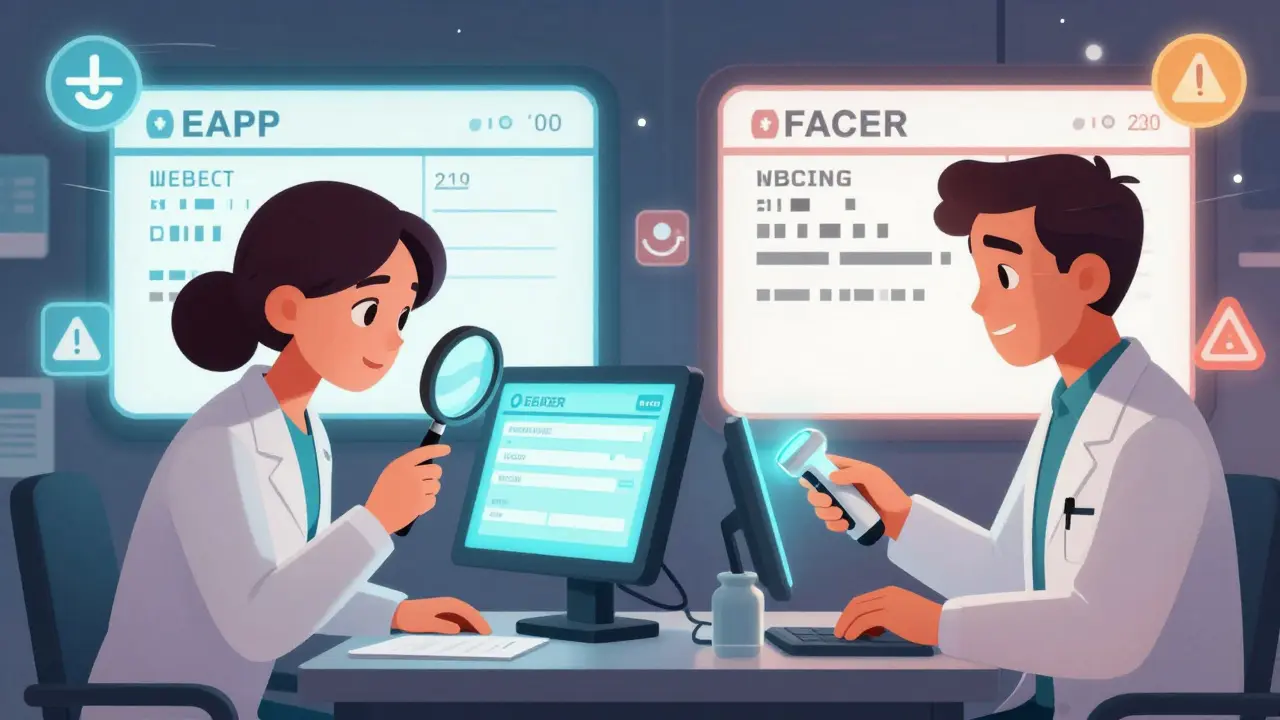
Pharmacists aren’t just filling bottles. They’re verifying systems. The ASHP guidelines recommend a double-check: one pharmacist verifies the drug, dose, quantity, and instructions. A second pharmacist confirms it again. Add barcode scanning, and errors drop by 41%, according to a 12-hospital JAMA study. That’s not luck-it’s procedure.
Patients should expect:
- A label with no abbreviations (no "HCTZ," no "MOM").
- Full drug names: "Hydrochlorothiazide," not "HCTZ."
- Clear directions: "Take one tablet by mouth once daily with food," not "1 tab qd."
- Prescriber’s full name and phone number.
- Pharmacy phone number and address.
- No trailing zeros: "5 mg," not "5.0 mg."
- Leading zeros: "0.5 mg," not ".5 mg."
If the label doesn’t look right, ask. Don’t assume it’s fine. Dr. Michael Cohen of ISMP says standardized labels could prevent 30% of errors caused by misreading. That’s not theory-it’s data.
The Big Change Coming in 2025: Patient Medication Information (PMI)
The FDA is rolling out a new rule called Patient Medication Information (PMI), set for full implementation by 2025. It will require:
- Paper labels as the default (electronic only if you ask for it).
- Automated scanning of labels before they leave the pharmacy.
- Standardized formatting: font size, layout, warning icons.
- Clear language: "Do not drink alcohol" instead of "Avoid ethanol."
Early adopters in California report implementation costs between $12,500 and $18,750 per pharmacy. But the payoff? Fewer errors, fewer hospital visits, fewer deaths. By 2030, the FDA predicts 40% more prescriptions will include multiple drugs. If labels aren’t clear, the risk skyrockets.

What You Can Do Right Now
Whether you’re a patient, caregiver, or pharmacist, here’s what actually works:
- Always initiate the transfer yourself. Don’t let the pharmacy do it for you. Confirm the receiving pharmacy can handle the drug and refill count.
- Check the label when you pick it up. Compare it to the old one. Is the strength the same? Are the directions clear? Are there any new warnings?
- Ask if they use NCPDP SCRIPT 2017071 or newer. If they say "we fax," ask why. If they can’t answer, consider switching.
- Never accept a label with "0.5 mg" written as ".5 mg." Say something. It’s not picky-it’s life-saving.
- Keep a printed copy of your prescription. Even if it’s electronic, have a paper backup. It’s your safety net.
There’s no magic tech fix. No app that replaces human vigilance. The system is better than it was in 2020-but it still relies on people catching mistakes. You’re not just a patient. You’re part of the safety net.
What Happens When It Goes Wrong?
In 2022, the DEA issued 142 warning letters to pharmacies for improper prescription transfers. Most were for Schedule II transfers done incorrectly-either too many, or with missing data. One pharmacy in Ohio transferred a fentanyl script twice, leading to two overdoses. Another in Texas used a faxed copy that lost the refill count, and a patient got 10 extra pills. These aren’t rare. They’re preventable.
Patients aren’t blameless either. A 2023 CMS study found rural patients abandon transfers 15% more often than urban ones-not because they don’t want the meds, but because the system doesn’t work for them. If your local pharmacy can’t transfer electronically, and the next one is 40 miles away, you’re stuck. That’s a system failure. And it’s why the push for interoperability with Epic and Cerner is so urgent. Real-time checks between EHRs and pharmacy systems could cut transfer errors by 75% by 2026.
Can I transfer a Schedule II prescription more than once?
No. Under the DEA’s 2023 rule, Schedule II prescriptions (like oxycodone or fentanyl) can only be transferred electronically once. After that, the original prescription is void. If you need another fill, you must get a new prescription from your prescriber. This rule was created to prevent abuse and reduce diversion.
What happens if the label has a trailing zero, like "5.0 mg"?
A trailing zero (like "5.0 mg") is a serious labeling error. The FDA and NCCMERP have documented dozens of cases where this led to tenfold overdoses. The correct format is "5 mg." If you see "5.0 mg," do not take it. Return to the pharmacy and ask them to correct it. This is not a minor typo-it’s a safety violation.
Can I transfer a prescription between states?
Yes, but it’s complicated. The DEA’s 2023 rule allows interstate electronic transfers for controlled substances, but each state has its own pharmacy board rules. Some require additional documentation. Others restrict certain drugs. Always confirm with the receiving pharmacy that they’re licensed to accept prescriptions from your state. Don’t assume it’s automatic.
Why do pharmacies ask me to confirm the transfer before filling?
Because the transfer isn’t complete until you confirm it. For Schedule II drugs, the prescription can only be filled once. If you don’t verify the pharmacy has the correct info, you might end up with no medication-or the wrong dosage. It’s not bureaucracy; it’s a safety step designed to prevent errors.
What should I do if the new pharmacy’s label looks different from the old one?
Stop. Don’t take the medication. Compare the drug name, strength, dosage, and refill count side by side. If anything doesn’t match-especially the amount or instructions-call the pharmacy and ask for clarification. If they can’t explain it, go to another pharmacy or contact your prescriber. It’s better to be safe than sorry.
Next Steps
If you’re a patient: Make this a habit. Before you leave the pharmacy, hold the label up to the light. Read it out loud. Does it make sense? If not, ask. If you’re switching pharmacies, call ahead. Ask if they use electronic transfers. Ask if they’ve had issues with label truncation. You have more power than you think.
If you’re a pharmacist: Train your staff. Use barcode scanning. Implement double verification. Push for system upgrades. The cost of compliance is high-but the cost of error is higher.
The system isn’t perfect. But it’s getting better. And the only way it keeps improving is if people like you-patients, caregivers, pharmacists-demand accuracy. Because when it comes to your health, there’s no room for "close enough."