
How to Discuss Expired Medication Use During Disasters or Shortages
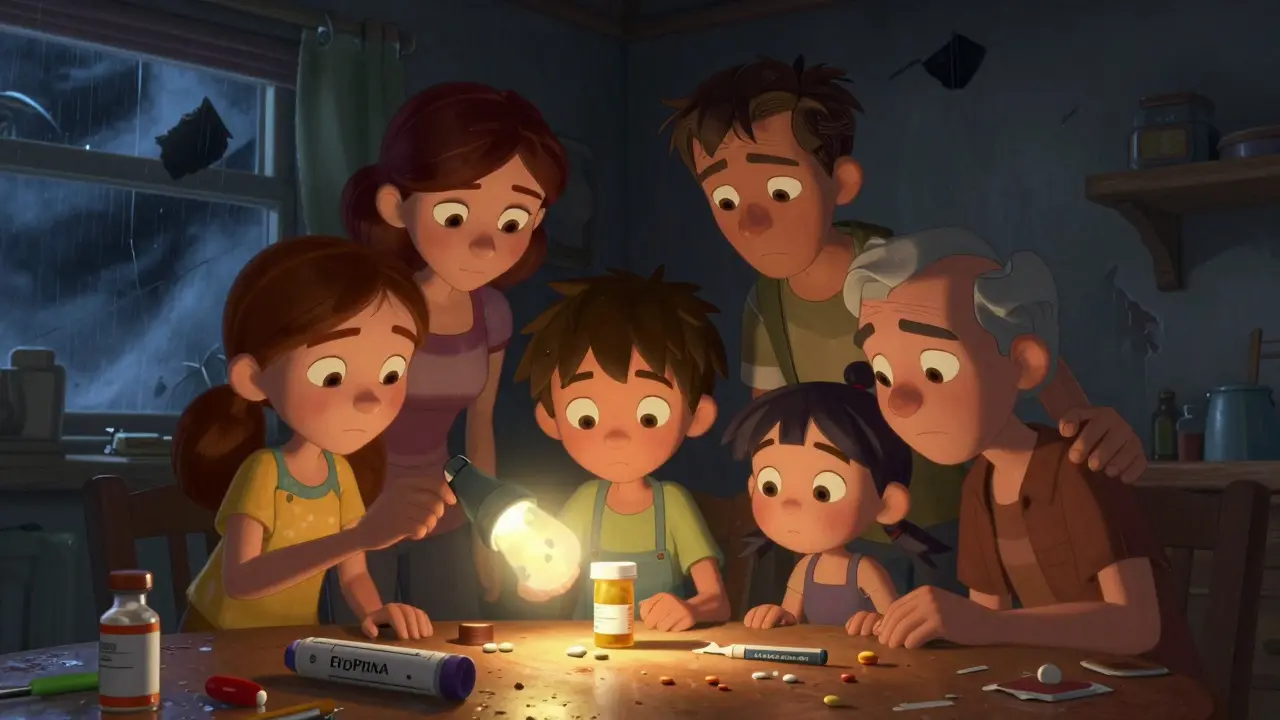
When a hurricane knocks out power for days, or a wildfire forces you to flee with nothing but a backpack, the first thing you might think about isn’t your ID or your phone-it’s your medicine. What if your insulin, blood pressure pills, or asthma inhaler expired last year? Do you throw it out? Risk using it? Or go without? These aren’t hypothetical questions. They’re real choices people face every time disaster strikes.
What Does ‘Expired’ Actually Mean?
Most people assume expired medication is dangerous or useless. That’s not always true. The expiration date on your pill bottle isn’t a ‘use-by’ date like milk. It’s the last day the manufacturer guarantees the drug will work at full strength-under ideal storage conditions. The FDA requires this testing, and it’s based on stability studies done in controlled labs: cool, dry, dark places. Real life? Not so controlled.
Studies from the FDA’s Shelf Life Extension Program show that 88% of military stockpiled drugs remained stable years past their expiration dates. But here’s the catch: those were sealed, climate-controlled vials. Your medicine, sitting in a bathroom cabinet or a hot car during a power outage, is a different story.
Some drugs hold up better than others. Solid tablets like acetaminophen or ibuprofen often keep 90%+ potency for 1-5 years past expiration if kept dry and cool. But liquids? Not so much. Insulin loses about 10% potency per month after expiration at room temperature. Epinephrine auto-injectors degrade 2-4% per month. Nitroglycerin? Half its strength is gone within three months of opening the bottle.
When Is It Okay to Use Expired Medicine?
During a disaster, the question isn’t whether the drug is still good-it’s whether going without is worse. The American Pharmacists Association and the FDA both agree: in life-or-death situations with no alternatives, using expired medication may be better than nothing.
Here’s a simple way to think about it:
- Life-sustaining drugs (insulin, epinephrine, warfarin, seizure meds): High risk. Use only if absolutely no other option exists. Even then, expect reduced effectiveness.
- Essential but not immediately life-threatening (blood pressure, diabetes, thyroid meds): Use with caution. You might feel okay, but your numbers could be off. Monitor closely if possible.
- Non-critical pain or allergy relief (ibuprofen, antihistamines, acetaminophen): Often safe and effective even years past expiration. Many people report full symptom relief.
During Hurricane Maria in 2017, 42% of Puerto Ricans used expired meds. For pain or cold symptoms, 78% said it worked. But for chronic conditions like hypertension or diabetes, 22% had treatment failure. That’s the difference between discomfort and danger.
What Drugs Are Dangerous to Use After Expired?
Not all expired meds are risky. Some are outright dangerous.
Tetracycline antibiotics are the most documented case. When degraded, they can cause Fanconi syndrome-a rare but serious kidney disorder. There have been 17 confirmed cases since 2000, according to the Institute for Safe Medication Practices. Don’t use expired tetracycline, doxycycline, or minocycline if you can avoid it.
Antibiotics like amoxicillin or ciprofloxacin can lose potency over time. That doesn’t just mean you won’t get better-it means you might not kill all the bacteria. That’s how antibiotic resistance starts. A 2023 Johns Hopkins study found that 28% of disaster survivors using expired antibiotics developed resistant infections, compared to just 8% with fresh ones.
Epinephrine is another high-risk item. If you’re having anaphylaxis and your EpiPen is expired, using it is better than doing nothing-but you might need to double the dose if you have access to another. A pharmacist on Reddit with over 10 years of emergency experience said, “I’ve seen patients use 6-month expired epinephrine with 60% effectiveness. Better than nothing, but don’t count on it.”
How to Check If Your Medicine Is Still Usable
Before you even think about using an expired pill, do a quick physical inspection:
- Look at it. Is it discolored? Crumbling? Smelling weird? If yes, throw it out. The FDA says 73% of degraded meds show visible changes.
- Check the environment. Was it exposed to floodwater? Heat above 86°F (30°C) for more than 48 hours? Moisture for over 24 hours? If yes, discard it. Contamination risk jumps to 92% after water exposure.
- Know the drug type. Tablets? Probably okay. Liquids? Risky. Inhalers? Check the spray pattern-if it’s weak or sputters, it’s not reliable.
- Consider the time. One year past expiration? Maybe. Five years? Probably not for critical meds.
There’s no home test for potency. But if the pill looks intact, was stored well, and you’re using it for something like headaches or mild allergies, the odds are in your favor.
What Should You Do During a Disaster?
Here’s a real-world 5-step plan based on FDA and APhA guidelines:
- Assess the situation. Is this a life-threatening emergency? Are you out of options? If yes, proceed with caution.
- Inspect the drug. No discoloration? No moisture? No extreme heat? Good sign.
- Classify the drug. Is it life-sustaining? Use only as last resort. Is it for pain or allergies? Likely safe.
- Use the lowest effective dose. If you’re using an expired antibiotic or blood pressure pill, don’t double up unless you have to. Overdosing on degraded drugs can be unpredictable.
- Seek help ASAP. Call a telehealth line. Ask a pharmacist. Even a 10-minute chat can change your decision. Only 38% of rural disaster zones had telehealth access in 2022-but if you can get it, use it.
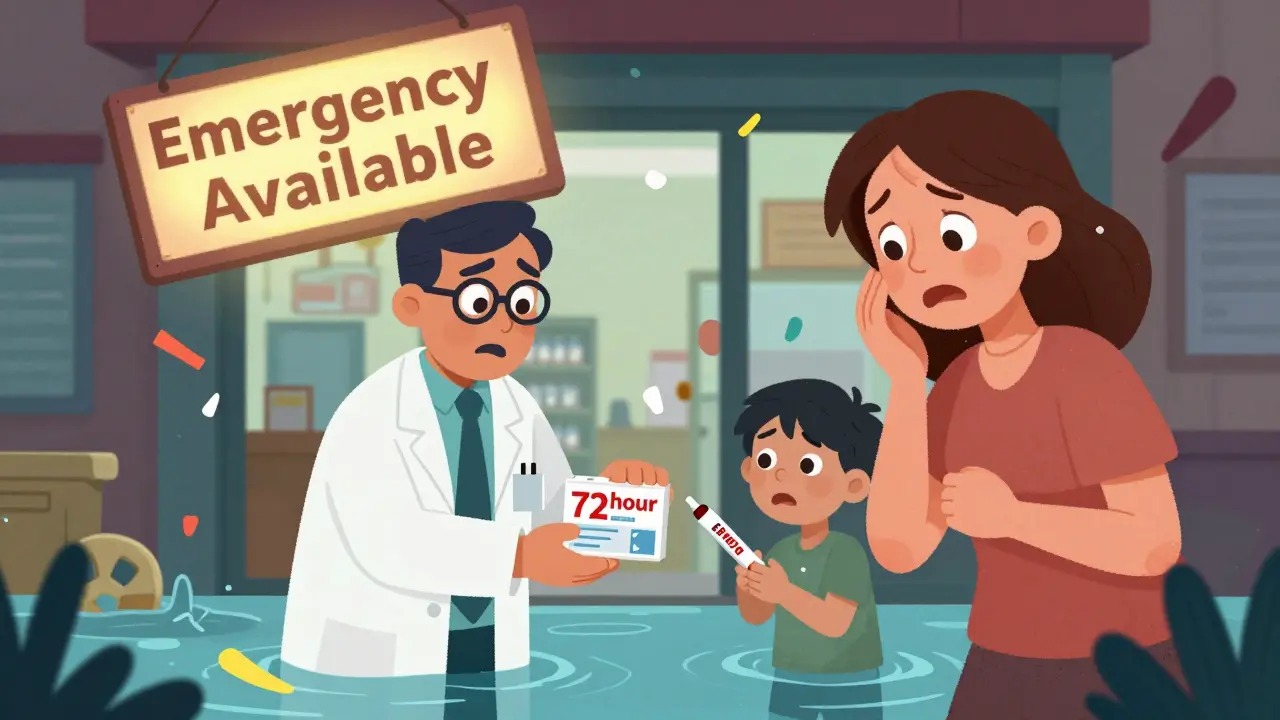
And remember: pharmacists in 48 states can legally give you a 72-hour emergency supply of most medications without a prescription during a declared emergency. Call your local pharmacy. Ask if they’re participating. Most chain pharmacies are.
What About the Future?
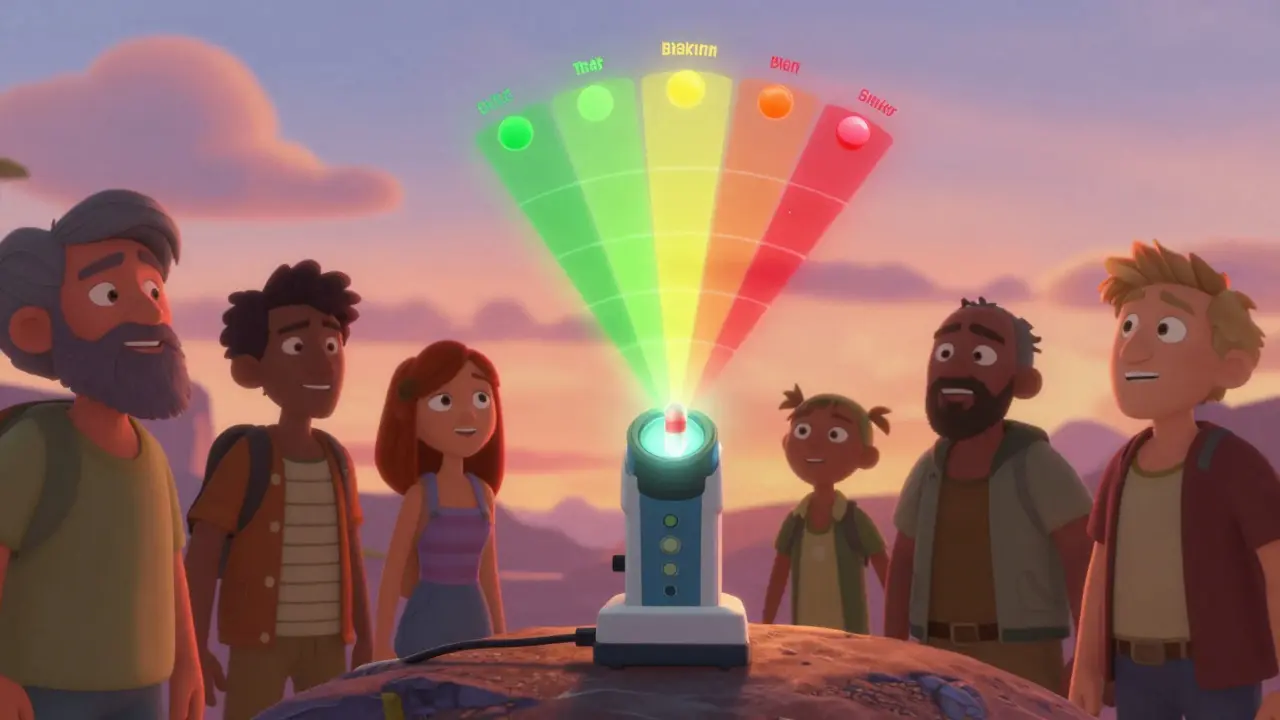
There’s hope on the horizon. The FDA’s 2023 Emergency Use Authorization template now includes guidance for expired meds, and it was used during the 2023 Maui wildfires to help over 1,200 people. The CDC’s new 2024 Public Health Emergency Response Guide introduces a color-coded decision matrix-green for safe, yellow for caution, red for avoid-that’s been tested in 12 disaster simulations.
NIH is funding a $4.7 million project to build portable devices that can test drug potency in under five minutes using light spectroscopy. Field testing begins in hurricane season 2024. That could change everything.
Pharmaceutical companies are also starting to extend shelf lives by 6-12 months for critical drugs through better packaging. If that works, it could cut disaster-related shortages by 22%.
What You Can Do Now
Don’t wait for a disaster to figure this out.
- Keep a list of your critical meds and their expiration dates.
- Store them in a cool, dry place-not the bathroom or the car.
- Rotate your emergency stock. Use older pills first. Replace them before they expire.
- Know your local pharmacy’s emergency policy. Call them now and ask: “What’s your process for emergency dispensing during disasters?”
- Keep a printed copy of your prescriptions. Power and phones fail. Paper doesn’t.
Most people don’t think about this until it’s too late. But if you’ve got a week’s worth of meds, a plan, and a basic understanding of what’s safe to use and what’s not-you’re already ahead of 90% of the population.
Is it safe to take expired antibiotics during a disaster?
It depends. Antibiotics like amoxicillin or ciprofloxacin can retain 70-80% potency up to one year past expiration if stored properly. But using them carries a risk: they may not fully kill the infection, leading to antibiotic resistance. Only use them if there’s no other option and the infection is serious. Never use expired tetracycline-it can cause kidney damage.
Can expired insulin still work?
Expired insulin loses potency quickly-about 10% per month at room temperature. After six months past expiration, you could be getting less than half the dose you need. This can cause dangerously high blood sugar. If you have no other option, use it-but monitor your glucose closely and seek medical help as soon as possible. Never rely on expired insulin long-term.
What should I do if my EpiPen is expired?
If you’re having a severe allergic reaction and your EpiPen is expired, use it anyway. Epinephrine degrades slowly-6-month-old pens still work about 60% of the time. If you have a second expired EpiPen, use both. Better to get partial treatment than none at all. Call 911 immediately after, even if you feel better.
Can I use expired pain relievers like ibuprofen or acetaminophen?
Yes, generally. Studies show acetaminophen retains over 95% potency up to four years past expiration when stored properly. Ibuprofen works similarly. These are low-risk options for pain or fever during disasters. Just check for discoloration or crumbling. If it looks fine, it’s likely safe.
Where can I get emergency medicine if my pharmacy is closed?
In 48 states, pharmacists can legally dispense a 72-hour emergency supply of most medications without a prescription during a declared emergency. Call your local chain pharmacy-CVS, Walgreens, or Rite Aid-and ask if they’re participating. Also check with local health departments or FEMA relief centers. Many have temporary medication distribution points.
How do I properly dispose of expired meds after a disaster?
Don’t flush them or throw them in the trash. Many pharmacies offer take-back programs, even after disasters. If none are available, mix pills with coffee grounds or cat litter in a sealed container, then throw them in the trash. This reduces the chance of accidental ingestion or environmental contamination. The DEA’s Secure Disposal Program has drop boxes in 42% of U.S. counties-but if yours doesn’t, this method is the next best option.
Final Thoughts
Expired medication isn’t magic. It’s not poison. It’s a tool-and like any tool, its usefulness depends on context. In a disaster, your goal isn’t perfection. It’s survival. Knowing which drugs still work, which ones to avoid, and how to make a smart call under pressure can literally save your life-or someone else’s.
The system isn’t perfect. Only 61% of pharmacists have emergency training. Two-thirds of state disaster plans don’t mention expired meds. But you don’t need a perfect system. You just need to know what to do when everything else fails.
Be prepared. Know your meds. Store them right. Ask questions. And if the worst happens-you’ll be ready.


Stewart Smith
January 1, 2026 AT 22:58Man, I keep my insulin in the fridge but still check the date like it’s a milk carton. Guess I’m just a nervous Nelly. Still, I’d rather look dumb than end up in the ER because I trusted a 5-year-old vial.
Retha Dungga
January 3, 2026 AT 17:58life is a gamble anyway 🤷♀️💊 if your meds are dry and not glowing? use em. if you die? well at least you tried. the system failed you anyway 😔
Frank SSS
January 5, 2026 AT 15:55So let me get this straight-we’re supposed to risk kidney failure from expired tetracycline because the government didn’t stockpile enough? Classic. Meanwhile, my cousin’s asthma inhaler from 2019 still works like a charm. Maybe the real problem isn’t the meds-it’s the people who let them expire in the first place.
Paul Huppert
January 6, 2026 AT 15:29Interesting that the FDA’s data comes from military stockpiles. Makes me wonder how much of this applies to the random bottle in my bathroom cabinet. I’ll stick to the visual check-no weird smell, no crumbles, no water damage. If it looks fine, I’ll use it for ibuprofen. Not for insulin though.
Hanna Spittel
January 6, 2026 AT 16:17They’re lying. The FDA knows expired meds are fine. They just want you to buy new ones every year. Big Pharma’s cash cow. I’ve used 8-year-old amoxicillin and never got sick. Coincidence? I think not. 🕵️♀️💊
Brady K.
January 8, 2026 AT 02:17Let’s be real-this isn’t about pharmacology, it’s about systemic collapse. We’re not talking about ‘expired meds’-we’re talking about a society that can’t guarantee basic healthcare access. The real emergency isn’t the pill’s shelf life-it’s the fact that we’re even having this conversation. 🧠💥
John Chapman
January 8, 2026 AT 11:54My grandma used expired blood pressure meds during Hurricane Harvey and lived to tell about it. She said, ‘If it’s still in the bottle, it’s still in the game.’ I don’t take it lightly-but I’m not scared of a date stamp either. 💪
Urvi Patel
January 10, 2026 AT 04:54You Americans think you’re so prepared but you still panic over a pill expiration date. In my village we use whatever works. No labels. No science. Just results. You overthink everything. That’s why you’re always behind
anggit marga
January 11, 2026 AT 00:18Why are we even talking about this? The real solution is not to rely on Western pharma at all. We need African-made, climate-resilient medicines. Not this corporate nonsense. You want survival? Build your own supply chain. Stop begging for FDA approval