
Elderly Dehydration and Diuretics: How to Prevent Kidney Damage
Elderly Hydration Calculator
Personalized Fluid Intake Calculator
Calculate your safe daily fluid intake based on your age, diuretic type, and kidney function to prevent dehydration and kidney damage.
Your Personalized Hydration Plan
Recommended Daily Fluid Intake:
Why this range? This recommendation balances the risk of dehydration with the risk of fluid overload, considering your specific diuretic type and kidney function.
Important Notes
Your safe fluid intake is 1.5-2.0 liters daily for most elderly patients on diuretics. This range:
- Reduces risk of kidney injury
- Prevents excessive fluid accumulation
- Helps maintain proper electrolyte balance
When to Contact Your Doctor
Seek immediate medical attention if you experience:
- Urine output below 400 mL per day
- Weight loss over 2 kg in one week
- Confusion or dizziness
- Systolic blood pressure drops more than 20 mmHg when standing
Hydration Tips for Safe Intake
When older adults take diuretics for heart failure or high blood pressure, their bodies face a hidden danger: dehydration. It’s not just about feeling thirsty. For seniors, even a small drop in fluid levels can trigger acute kidney injury - sometimes within hours. This isn’t rare. About 1 in 5 hospitalizations for people over 65 involve dehydration, and those on diuretics are more than three times as likely to suffer kidney damage compared to others. The problem isn’t the medication itself, but how it interacts with aging kidneys and a body that no longer signals when it needs water.
Why Seniors Are at Higher Risk
As we age, our kidneys lose their ability to concentrate urine. A young adult’s kidneys can make urine as concentrated as 1,200 mOsm/kg, but by age 70, that number often drops to 500-700 mOsm/kg. That means more water is lost in every trip to the bathroom. Diuretics like furosemide or hydrochlorothiazide make this worse by forcing the kidneys to dump even more sodium and water. The result? A slow, silent drain on body fluids.On top of that, older adults don’t feel thirsty like they used to. Studies show thirst perception drops by about 40% after age 65. Many seniors don’t drink enough because they simply don’t feel the need. Add in medications for diabetes, blood pressure, or pain - which 75% of seniors take - and you’ve got a perfect storm. Some drugs, like NSAIDs (ibuprofen, naproxen), can cut kidney blood flow by up to 30%, making dehydration even more dangerous.
How Diuretics Affect the Kidneys Differently
Not all diuretics are the same. Loop diuretics like furosemide are strong - they can make you lose 20-25% of filtered sodium. That’s why they’re used for heart failure. But they also carry the highest dehydration risk. Thiazide diuretics like hydrochlorothiazide are milder, removing only 5-10% of sodium. They’re often used for high blood pressure, but they’re more likely to cause low sodium levels (hyponatremia) in seniors. In fact, 14% of elderly thiazide users develop hyponatremia, compared to 8% on loop diuretics.Potassium-sparing diuretics like spironolactone seem safer because they don’t flush out as much fluid. But they can spike potassium levels, which is dangerous for seniors with chronic kidney disease. Nearly 4 in 10 elderly diuretic users have stage 3 or worse kidney disease. High potassium can trigger heart rhythm problems - another silent threat.
Even non-diuretic blood pressure drugs carry risks. ACE inhibitors like lisinopril lower blood pressure by narrowing blood vessels in the kidneys. That’s helpful - unless you’re dehydrated. Then, those same vessels can shut down completely, causing sudden kidney failure. In one study, elderly patients on ACE inhibitors had an 18% lower risk of dehydration but a 22% higher risk of kidney injury during fluid loss.
What Happens When Kidneys Get Damaged
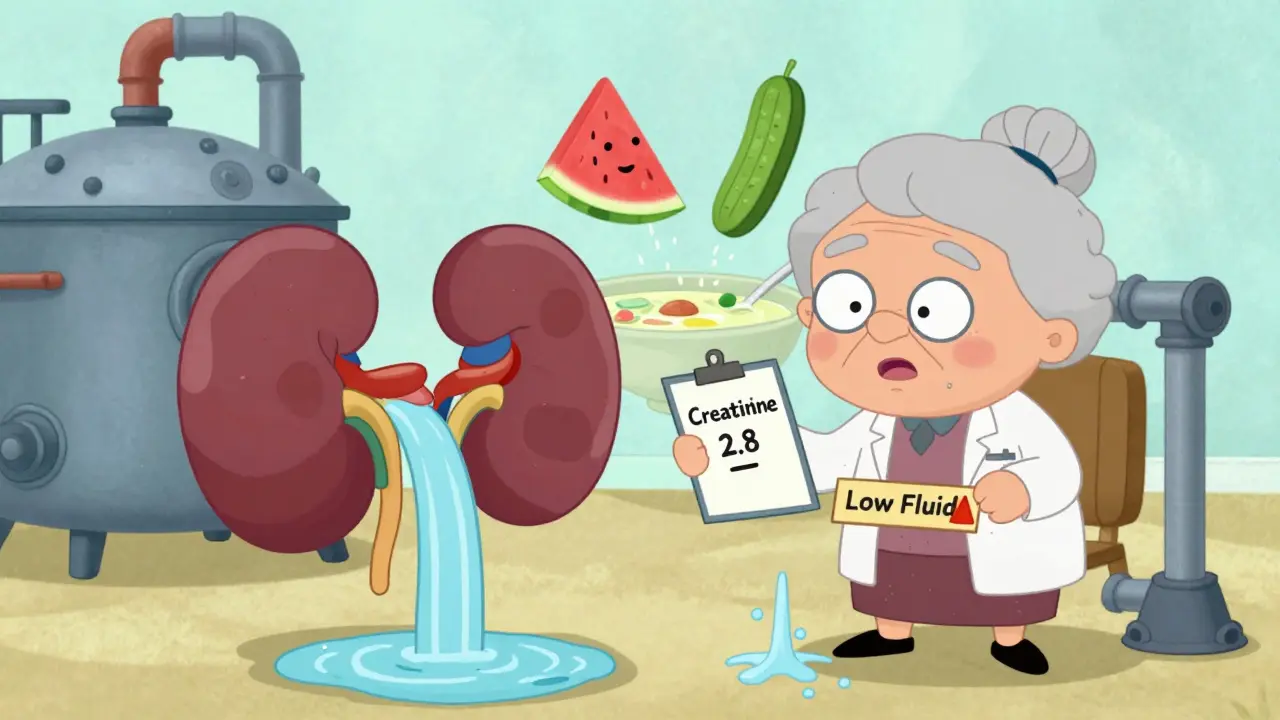
Acute kidney injury (AKI) in seniors often shows up quietly. It’s not always pain or swelling. The first sign? A rise in serum creatinine by 0.3 mg/dL or more in just 48 hours. That’s the lab’s red flag. But many seniors never get tested. Their doctors assume their creatinine is “always a little high,” so they miss the change.Real-world cases show how fast this can go wrong. One 82-year-old woman on furosemide for heart failure went on a beach trip. She drank water, but not enough. Within two days, her creatinine jumped from 1.2 to 2.8. She ended up in the hospital with AKI. Another man on hydrochlorothiazide kept falling - not because of balance, but because low sodium from dehydration made him dizzy. After switching to a lower dose and drinking water every two hours, his falls stopped.
Urine specific gravity is another key clue. If it’s above 1.020, your body is holding onto every drop of water it can. That’s a sign of dehydration. Studies show seniors on diuretics with urine specific gravity below 1.020 had 31% fewer kidney injury episodes.
How Much Water Is Enough?
The old advice - “drink eight glasses a day” - doesn’t work for seniors. The sweet spot? Between 1.5 and 2.0 liters daily. Less than 1 liter doubles the risk of hospitalization for kidney injury. More than 3 liters can also be harmful, especially for those with advanced kidney disease.Why? Because too much fluid can overload weak hearts or cause fluid buildup in the lungs. The European Renal Association warns that in stage 4 or 5 kidney disease, too much water can be as dangerous as too little. The goal isn’t maximum hydration - it’s balance.
A 2021 trial in the New England Journal of Medicine found that giving elderly CKD patients three extra cups of water daily didn’t slow kidney decline. That surprised many doctors. But it also showed that blanket recommendations don’t work. Personalization matters.
Practical Prevention Strategies
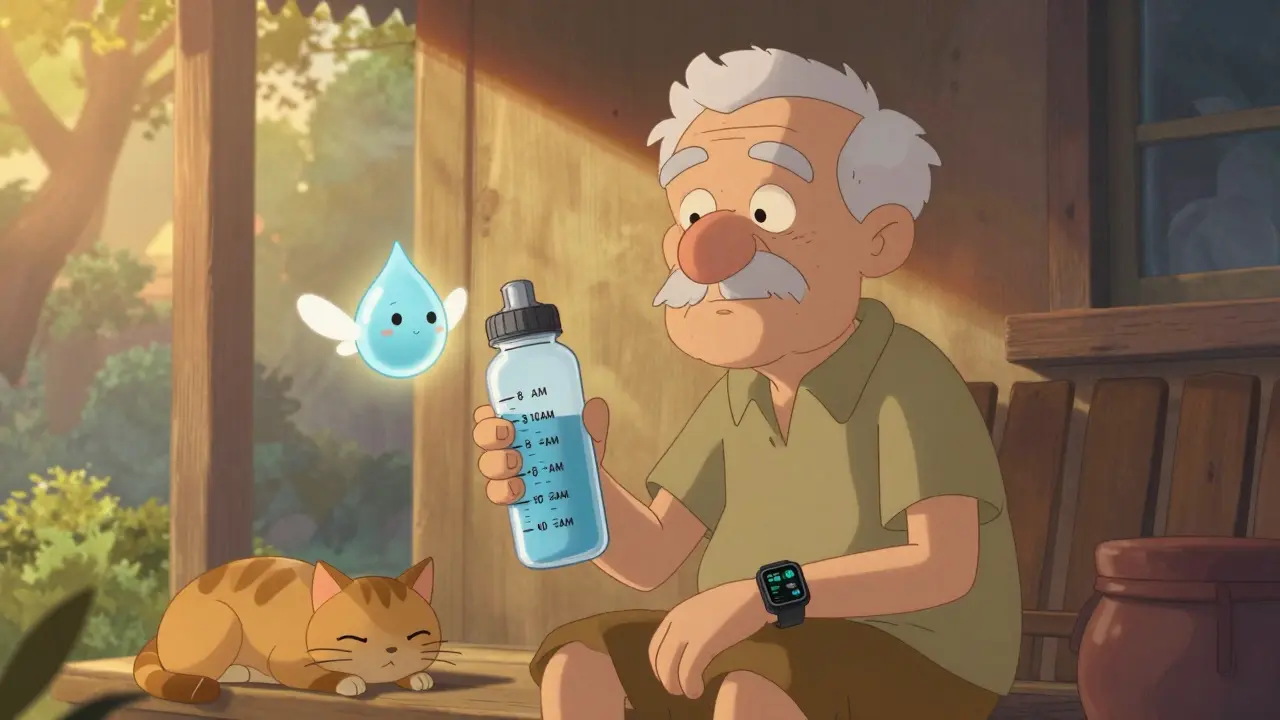
The good news? Simple changes cut hospital visits by 27% and save over $4,200 per person per year. Here’s what works:- Set a hydration schedule. Drink 150 mL (about 5 oz) every two hours while awake. That’s roughly a small cup. Use alarms on your phone or smartwatch.
- Use marked water bottles. A bottle with time markers (8 AM, 10 AM, etc.) helps seniors track intake. One survey found 45% of caregivers said this improved compliance.
- Include hydrating foods. Watermelon, cucumbers, oranges, and broth-based soups count. They’re easier to eat than drinking large volumes.
- Check weight daily. A drop of more than 2 kg (4.4 lbs) in a week is a red flag. It means fluid loss is out of control.
- Monitor urine output. If you’re peeing less than 400 mL per day (about 1.5 cups), contact your doctor. Oliguria is a serious warning.
One caregiver on Reddit shared that after her father started using a smart water bottle that synced to her phone, his hydration improved from 40% to 90% compliance. He went from three falls a month to none.
What to Avoid
Don’t try to “catch up” by chugging water after a long day without drinking. Rapid fluid replacement can cause hyponatremia - a dangerous drop in sodium. In 19% of cases, this happens when seniors drink too much too fast after being dehydrated. It can cause confusion, seizures, or even coma.Avoid NSAIDs like ibuprofen or naproxen. The FDA updated its warning in January 2023: these drugs triple the risk of kidney injury in seniors on diuretics. Even occasional use can be risky.
Don’t assume “I’m not thirsty, so I’m fine.” Thirst is a broken alarm in older adults. Rely on routine, not sensation.
When to Call the Doctor
Seek immediate help if you or a loved one on diuretics has:- Urine output under 400 mL per day
- Systolic blood pressure drops more than 20 mmHg when standing
- New confusion, dizziness, or weakness
- Weight loss over 2 kg in one week
These aren’t normal aging signs. They’re signs of kidney stress.
The Future of Hydration Monitoring
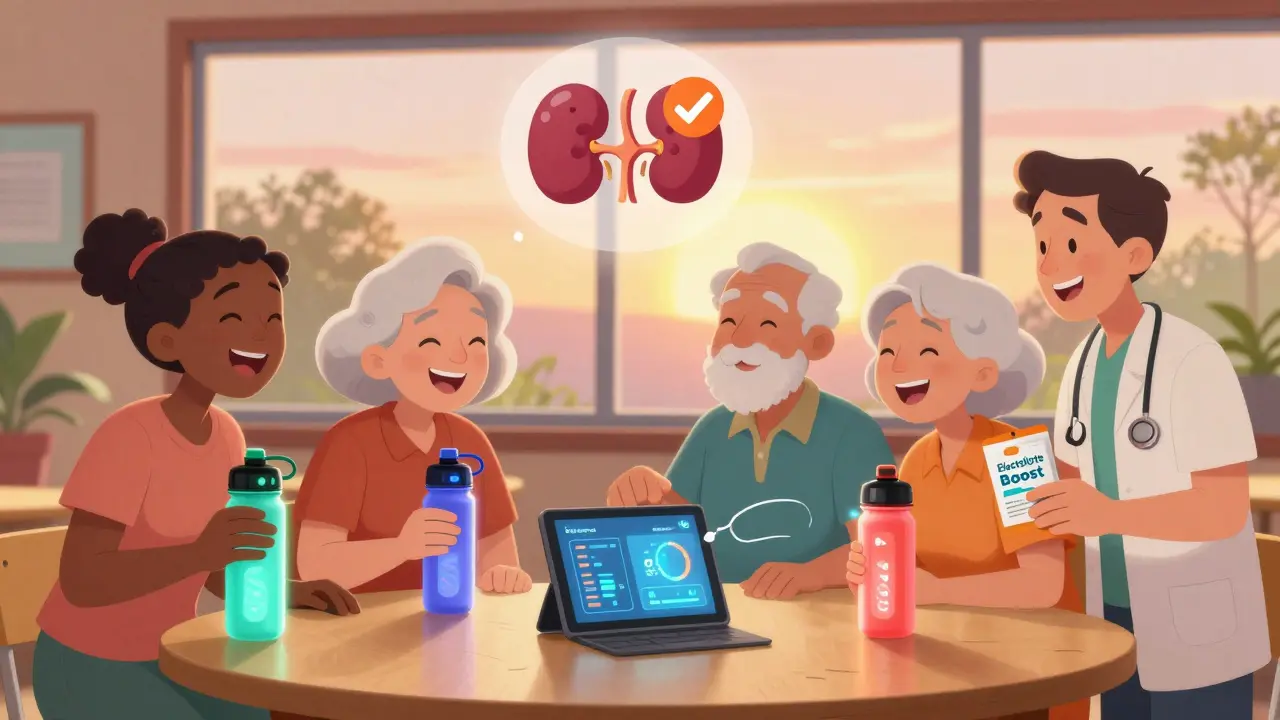
New tools are emerging. Wearables like GYMGUYZ’s Hidrate (FDA-cleared in May 2023) track fluid intake and send alerts to caregivers. Smart bottles like HidrateSpark PRO sync with apps and have helped reduce emergency visits by 33% in pilot programs.Researchers are testing bioimpedance devices that measure body fluid levels in real time. Early results from the NIH-funded WATER-AGE trial show a 29% drop in kidney injury episodes using this method. Also, cystatin C - a more accurate kidney marker than creatinine in seniors - is expected to become standard in 2024 guidelines.
One promising innovation? Electrolyte-enhanced hydration gels. A 2023 pilot study found 78% adherence with gels, compared to 37% with plain water. They’re easier to swallow, come in small doses, and help replace lost sodium and potassium.
Final Thoughts
Diuretics save lives. But they also carry silent risks. For seniors, preventing kidney damage isn’t about drinking more - it’s about drinking smart. Consistency matters more than volume. Monitoring matters more than guesswork. And routine matters more than thirst.The goal isn’t to eliminate diuretics. It’s to manage them with precision. Reduce doses when appropriate. Track intake daily. Watch for early warning signs. And never assume that not feeling thirsty means you’re fine.
Every senior on diuretics deserves a hydration plan - not just a recommendation. Because in aging bodies, small changes in fluid balance can make life-or-death differences.
Can drinking too much water be harmful for seniors on diuretics?
Yes. While dehydration is a major concern, drinking too much water - especially over 3 liters daily - can overload the heart and kidneys in seniors with advanced chronic kidney disease. This can lead to fluid buildup in the lungs (pulmonary edema), especially in those with heart failure. The key is balance: 1.5 to 2.0 liters per day is the recommended range for most elderly diuretic users.
What are the early signs of dehydration in elderly people?
Early signs aren’t always thirst. Look for dry mouth (which 68% of seniors don’t recognize as a warning), dark yellow urine, dizziness when standing, confusion, sunken eyes, or skin that doesn’t bounce back when pinched. A sudden drop in weight (over 2 kg in a week) is another red flag. Many seniors don’t feel thirsty until they’re already dehydrated.
Is it safe to stop a diuretic if I feel dehydrated?
No. Never stop or change your diuretic dose without talking to your doctor. Stopping suddenly can cause fluid buildup, worsen heart failure, or raise blood pressure dangerously. Instead, focus on adjusting fluid intake, checking weight daily, and contacting your provider if you notice symptoms. Your doctor may lower your dose or switch medications.
Do all diuretics have the same risk of causing kidney damage?
No. Loop diuretics like furosemide cause more fluid loss and carry a higher dehydration risk. Thiazides like hydrochlorothiazide are milder but more likely to cause low sodium. Potassium-sparing diuretics like spironolactone are less dehydrating but can raise potassium levels, which is dangerous for those with kidney disease. The choice depends on the patient’s heart and kidney health.
How often should seniors on diuretics get their kidney function checked?
At least every 3 to 6 months. Blood tests for creatinine, eGFR, sodium, and potassium are essential. Some doctors now recommend cystatin C testing, which is more accurate than creatinine in older adults. Daily weight checks and monitoring urine color or specific gravity can help catch problems between lab visits.
Can hydration apps or smart bottles really help seniors stay hydrated?
Yes. Studies show that using marked water bottles or smart devices that track intake improves adherence by 50-60%. One survey found 63% of seniors followed a hydration schedule when using smartphone reminders. These tools help overcome the natural decline in thirst perception and provide accountability, especially for caregivers managing multiple medications.



Rama Rish
March 24, 2026 AT 22:55Kevin Siewe
March 25, 2026 AT 07:31Amber Gray
March 25, 2026 AT 08:27Danielle Arnold
March 27, 2026 AT 02:50James Moreau
March 27, 2026 AT 23:59J. Murphy
March 29, 2026 AT 13:29Jesse Hall
March 31, 2026 AT 03:23Donna Fogelsong
March 31, 2026 AT 08:39Sean Bechtelheimer
April 1, 2026 AT 17:35Seth Eugenne
April 2, 2026 AT 17:49rebecca klady
April 2, 2026 AT 23:31Namrata Goyal
April 4, 2026 AT 06:04Alex Arcilla
April 5, 2026 AT 07:08Brandon Shatley
April 6, 2026 AT 21:03Blessing Ogboso
April 7, 2026 AT 19:06Kevin Siewe
April 8, 2026 AT 23:07Jesse Hall
April 10, 2026 AT 17:17Brandon Shatley
April 12, 2026 AT 08:21Rama Rish
April 13, 2026 AT 11:36