
Valerian and Sedating Medications: What You Need to Know About CNS Depression Risk
Valerian & Sedative Interaction Checker
Check if your medications or supplements have dangerous interactions with valerian root. Valerian can significantly increase sedation when combined with other CNS depressants, which may lead to dangerous effects like slowed breathing, extreme drowsiness, or respiratory failure.
Select substances and valerian status to see risk assessment.
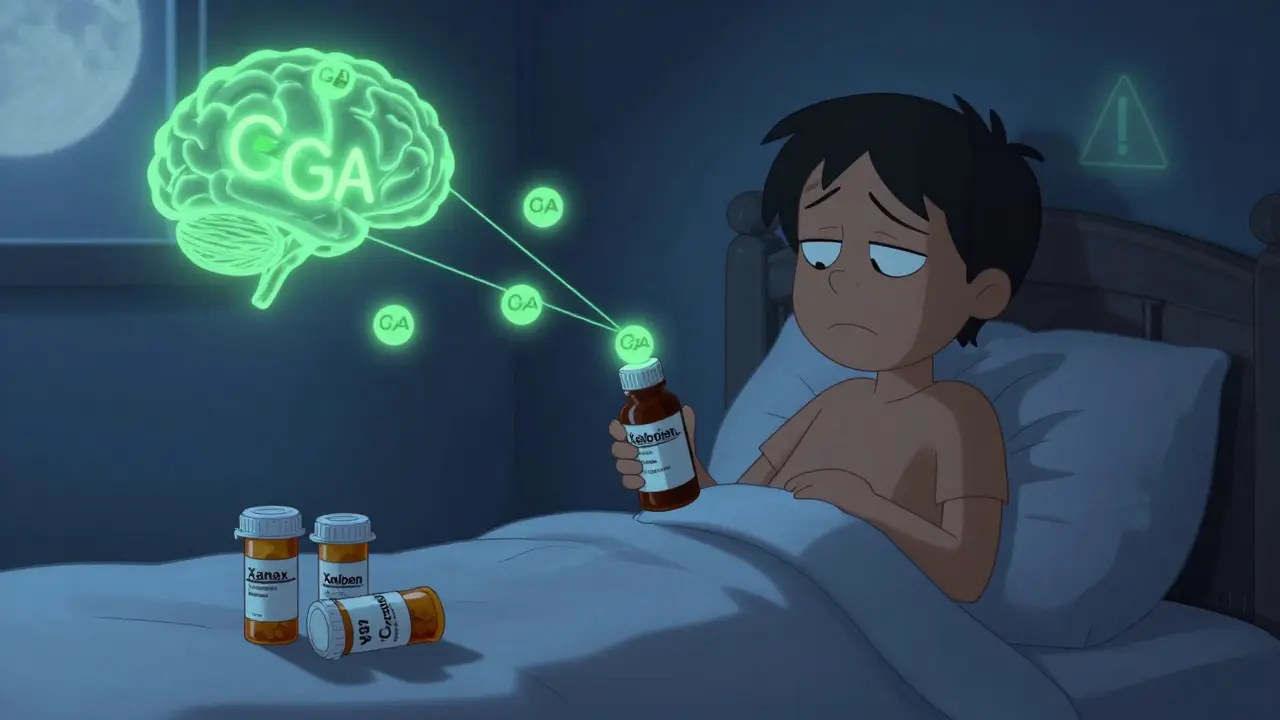
Combining valerian with sedating medications isn't just a "maybe" risk-it's a real and potentially dangerous mix. If you're taking something like Xanax, sleeping pills, or even just having a glass of wine at night, adding valerian root supplement could push your body into a state of central nervous system depression. That means slower breathing, extreme drowsiness, or worse. And most people don't even realize they're putting themselves at risk.
What Is Valerian, Really?
Valerian root comes from a flowering plant called Valeriana officinalis. People have used it for over 2,000 years to help with sleep and anxiety. It's sold as capsules, teas, tinctures, and tablets. Unlike prescription drugs, it doesn't need FDA approval before hitting store shelves. That means what’s in one bottle of valerian might be totally different from another.
What makes valerian work? It doesn't just have one active ingredient. The main players are valerenic acid and valepotriates. Valerenic acid blocks the enzyme that breaks down GABA-the brain’s natural calming chemical. More GABA means less anxiety, slower brain activity, and drowsiness. Valepotriates also calm the nervous system, but they break down quickly, so older or poorly stored supplements might not even contain them anymore.
The NIH says valerian is generally safe if you stick to the recommended dose. But "safe" doesn’t mean "risk-free," especially when you're mixing it with other drugs.
How Valerian Plays With Sedating Drugs
Valerian doesn’t just make you sleepy. It changes how your brain handles GABA. And guess what else does that? Benzodiazepines like Xanax, barbiturates, sleep meds like zolpidem, and even alcohol. When you take valerian with any of these, your brain gets hit with extra GABA from multiple directions.
Think of it like turning up the volume on a speaker that’s already at max. You don’t just get louder-you get distortion, crackling, maybe even a blown speaker. In your body, that distortion can look like:
- Extreme drowsiness that lasts all day
- Slowed breathing, so shallow you barely notice
- Dizziness or confusion
- Loss of coordination-like you’re drunk without drinking
- In worst cases, respiratory failure
WebMD labels the combo of valerian with alcohol and alprazolam as a "Major" interaction. That’s their highest risk level. For other sedatives metabolized by liver enzymes CYP3A4 and CYP2D6, they say "Moderate"-but that still means "be very careful."
The Contradictory Science
Here’s where it gets messy. A 2005 study from Mexico tested valerian extract with six common sedative drugs in mice. The researchers expected to see stronger sedation. They didn’t. In fact, the valerian didn’t boost the effects at all. The study suggested the feared interaction might be overblown.
But here’s the catch: that study used Valeriana edulis, not Valeriana officinalis-the kind most people take. Also, mice aren’t humans. Their liver enzymes, brain chemistry, and how they process herbs are different. And that study didn’t test long-term use, or real-world doses people actually take.
Meanwhile, the Mayo Clinic, NIH, and WebMD all warn that valerian "might increase" the effects of sedatives. Why? Because the mechanism makes sense. GABA overload isn’t theoretical-it’s proven in lab studies. And while there aren’t a ton of published human cases of fatal overdoses from valerian + Xanax, there are plenty of ER visits where people passed out after mixing herbal sleep aids with prescription meds.

Why You Can’t Trust the Label
One bottle of valerian might have 0.8% valerenic acid. Another might have 3.2%. A third might have none at all. Why? Because herbal supplements aren’t regulated like drugs. The FDA doesn’t test them before they’re sold. There’s no standard for potency, purity, or even what species of valerian is in the bottle.
Some products include fillers, other herbs, or even hidden sedatives. A 2018 study found that nearly 1 in 5 herbal sleep supplements contained undeclared pharmaceuticals. That means you could think you’re just taking valerian, but you’re actually taking a low-dose benzo. And then you add your real prescription on top of it.
So when a doctor says "don’t mix valerian with your sleeping pill," they’re not just being cautious. They’re trying to protect you from something you can’t even see on the label.
Real-World Risks You Might Not Think About
Most people don’t tell their dentist they’re taking valerian before a procedure. They think, "It’s just a herb." But if you took valerian the night before or even that morning, and then get a local anesthetic with epinephrine-or worse, sedation dentistry-you could slip into deep sedation without anyone realizing why.
Same goes for surgery. An anesthesiologist can’t safely dose you if they don’t know you took valerian. It can make you respond unpredictably to anesthesia. That’s not a hypothetical risk. It’s in the clinical guidelines.
And it’s not just prescriptions. Over-the-counter sleep aids like diphenhydramine (Benadryl, ZzzQuil) or doxylamine (Unisom) also depress the CNS. Combine them with valerian? You’re doubling down on drowsiness. You might fall asleep at the wheel. You might forget to breathe while sleeping. You might wake up confused, disoriented, or not at all.

What Should You Do?
If you’re on any of these, don’t take valerian:
- Benzodiazepines (Xanax, Ativan, Klonopin, Valium)
- Barbiturates
- Prescription sleep aids (Ambien, Lunesta, Sonata)
- Antidepressants with sedating effects (trazodone, mirtazapine)
- Opioids (oxycodone, hydrocodone, morphine)
- Alcohol
- Over-the-counter sleep meds (Benadryl, Unisom, NyQuil)
Even if you’re not on meds, ask yourself: Are you using valerian because you’re avoiding the real cause of your sleep problems? Insomnia is often linked to stress, anxiety, sleep apnea, or poor habits-not a lack of herbal supplements. The Mayo Clinic says persistent insomnia usually points to something deeper.
If you still want to try valerian:
- Talk to your doctor first. Don’t assume it’s "safe" because it’s natural.
- Don’t use it for more than 4-6 weeks without a break.
- Start with the lowest dose.
- Check the label for valerenic acid content-if it’s listed.
- Never take it before driving, operating machinery, or making important decisions.
What If You Already Combined Them?
If you’ve taken valerian with a sedative and feel unusually sleepy, dizzy, or have trouble breathing, stop immediately. Don’t wait. Call your doctor. If symptoms are severe-like slow or shallow breathing, confusion, or inability to stay awake-go to the ER. Don’t try to sleep it off. This isn’t a hangover. This is a medical event.
Many people don’t realize how serious this is because they’ve never heard of a death from valerian + Xanax. But that doesn’t mean it hasn’t happened. It just means it’s underreported. People don’t always connect the dots between a supplement they bought online and a hospital visit.
Can I take valerian if I’m not on any medications?
Yes, valerian is generally safe for healthy adults without other sedatives. But it’s still a potent herb. Start with the lowest dose, avoid alcohol, and don’t use it daily for more than a few weeks. Even without medications, it can cause next-day grogginess or affect your sleep cycle if taken too late.
Is there a safe time gap between valerian and sedatives?
There’s no proven safe window. Valerian’s effects can last 6-8 hours, and some compounds linger longer. Even if you take valerian at night and your medication in the morning, the interaction risk remains because of how it affects brain chemistry. The safest choice is to avoid combining them entirely.
Why do some sources say valerian has no interactions?
Some older studies or guidelines, like a 2003 AAFP report, said no significant interactions had been reported. But that was based on limited data at the time. Since then, more evidence has emerged about GABA effects and real-world adverse events. Clinical guidelines have updated to reflect the known risks, even if large-scale human studies are still lacking.
Can I switch from prescription sleep aids to valerian?
No-not without medical supervision. Stopping sedatives suddenly can cause rebound insomnia, anxiety, or seizures. Valerian isn’t a replacement. If you want to reduce medication use, work with your doctor on a gradual plan. Never self-manage this switch.
Are there safer natural sleep aids than valerian?
Magnesium, melatonin (in low doses), and chamomile are generally lower-risk options. But even these can interact with medications. Melatonin, for example, can affect blood pressure drugs. Always check with your doctor before starting any new supplement, even if it’s "natural."
Next Steps
If you’re using valerian and take any sedating medication, stop combining them. Call your doctor or pharmacist. Bring your supplement bottles with you-labels matter. If you’re not on meds but still use valerian, ask yourself why. Are you treating the symptom-or the cause?
Sleep isn’t solved by a pill or a root. It’s about routines, light exposure, stress, and sometimes medical conditions. Valerian might help a little-but it shouldn’t be your first line of defense, especially if you’re already on drugs that slow your brain down.





Benjamin Fox
February 19, 2026 AT 18:35Hariom Sharma
February 21, 2026 AT 05:54Nina Catherine
February 23, 2026 AT 04:53Taylor Mead
February 24, 2026 AT 20:59Amrit N
February 25, 2026 AT 12:40Courtney Hain
February 26, 2026 AT 20:41Maddi Barnes
February 27, 2026 AT 05:04aine power
February 27, 2026 AT 14:22Ellen Spiers
February 28, 2026 AT 09:40Marie Crick
February 28, 2026 AT 20:10Jonathan Rutter
February 28, 2026 AT 21:10Jana Eiffel
March 2, 2026 AT 16:54