
State Pharmacy Boards: How to Verify Pharmacy Licenses to Avoid Counterfeit Drugs
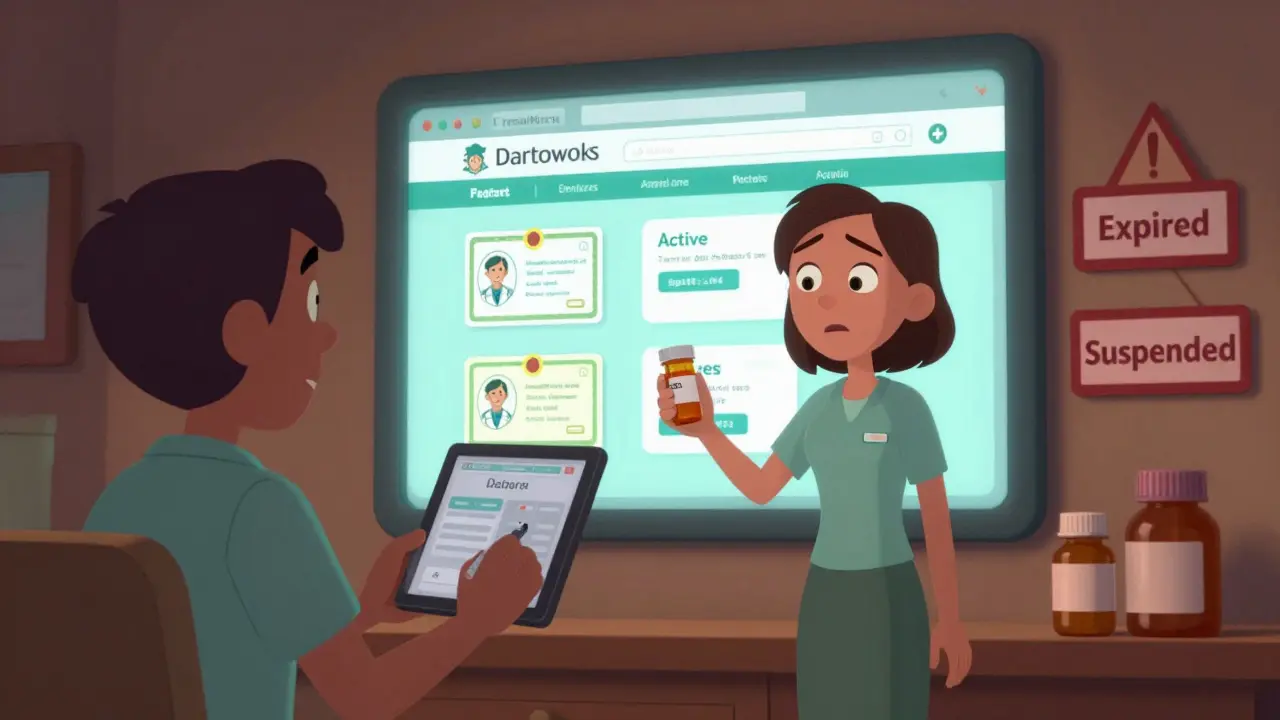
When you pick up a prescription, you assume the pharmacist is licensed, trained, and legitimate. But what if they’re not? In 2023, the National Association of Boards of Pharmacy (NABP) reported that 47% of disciplinary actions against pharmacists involved practicing with an invalid or expired license. That’s not just a paperwork error-it’s a direct threat to patient safety. And in a world where counterfeit drugs are flooding online pharmacies and unregulated distributors, verifying a pharmacist’s license isn’t optional. It’s your first line of defense.
Why State Pharmacy Boards Matter
Every U.S. state and territory has its own pharmacy board. These aren’t just bureaucratic offices-they’re legal guardians of public health. Created in the late 1800s, these boards now regulate over 350,000 pharmacists and 300,000 pharmacy technicians. Their job? Make sure only qualified, ethical professionals handle your medications.They issue licenses, track continuing education, investigate complaints, and suspend or revoke credentials when someone breaks the rules. If a pharmacist gets caught selling fake drugs, mixing incorrect dosages, or working without a valid license, the state board is the one who shuts them down. Without these boards, there’d be no consistent way to stop unqualified people from walking into pharmacies and putting lives at risk.
And it’s not just about individual pharmacists. Pharmacies themselves must be licensed. A clinic, hospital, or mail-order pharmacy that’s not properly registered by the state board is operating illegally. That’s why checking the license of the pharmacy you’re using is just as important as checking the pharmacist’s credentials.
How to Verify a Pharmacy License
Verifying a license is simple-but only if you know where to look. Never rely on a pharmacy’s website, a third-party directory, or even an employer’s word. The only source that matters is the official state board website.Here’s how to do it:
- Find your state’s pharmacy board website. Search for “[Your State] Board of Pharmacy.”
- Look for a section called “License Verification,” “Verify a License,” or “Public Search.”
- Enter the pharmacist’s full name or license number. Some states let you search by city or pharmacy name too.
- Check the status. Look for “Active.” If it says “Suspended,” “Revoked,” “Expired,” or “Probation,” walk away.
- Verify the expiration date. Licenses usually renew every one to two years. If it’s expired, the pharmacist can’t legally practice.
Some states, like Maryland and the District of Columbia, offer detailed results showing when the license was issued, what type it is (pharmacist, technician, intern), and any disciplinary history. Others are more basic. But even the simplest system will tell you if the license is active.
Pro tip: If you’re searching by name, try variations. People change names after marriage. Use first name, last name, and middle initial if possible. Too many details? Less is more. Start broad and narrow it down.
The NABP Verify Alternative
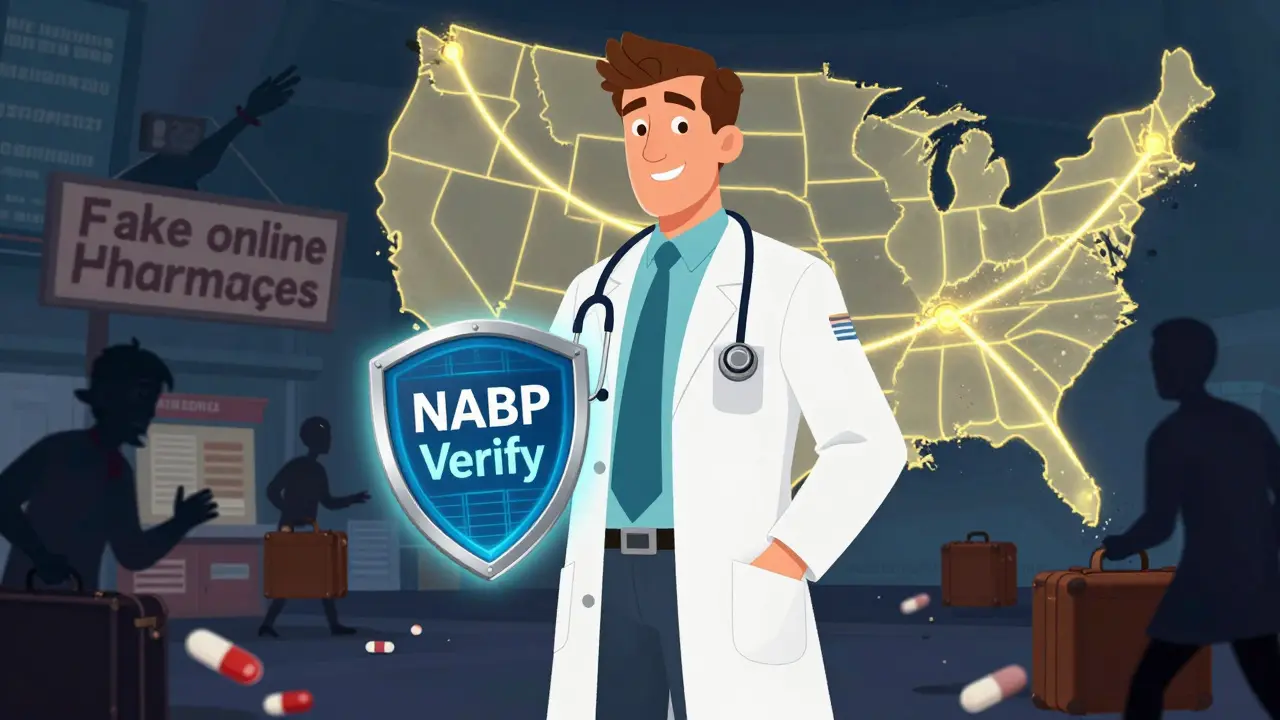
If you’re dealing with a pharmacist who works in multiple states-or you’re hiring someone who does-checking each state board individually can take hours. That’s where NABP Verify comes in.Launched in 2020, NABP Verify is a national database that pulls real-time data from 48 of the 56 state boards. It doesn’t replace state verification-it complements it. You can pay $59 a year to get a digital badge that shows your license is current across all participating states. Employers and patients can scan the badge to instantly confirm legitimacy.
For independent pharmacies expanding to new states, NABP Verify cuts credentialing time from two weeks to three days. For patients, it’s a quick way to check a telehealth pharmacist’s credentials before sharing medical info.
But here’s the catch: NABP Verify isn’t official. Only the state board’s website has legal authority. Use NABP Verify as a shortcut, not a replacement. Always double-check the state source if something looks off.
What to Watch For: Red Flags in License Status
Not all license issues are obvious. Here’s what to look for:- “Active” but expired expiration date-Some systems show “Active” during a grace period. If the expiration date passed more than 30 days ago, it’s not valid.
- No disciplinary history shown-Just because nothing shows up doesn’t mean nothing happened. Some states take up to 14 days to update disciplinary actions. If you’re concerned, call the board directly.
- License issued in another country-Foreign-trained pharmacists must pass U.S. licensing exams and be approved by a state board. A license from India, the Philippines, or Canada isn’t valid here unless it’s been officially recognized.
- Pharmacy license doesn’t match the address-If the pharmacy claims to be in Texas but the license shows a different state, it’s likely a front for an illegal operation.
One 2022 study found that 28% of people who tried to verify a license online got stuck because the website crashed, returned no results, or asked for info they didn’t have. If you hit a wall, call the board. Most have a phone line. Maryland’s Board of Pharmacy, for example, takes calls at (410) 764-4755 during business hours.
Why This Matters for Counterfeit Drugs
Counterfeit drugs aren’t just fake pills with wrong ingredients. They’re often sold through websites that look real, with fake “licensed pharmacist” badges and forged documentation. These sites rely on one thing: your trust in the system.When you buy from an online pharmacy, ask: Is this pharmacy licensed in my state? Is the pharmacist listed on the state board’s website? If you can’t verify both, don’t buy. The FDA estimates that 50% of drugs sold online are counterfeit. Many of them contain toxic substances-rat poison, chalk, or no active ingredient at all.
State pharmacy boards work with the FDA and DEA to shut down illegal online pharmacies. But they can’t act unless someone reports them. If you see a website offering “no prescription needed” or “discounted brand-name drugs,” report it to your state board. They track these patterns and act fast when enough complaints come in.
What Employers and Patients Should Do
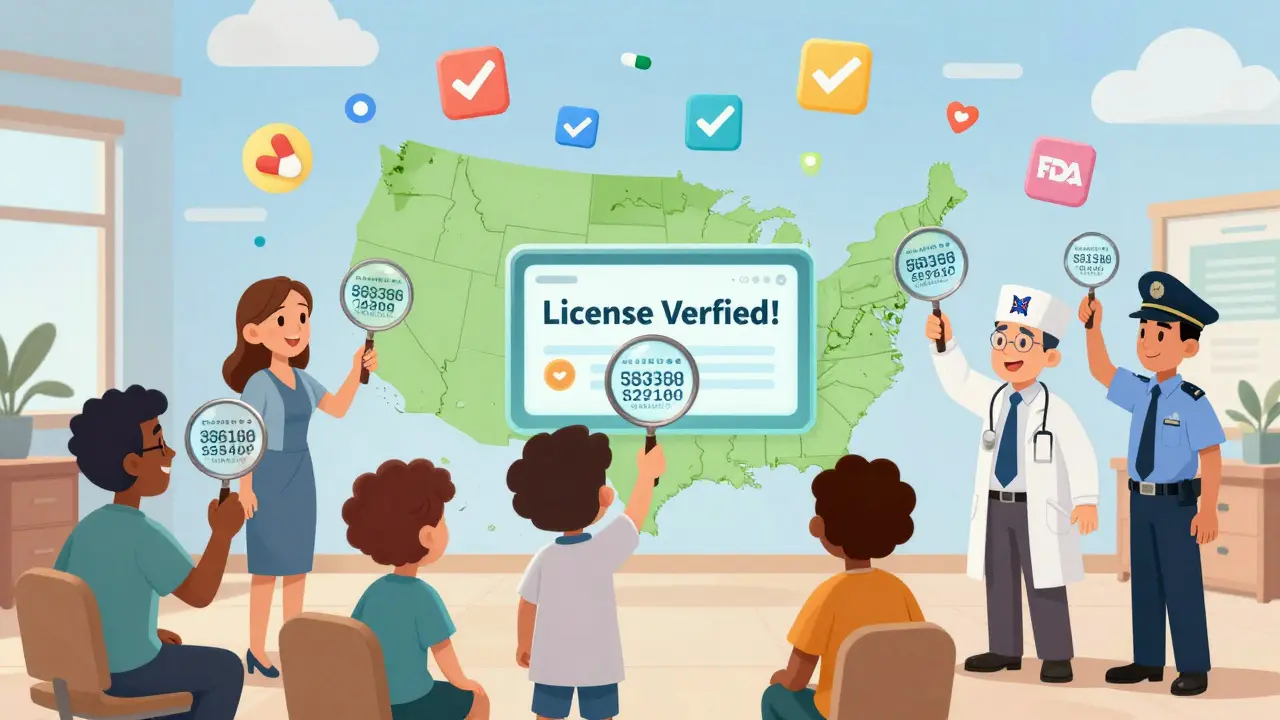
If you’re a hiring manager at a pharmacy, hospital, or clinic: Verify every new hire’s license directly through the state board. Don’t accept a copy of a license. Don’t trust a LinkedIn profile. Go to the official website and search. The American Pharmacists Association says this is non-negotiable.If you’re a patient: Before filling a prescription at a new pharmacy, do a quick search. Look up the pharmacist’s name. Check the pharmacy’s license status. If you’re using a telehealth service, ask for the pharmacist’s license number and verify it yourself. It takes two minutes. It could save your life.
Even small actions matter. In 2023, a patient in Ohio verified a pharmacist’s license after noticing odd behavior during a consultation. The board discovered the person had been suspended in Florida for dispensing incorrect doses. The pharmacist was arrested. The patient didn’t know they were helping stop a pattern of harm-but they did.
The Future of License Verification
The system isn’t perfect. State boards still lag behind in updating disciplinary records. Some websites are outdated. Search tools vary wildly from state to state. But change is coming.In 2023, Maryland launched a new verification system that’s mobile-friendly and faster. NABP is expanding Verify to include pharmacy technicians in 2024. Twenty-three states are now part of the Interstate Pharmacy Licensure Compact (IPLC), which lets pharmacists practice across state lines with one application. By 2025, NABP predicts 90% of state boards will have real-time updates.
For now, the system still relies on you. The tools exist. The data is public. The process is free. All you need to do is use it.
Can I verify a pharmacy license for free?
Yes. All 56 U.S. state and territorial pharmacy boards offer free online license verification. You don’t pay to search a pharmacist’s name or license number. Some states charge a small fee (usually under $10) if you request an official printed verification letter to send to another state or employer.
What if the license status says “Active” but the expiration date is past?
That’s a red flag. Some boards show “Active” during a grace period-usually 30 to 60 days after expiration-while the pharmacist waits to renew. If the expiration date is more than 30 days behind, the license is no longer valid. The pharmacist can’t legally dispense medication. Contact the board to confirm.
Is NABP Verify reliable enough to replace checking the state board?
No. NABP Verify is a useful tool for multi-state verification, but it’s not the official source. Only the state board has legal authority over licensing. Always cross-check with the state website if you’re unsure, especially if the person is under investigation or has a disciplinary history.
How long does it take for a new license to show up online?
It varies. In Maryland, it can take up to three weeks after passing the exam for the license to appear in the system. Other states update within 2-5 business days. If you’ve just passed your exam and it’s not showing, don’t panic. Call the board directly and ask for confirmation.
Can I verify a pharmacy technician’s license the same way?
Yes. All state boards regulate pharmacy technicians and list them in their verification systems. As of 2024, NABP Verify will also include pharmacy technicians, making it easier to check credentials across states. Always verify both the pharmacist and the technician if they’re handling your prescription.
What should I do if I find a fake pharmacist or pharmacy?
Report it immediately to your state pharmacy board. If it’s an online pharmacy, also report it to the FDA’s MedWatch program and the National Association of Boards of Pharmacy’s BeSafeRx campaign. Don’t wait. Fake pharmacies are often part of larger criminal networks selling counterfeit drugs, and your report could help shut them down.
Next Steps: Protect Yourself and Others
Start today. If you’ve ever filled a prescription at a new pharmacy, go back and verify the pharmacist’s license. If you’re hiring someone for a pharmacy role, make license verification part of your onboarding checklist. If you buy medication online, always check the pharmacy’s license before you pay.Counterfeit drugs don’t come with warning labels. They look real. They feel real. But they’re not. The only way to be sure you’re getting safe medication is to know who’s filling your prescription-and whether they’re legally allowed to.
You don’t need a medical degree. You don’t need to be a pharmacist. You just need to know where to look. And now you do.
Chelsea Harton
January 16, 2026 AT 21:47just checked my last pharmacist’s license bc of this. active. good. i’m gonna start doing this every time. too many people just trust the sticker on the wall.
Christina Bilotti
January 17, 2026 AT 01:22Oh wow. You mean the state boards actually do something? I thought they were just glorified paper-pushers who nap between renewals. Guess I underestimated the bureaucratic machine. My bad. 😌
Henry Ip
January 18, 2026 AT 03:25Good stuff. I’ve been pushing my clinic to make license checks mandatory for all new hires. Took us too long to start. Now we do it before the first shift. Simple, free, life-saving. Why isn’t this common knowledge?
waneta rozwan
January 18, 2026 AT 05:54YOU THINK THIS IS BAD? I once got a prescription filled by someone who had their license revoked in 2019. They were still wearing the lab coat. I called the board. They didn’t even know. TWO WEEKS LATER they shut it down. People are dying because no one checks. NO ONE.
kanchan tiwari
January 18, 2026 AT 13:29THIS IS ALL A SETUP. The boards are in cahoots with Big Pharma. They let fake pharmacists slide so you keep buying expensive meds. NABP? Owned by Pfizer. That ‘Verify’ badge? A tracker. They’re watching you. Don’t trust any website. Call the board. But even then… they might be lying.
Bobbi-Marie Nova
January 20, 2026 AT 04:21ok but like… i’ve never checked once and i’m still alive? 😅 maybe i’m just lucky? or maybe the system actually works? i’ll still do it now tho. better safe than sorry. and hey, it’s only 2 minutes.
Joie Cregin
January 20, 2026 AT 11:09Man, I love how something so simple can feel so radical. Just… look up the person holding your medicine. It’s not magic. It’s not complicated. It’s just… basic human care. And yet, most of us never think to do it. Kinda beautiful, in a quiet, terrifying way.
Riya Katyal
January 21, 2026 AT 10:34you’re telling me you don’t just trust the guy with the white coat? after all these years? what’s next? checking if your dentist went to med school? 😂
Cheryl Griffith
January 22, 2026 AT 00:33I used to think this was overkill. Then my mom got a counterfeit painkiller that gave her liver failure. Turned out the pharmacy’s license expired 8 months prior. We never checked. I check every single time now. Even if I’ve been going there for 10 years. Never assume.
swarnima singh
January 23, 2026 AT 20:49they say verify the license… but who verifies the verifiers? the state boards are corrupt. they let people slip through because they’re friends with the owners. you think your ‘active’ status means safety? it means paperwork was filed. that’s it. the real danger is invisible.
Ryan Hutchison
January 23, 2026 AT 21:54Why do we even need state boards? The feds should handle this. All 50 states doing their own thing? That’s why it’s messy. America’s broken. Fix the system, not just check the website.
Samyak Shertok
January 25, 2026 AT 15:22So let me get this straight - you’re saying we should trust a government website more than a pharmacy that’s been open for 20 years? What’s next? Asking your barber for his license? I’ve been getting my meds from the same place since 2012. They give me free lollipops. That’s more trustworthy than any .gov domain.
Stephen Tulloch
January 26, 2026 AT 18:25OMG this is FIRE 🔥 I just verified my pharmacist and he’s got a clean record! I’m gonna screenshot this and post it on my Insta. #PharmacistVerified #SafetyFirst #NoMoreCounterfeitBullshit 🧪💊
Melodie Lesesne
January 27, 2026 AT 14:03I used to think this was just for nerds or paranoid people. But after reading this, I checked my local pharmacy. Turns out the tech who hands me my insulin had a suspension last year. They fixed it. I didn’t know. Now I know. And I’m telling everyone. Thank you for making me care.