
Pneumonia Types: Bacterial, Viral, and Fungal Lung Infections Explained

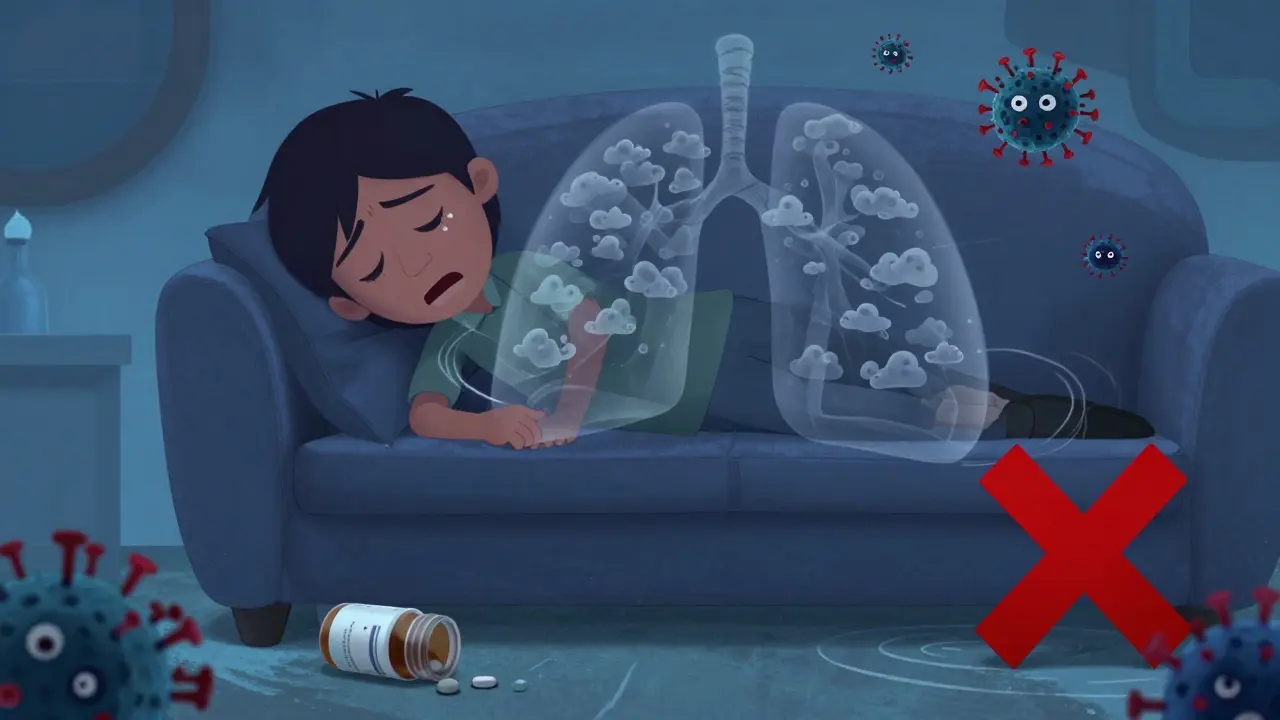
When your lungs get infected, it’s not just a bad cough. Pneumonia can turn a simple cold into something life-threatening-especially if you don’t know what kind you have. Not all pneumonia is the same. The treatment, the symptoms, even how it shows up on an X-ray, changes depending on whether it’s caused by bacteria, a virus, or a fungus. Getting this right isn’t just about feeling better faster-it’s about stopping unnecessary antibiotics, avoiding complications, and sometimes, saving a life.
Bacterial Pneumonia: The Sudden Onset
Bacterial pneumonia hits hard and fast. You might feel fine one day, then wake up with a fever so high it feels like your body’s on fire-102°F to 105°F. Your cough isn’t dry anymore. It’s wet, thick, and often yellow, green, or even streaked with blood. You can’t catch your breath. Every inhale hurts, sharp and deep, like something’s tearing inside your chest. Your lips or fingertips might turn blue. That’s your body screaming for oxygen.
The usual culprit? Streptococcus pneumoniae is responsible for nearly half of all community cases. It’s sneaky. Its outer capsule hides it from your immune system, letting it multiply unchecked. Other bacteria like Staphylococcus aureus, Haemophilus influenzae, and Legionella pneumophila (the cause of Legionnaires’ disease) can also trigger it. Even Mycoplasma pneumoniae, which causes milder "walking pneumonia," counts.
On a chest X-ray, it looks like a solid white patch-usually on one side. That’s lobar consolidation: the alveoli, the tiny air sacs in your lungs, are flooded with fluid and immune cells. Your body sends in neutrophils, the frontline soldiers of your immune system, to swallow the invaders. But if the infection is bad enough, those cells can’t keep up.
Treatment? Antibiotics. Penicillin, amoxicillin, or macrolides like azithromycin. For more resistant cases, doctors reach for fluoroquinolones. The key? Start them early. Delaying antibiotics for bacterial pneumonia can mean longer hospital stays, more complications, or even death.
Viral Pneumonia: The Slow Burn
Viral pneumonia doesn’t come with a siren. It creeps in. You start with a runny nose, a scratchy throat, maybe a low-grade fever. Days pass. The cough gets worse-not with phlegm, but with a dry, hacking rhythm. You feel achy, drained, like you’ve been hit by a truck. Your fever stays low, maybe 100°F to 102°F. You don’t have that sharp chest pain. Instead, your whole chest feels heavy.
This is where influenza (flu), respiratory syncytial virus (RSV), SARS-CoV-2 (COVID-19), and human metapneumovirus come in. These viruses attack the lining of your airways and lungs, triggering inflammation across both lungs-not just one side. On an X-ray, you’ll see a hazy, scattered pattern, not a solid white lobe. That’s diffuse interstitial infiltrates: fluid and immune cells spread through the lung tissue like smoke.
Here’s the scary part: viral pneumonia doesn’t respond to antibiotics. None. Zero. Yet, nearly one-third of outpatient antibiotic prescriptions in the U.S. are for viral infections-according to the CDC, that’s 30% of prescriptions that do nothing but fuel antibiotic resistance. Every time you take an antibiotic for a virus, you’re helping superbugs evolve.
But there’s hope. If caught early, antivirals like oseltamivir (Tamiflu) can shorten flu-related pneumonia. For severe COVID-19 pneumonia, remdesivir helps. Most often, though, treatment is support: rest, fluids, oxygen if needed. The body fights the virus. Your job? Let it.
And here’s another risk: viral pneumonia often opens the door for a bacterial infection. About 25-30% of people with severe flu develop a secondary bacterial pneumonia-usually from Streptococcus pneumoniae or Staphylococcus aureus. That’s why doctors watch closely after viral illness.
Fungal Pneumonia: The Hidden Threat
Fungal pneumonia? Most people don’t even know it exists. And that’s the problem. It’s rare in healthy people. But if you’re immunocompromised-someone with HIV, on chemo, after an organ transplant, or taking long-term steroids-you’re at risk.
In the U.S., three fungi cause most cases: Coccidioides (Valley fever), Histoplasma capsulatum (histoplasmosis), and Blastomyces dermatitidis (blastomycosis). You don’t catch them from people. You breathe them in from soil, bird droppings, or decaying wood. Farmers, landscapers, construction workers, and cave explorers have higher exposure. In places like Arizona or the Ohio River Valley, nearly 70% of adults have been exposed to Histoplasma-and never knew it.
Symptoms? Fever, cough, chills, fatigue. Sometimes nausea or diarrhea. It looks like bacterial or viral pneumonia. That’s why it’s often missed. A chest X-ray might show patchy infiltrates or nodules. Blood tests or sputum cultures are needed to spot the fungus. And here’s the catch: antibiotics won’t help. You need antifungals-amphotericin B for severe cases, fluconazole or itraconazole for long-term control.
Without the right treatment, fungal pneumonia can spread beyond the lungs. It can attack your skin, bones, even your brain. Mortality rates? Up to 15% in high-risk patients. That’s higher than bacterial or viral pneumonia in otherwise healthy people.
How to Tell Them Apart
Here’s a quick cheat sheet:
- Bacterial: Sudden fever (102°F+), thick colored sputum, sharp chest pain, one lung affected, X-ray shows solid white lobe.
- Viral: Gradual fever (100-102°F), dry cough, body aches, both lungs affected, X-ray shows hazy, scattered cloudiness.
- Fungal: Slow onset, often in high-risk people, symptoms mimic others, X-ray shows nodules or patchy spots, diagnosis needs lab tests.
But even this isn’t foolproof. That’s why newer tools are changing the game. Multiplex PCR tests can now check a single nasal swab for over 20 pathogens-virus, bacteria, fungus-all at once. Results in hours. That means doctors can stop guessing and start treating.
Prevention: Your Best Defense
You can’t always avoid pneumonia, but you can lower your risk.
- For bacterial: The pneumococcal vaccine (Prevnar 20 or Pneumovax 23) cuts infection risk by 60-70% in kids and 80% in adults. Yet, only 68% of seniors over 65 get it. That’s a gap.
- For viral: Annual flu shots reduce pneumonia risk by 40-60%. COVID-19 vaccines cut pneumonia risk by 90% in the first few months after vaccination.
- For fungal: Avoid dusty soil in endemic areas. Wear an N95 mask if you’re gardening, digging, or working in barns or caves. If you’re immunocompromised, talk to your doctor about antifungal prophylaxis.
Smokers? You’re 2.3 times more likely to get pneumonia. Quitting is the single most effective thing you can do.

What Happens If You Get It Wrong?
Taking antibiotics for viral pneumonia doesn’t cure it. It just makes things worse. Antibiotic resistance isn’t a future threat-it’s happening now. In Canada, over 200,000 infections each year are caused by drug-resistant bacteria. Many started with a simple cold that turned into pneumonia-and was treated with the wrong medicine.
Delaying antifungals for fungal pneumonia? That’s a death sentence for some. A 2023 study in the New England Journal of Medicine found that patients with histoplasmosis pneumonia who waited more than 10 days for antifungal treatment had a 3x higher chance of dying.
That’s why accurate typing matters. It’s not just medical jargon. It’s survival.
What’s Next?
Researchers are working on blood tests that detect your body’s immune response-whether it’s fighting bacteria, viruses, or fungi-without needing to isolate the pathogen. Early results show these tests could cut unnecessary antibiotic use by 40%. That’s huge.
And new vaccines are coming. The 20-valent pneumococcal vaccine (Prevnar 20) already protects against 20 strains of Streptococcus pneumoniae, including ones that cause the most severe disease. It’s now recommended for adults 65+ and high-risk adults under 65.
The bottom line? Pneumonia isn’t one disease. It’s three. And knowing which one you’re dealing with changes everything.




Lauren Volpi
March 19, 2026 AT 02:07And why do doctors act like they're gods? Just ask for a PCR test already.
Michelle Jackson
March 20, 2026 AT 09:19Alexander Pitt
March 21, 2026 AT 04:39jared baker
March 21, 2026 AT 06:02Suchi G.
March 21, 2026 AT 10:51becca roberts
March 22, 2026 AT 12:07Andrew Muchmore
March 23, 2026 AT 21:13SNEHA GUPTA
March 25, 2026 AT 08:38Gaurav Kumar
March 25, 2026 AT 14:19David Robinson
March 26, 2026 AT 11:20Jeremy Van Veelen
March 28, 2026 AT 03:33Laura Gabel
March 28, 2026 AT 09:35Melissa Stansbury
March 29, 2026 AT 09:49jerome Reverdy
March 29, 2026 AT 18:43