
Paragraph IV Certifications: How Generic Drug Makers Legally Challenge Pharma Patents
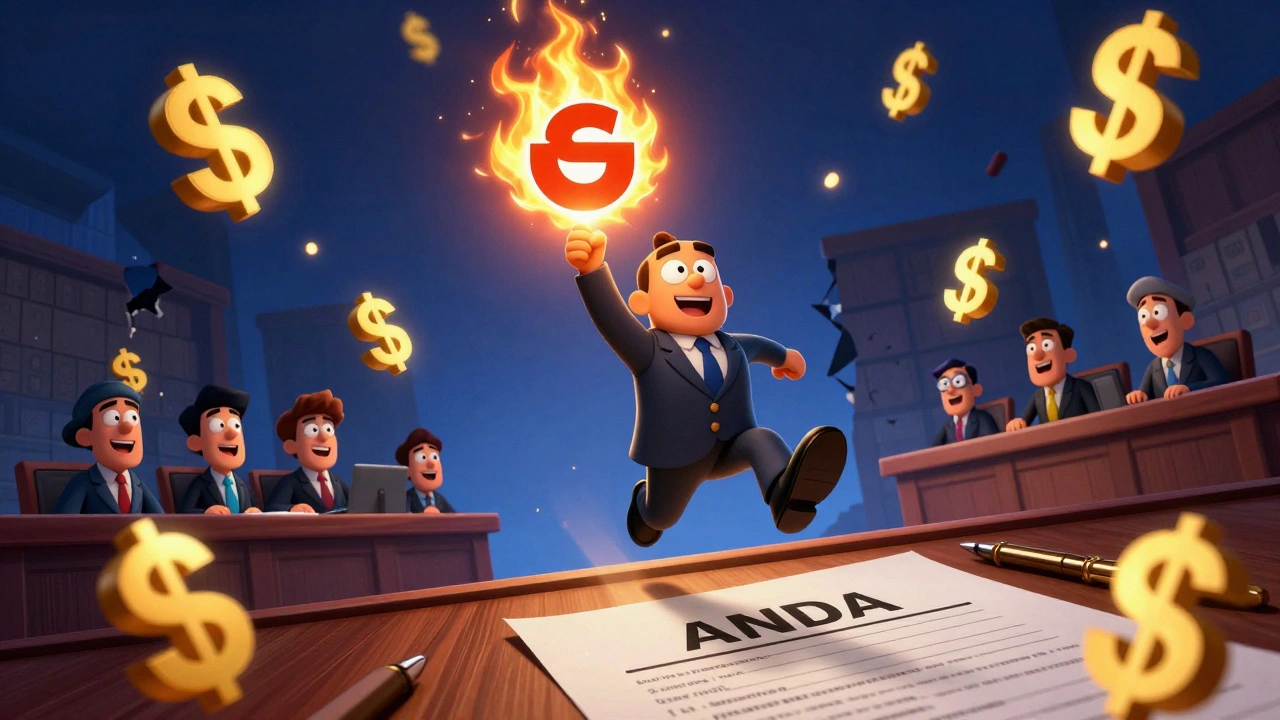
When a brand-name drug company holds a patent, it can block generic versions from entering the market for years. But there’s a legal loophole-actually, it’s a carefully designed part of U.S. drug law-that lets generic manufacturers challenge those patents before the drug even hits shelves. That loophole is called a Paragraph IV certification. It’s not a secret tactic. It’s written into federal law. And it’s responsible for saving U.S. consumers over $1.7 trillion since 1984.
What Exactly Is a Paragraph IV Certification?
A Paragraph IV certification is a formal statement filed by a generic drug company as part of its Abbreviated New Drug Application (ANDA) to the FDA. In this statement, the company says one or more patents listed for the brand-name drug in the FDA’s Orange Book are either invalid, unenforceable, or won’t be infringed by the generic version.
This isn’t just a guess. The law requires the generic maker to provide a detailed legal and factual basis for why they believe the patent doesn’t hold up. That means citing prior art, explaining why the patent’s claims are too broad, or showing their manufacturing process doesn’t copy the protected method.
The whole system was created by the Hatch-Waxman Act of 1984. Congress wanted to balance two things: giving innovators enough time to profit from their research, and letting cheaper generics enter the market quickly once patents expire or are proven weak. Paragraph IV is the sharp edge of that balance-it’s the only way a generic company can jump the gun legally.
How It Triggers a Patent Fight Before the Drug Even Launches
Here’s where it gets interesting. Under normal patent law, you can’t sue someone for infringement until they actually make or sell the product. But Paragraph IV creates a legal fiction called an “artificial act of infringement.” That means the moment the generic company files its certification, the brand-name company can sue-even if the generic drug hasn’t been made yet.
Once the generic company files its ANDA, it has just 20 days to send a notice letter to the patent holder. That letter must include the same detailed legal argument it gave the FDA. If the brand company doesn’t like what it reads, it has 45 days to file a lawsuit. If they do, the FDA is forced to put a 30-month hold on approving the generic drug.
That 30-month clock is the biggest leverage point in the whole system. It’s not a guarantee the patent will be upheld. But it’s long enough to scare off smaller generic companies. Big players can afford to wait. Small ones? Not so much.
The 180-Day Prize: Why Companies Risk Millions
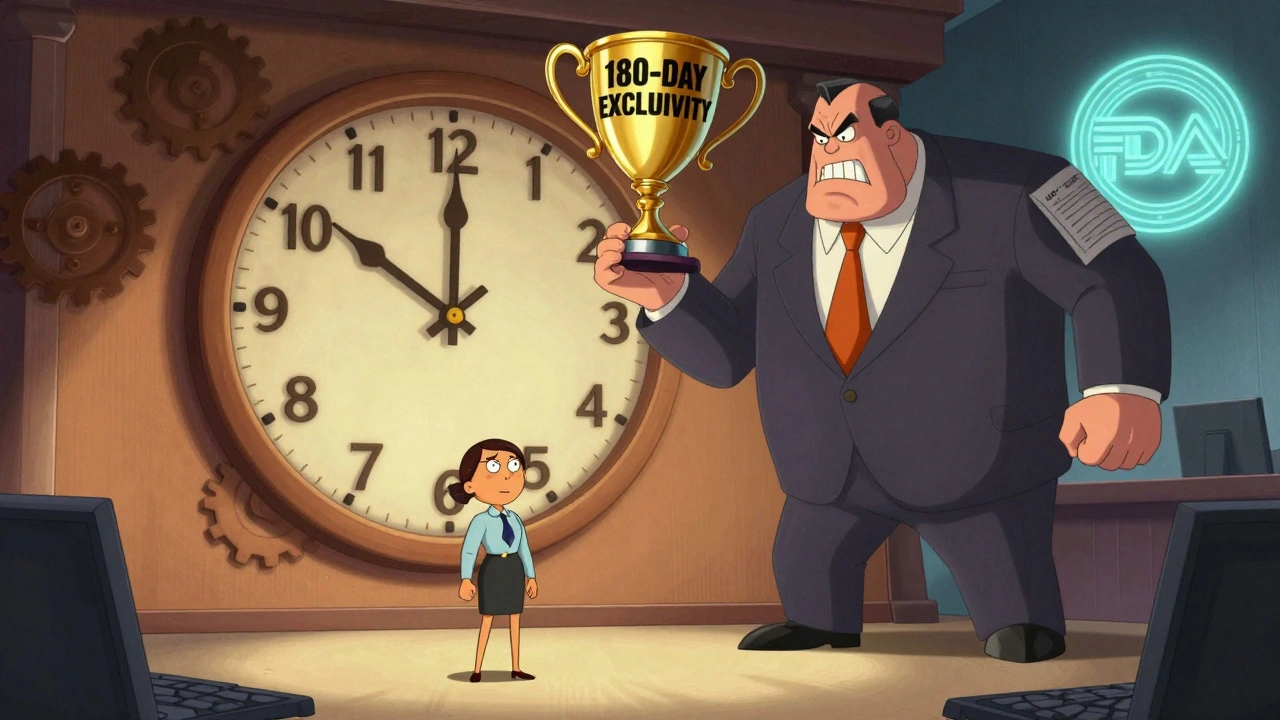
Why would a generic company risk $10 million in legal fees and years of court battles? Because if they win, they get 180 days of exclusive rights to sell their version of the drug-before any other generic can enter.
This exclusivity isn’t just a reward. It’s a financial bomb. If the brand drug sells for $2 billion a year, the first generic could make $500 million or more in those six months. That’s why companies like Teva, Mylan, and Apotex built their businesses around Paragraph IV challenges.
Take Apotex’s 2004 challenge to GlaxoSmithKline’s Paxil patent. They won. Their 180-day exclusivity period brought in over $1.2 billion in sales. That’s not an outlier. It’s the model.
But here’s the catch: you have to be the first to file. And you have to actually launch the drug within a certain time after approval. Teva lost its 180-day exclusivity in 2017 on Copaxone because they didn’t get final FDA approval within 30 months of filing their Paragraph IV notice. Another company jumped in, and the exclusivity vanished overnight.
Why Most Generic Companies Choose This Path
Not all generic applications are created equal. There are four types of patent certifications under Hatch-Waxman:
- Paragraph I: “No patents listed.” Only 5% of ANDAs use this. Safe, but no early entry.
- Paragraph II: “Patent expired.” About 15% of filings. You can launch right away. No risk. No reward.
- Paragraph III: “We’ll wait until patent expires.” Around 20% of cases. Straightforward, but you’re not challenging anything.
- Paragraph IV: “This patent is invalid or we won’t infringe it.” 60-70% of ANDAs. High risk, massive reward.
Why do 7 out of 10 generic applicants choose Paragraph IV? Because the biggest money is in blockbuster drugs-medications that sell over $1 billion a year. And nearly all of them have at least one Paragraph IV challenge filed against them.
According to the FDA, 90% of top-selling branded drugs have faced a Paragraph IV challenge. The top five generic manufacturers-Teva, Viatris, Sandoz, Hikma, and Amneal-account for nearly 60% of all filings. This isn’t a side hustle. It’s core business strategy.
The Hidden Costs and Legal Traps
It’s not all victory parties and $500 million paydays. The median cost of a Paragraph IV lawsuit? $12.7 million, according to Fish & Richardson. Some cases go over $15 million. And they take 4 to 5 years to resolve.
Then there’s the notice letter. It sounds simple: just explain why you think the patent is invalid. But the FDA rejects about 12% of Paragraph IV applications because the notice letter isn’t detailed enough. You can win in court, but if your letter doesn’t meet the FDA’s technical standard, your application gets tossed. No second chances.
Another trap: “pay-for-delay.” That’s when the brand company pays the generic maker to delay their launch. The FTC has called this anticompetitive. In 2013, the Supreme Court ruled in FTC v. Actavis that these deals aren’t automatically legal. Since then, the FTC has challenged over 190 such deals since 1999.
And now there’s “patent thicketing.” Brand companies pile on dozens of secondary patents-covering packaging, dosing schedules, manufacturing methods-just to slow down generics. In 2022, 63% of generic manufacturers said this made challenges harder than five years ago.
What’s Changing in 2025?
The rules aren’t static. In 2023, the Supreme Court’s Amgen v. Sanofi decision made it harder to invalidate patents by requiring the patent to enable the full scope of its claims-not just a narrow example. That’s a big deal for biologics and complex drugs.
Also, more generic companies are now combining Paragraph IV challenges with Inter Partes Review (IPR) at the Patent Trial and Appeal Board. About 42% of Paragraph IV cases in 2022-2023 had parallel IPR filings. It’s a two-front war: one in court, one at the patent office.
The FDA’s 2023 Orange Book Modernization rules are also making it harder to list weak patents. Fewer patents listed means fewer targets for generics to challenge. That could reduce noise-but also reduce opportunities.
Despite all this, the Congressional Budget Office predicts Paragraph IV challenges will keep saving $150-$200 billion a year in healthcare costs through 2030. That’s why Congress keeps funding the FDA to process these applications-and why big pharma keeps fighting them.
Who Benefits the Most?
Patients. Insurers. Medicaid. Medicare. The whole system saves money when generics enter early. A single Paragraph IV challenge on a $10,000-a-year drug can drop the price to $100. That’s life-changing for people with chronic conditions.
But the biggest winners are the first generic companies that get it right. They don’t just make money-they reshape the market. And they do it by playing the legal game better than anyone else.
It’s not about breaking the law. It’s about using it better than the other side.

Genesis Rubi
December 3, 2025 AT 01:47Doug Hawk
December 3, 2025 AT 09:44John Morrow
December 4, 2025 AT 14:53Kristen Yates
December 6, 2025 AT 11:02Saurabh Tiwari
December 7, 2025 AT 10:39Michael Campbell
December 8, 2025 AT 02:19Victoria Graci
December 9, 2025 AT 14:43Saravanan Sathyanandha
December 11, 2025 AT 12:03