
Omeprazole and Clopidogrel: What You Need to Know About CYP2C19 Interaction
PPI Safety Calculator
Clopidogrel & PPI Interaction Guide
This tool helps you understand which proton pump inhibitor (PPI) is safest to take with clopidogrel. Select your current PPI and learn about potential interactions with your heart medication.
If you're taking clopidogrel to prevent heart attacks or strokes, and your doctor also prescribed omeprazole for acid reflux, you might be at risk for a hidden but serious drug interaction. It’s not about one pill canceling out the other-it’s about how your body processes them, and whether the medicine meant to protect your heart is still working the way it should.
Why Clopidogrel Needs Your Liver to Work
Clopidogrel doesn’t work right away. It’s a prodrug, meaning your body has to turn it into something active before it can block platelets from clumping together. That transformation happens mostly in your liver, using an enzyme called CYP2C19. Without this step, clopidogrel is basically useless. About 30% of people have genetic variations that make CYP2C19 less effective, and for them, clopidogrel already doesn’t work as well. Now add omeprazole into the mix, and things get worse.Omeprazole: The Silent Saboteur
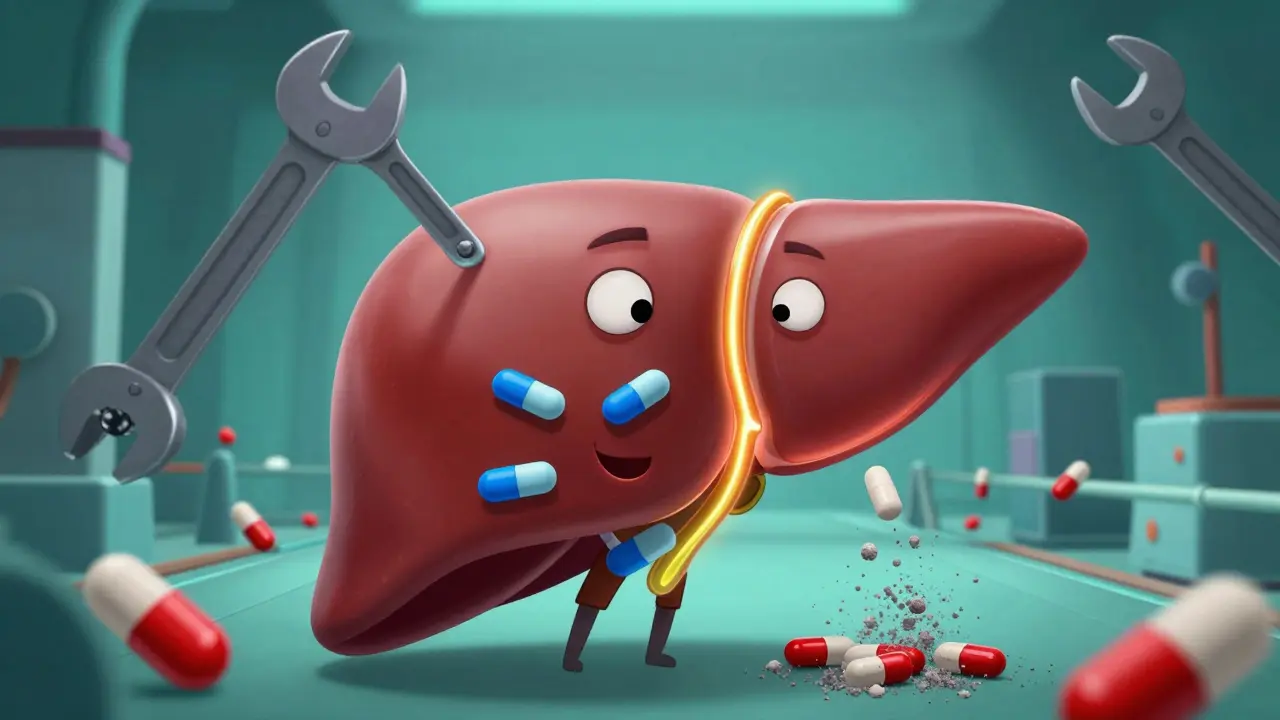
Omeprazole is a proton pump inhibitor (PPI) used to reduce stomach acid. It’s sold under brands like Prilosec and is one of the most common medications in the world. But here’s the catch: omeprazole doesn’t just get broken down by CYP2C19-it also blocks it. Think of CYP2C19 as a busy factory line. Clopidogrel is one product needing assembly. Omeprazole shows up, takes over the machines, and slows down or stops the whole process. Studies show that a daily 80mg dose of omeprazole reduces the amount of active clopidogrel in your blood by nearly half. Even the standard 20mg dose cuts it by 32%. That’s not a small drop-it’s enough to make clopidogrel less effective at preventing blood clots. The FDA issued a safety warning in 2009 after multiple studies confirmed this effect. Since then, guidelines from the American Heart Association and European Society of Cardiology have consistently advised against combining these two drugs.Not All PPIs Are Created Equal
If you need a stomach acid reducer while on clopidogrel, you don’t have to go without. But you do need to pick the right one. Among PPIs, omeprazole and its close relative esomeprazole are the worst offenders. They bind tightly to CYP2C19 and block it effectively. Lansoprazole is a bit better, but still risky at high doses. Rabeprazole has a moderate effect. And then there’s pantoprazole-this one barely touches CYP2C19. Here’s what the data shows:| PPI | Typical Daily Dose | Reduction in Clopidogrel Active Metabolite | Clinical Recommendation |
|---|---|---|---|
| Omeprazole | 20-80 mg | 32-49% | Avoid completely |
| Esomeprazole | 20-40 mg | 35-40% | Avoid completely |
| Lansoprazole | 30 mg | Up to 18% (high dose) | Use with caution |
| Rabeprazole | 20 mg | 28% (peak levels only) | Acceptable alternative |
| Pantoprazole | 40 mg | 14% | Preferred choice |
| Ilaprazole | 10 mg | No significant effect | Emerging safest option |
Pantoprazole is the current go-to recommendation from the American College of Gastroenterology and clinical pharmacogenetics groups. It’s the only PPI with enough data to support its use alongside clopidogrel without major loss of antiplatelet effect. Rabeprazole is a reasonable second choice. And if you’re in a region where ilaprazole is available (mostly Asia), it’s showing promise as the safest option long-term.

Does This Actually Lead to More Heart Attacks?
This is where things get messy. Lab tests show less active clopidogrel. Blood tests show weaker platelet inhibition. But do people on omeprazole have more heart attacks? The answer isn’t clear-cut. The COGENT trial in 2010-designed to test this exact question-found no increase in heart attacks or strokes in people taking omeprazole with clopidogrel. The FAST-MI Registry, which tracked over 2,700 patients, also found no higher risk of cardiovascular events. Yet other large studies, including one that analyzed over 270,000 patients, found a 27% higher risk of adverse events with PPI use, especially with omeprazole. Why the contradiction? One major reason: genetics. People with CYP2C19 loss-of-function alleles (common in East Asian populations) are hit hardest. In Korea, one study showed omeprazole reduced clopidogrel’s effect by 54% in these patients. In Caucasians, the drop was smaller but still there. So if you’re genetically predisposed to poor clopidogrel metabolism, adding omeprazole pushes you into danger zone.What Should You Do?
If you’re on clopidogrel and need a PPI, here’s what to do:- Don’t take omeprazole or esomeprazole. Even if your doctor says it’s fine, the evidence says otherwise.
- Ask for pantoprazole. It’s the most studied and safest option for concurrent use.
- Consider rabeprazole. If pantoprazole isn’t available or doesn’t work for you, this is the next best.
- Ask about CYP2C19 testing. If you’ve had a stent, heart attack, or stroke, knowing your genotype helps. If you’re a poor metabolizer, your doctor might switch you to prasugrel or ticagrelor-drugs that don’t rely on CYP2C19.
- Don’t rely on timing. Taking clopidogrel in the morning and omeprazole at night won’t help. The enzyme is blocked all day.
- Consider famotidine. If you only need mild acid relief, an H2 blocker like famotidine doesn’t interfere with CYP2C19 and is a safe alternative.

What About Newer Drugs?
The industry knows this interaction is a problem. That’s why newer antiplatelet drugs like ticagrelor and prasugrel were developed-they don’t need CYP2C19 to activate. Ticagrelor, approved in 2011, works faster, stronger, and doesn’t interact with PPIs. Prasugrel is similar. But they’re more expensive, carry higher bleeding risks, and aren’t suitable for everyone. Meanwhile, new PPIs like ilaprazole are being studied. Early data shows no effect on clopidogrel’s activity. If approved in North America, it could become the gold standard for patients who need both.Bottom Line
This isn’t a hypothetical risk. It’s a real, measurable, and preventable interaction. Omeprazole reduces clopidogrel’s effectiveness by nearly half in some people. That’s not a minor concern-it’s a potential life-threatening one. The best approach isn’t to avoid all PPIs. It’s to avoid the *wrong* PPI. Use pantoprazole instead. Get tested if you’re high-risk. Talk to your doctor about alternatives. And if you’ve been taking omeprazole with clopidogrel for years without knowing this, don’t panic-but do schedule a review.Medications aren’t just pills. They’re complex systems interacting inside your body. Sometimes, the most dangerous interactions aren’t obvious. They’re hidden in enzymes, genes, and metabolic pathways. Knowing the difference between omeprazole and pantoprazole might not sound exciting-but it could be the reason you’re still here next year.
Can I take omeprazole and clopidogrel together if I take them at different times of day?
No. Taking clopidogrel in the morning and omeprazole at night won’t prevent the interaction. Omeprazole blocks the CYP2C19 enzyme for hours after it’s taken, and the enzyme is needed continuously to activate clopidogrel. The timing doesn’t matter-what matters is that omeprazole is in your system at all.
Is pantoprazole really safe with clopidogrel?
Yes. Multiple studies show pantoprazole has minimal effect on clopidogrel’s active metabolite levels-only about a 14% reduction, which is not considered clinically significant. It’s the preferred PPI by the American College of Gastroenterology and CPIC guidelines for patients on clopidogrel who need acid suppression.
What if I can’t afford ticagrelor or prasugrel?
If cost is an issue and you’re on clopidogrel, stick with pantoprazole. Generic pantoprazole is inexpensive and widely available. Avoid omeprazole and esomeprazole at all costs. Talk to your pharmacist or doctor about patient assistance programs for newer antiplatelets-they’re often available if you qualify.
Should I get tested for CYP2C19 gene variants?
If you’ve had a stent, heart attack, or stroke and are on clopidogrel, yes. About 30% of people have gene variants that make clopidogrel less effective. If you’re one of them and also take omeprazole, your risk of another event increases significantly. Testing is now available at most major hospitals and is covered by many insurance plans for high-risk patients.
Are there any natural alternatives to PPIs for heartburn?
There’s no proven natural alternative that works as well as a PPI for chronic acid reflux. Lifestyle changes-like avoiding late meals, reducing caffeine and alcohol, losing weight, and elevating your head while sleeping-can help. H2 blockers like famotidine are safer than PPIs when combined with clopidogrel. But if you have severe GERD, you still need medical treatment. Don’t skip your medication without talking to your doctor.
For those managing long-term heart health, this interaction is one of the clearest examples of why personalized medicine matters. It’s not just about what drug you take-it’s about your genes, your liver, and how your body turns medicine into action. The right choice isn’t always the most popular one. Sometimes, it’s the one that doesn’t interfere.





Janette Martens
December 30, 2025 AT 11:36Marie-Pierre Gonzalez
December 30, 2025 AT 12:42Louis Paré
December 31, 2025 AT 14:08Payton Daily
January 1, 2026 AT 01:03Hakim Bachiri
January 2, 2026 AT 17:03Celia McTighe
January 3, 2026 AT 18:54Samantha Hobbs
January 4, 2026 AT 23:44Nicole Beasley
January 6, 2026 AT 07:55sonam gupta
January 7, 2026 AT 07:09