
Medication Timers and Apps: Tools to Improve Adherence
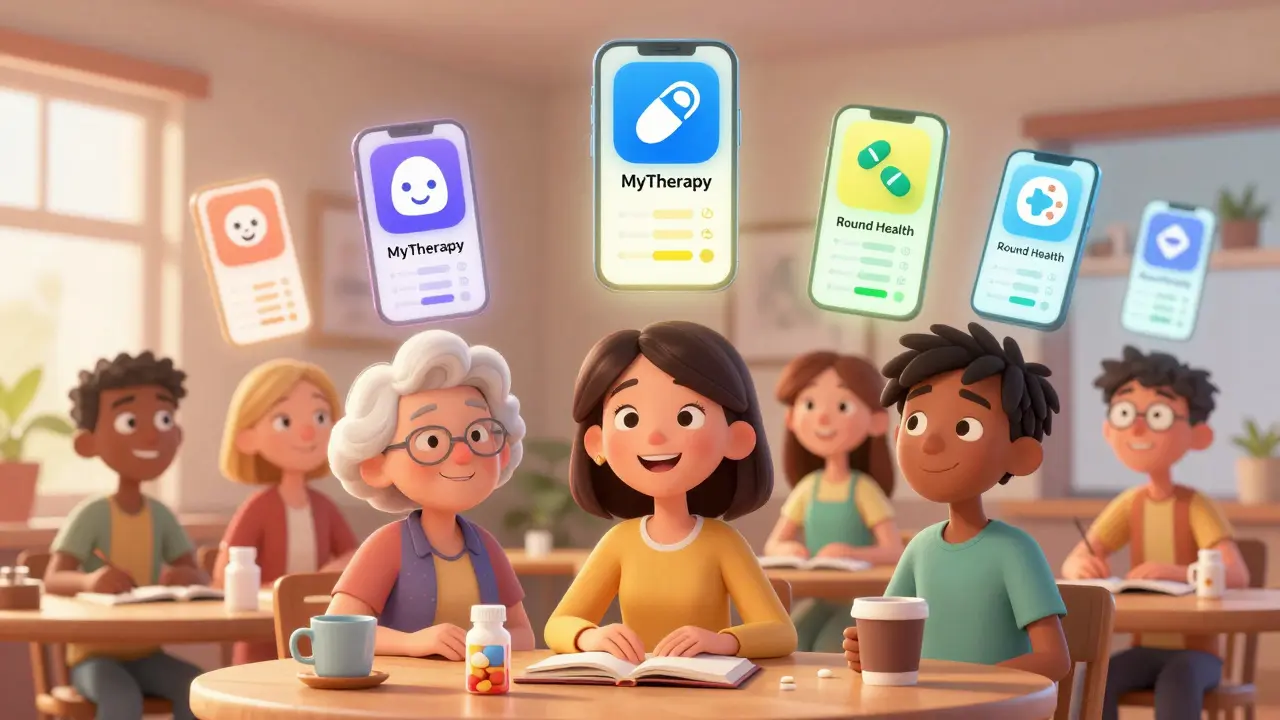
More than half of people with chronic illnesses miss doses of their medication at least once a month. That’s not laziness or forgetfulness-it’s a global health crisis. The World Health Organization calls it the biggest reason treatments fail. And the fix isn’t a new drug. It’s a phone.
Why Medication Timers and Apps Actually Work
Traditional pill organizers? They help if you remember to look at them. Electronic medicine boxes? They cost $30 to $50 a month and need separate hardware. Most people don’t use them long-term. But a smartphone? You already have it. You check it 100 times a day. Medication apps use that habit to your advantage.
Apps like Medisafe, MyTherapy, and Round Health don’t just buzz at 8 a.m. They track what you took, remind you when you’re late, explain why each pill matters, and even show you progress over time. In 14 clinical trials between 2023 and 2025, patients using these apps improved adherence by an average of 0.57 points on the 8-item Morisky scale. That’s not a tiny bump-it’s the difference between a treatment working and failing.
For someone on blood pressure meds, that means fewer hospital visits. For someone with diabetes, it could mean dropping an HbA1c from 8.2 to 6.9-like one Reddit user did after six months using Medisafe. For HIV patients, where missing even one dose can lead to drug resistance, apps help hit the 95%+ adherence target that saves lives.
What Makes a Good Medication App
Not all apps are built the same. The best ones share five key features:
- Customizable reminders-set time, frequency, sound, and even vibration patterns. 92% of top apps offer this.
- Digital medication log-tap to confirm you took your pill. No paper sheets to lose.
- Drug interaction checker-alerts you if your new OTC painkiller clashes with your blood thinner.
- Progress dashboard-shows weekly adherence rates, streaks, and trends. Visual feedback keeps you motivated.
- Education library-short videos or articles explaining why your meds matter. One study found this boosted self-efficacy by 0.69 points in underserved communities.
Apps that do only one thing-like sending SMS texts-are less effective. A 2024 study showed apps had a Cohen’s d of 0.52 in diabetes care. SMS? Just 0.31. The difference? Apps give context. They don’t just remind you. They help you understand.
Who Benefits the Most
These tools aren’t one-size-fits-all. They shine for people with complex regimens: three or more pills a day, different times, different instructions. Elderly patients on multiple chronic conditions. New parents juggling baby meds and their own prescriptions. People recovering from surgery or managing mental health meds.
Interestingly, younger users with low confidence in managing their own care benefit the most. A 2023 study found those with low medication self-efficacy stayed engaged longer with apps than those who thought they didn’t need help. The app didn’t replace their judgment-it gave them structure.
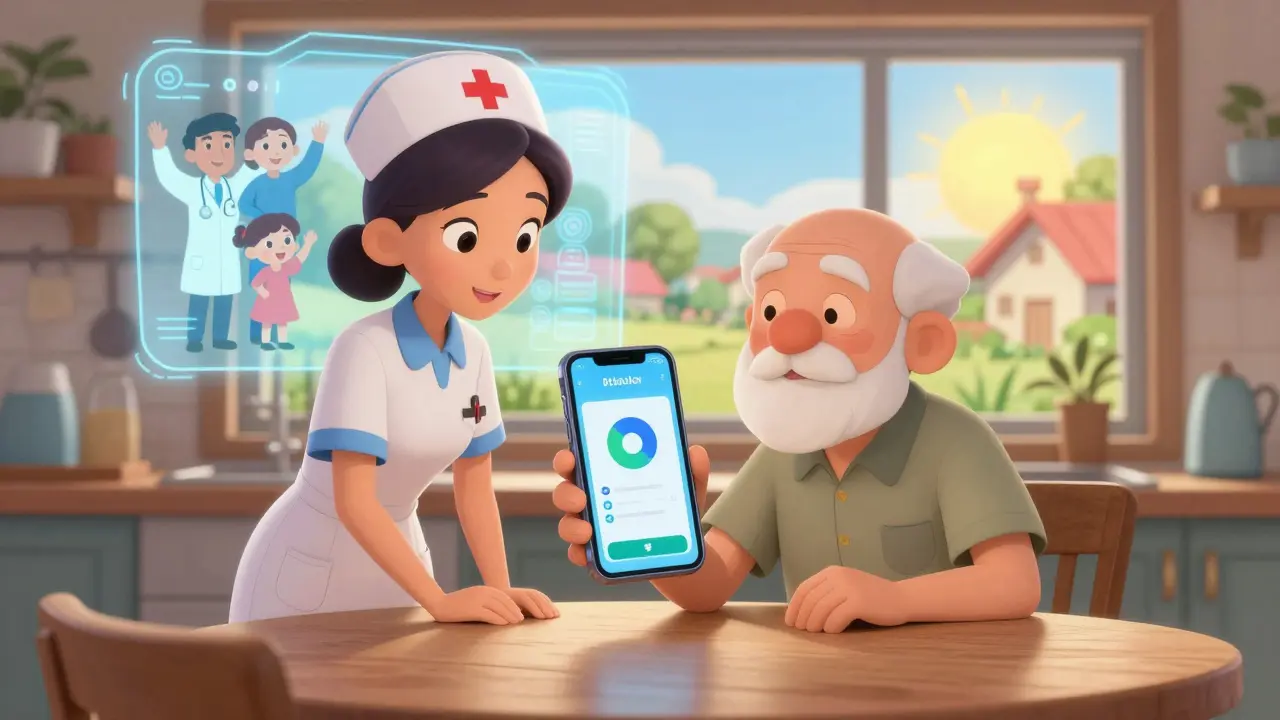
But not everyone can use them. About 15-20% of patients in low-income or rural areas don’t have reliable smartphones or the digital skills to set up an app. Older adults (65+) often need 42 minutes to get started, compared to 18 minutes for people under 45. That’s why some clinics now pair app use with a 15-minute in-person setup session. Tech alone isn’t enough-human support still matters.
Cost, Privacy, and Getting Started
Most apps are free. Medisafe, MyTherapy, and Round Health all have free versions with core features. Premium plans cost $4.99 a month and unlock 24/7 chat support, detailed reports for doctors, and cloud backup.
Privacy? Top apps are HIPAA-compliant. They use end-to-end encryption and biometric login (Face ID, fingerprint). But only 64% of apps in a 2025 review clearly stated their security practices. Stick to well-known names. Avoid random apps with no reviews or unclear privacy policies.
Setting up takes 10 to 25 minutes. Open the app. Tap "Add Medication." Type in the name (most have autocomplete). Set the time. Add dosage. Repeat for each pill. Turn on notifications. Done. iOS and Android now have Focus Modes that let you silence other alerts while keeping med reminders active-no more notification fatigue.
Pro tip: Use the app’s photo upload feature. Snap a picture of your pill bottle. The app will auto-fill the name and dosage. Saves typing and reduces errors.
What’s Next: AI, Voice, and Integration
The next wave is smarter. Medisafe’s "Adherence Coach," launched in early 2024, uses machine learning to predict when you’re likely to miss a dose. If you’ve skipped your evening pill three times this week, it might send a voice message: "You’ve been consistent all week. One more dose tonight keeps you on track."
The FDA cleared its first prescription digital therapeutic for hypertension in March 2024. That means some apps are now officially part of your treatment plan-and may be covered by insurance. Medicare Advantage plans already cover adherence apps for 42% of members.
Google is testing a voice-activated assistant called "Med Buddy" for late 2025. Imagine saying, "Hey Google, did I take my insulin?" and it pulls your log, reminds you if you missed it, and texts your caregiver if you didn’t respond in 15 minutes.
And Pfizer is testing blockchain systems to verify adherence in clinical trials. No more self-reporting. No more lying. Just proof you took it. That’s not sci-fi-it’s coming.
Real Limitations and When Not to Rely on Apps
Apps aren’t magic. If you forget your phone at home, you forget your pills. If your battery dies, the reminders stop. If you’re overwhelmed and turn off all notifications, the app becomes useless.
Studies show adherence drops 35-40% after three months without extra support. That’s why the best programs combine apps with weekly check-ins from a nurse or pharmacist. Apps are tools-not replacements for care.
They also don’t help people with severe dementia or no access to smartphones. In rural India, a 2023 trial found minimal benefit because many patients shared one phone or had no internet. In those cases, family-based reminders or community health workers still win.
And yes, some people get annoyed by constant pings. 32% of dissatisfied users cited notification fatigue. The fix? Customize. Change the tone. Set different sounds for morning vs. night. Use silent vibrations. Or turn off reminders for weekends if your doctor agrees.
How to Choose the Right App
Here’s a quick checklist:
- Does it support your exact medications? (Search the app’s database first.)
- Can you add multiple doses per day with different times?
- Does it let you share reports with your doctor or caregiver?
- Is it HIPAA-compliant? (Check the privacy page.)
- Are there real user reviews-not just 5-star spam?
- Does it work offline? (Important if your internet is spotty.)
Top picks in 2025: Medisafe (best for complex regimens), MyTherapy (best interface), Round Health (best for caregivers). All are free to start. Try one for two weeks. See if it fits your life.
Final Thought: Your Phone Is the Best Pill Organizer You Already Own
You don’t need a fancy device. You don’t need to spend money. You just need to use what’s already in your pocket. Medication apps work because they meet you where you are-not where a doctor thinks you should be.
They turn forgetting into a solvable problem. They turn confusion into clarity. They turn isolation into connection-by letting your family see your progress, or your doctor spot a pattern before you get sick.
It’s not about technology. It’s about making health care easier. And for millions of people, that’s exactly what these apps are doing.
Do medication adherence apps really work?
Yes. In 14 clinical trials from 2023 to 2025, patients using medication apps improved adherence by an average of 0.57 points on the Morisky scale-enough to make treatments significantly more effective. Apps outperform SMS reminders and traditional pill organizers by 20% or more.
Are medication apps free?
Most top apps like Medisafe, MyTherapy, and Round Health offer free versions with core features: reminders, logs, and basic tracking. Premium plans cost around $5/month and include 24/7 support, cloud backup, and doctor reports. You don’t need to pay to see results.
Can I use an app if I’m not tech-savvy?
Yes. Most apps are designed for a 6th-grade reading level. Setup takes 10-25 minutes. Many users over 65 learn to use them with a little help-like a family member walking them through the first setup. Voice prompts and large buttons help. If you can use Facebook or order food online, you can use a medication app.
What if I miss a dose and the app doesn’t remind me?
Apps rely on your phone being on and notifications enabled. If you turned off alerts or your phone was off, the app can’t help. That’s why it’s smart to set up multiple reminders (e.g., 30 minutes before and at the exact time) and use a backup like a calendar alert or a family member check-in.
Do doctors recommend these apps?
More and more do. Johns Hopkins, UCSF, and other major institutions cite strong evidence for their use. Some clinics now prescribe apps like medication. Medicare Advantage plans in 42% of cases cover them as a supplemental benefit. If your doctor hasn’t mentioned it, ask.
Can medication apps replace my pharmacist?
No. Apps can alert you to potential drug interactions, but they don’t replace a pharmacist’s clinical judgment. Always talk to your pharmacist before starting or stopping any medication-even if the app says it’s safe.
How long do people keep using these apps?
Adherence drops by 35-40% after three months without extra support. The best results happen when apps are paired with regular check-ins-like a nurse calling every two weeks or a family member asking, "Did you take your pills today?" Long-term use requires ongoing motivation.

Meina Taiwo
December 22, 2025 AT 05:18Used MyTherapy for my dad’s diabetes meds. He’s 72, barely uses smartphones. Took him 20 mins with my help. Now he gets his pills on time. No more hospital trips. Simple works.
Cara C
December 24, 2025 AT 04:19I used to hate reminders until I started using Medisafe. Now I don’t feel guilty when I forget. The app doesn’t yell at me-it just says ‘Hey, you got this.’ Small kindnesses matter.
Michael Ochieng
December 25, 2025 AT 08:59As someone who grew up in Nigeria and now lives in the US, I’ve seen how tech bridges gaps. In Lagos, my cousin used WhatsApp reminders because she had no smartphone app access. In Atlanta, she uses MyTherapy. Same goal. Different tools. Tech should adapt to people, not the other way around.
Cameron Hoover
December 26, 2025 AT 03:37I was skeptical. Then I started using Round Health for my anxiety meds. I didn’t think I needed help. But the progress chart? Seeing my streaks? It felt like I was winning. I cried the first time I hit 30 days. Not because I’m emotional-because I finally felt like I was in control. That’s not tech. That’s hope.
Grace Rehman
December 26, 2025 AT 13:30So we’re supposed to believe a phone app fixes systemic healthcare failure? Cool. Next they’ll tell us TikTok cures cancer. People forget meds because they’re poor. Because they can’t afford the pills. Because their doctors don’t listen. A reminder doesn’t fix that. It just makes you feel bad for forgetting while the system keeps ignoring you. 🤷♀️
Jerry Peterson
December 28, 2025 AT 12:11My grandma uses Medisafe. We set it up together. She still forgets sometimes. But now she tells me when she does. That’s the real win-not perfect adherence, but communication. Tech just gave us a language to talk about it.
Adrian Thompson
December 29, 2025 AT 03:54Big Pharma loves these apps. Why? Because they turn you into a data farm. Every time you tap ‘took it’-they log it. Sell it. Link it to your insurance. Next thing you know, your premiums go up because you ‘missed’ a dose. This isn’t healthcare. It’s surveillance with a smiley face. 🚩
Southern NH Pagan Pride
December 30, 2025 AT 06:58Did you know the FDA cleared a digital therapeutic? That means your meds are now being tracked by a corporation that doesn’t have to follow HIPAA if they’re not a ‘covered entity.’ They’re selling your adherence data to insurers who then penalize you. Wake up. This is a Trojan horse. No one talks about this. Why? Because you’re too busy tapping your phone.
Jackie Be
January 1, 2026 AT 02:39I used to miss my blood pressure pills every weekend. Then I turned on weekend reminders with a funny voice alert. Now I laugh every time it goes off. I’m not perfect but I’m trying and that’s enough. Apps dont fix you they just give you a nudge. And sometimes thats all you need 💪
John Hay
January 2, 2026 AT 22:25Apps help but they’re not magic. My brother used one for his HIV meds. He hit 98% adherence for 6 months. Then he lost his phone. Missed three doses. Got resistant. App didn’t save him. Human check-ins did. Nurse called him. That’s what works.
Stacey Smith
January 4, 2026 AT 04:06These apps are great for Americans. What about people in rural areas without phones? Or internet? Or power? This feels like tech-washing. We’re celebrating apps while ignoring that 1 in 5 people can’t even use them. Fix the system first. Not the phone.
Jason Silva
January 4, 2026 AT 18:44Just got my first AI voice reminder from Medisafe’s coach. It said ‘You’ve been killing it this week. One more pill and you’re a legend.’ I cried. Not because I’m weak. Because someone-even an algorithm-cared enough to say that. 🤖❤️