Green Tea and Warfarin: What You Need to Know About the Interaction
When you take warfarin, a blood thinner used to prevent dangerous clots in people with atrial fibrillation, artificial heart valves, or a history of deep vein thrombosis. Also known as Coumadin, it works by blocking vitamin K, which your body needs to make clotting proteins. Many people drink green tea, a popular beverage made from unfermented tea leaves, rich in antioxidants like EGCG and low levels of vitamin K for its health benefits—but what happens when it meets warfarin? It’s not as simple as "avoid it completely." Some studies show green tea can slightly raise your INR (the measure of how long your blood takes to clot), especially if you drink large amounts daily or suddenly change your intake.
The real issue isn’t just green tea—it’s vitamin K, a nutrient that directly opposes warfarin’s effect. Green tea has less vitamin K than spinach or kale, so it’s not a major threat by itself. But if you’re sipping three cups a day and suddenly cut back to one, your INR could spike. The same goes for switching from black tea to green tea, or adding a green tea supplement. Your body doesn’t like sudden changes in vitamin K intake, and neither does your warfarin dose. Other herbal supplements, like ginseng, garlic, or St. John’s wort, can also interfere with how warfarin is broken down in your liver. These aren’t always listed on supplement labels, and many patients don’t tell their doctors they’re taking them.
What should you do? Don’t panic and don’t quit green tea cold turkey. Keep your intake steady. If you drink two cups daily, keep drinking two. If you rarely drink it, don’t start now. Consistency matters more than elimination. Always check with your provider before adding any new supplement, even if it’s "natural." Your INR should be checked regularly—not just when you feel off. And if you’ve had a recent spike in INR, ask your pharmacist or doctor: could green tea, or something else you changed in your diet, be the cause? The posts below give you real examples of how diet, herbs, and medications interact with blood thinners, so you can spot patterns before they become problems.
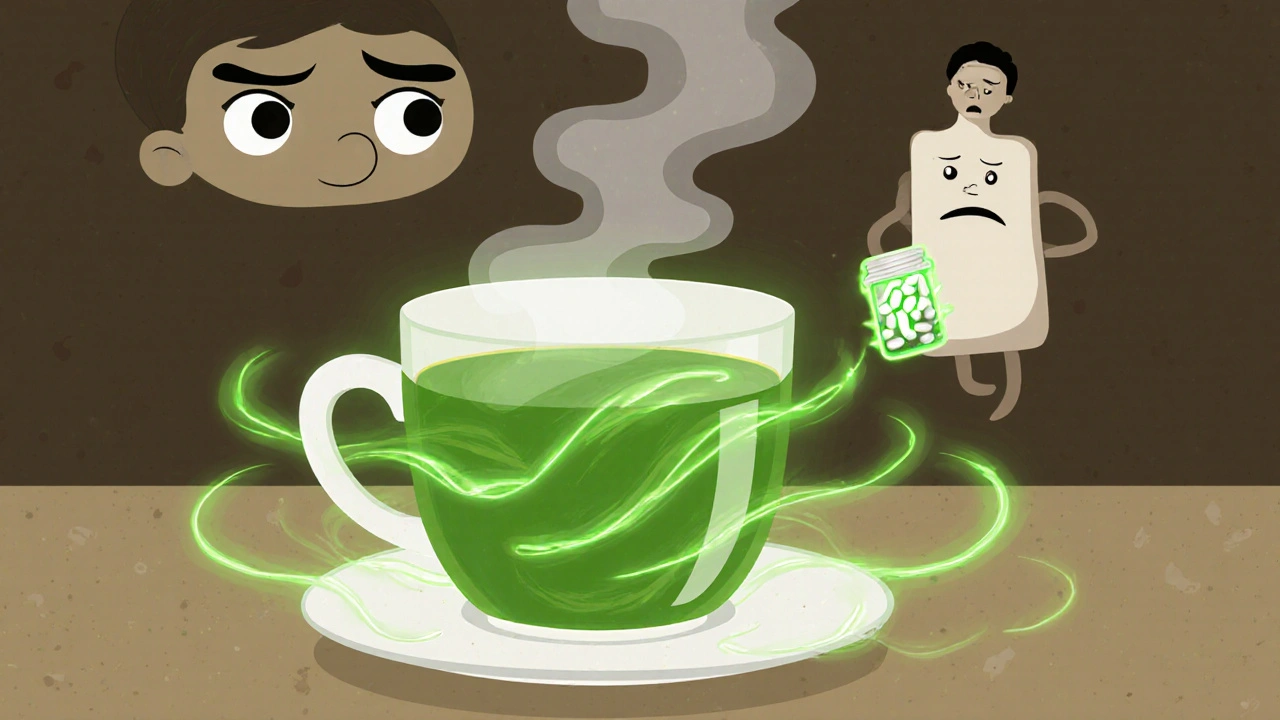
Herbal Teas and Medications: Potential Interactions to Review
Herbal teas may seem harmless, but they can interfere with medications like blood thinners, heart drugs, and birth control. Learn which teas pose real risks and how to stay safe while enjoying your cup.
Categories
- Medications (76)
- Health and Medicine (64)
- Health and Wellness (38)
- Online Pharmacy Guides (16)
- Nutrition and Supplements (9)
- Parenting and Family (3)
- Environment and Conservation (2)
- healthcare (2)
- prescription savings (1)