Dairy and Antibiotics: What You Need to Know About Interactions and Effects
When you take dairy and antibiotics, the interaction between calcium-rich foods and certain drugs can block absorption and lower treatment effectiveness. Also known as milk and medication conflicts, this isn’t just a myth—it’s a well-documented issue that affects how well your antibiotics work. If you’re on a course of antibiotics and enjoy yogurt, cheese, or a glass of milk, you might be accidentally weakening your treatment.
The real problem lies with antibiotic interactions, specifically how minerals like calcium, magnesium, and iron bind to certain drugs. Tetracyclines and fluoroquinolones are the two main classes of antibiotics that get hit hard by dairy. Calcium in milk forms an insoluble complex with these drugs in your gut, so your body can’t absorb them properly. That means the infection might not clear up, or worse—it could come back stronger. You don’t need to give up dairy forever, but timing matters. Waiting at least two hours before or after taking your antibiotic makes a big difference.
Not all antibiotics are affected the same way. Penicillins, cephalosporins, and azithromycin? No major issues with dairy. But if your prescription is doxycycline, ciprofloxacin, or levofloxacin, you need to be careful. Even a single glass of milk taken with the pill can cut absorption by up to 50%. That’s not a small risk—it’s a treatment failure waiting to happen. And it’s not just milk. Yogurt, cheese, calcium-fortified orange juice, and even some antacids can cause the same problem.
calcium and antibiotics, especially when consumed together, can turn effective treatments into wasted doses. This is why pharmacists often give you a little card with your prescription: "Take on an empty stomach" or "Avoid dairy for 2 hours." It’s not just a suggestion—it’s science. And if you’re taking antibiotics for a serious infection like pneumonia or a urinary tract infection, skipping this rule could mean longer illness, more doctor visits, or even hospitalization.
There’s also the gut angle. Antibiotics wipe out good bacteria along with bad ones. Dairy, especially fermented types like yogurt, can help rebuild those good bugs—but only if you take it at the right time. If you eat yogurt right after your antibiotic, the calcium will interfere. But if you wait a few hours, it can actually support your recovery. Same goes for probiotic supplements. Timing is everything.
What about people who are lactose intolerant? If you avoid dairy anyway, you’re already safe from this interaction. But if you use calcium supplements or fortified plant milks, watch out. Many almond, soy, or oat milks are loaded with added calcium—and they can cause the same problem as cow’s milk. Always check the label.
Bottom line: dairy and antibiotics don’t mix well in most cases. You don’t have to become a nutrition expert to get this right. Just remember: take your antibiotic with water, on an empty stomach if possible, and wait at least two hours before eating anything dairy-related. It’s simple, it’s effective, and it could mean the difference between getting better fast and dealing with a stubborn infection.
Below, you’ll find real-world guides on how antibiotics behave with food, what to do if you accidentally took them together, and which common meds are most at risk. These aren’t theoretical tips—they’re based on patient experiences, clinical studies, and pharmacy guidelines that actually matter.
Antibiotics and Dairy: Why Timing Matters for Drug Absorption
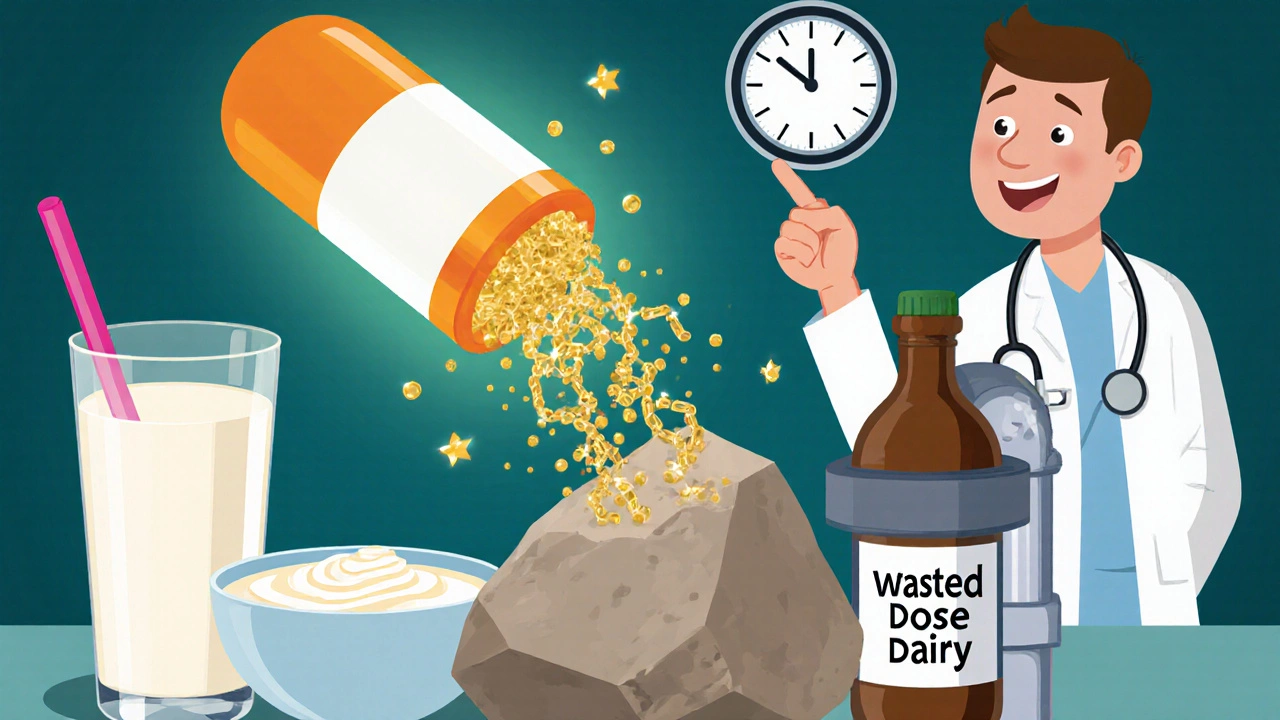
Dairy can block antibiotic absorption, reducing effectiveness by up to 92%. Learn which antibiotics are affected, how long to wait after dairy, and how to avoid treatment failure and antibiotic resistance.
Categories
- Medications (76)
- Health and Medicine (64)
- Health and Wellness (38)
- Online Pharmacy Guides (16)
- Nutrition and Supplements (9)
- Parenting and Family (3)
- Environment and Conservation (2)
- healthcare (2)
- prescription savings (1)
Popular Articles