
Semaglutide for Weight Loss: How Ozempic and Wegovy Compare in Real-World Efficacy
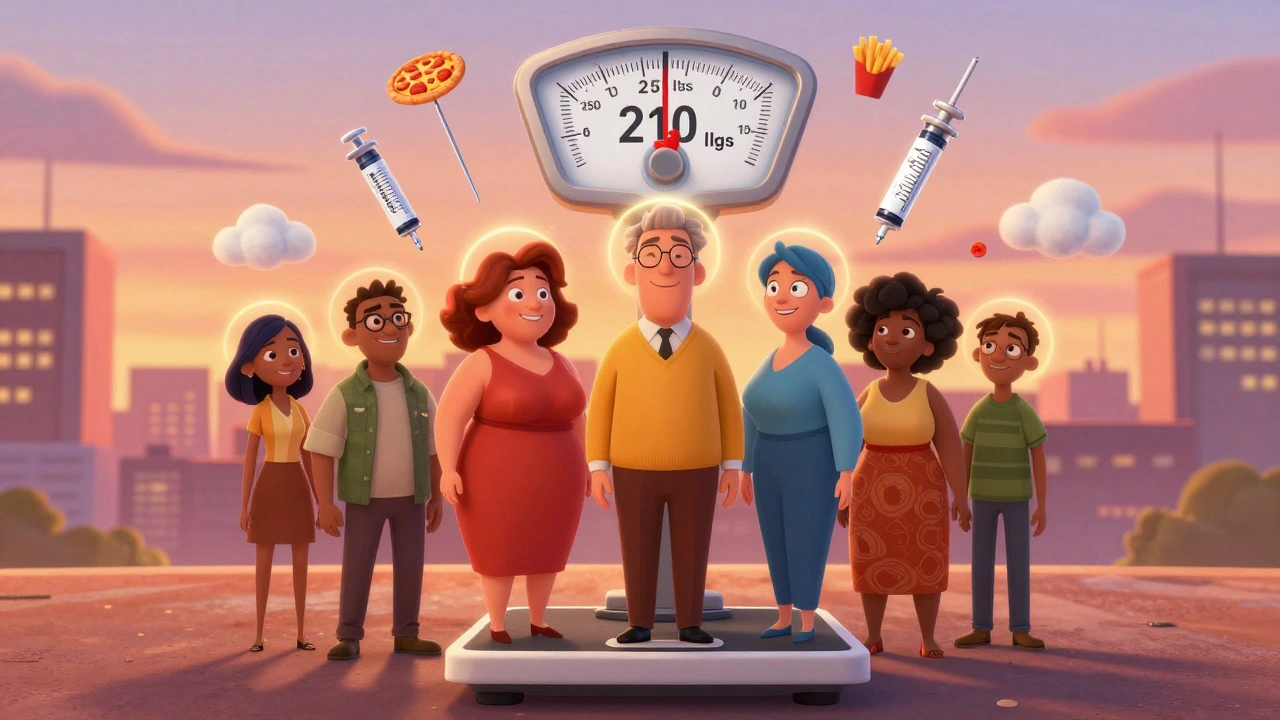
When you hear people talking about losing 20, 30, even 50 pounds on a medication, it’s hard not to wonder: is this real? And if it is, how does it actually work? Semaglutide - sold as Ozempic for diabetes and Wegovy for weight loss - isn’t magic. But it’s the most effective weight loss drug most people have ever seen. In clinical trials, people lost nearly 15% of their body weight on average. That’s not a small number. That’s like dropping from 220 pounds to 187 in less than a year. And it’s not just about looks. For many, it’s about breathing easier, moving without pain, and finally feeling in control of their health.
How Semaglutide Actually Works (No Jargon)
Semaglutide mimics a hormone your body already makes called GLP-1. This hormone shows up after you eat and tells your brain, “You’re full.” It also slows down how fast your stomach empties and helps your pancreas release insulin only when needed. But here’s the key: in people with obesity, this signal gets weak. Your brain doesn’t get the message that you’ve had enough. Semaglutide turns that signal back up.
It doesn’t just make you eat less. It changes how your brain sees food. People on semaglutide often say things like, “I used to crave pizza. Now I just don’t care.” It’s not willpower. It’s biology. Studies show it directly affects the appetite centers in your brain - quieting the hunger signals and boosting the ones that say, “Enough.”
It also helps your body burn fat more efficiently. It encourages your white fat tissue to behave more like brown fat - the kind that burns calories to make heat. That’s why some people notice they feel warmer or sweat more, even without exercise.
Ozempic vs Wegovy: Same Drug, Different Doses
Ozempic and Wegovy are the same active ingredient: semaglutide. The difference is the dose and what they’re approved for.
- Ozempic: Approved for type 2 diabetes. Doses go up to 1.0 mg or 2.0 mg weekly. Many people use it off-label for weight loss - and it works.
- Wegovy: Approved specifically for weight loss. The full dose is 2.4 mg weekly. That’s the highest dose studied for obesity.
In the STEP 1 trial, people on Wegovy lost an average of 14.9% of their body weight over 68 weeks. Those on Ozempic at 1.0 mg lost around 6-8%. That’s not because Ozempic doesn’t work - it does. But Wegovy was designed to push the dose higher for maximum effect.
Doctors often start people on Ozempic at 0.5 mg or 1.0 mg for weight loss because it’s cheaper and easier to get. But if you’re serious about losing significant weight, 2.4 mg is where the real results happen.
What the Numbers Really Mean
Let’s break down what 14.9% weight loss looks like in practice:
- Someone weighing 250 pounds loses about 37 pounds.
- Someone weighing 180 pounds loses about 27 pounds.
And it’s not just about the scale. In the same trial:
- 79% of people lost at least 10% of their body weight.
- 50% lost 20% or more.
- Only 12% of those on placebo lost 10%.
That’s not a slight improvement. That’s life-changing. People who lost 20% of their weight saw improvements in blood pressure, cholesterol, liver function, and even sleep apnea. Many were able to reduce or stop other medications.
But here’s the catch: this works best when combined with lifestyle changes. In the STEP trials, everyone got weekly counseling on diet and movement. Semaglutide doesn’t replace healthy habits - it makes them easier to stick with.

The Side Effects Nobody Talks About Enough
Yes, it works. But it’s not easy.
Three out of four people on Wegovy get nausea. More than half get diarrhea or vomiting. These aren’t mild. Some people describe it as feeling like a bad stomach bug for weeks. That’s why the dose starts low - 0.25 mg weekly - and slowly increases over 16 to 20 weeks. Rushing the dose increase almost guarantees you’ll quit.
Some people can’t tolerate even the lowest dose. Others manage it with ginger tea, eating smaller meals, or avoiding greasy foods. A few have to stop entirely. The side effects usually fade after a few months, but for some, they don’t.
There’s also a black box warning from the FDA about thyroid tumors in rats. No human cases have been proven, but if you or a family member has ever had medullary thyroid cancer or Multiple Endocrine Neoplasia Syndrome Type 2, you can’t use it.
What Happens When You Stop?
This is the biggest question people don’t ask until it’s too late.
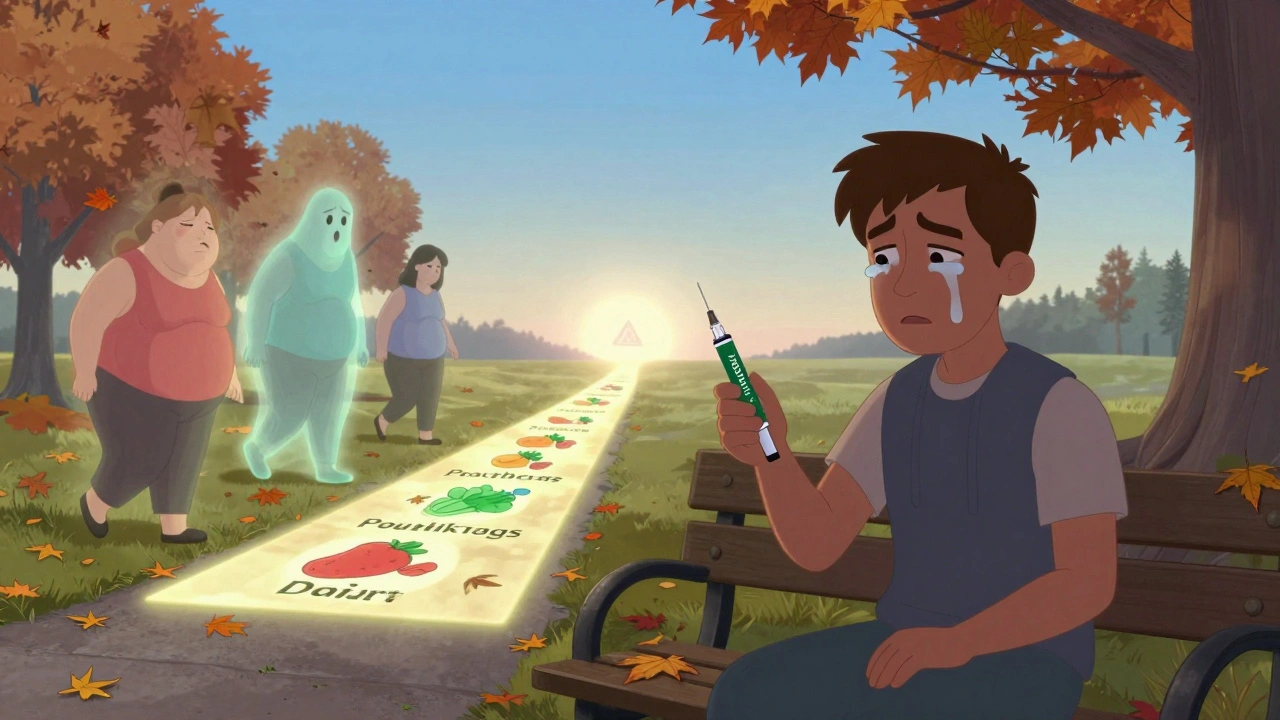
In the STEP 4 trial, people who stopped semaglutide after 68 weeks regained about two-thirds of the weight they lost - within a year. That’s not failure. That’s biology. Your body fights to return to its old weight. Semaglutide doesn’t fix the underlying causes of obesity. It suppresses the symptoms.
That’s why experts say: if you’re going to use it, you may need to use it for life. That’s not a flaw - it’s like taking blood pressure medication. You don’t stop when your pressure normalizes. You keep going because the condition doesn’t go away.
But here’s the problem: insurance rarely covers it long-term. In the U.S., Wegovy costs about $1,350 a month without insurance. Even with coverage, many plans require step therapy - you have to try and fail on cheaper options first. And even then, shortages mean pharmacies often run out.
Who Benefits Most - And Who Doesn’t
Semaglutide works best for people with:
- BMI of 30 or higher (obesity), or BMI of 27+ with a weight-related condition like high blood pressure or prediabetes.
- History of failed diet attempts.
- Strong support system or access to coaching.
It’s less effective for:
- People who expect it to work without any lifestyle changes.
- Those with severe mental health conditions like binge eating disorder without therapy.
- People who can’t afford it or can’t get consistent access.
And while it’s approved for adults, trials are now underway for teens aged 12-17. Early results look promising, but long-term safety data is still being collected.
What’s Next? Tirzepatide, Oral Pills, and Combination Therapies
Wegovy isn’t the end. Tirzepatide (sold as Zepbound or Mounjaro) is a newer drug that hits two hormones at once - GLP-1 and GIP. In trials, it led to 20.9% weight loss on average. That’s higher than semaglutide.
Oral semaglutide (Rybelsus) is approved for diabetes, but not yet for weight loss. Early data shows it can still help - about 11% weight loss - but it’s less potent than the injection.
Future drugs may combine semaglutide with other agents like amylin analogs or dual agonists. The goal isn’t just to lose weight - it’s to keep it off without lifelong medication.
But right now, semaglutide is the most proven tool we have. It’s not perfect. But for millions of people, it’s the first thing that’s actually worked.
Real Stories, Real Results
On Reddit, one user wrote: “I lost 40 pounds in 10 months on Wegovy. I didn’t change my diet much, but I stopped craving junk food. I didn’t feel hungry. I didn’t feel deprived. I just… stopped wanting to eat so much.”
Another said: “I stopped after 8 months because my insurance dropped coverage. I gained back 35 pounds in 6 months. It wasn’t laziness. It was like my body went back into survival mode.”
These aren’t outliers. They’re the norm. The drug works. But without access, support, and long-term planning, the results don’t last.
What You Should Do If You’re Considering It
1. Talk to a doctor who specializes in obesity medicine. Not every provider knows how to use this right.
2. Ask about the dosing schedule. Don’t rush it. Start low. Go slow.
3. Get ready for side effects. Have ginger, electrolytes, and small meals ready.
4. Plan for long-term use. If you start, think about how you’ll pay for it next year - and the year after.
5. Pair it with real support. A dietitian, a therapist, a weight loss group - anything that helps you build habits that last beyond the medication.
Semaglutide isn’t a cure. But for the first time in decades, we have a tool that actually moves the needle on obesity. The question isn’t whether it works. It’s whether we’re ready to use it wisely - and fairly - for the people who need it most.




Ibrahim Yakubu
December 7, 2025 AT 11:41Semaglutide? Please. This is just Big Pharma’s latest money grab wrapped in science-speak. They don’t care if you lose weight-they care if you keep buying. The ‘life-changing’ results? Only if you ignore the fact that 67% of people regain it all once they stop. And the side effects? Nausea, vomiting, diarrhea-sounds like a bad taco night, not a medical breakthrough. They’re selling a chemical crutch, not a cure. And don’t get me started on the black box warning. Rats got tumors. Humans? ‘No proven cases’-yeah right, like they didn’t hide the data. This isn’t medicine. It’s corporate seduction.
Chris Park
December 7, 2025 AT 17:06Actually, the data is misleading. The STEP trials excluded patients with psychiatric comorbidities, GI disorders, and those on other weight-loss meds-so the ‘14.9% average’ is a cherry-picked illusion. Also, the ‘lifestyle counseling’ was mandatory and intensive-meaning the weight loss isn’t from semaglutide alone, it’s from the 68 weeks of daily therapy. They’re attributing therapy outcomes to a drug. That’s not science. That’s marketing. And the ‘brown fat’ claim? That’s from one mouse study from 2017. No human replication. Still, you’ll see influencers screaming ‘metabolic magic’ on TikTok. The science is thin. The profit? Thick.
Ashish Vazirani
December 8, 2025 AT 04:52India has been using Ayurvedic herbs for weight loss for 5,000 years-turmeric, fenugreek, triphala-and now you people are paying $1,350 a month for a synthetic hormone? This is cultural colonization disguised as medicine. You think your body is broken? It’s not. Your diet is. Your lifestyle is. Your addiction to processed food is. But no-better to inject a patented molecule and call it science than to admit you’d rather eat chips than cook. And don’t even mention the fact that in India, we don’t have access to this drug, so we don’t need it. You’re not ‘sick’-you’re just lazy. And now you’re outsourcing your willpower to a Big Pharma puppet.
Karen Mitchell
December 8, 2025 AT 13:04I find it deeply concerning that society has reduced the complex, multifaceted issue of obesity to a pharmaceutical solution. This is not a medical breakthrough-it is a moral abdication. We have created a culture that rewards quick fixes over personal responsibility, and now we are medicating away the consequences of decades of poor dietary habits and sedentary lifestyles. The fact that insurance won’t cover long-term use is not a flaw in the system-it is a necessary safeguard. To treat obesity as a condition requiring lifelong pharmacological intervention is to abandon the very principles of health promotion and behavioral accountability.
Nava Jothy
December 10, 2025 AT 10:36OMG I’m so done with this. I’ve been on Wegovy for 6 months and I lost 32 lbs but now I’m crying because my insurance dropped me 😭 I gained back 20 in 3 months and I feel like a failure. But it’s not my fault!! I did everything right!! I ate salads, I walked 10k steps, I meditated, I journaled… and then the drug stopped working (or rather, they stopped paying for it). I’m just so tired of being told to ‘just eat less’ when my brain literally doesn’t want to eat anymore. Why is no one talking about how cruel this is?? I’m not lazy. I’m just… chemically betrayed. 💔
brenda olvera
December 12, 2025 AT 04:49I just want to say thank you for writing this. I’ve been on Ozempic for a year and it changed my life. I used to be scared to leave the house. Now I hike. I play with my kids. I sleep through the night. The nausea was rough at first but I pushed through. It’s not magic but it’s the first thing that helped me actually feel like myself again. You don’t have to be perfect. You just have to keep going. And if you can’t afford it? Talk to your doctor. There are patient programs. You’re not alone. ❤️
Priya Ranjan
December 13, 2025 AT 02:57People who say they 'didn’t change their diet' are lying. You can’t lose 40 pounds on semaglutide without reducing calorie intake. The drug reduces appetite, yes-but you still have to choose not to eat the cake. This isn’t a free pass. It’s a tool. And tools are useless in the hands of someone who refuses to use them properly. If you’re still eating pizza every Friday because 'I deserve it,' then no drug in the world will fix that. It’s not biology. It’s choice. And you can’t out-inject your bad habits.
Kay Jolie
December 14, 2025 AT 17:28Let’s be real-semaglutide is the first GLP-1 agonist that actually shifts the paradigm in metabolic medicine. The STEP trials represent a paradigmatic shift in obesity pharmacotherapy, demonstrating not only statistically significant weight reduction but also clinically meaningful improvements in cardiometabolic biomarkers, including HbA1c, LDL, and hepatic steatosis. The pharmacokinetic profile of subcutaneous semaglutide allows for sustained receptor occupancy, which modulates central appetite regulation via the arcuate nucleus and nucleus tractus solitarius. That’s not just weight loss. That’s metabolic reprogramming. The real challenge? Scaling access. Because when you have a drug that rewrites neurobiology, you can’t leave it to the whims of insurance gatekeepers.
Billy Schimmel
December 16, 2025 AT 16:30So… you’re telling me the best way to lose weight is to pay $1,350 a month and throw up for three months? Cool. I’ll just keep eating my oatmeal and walking. At least I don’t need a prescription to be healthy. Also, I’ve seen three people on this stuff. Two quit because they were miserable. One gained it all back. The fourth? Still on it. And still broke. We’re treating symptoms like they’re the disease. And we’re paying for it. Literally.